The Philippine economy unexpectedly slowed for a fifth straight quarter, raising questions about the central bank’s rate-hike cycle and heaping pressure on President Ferdinand Marcos Jr.
The Philippines’ farm output shrank by a record in the third quarter following a sharp drop in rice harvests, signaling more strain for an economy that’s among the region’s laggards.
Philippine exports rose at their fastest pace in five years, bringing overseas sales to a new record on the back of global electronics demand and a weak peso.
The Philippine central bank delivered an outsized interest-rate hike and signaled readiness to tighten further to rein in resurgent inflation and support a peso that’s sunk to a record low.
The Philippines is facing a slew of price risks after inflation surged past economists’ estimates in September, backing the case for the central bank to further raise its policy rate.
Philippine jobless rate climbed to the highest in four years as fresh graduates sought work in an economy that slowed due to a corruption scandal and the global oil shock.
Philippine borrowers will face high interest rates rather than a shortage of loans, the central bank said, easing concerns that record level of government borrowing is squeezing out private businesses.
The Philippine central bank said it’s “closely” monitoring the impact of the Middle East conflict and weather disturbances after inflation barely eased in August.
The Philippine central bank said it will be less aggressive in fighting inflation as economic growth slows, while President Ferdinand Marcos Jr. pledged to ramp up fiscal support.
The Philippine government plans to borrow 3.3 trillion pesos ($54 billion) next year, up by a fifth, as it seeks to revitalize an economy rocked by the Middle East conflict and a corruption scandal.
The Philippine central bank has limited room to increase its policy rate further after the country’s economic slump deepened in the second quarter, according to economists.
Philippine economic growth unexpectedly slumped in the second quarter as consumers cut back and investment shrank, prompting officials to pledge more state spending to spur a rebound. The peso fell.
The Philippine central bank said it’s ready for a policy rate move if needed, as inflation in July remained way above its tolerance range even after slowing for a third month.
The Philippines risks delaying planned reductions to its budget deficit if President Ferdinand Marcos Jr.’s tax relief proposals don’t come with revenue-generating measures, debt watchers said.
The Philippine central bank intervened in a small way to defend the peso last week, Governor Eli Remolona said, as the currency weakened to a record low.
Philippine inflation eased for a second month, but the central bank said consumer price pressures remain strong and is prepared to take further monetary action to ensure that it returns to target.
Workers in the Philippine capital will see their wages rise by a record 12%, with implementation set to start this month, Labor Secretary Francis Tolentino said on Tuesday.
The Philippine central bank raised its benchmark interest rate for a second consecutive meeting, and Governor Eli Remolona said another increase is possible in August with inflationary pressures still strong despite an interim US-Iran peace deal.
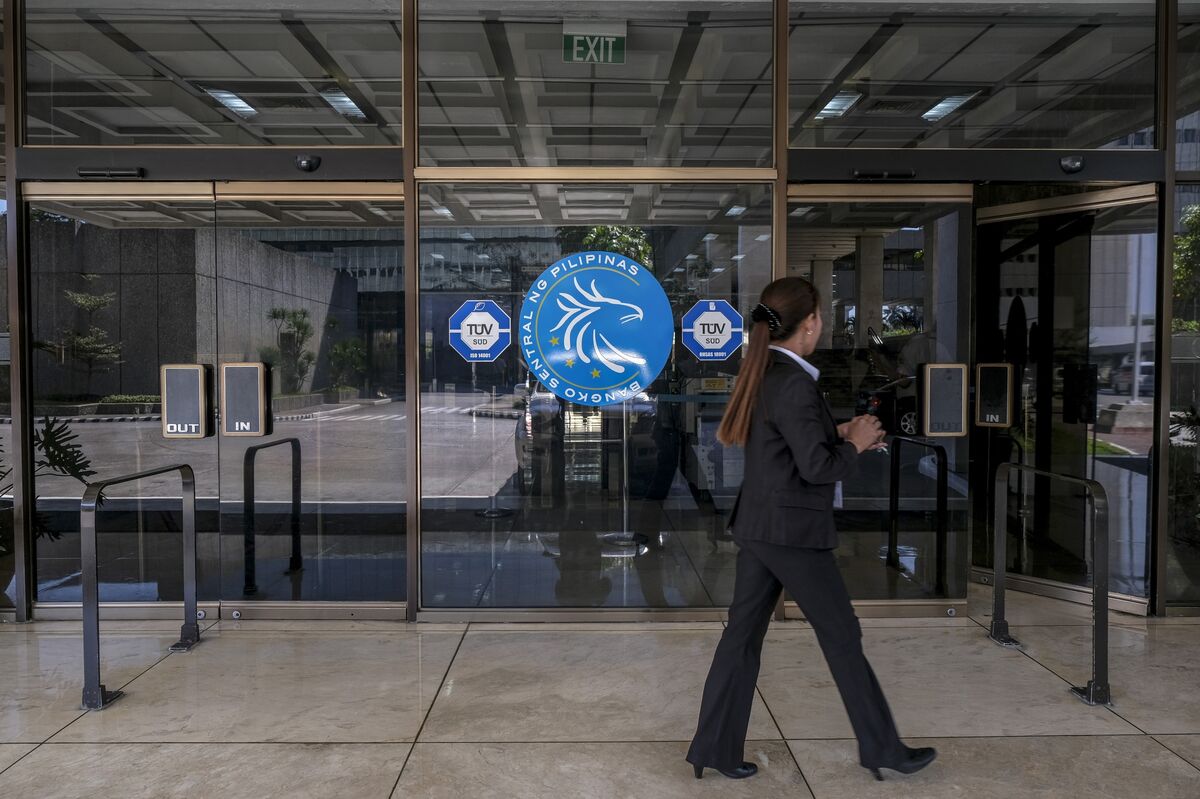
A woman walks past an entrance to the Bangko Sentral ng Pilipinas headquarters
Oil’s much-awaited decline may offer little respite for hard-hit consumers in the Philippines, where local pump prices were quick to skyrocket but could take up to a year to normalize.
A jeepney driver refuels at a gas station in Mandaluyong in the Philippines.
 Anmelden