UK bonds and stocks advanced after Chancellor of the Exchequer John Healey delivered a well-telegraphed budget that reassured investors the government will stick to its pledges of fiscal discipline.
UK government bonds are heading into next week’s budget on a firmer footing and Royal London Asset Management Ltd. sees an opportunity to buy longer-dated gilts.
The Bank of England warned that elevated hedge fund leverage in gilts, alongside exposure to artificial intelligence assets and corporate debt, raise the risk of stress spilling across markets.
Valuations in artificial intelligence remain vulnerable to a “sharper correction” than experienced in July, the Bank of England warned, noting the widespread implications of such a crash for global growth and sovereign bond yields.
UK government bonds gained after the Bank of England left interest rates unchanged and scrapped plans to sell long-dated gilts as part of its quantitative tightening program.
The Bank of England gave Britain’s bond market some much needed relief with an overhaul of its plan for selling off excess gilts that piled up on its balance sheet in the previous decade.
Traders added to bets on interest-rate hikes from the European Central Bank and the Bank of England as another jump in energy prices fueled concerns about inflation.
Only last month, Andrew Bailey again insisted quantitative tightening is here to stay. The Bank of England governor has been adamant the UK central bank needs to keep slashing its bond holdings to clear the decks for the next crisis and take interest-rate risk off its balance sheet.
Gilts extended their winning streak to five days after UK inflation held steady in May, easing pressure on the Bank of England to raise interest rates.
Currencies of emerging-market nations that produce the metals and minerals key to artificial intelligence are set to get a boost in the coming years, according to Barclays Plc.
Treasuries advanced at the close of the week as mixed economic data reinforced expectations the Federal Reserve will stay on hold, shifting the market’s focus back to inflation.
Investor worries over higher energy prices and elections that look to be disastrous for the government pushed the UK’s long-term borrowing costs to the highest level since 1998 this week. The pound wasn’t fazed.
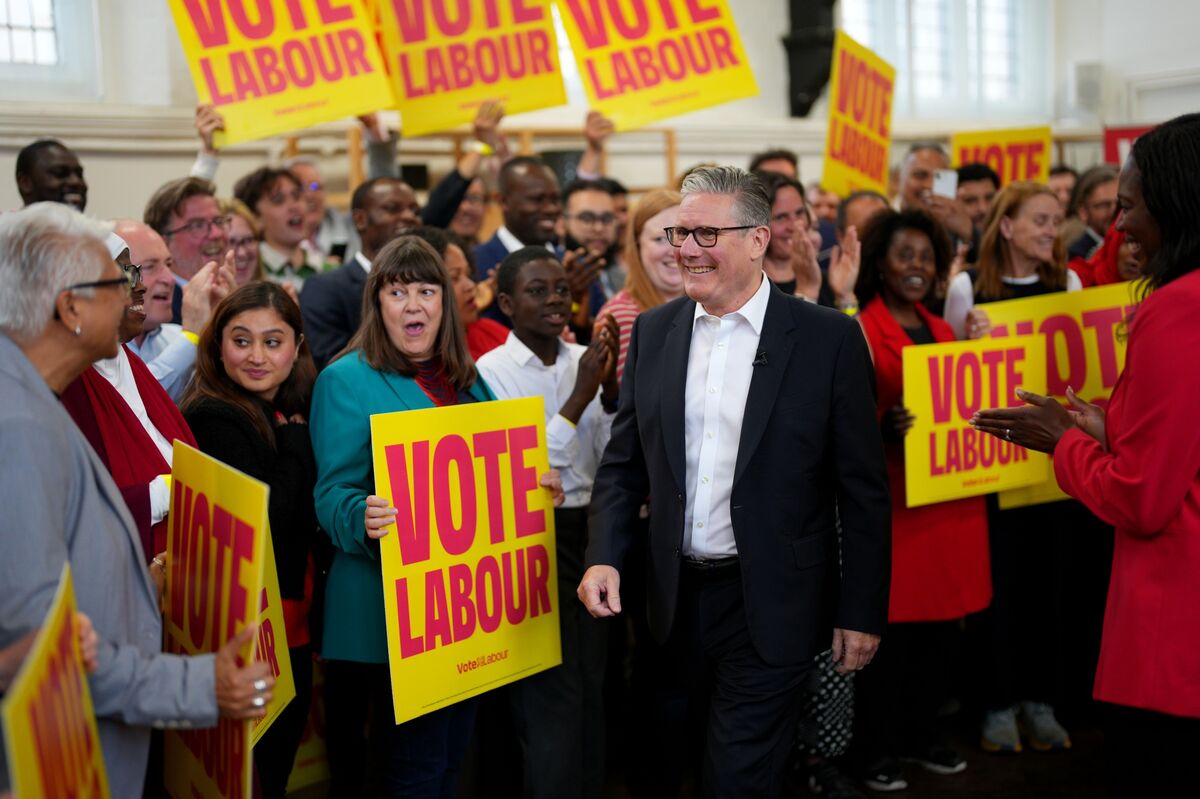
Prime Minister Keir Starmer joins party supporters during a campaign event in London on May 5.
Global bonds rallied as the prospect of a peace deal between the US and Iran drove down energy prices, curbing bets on interest-rate hikes as inflation expectations eased.
UK long-term borrowing costs jumped to a 28-year high as worries intensified over local government elections and the impact of soaring energy prices on the economy.
The Elizabeth Tower in the Westminster district of London.
The UK’s government bonds are sliding on pressure from surging oil prices and political risks, sending the 10-year yield back above 5% for the first time in a month.
British government bonds are set for their worst week since the early days of the Iran war, undermined by a simmering political crisis within the ruling Labour Party and expectations of higher interest rates this year.
A visitor enters the headquarters of HM Treasury in the Westminster district of London, UK, on Thursday, Jan. 9, 2025. The pound dropped to a more than one-year low, stocks fell and gilts extended a fourth day of losses on concern the Labour government will struggle to keep the deficit in check as borrowing costs surge.

 Anmelden