Ghana’s central bank unexpectedly cut its key interest rate to 11% from 14% on Wednesday, explaining that this was necessary to align monetary policy with market borrowing costs.
Ghanaian inflation accelerated slightly as service price-growth picked up pace, hardening expectations the central bank will keep interest rates on hold.
Ghana’s central bank maintained its key interest rate for a third straight meeting as the wars in Ukraine and Iran keep grain and energy prices elevated, threatening to push inflation higher.
Ghana’s annual inflation rate resumed its upswing in August as the rise in oil prices caused by the war in Iran seeped into transport and utility costs.
Moody’s Ratings downgraded Senegal’s sovereign credit score, pushing it closer to default as a power struggle between the executive and legislature threatens to complicate efforts to address the country’s debt crisis.
Ghanaian annual inflation unexpectedly slowed in July as food-price growth eased and a more stable exchange rate helped contain the cost of imported goods.
Ghana’s central bank joined a growing number of peers keeping interest rates higher for longer as renewed hostilities between the US and Iran bring fresh inflation risks.
Senegal’s foreign bonds were among the top performers in emerging markets after the government unveiled plans to reduce its budget deficit from next year.
Bank of Ghana Governor Johnson Asiama played down the weakness of the cedi this year and said policymakers could resume cutting interest rates once the Iran war ends.
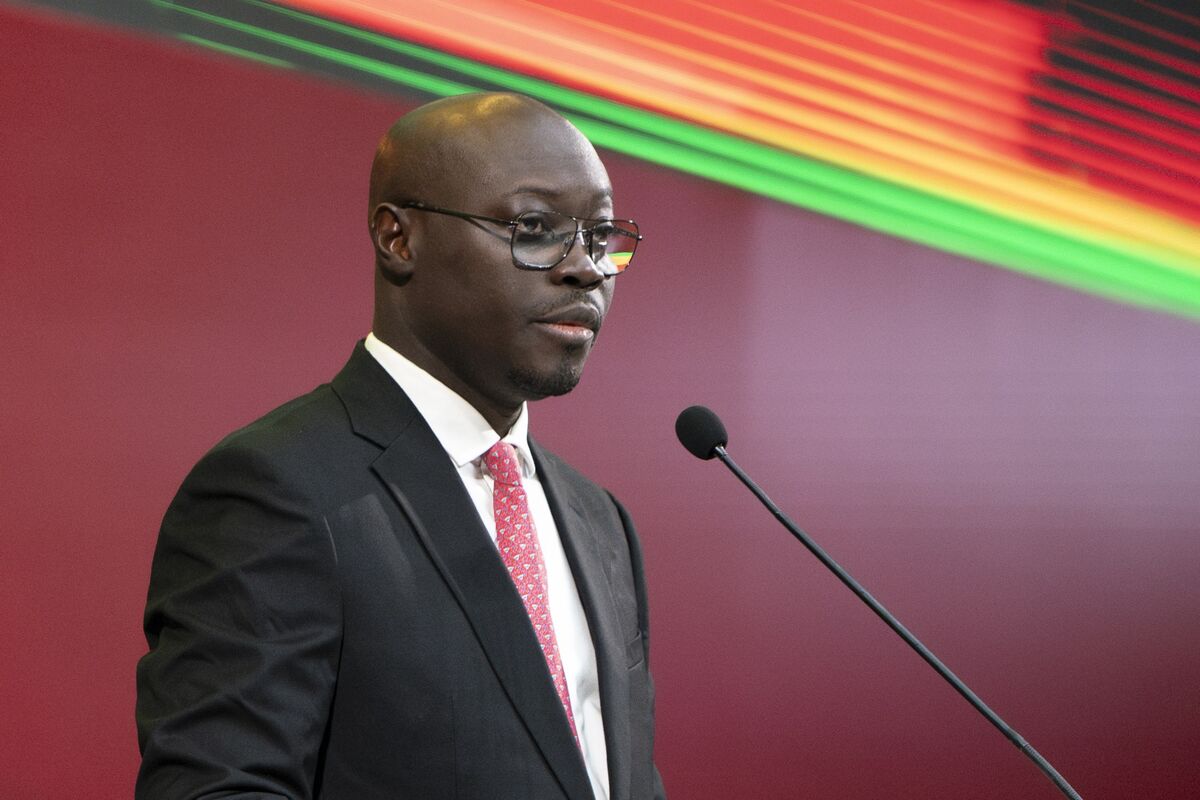
Bank of Ghana Governor Johnson Asiama Photographer: Kent Nishimura/Bloomberg
Ghana’s annual inflation rate edged higher a second straight month as the war in Iran fanned price pressures, increasing the likelihood that the central bank will keep interest rates on hold when it next meets.
Ghana’s economy is growing faster than expected as companies benefit from lower inflation and interest rates, with budget and foreign-exchange reforms helping offset the impact from the war in Iran, Finance Minister Cassiel Ato Forson said.
Ghana’s inflation rate increased for the first time in 16 months as the surge in global energy prices caused by the conflict in the Middle East drove up domestic fuel costs.
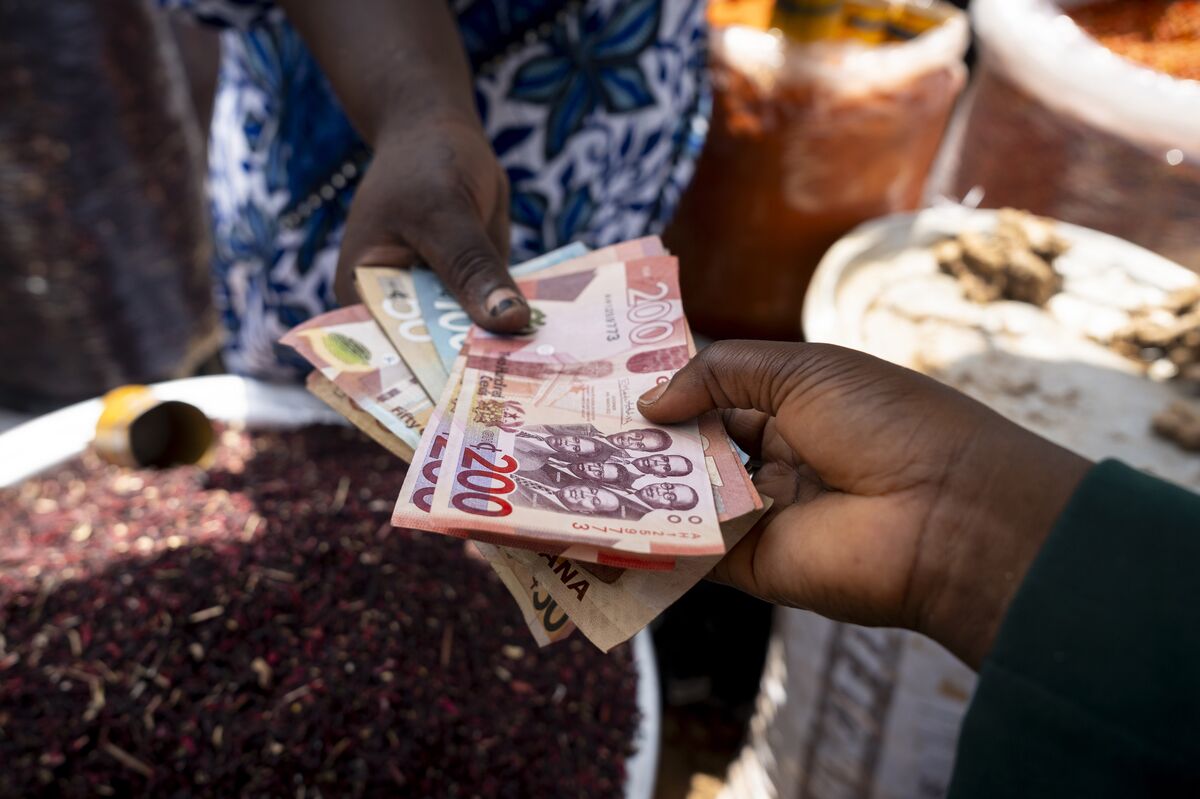
A vendor hands a Ghana cedi banknote to a customer at a market in Accra. Photographer: Ernest Ankomah/Bloomberg
Ghana’s central bank is urging the country’s lenders to tap into pension funds’ huge resources by offering shares and listing on the stock market.
Johnson Pandit Asiama, governor of the Bank of Ghana, during the International Monetary Fund (IMF) and World Bank Fall meetings at the IMF headquarters in Washington, DC, US, on Thursday, Oct. 16, 2025. The International Monetary Fund warned that the global economy is showing signs of strains from sweeping US tariffs and protectionism even though it so far has held up better than expected.
Ghana’s annual inflation rate fell to an almost three-decade low, giving the central bank another reason to consider a fifth consecutive cut in borrowing costs.
Africa’s top bullion producer has benefited from an improved fiscal outlook and record-high gold prices. Photographer: Ernest Ankomah/Bloomberg
The International Monetary Fund disbursed $385 million to Ghana under its three-year funding program as it praised the progress the authorities have made on economic reforms.
Ghanaian flags in Accra. Photographer: Ernest Ankomah/Bloomberg
Ghana’s inflation rate declined for the 11th straight month to the lowest level in almost seven years, boosting expectations the central bank will continue cutting interest rates in 2026.
People exchange Ghana cedi banknotes at a market in Accra, Ghana.
 Anmelden