Colombia is negotiating to borrow around $15 billion from the International Monetary Fund as the government seeks to stabilize its strained finances, according to people familiar with the matter.
Colombia’s new government is opening talks with the International Monetary Fund as it grapples with a fiscal crisis that officials have described as the worst in the nation’s history.
Colombia’s top economic officials told investors in New York they’re optimistic about President Abelardo de la Espriella’s austerity plan will be approved by Congress and suggested the country’s external borrowing for next year may be close to half the amount outlined in the budget.
Colombia’s new government plans to reinstate the fiscal rule, which limits borrowing, in a bid to restore investor confidence and rein in soaring debt costs.
Investors shouldn’t interpret the Colombian central bank’s decision to pause interest-rate hikes last month as a sign of dovishness, a top policymaker warned.
The Colombian peso is on track for its biggest drop in three months after the central bank unexpectedly paused rate hikes and announced a program to build up dollar reserves, signaling that the currency’s rally has gone too far.
Venezuela’s efforts to stabilize its currency have narrowed the differential between the official and black-market exchange rates, a key aim of a government strategy to curb inflation and bolster an economy now facing additional strains after two earthquakes.
A vendor counts dollar and bolivar banknotes at a market in Caracas, Venezuela, on Saturday, April 12, 2025. In April, President Nicolas Maduro approved the first economic emergency decree in four years, which gives him the power suspend taxes and exemptions and authorize more benefits to investors.
Venezuela’s devastating earthquakes this week affected nearly two million buildings, causing $6.7 billion in direct damage, according to estimates by a United Nations body.
A woman searches through the rubble of a collapsed building following an earthquake in Catia La Mar, La Guaira state, Venezuela on June 25, 2026.
Venezuela’s central bank said inflation is set for a slowdown after May data showed the rise in the consumer price index declined to 6.3%, the lowest since October 2024.
Venezuela’s government is stepping up dollar sales and allowing the bolivar to weaken, narrowing the gap with the parallel market and easing pressure on inflation.
The US government authorized Venezuela to hire advisers for potential debt talks, a key step in the long-awaited path to restructure the country’s $60-billion pile of defaulted bonds. The notes soared after the announcement.
Venezuela’s central bank on Friday released long-withheld inflation data showing prices soared in 2025, exposing just how sharply the economy deteriorated last year before easing in early 2026.
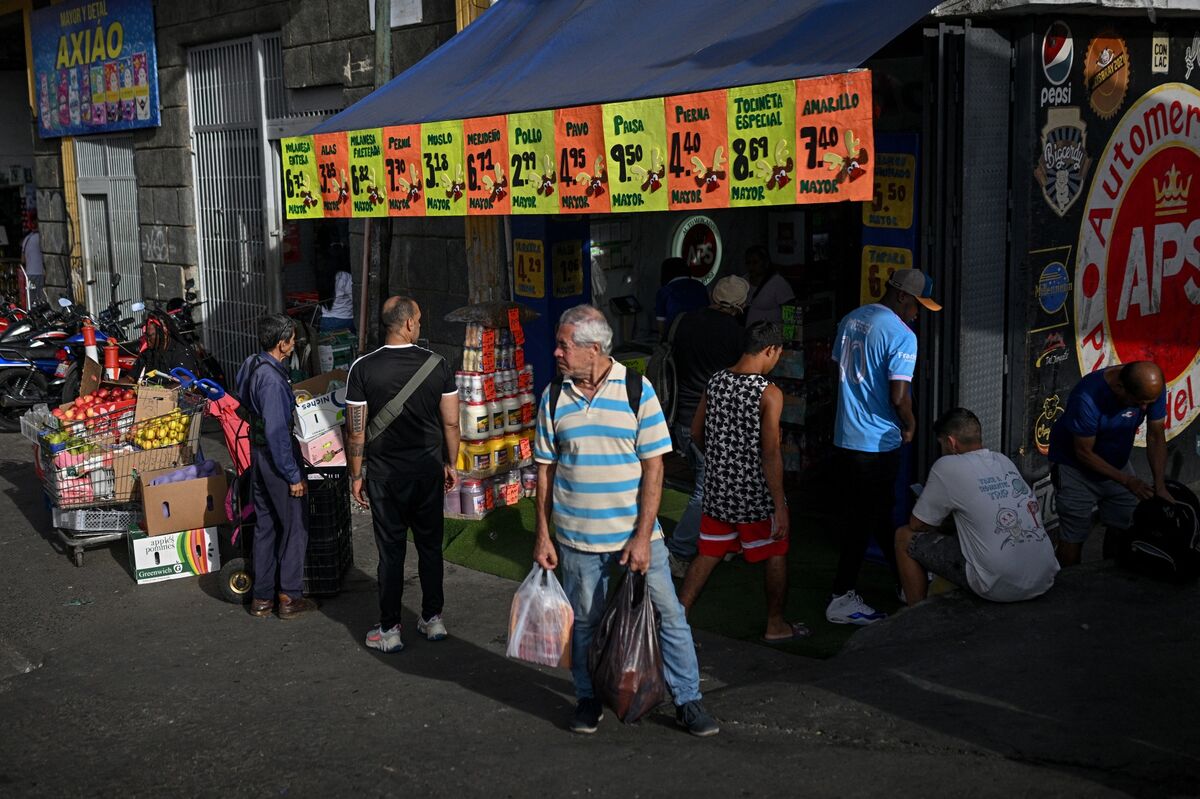
Pedestrian shop along Sabana Grande Boulevard in Caracas, Venezuela, on Thursday, Nov. 27, 2025. After enduring an economic depression, hyperinflation, population collapse, blackouts and US sanctions, Venezuelans aren’t all that impressed by the warships bobbing offshore. Bloomberg
Venezuela’s central bank sold nearly six tons of gold in the second half of last year as the country faced crippling dollars shortages due to US restrictions on oil exports.
Venezuela's central bank in Caracas on Oct. 2, 2021.
Emerging-market currencies and stocks clocked in a fifth session of gains after the Federal Reserve fulfilled market expectations by keeping interest rates steady on Wednesday.
Trump’s relaxed tone about the dollar selloff is fueling speculation the US currency.
Colombian swap rates soared Tuesday after President Gustavo Petro announced a 23% increase in the minimum wage, stoking bets that the central bank will have to hike interest rates to combat the policy’s impact on prices.
Venezuela faces a fresh financial shock after the US seized a sanctioned oil tanker off its coast, a move that could choke off one of the few remaining revenue streams for a nation again on the brink of hyperinflation.
Shoppers at a municipal market in Caracas. While the economy is widely dollarized, Venezuelans still rely on bolivars for daily purchases.
Argentine officials are starting to prepare the country’s return to international bond markets. Their hope is that markets keep moving in their favor so they can sell the bonds by the start of next year, according to people familiar with the matter who asked not to be identified because the discussions are private.
 Anmelden