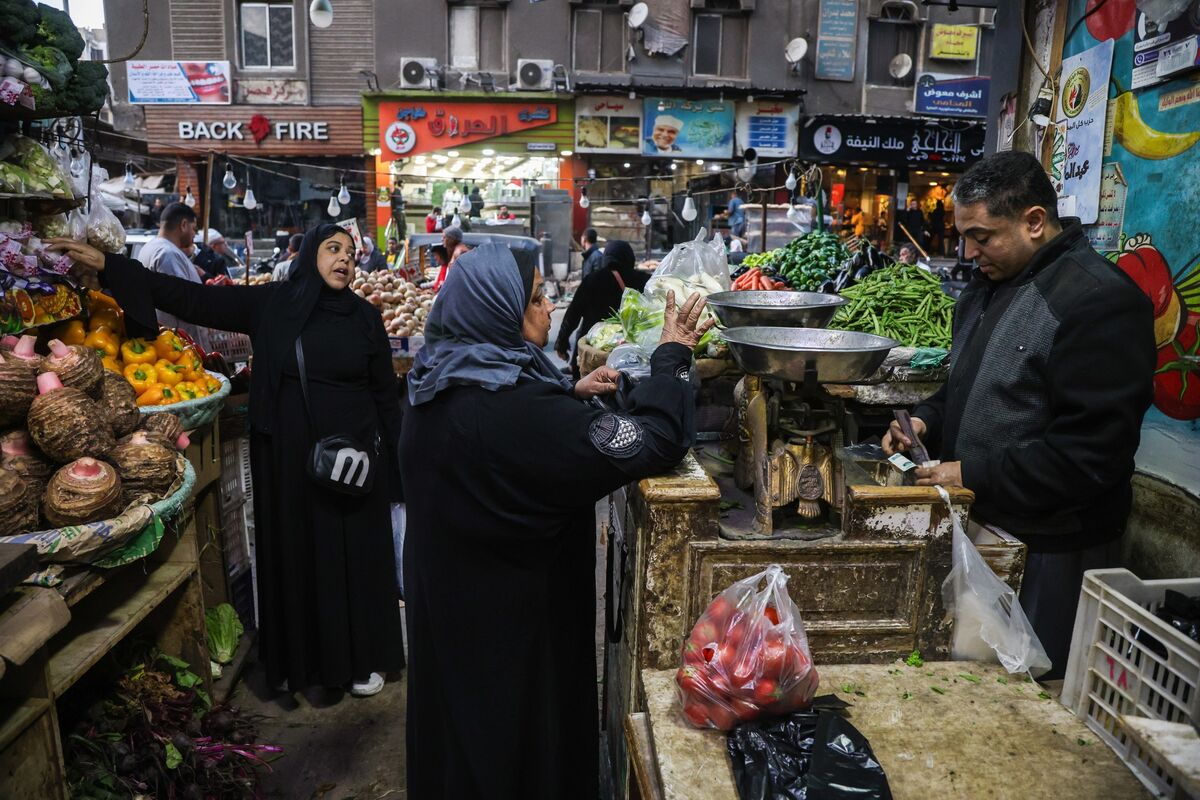
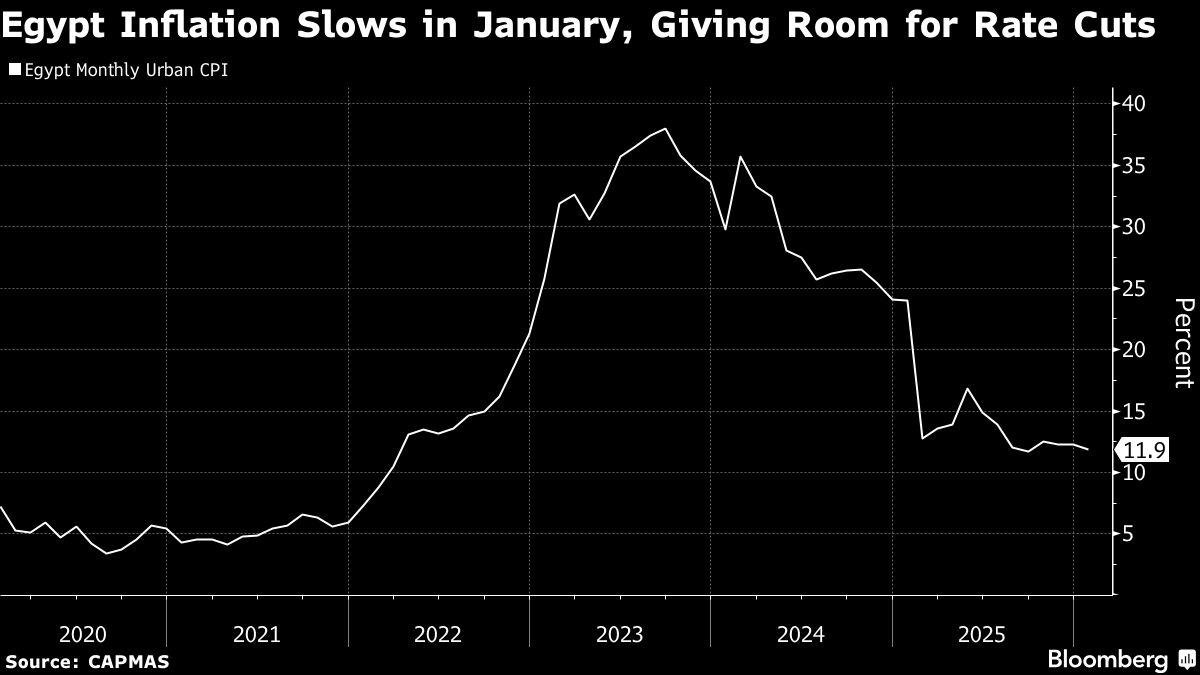
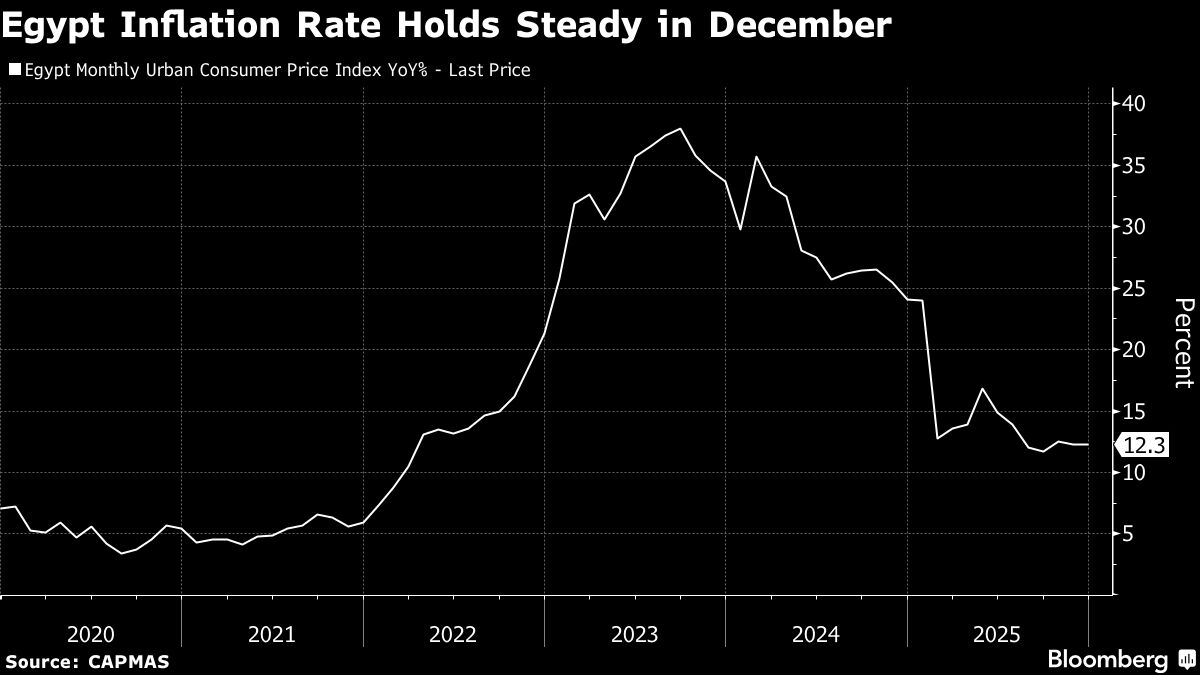
Egyptian inflation slowed for a second straight month to its lowest level since February, riding out renewed price pressures amid an escalation in the Iran war.
Egyptian inflation slowed in August after quickening the month before, an unexpected easing that came despite price pressures stemming from the Iran war.
Egypt’s inflation rate rose to the highest level since last May, after the Iran war caused a surge in global energy prices and a weakening of the local currency.
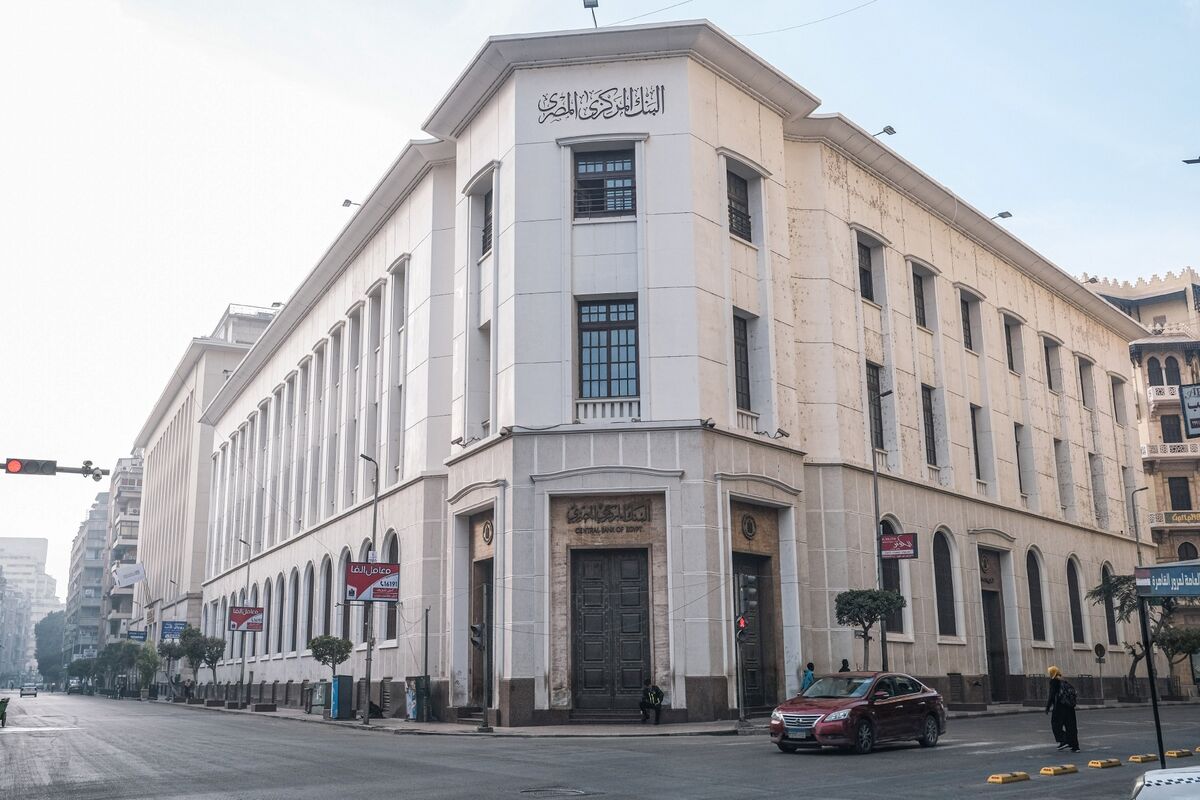
Egypt kept interest rates unchanged, seeking to tame the impact of the US-Israel war on Iran that’s sent energy prices soaring and the pound to a record low.
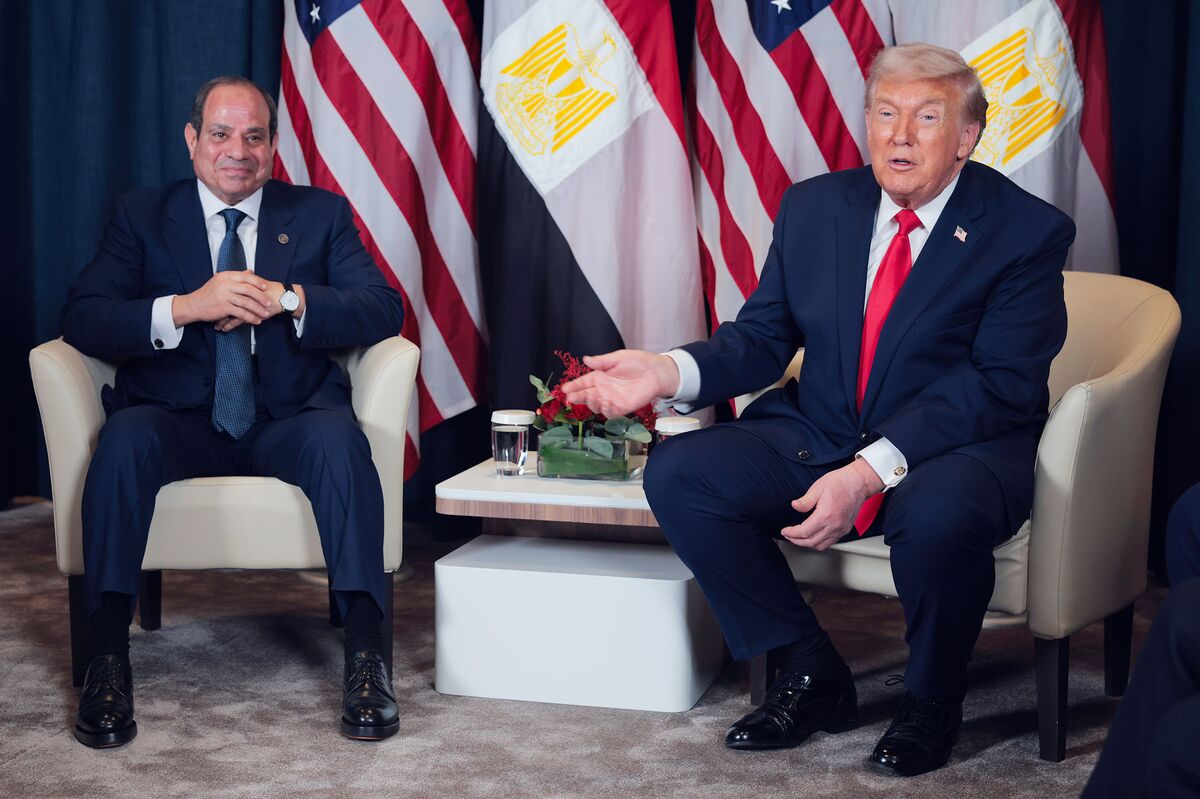
Egyptian President Abdel-Fattah El-Sisi appealed to his US counterpart Donald Trump to find a way to end an Iran war that’s sent global energy prices soaring and threatens developing nations’ economies.
US President Donald Trump, right, and Abdel-Fattah El-Sisi in January.
Egypt moved to ease concerns over the Iran war’s impact on the economy, while warning “extraordinary” measures may be needed to tackle commodity prices if the conflict drags on.
Egypt cut interest rates to their lowest since mid-2023 and trimmed the reserve ratio for banks, stepping up efforts to spur business borrowing and speed an economic revival.
Shares of premium grocer Gourmet Egypt SAE rose as much as 38% in their Egyptian stock exchange debut, in the country’s first initial public offering of the year.
Egypt’s central bank made its fifth interest-rate cut of the year, after a surprise slowdown in inflation gave authorities scope to resume an easing cycle.
Residential buildings in Cairo. Photographer: Islam Safwat/Bloomberg
 Anmelden