Ukraine is becoming increasingly dependent on foreign aid as Russian air attacks further devastate its economy, according to a Bloomberg Economics report.
The Ukrainian economy will contract this year for the first time since the start of the full-scale invasion, the central bank said, as Russia escalates airstrikes against civilians and businesses.
Ukraine is in talks with Turkey, Egypt and India on the possibility of opening up Black Sea civil navigation, particularly for agriculture exports, Ukraine’s President Volodymyr Zelenskyy said.
Ukraine’s central bank unexpectedly raised interest rates for the first time since March last year, with officials saying they are prepared to tighten policy further to tame underlying price pressures.
The International Monetary Fund agreed to release its next tranche of a loan to Ukraine, despite Kyiv’s failure to meet a key condition as the war-weary nation faces a growing backlash against the requirements.
The European Union will tie some payouts from the €90 billion ($105 billion) aid package for Ukraine to an unpopular tax change already demanded by the International Monetary Fund, people familiar with the matter said.
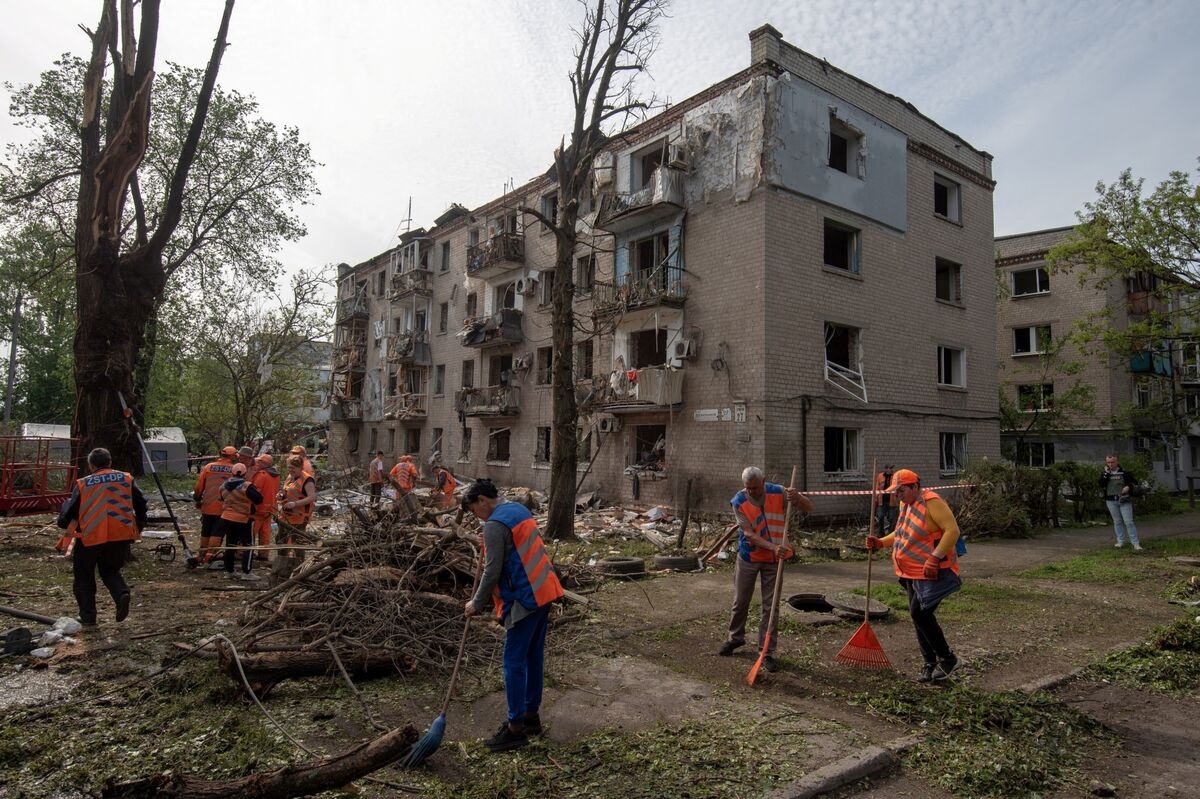
Municipal workers clean debris in the courtyard of a damaged residential building following an air attack in Dnipro on May 18, 2026, amid the Russian invasion of Ukraine. Russia launched hundreds of drone and nearly two dozen missiles at Ukraine overnight wounding more than 30 people, as Kyiv and Moscow step up deadly long-range attacks, Ukrainian officials announced. (Photo by Mykola SYNELNYKOV / AFP via Getty Images)
Ukraine’s central bank chief signaled that interest rates will likely remain on hold into next year after maintaining the benchmark for a second meeting.
The European Union is considering imposing stricter conditions on its €90 billion ($105 billion) loan to Ukraine, making some of the payouts dependent on the introduction of an unpopular tax change for businesses, according to people familiar with the matter.
A partially disassembled ferris wheel on Kontraktova Square in Kyiv on April 7. Photographer: GENYA SAVILOV/AFP
Ukraine’s central bank left interest rates unchanged after the first cut in more than a year and a half as the Middle East conflict and uncertainty over foreign funding weigh on the war-stricken economy.
The site of a recent Russian air attack in Zaporizhzhia, on March 18.
Ukraine’s central bank chief said the US-led campaign against Iran risks piling additional pressure on the country’s war-devastated economy while handing a boost to Russian President Vladimir Putin in the fifth year of his invasion.
Andriy Pyshnyi, governor of Ukraine's central bank, speaks at the 8th NBU-NBP Annual Research Conference in Kyiv, Ukraine, on Friday, June 21, 2024. Ukraine said Russia targeted energy facilities overnight as President Vladimir Putin’s forces continue attacks to disrupt the country’s power system.
Ukraine’s central bank cut its benchmark interest rate, ending almost a year of steady borrowing costs after an infusion of foreign aid and easing inflation shored up the country’s war-battered economy.
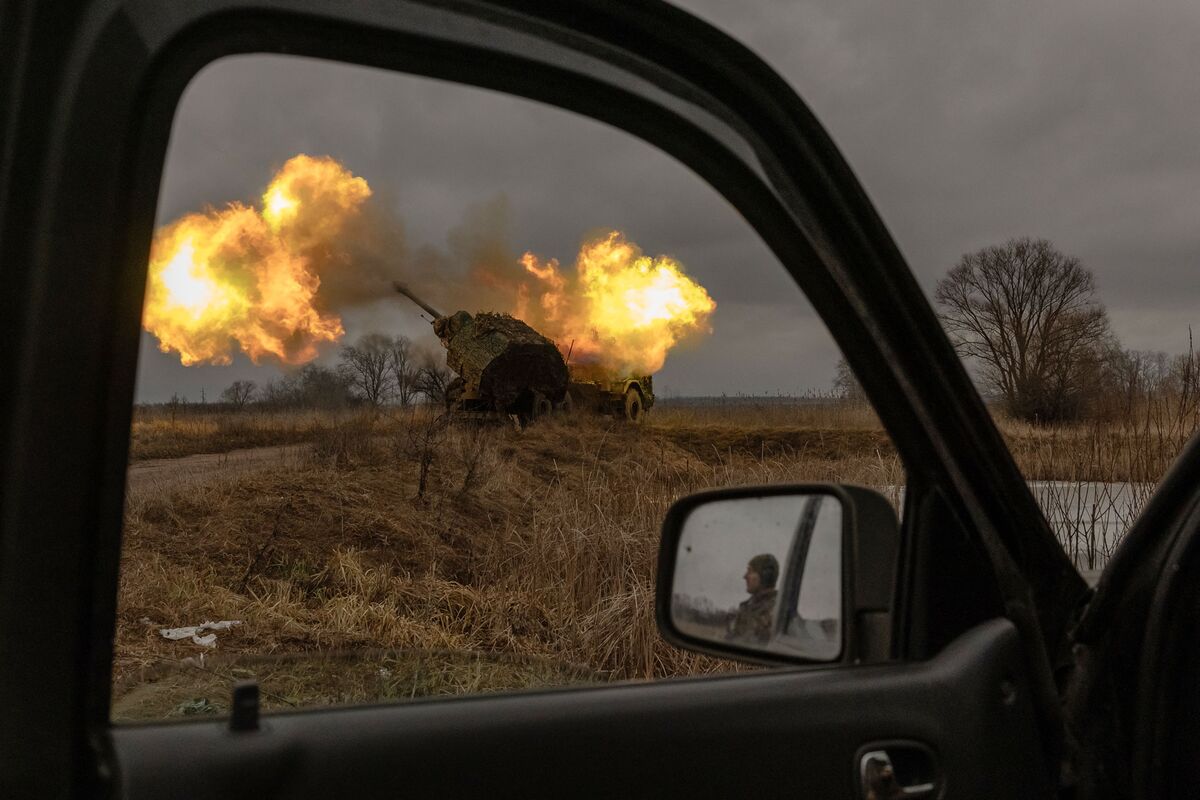
Ukrainian soldiers at a front line position in Donetsk region.
Ukraine started a process to exchange securities linked to economic growth into bonds as it seeks to restructure the terms of $3.2 billion in debt after another round of talks with a group of private creditors.
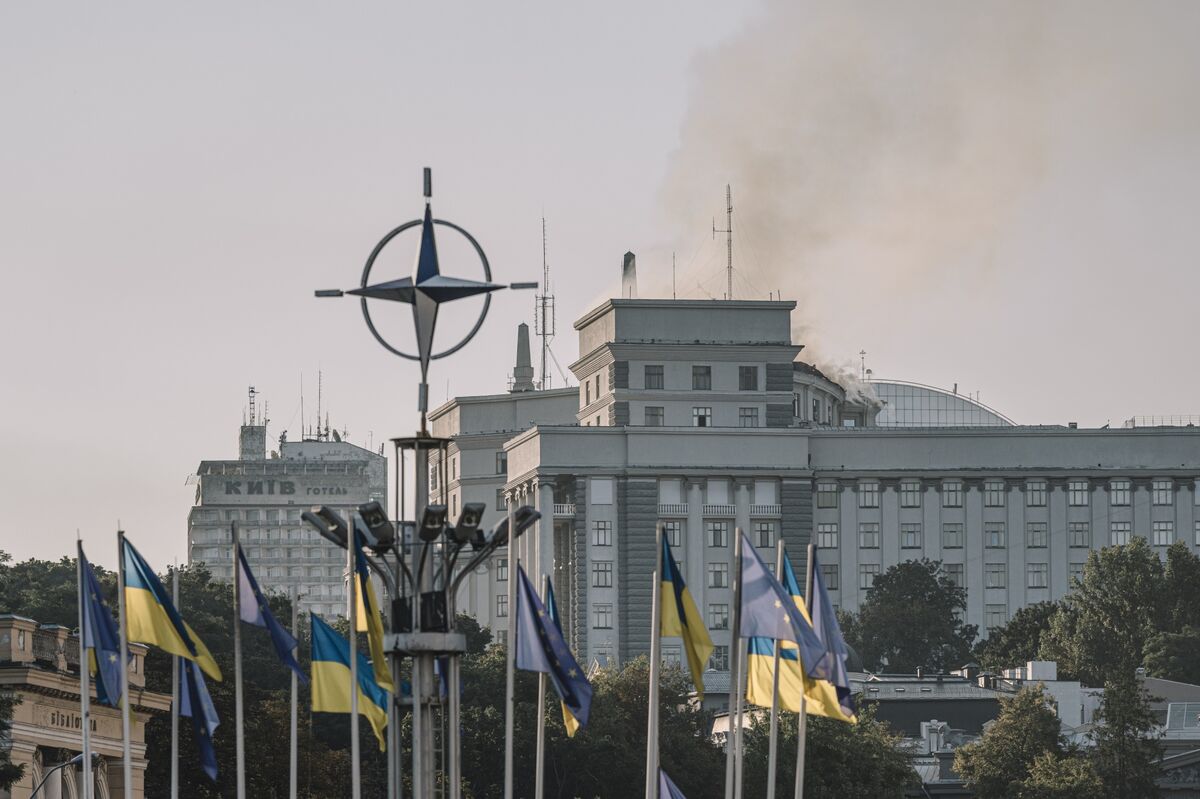
The NATO sign, EU flags and Ukrainian flags as smoke rises from a fire at the Cabinet of Ministers building after a Russian air strike in Kyiv, Ukraine, on Sunday, Sept. 7, 2025. Russian forces struck Ukraine’s main government complex in Kyiv for the first time early Sunday in what Ukraine’s foreign minister called a “serious escalation” of the conflict.
 Anmelden