China’s central bank announced a slew of measures aimed at enhancing Hong Kong’s role in promoting overseas use of the yuan as well as boosting the city’s financial connectivity with the mainland.
The Exchange Square Complex in Hong Kong. Photographer: Lam Yik/Bloomberg
China’s central bank trimmed its government bond purchases to the smallest in nine months in June, suggesting policymakers are turning cautious about potential further yield declines or excessive liquidity.
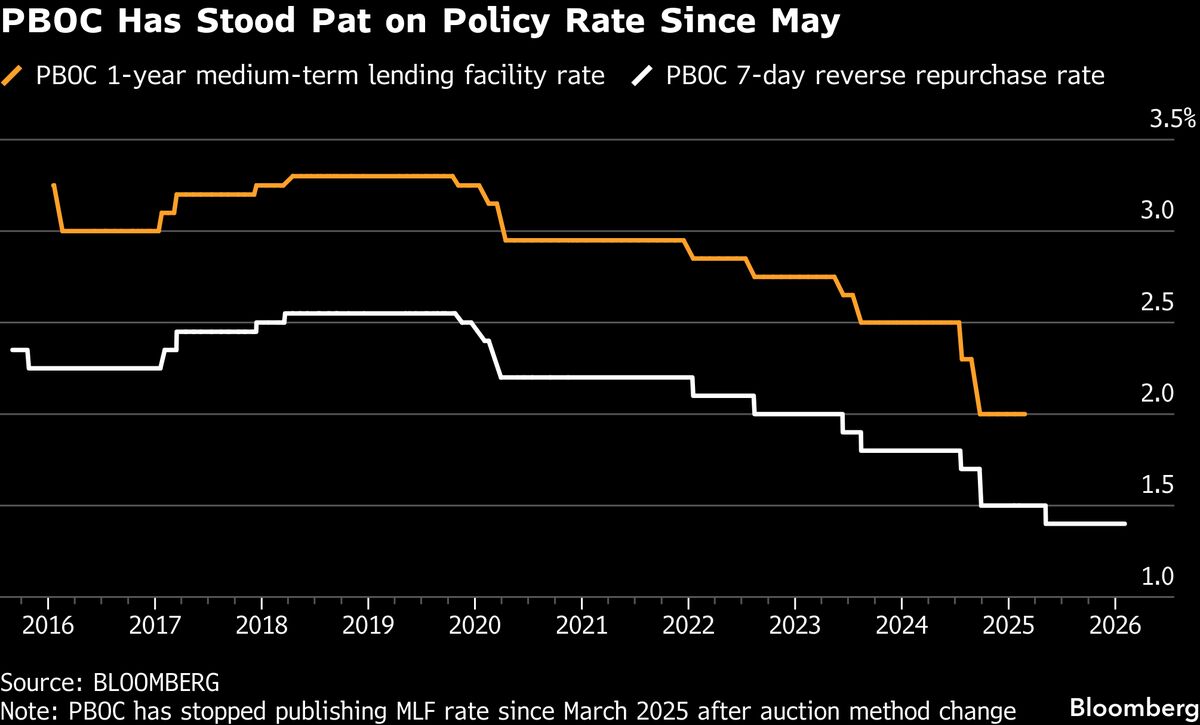
China’s central bank is expected to price its inaugural overnight reverse repo operation slightly below the seven-day rate when it debuts the tool on Monday, a Bloomberg survey shows.
The People's Bank of China (PBOC) headquarters in Beijing, China, on Wednesday, June 18, 2025. PBOC Governor Pan Gongsheng laid out in the clearest terms yet his vision for the future of a new global currency order after decades of dollar dominance, predicting a more competitive system will take root in the years to come.
The People’s Bank of China’s latest refinement of its monetary policy toolkit is expected to damp money-market volatility and support bonds, according to analysts.
China’s Vice Premier He Lifeng said Beijing will embed anti-sanctions provisions into its financial laws, vowing to counter what he called unreasonable foreign suppression.
Pan Gongsheng Photographer: Maxim Shemetov/Pool/AFP/Getty Images
China’s central bank is taking a further step to rein in a liquidity glut in its financial system by reducing the amount of medium-term funds it lends out to banks.
China’s central bank has injected more cash into the banking system, signaling unusual tolerance for abundant liquidity and boosting confidence that the bond rally may have further to run.
China’s super-long government bonds pushed higher on Monday after traders bet Beijing may scale back the maturity on its special-debt issuance to ease supply pressure.
China’s interest rate markets are indicating reduced expectations for further easing of funding conditions and monetary policy, reflecting renewed economic optimism and lingering concerns about elevated oil prices.
China’s central bank is signaling an increased tolerance for yuan flexibility, a sign of confidence it can insulate the currency from market turmoil triggered by the Iran war.
With ample cash but fewer investment options, Chinese speculators have fanned a rally in global metals prices, underscoring just how difficult it is for authorities to channel capital into the real economy.
China has let the interest rate on a one-year policy loan to banks drop to a record low, according to people familiar with the situation, lowering funding costs so as to revive economic growth.
Chinese banks helped clients sell a record amount of foreign currencies back into the yuan in December, supercharged by expectations of appreciation and increased seasonal demand.
China should increase imports and settle them in the yuan to balance its foreign trade, a move a former central bank adviser says will boost the Chinese currency’s usage globally.
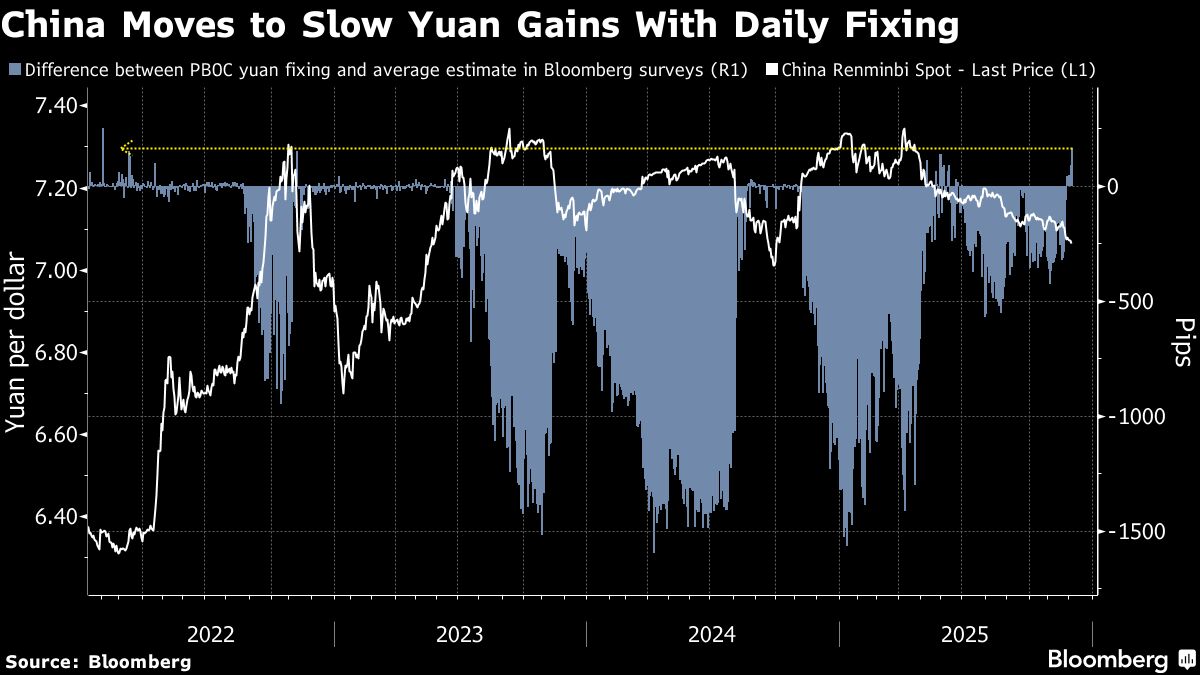
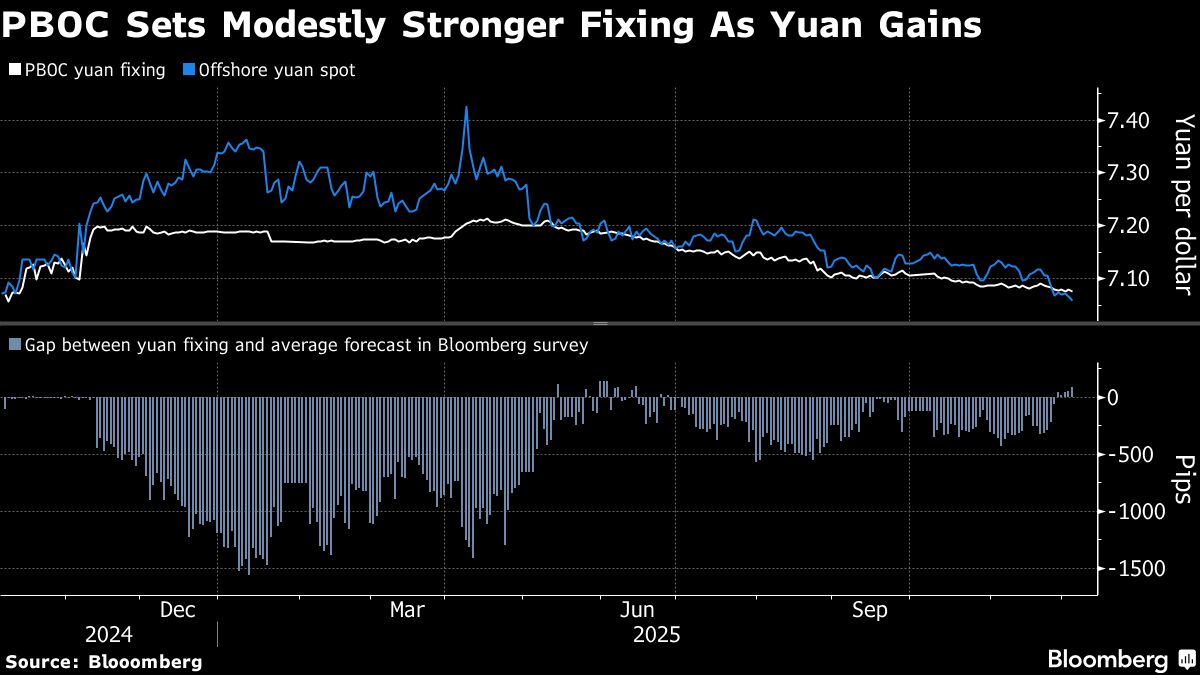
China set its daily reference rate for the yuan at a level that was significantly weaker than estimated by traders and analysts, suggesting the central bank is aiming to cool gains in the managed currency.
The yuan is inching close to a key psychological level of 7 per dollar, reflecting optimism over improved US-China relations but the gradual appreciation shows Beijing is tightly managing its gains.

 Anmelden