Ecuador, long seen as one of Latin America’s serial defaulters, sold $1 billion more of the dollar bonds it first issued in January, taking advantage of higher oil prices and sustained investor appetite for emerging-market debt.
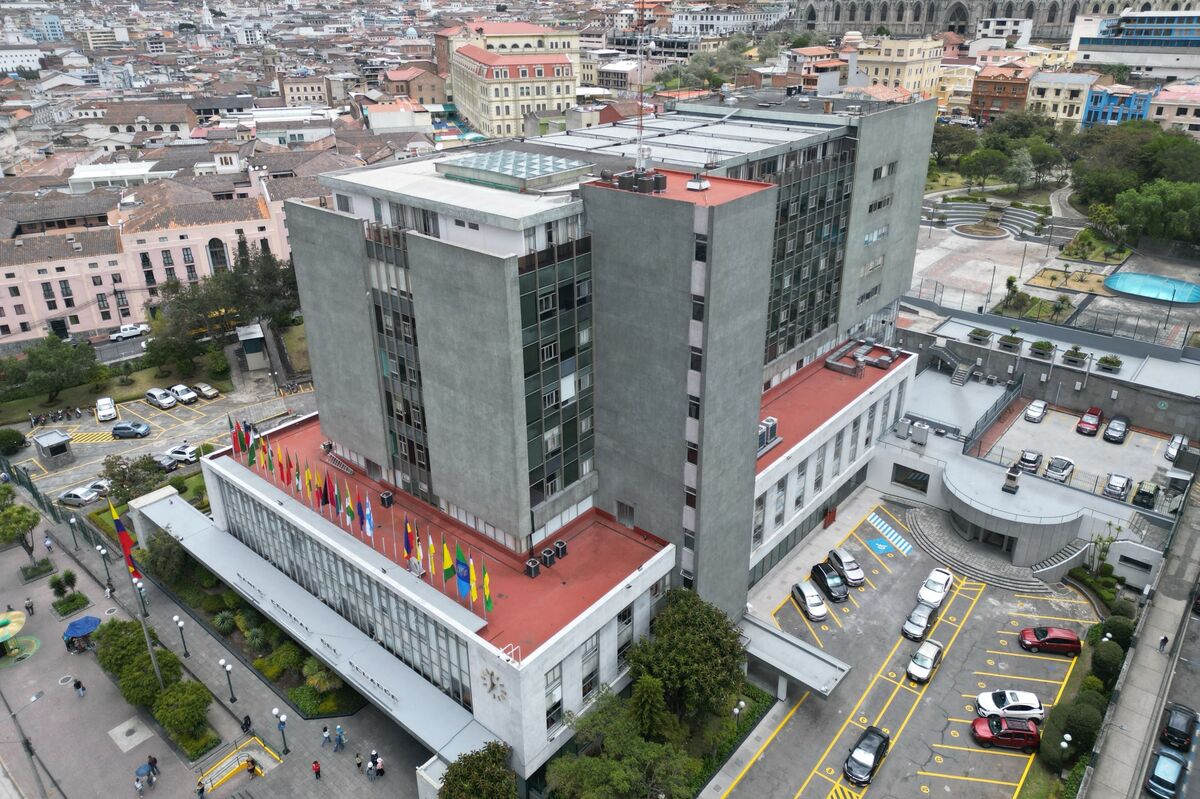
Ecuador's central Bank building in downtown Quito. Photographer: RODRIGO BUENDIA/AFP
Argentina’s credit score was upgraded by Fitch Ratings, signaling growing confidence in President Javier Milei’s push to overhaul the economy and secure financing to cover the country’s upcoming debt obligations.
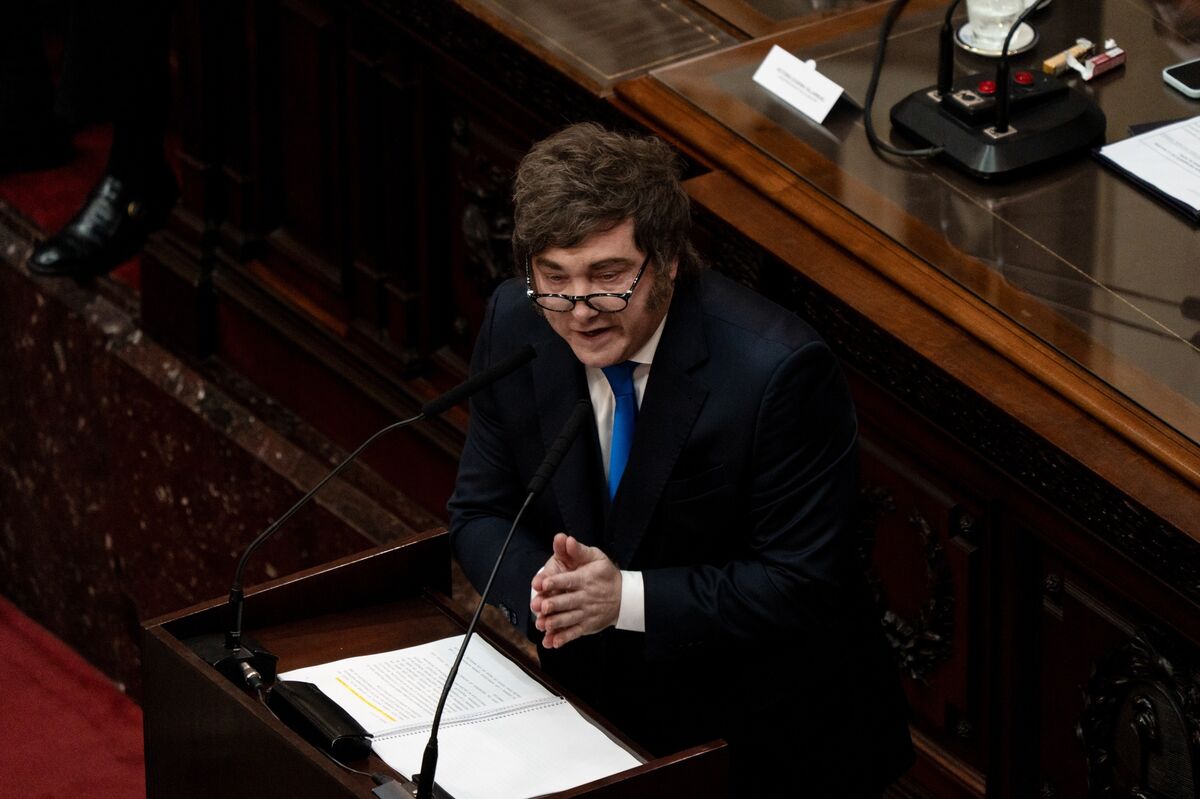
Javier Milei, Argentina's president, speaks during an opening session at the National Congress in Buenos Aires, Argentina, on Sunday, March 1, 2026. Emboldened by a string of legislative victories, Milei dedicated Argentina's annual state of the nation address to hurling insults at his opponents in a return to his boisterous persona on the campaign trail.
Global debt ballooned to a record $348 trillion last year, marking the fastest annual increase since the pandemic as governments ramped up borrowing across advanced and developing economies.
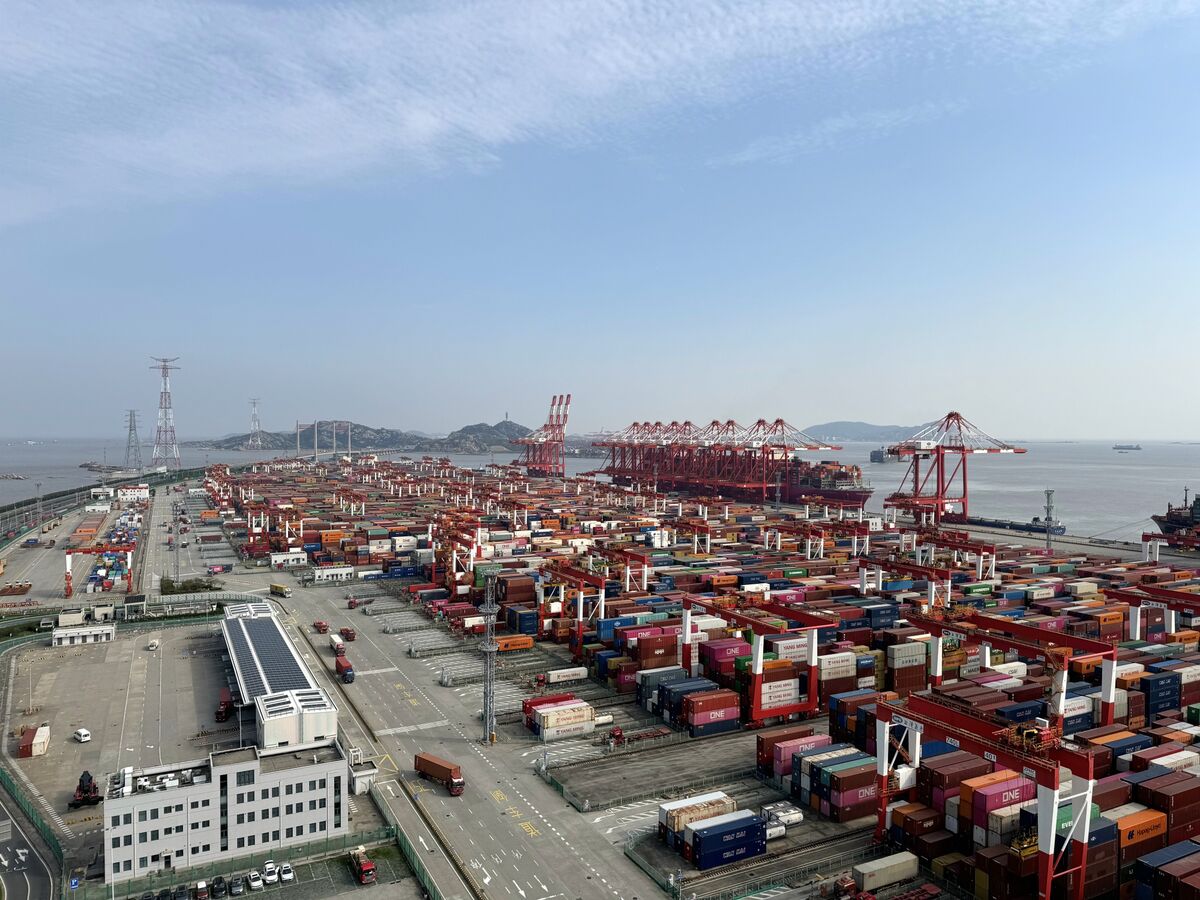
Gantry cranes and shipping containers at the Yangshan Deepwater Port in Shanghai, China, on Thursday, Oct. 10, 2024. Investors and analysts are expecting China to deploy as much as 2 trillion yuan ($283 billion) in fresh fiscal stimulus as Beijing seeks to shore up the world’s No. 2 economy and boost confidence.
Bitcoin’s crash has hit few places as hard as El Salvador, exposing the risks of President Nayib Bukele’s high-stakes embrace of crypto and whipsawing the country’s debt markets.
US President Donald Trump and Nayib Bukele, El Salvador’s president.

 Anmelden