Japan is set to spend roughly ¥252.5 billion ($1.6 billion) in an extra budget to further support developments of artificial intelligence and semiconductors.
Tokyo’s inflation held steady and industrial output unexpectedly rose, keeping the Bank of Japan on track to consider an interest rate hike in December or January.
Food items for sale at a store in Tokyo. Photographer: Kiyoshi Ota/Bloomberg
The Japanese government denied a report that US President Donald Trump advised Prime Minister Sanae Takaichi to avoid provoking China over Taiwan.
TOPSHOT - US President Donald Trump (L) and Japan's Prime Minister Sanae Takaichi arrive on board the US Navy's USS George Washington aircraft carrier at the US naval base in Yokosuka on October 28, 2025. (Photo by ANDREW CABALLERO-REYNOLDS / AFP) (Photo by ANDREW CABALLERO-REYNOLDS/AFP via Getty Images)
Japan will likely lean more heavily on the US and its allies if China escalates economic pressure, as Tokyo seeks to navigate the fallout from Prime Minister Sanae Takaichi’s remarks linking Taiwan’s security to its own.
US President Donald Trump and Sanae Takaichi in Tokyo, on Oct. 28.
Japan should leverage its alliance with the US to counter China’s threats rather than seeking quick compromises alone that will lead to long-term losses, according to an outspoken Japanese lawmaker whose entry into China has been banned.
Japan’s inflation ticked higher and exports rose, keeping the Bank of Japan on track for an interest rate hike in coming months as Prime Minister Sanae Takaichi prepares an economic package aiming to soothe public discontent over rising living costs.
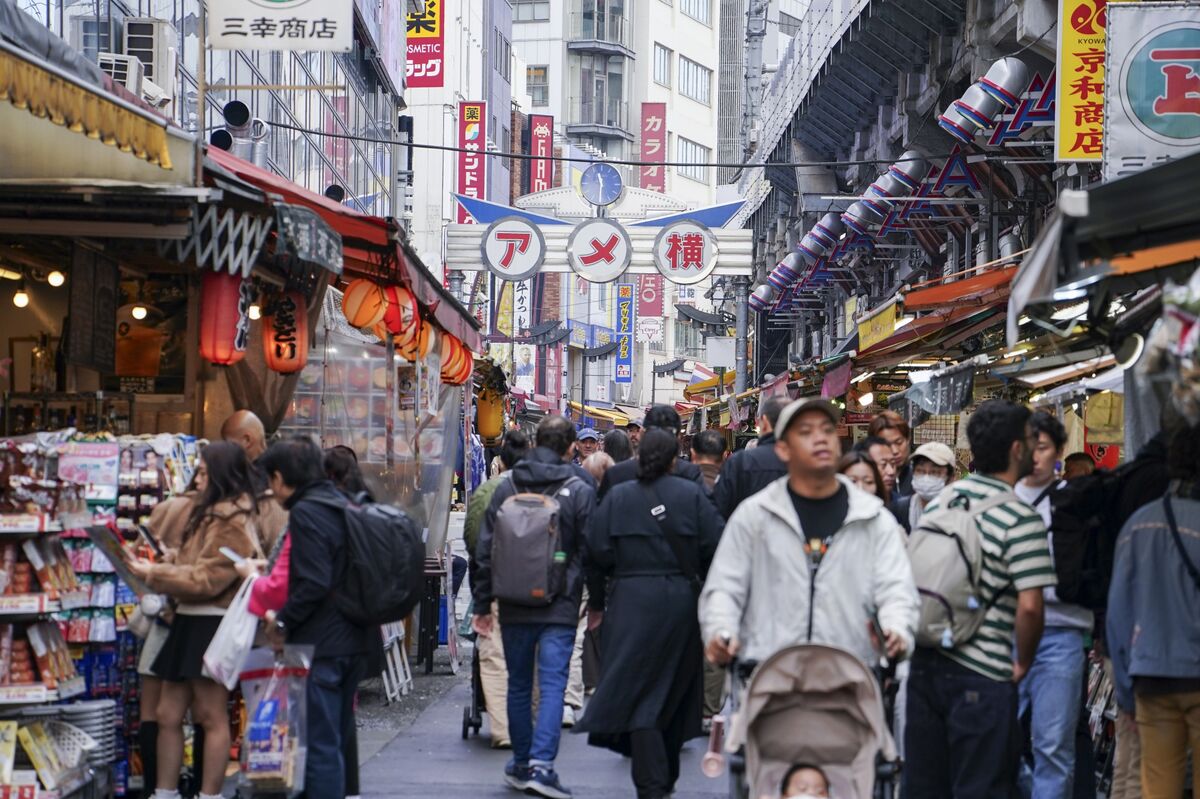
The Ameya-yokocho market in the Ueno area in Tokyo, Japan.
 Anmelden