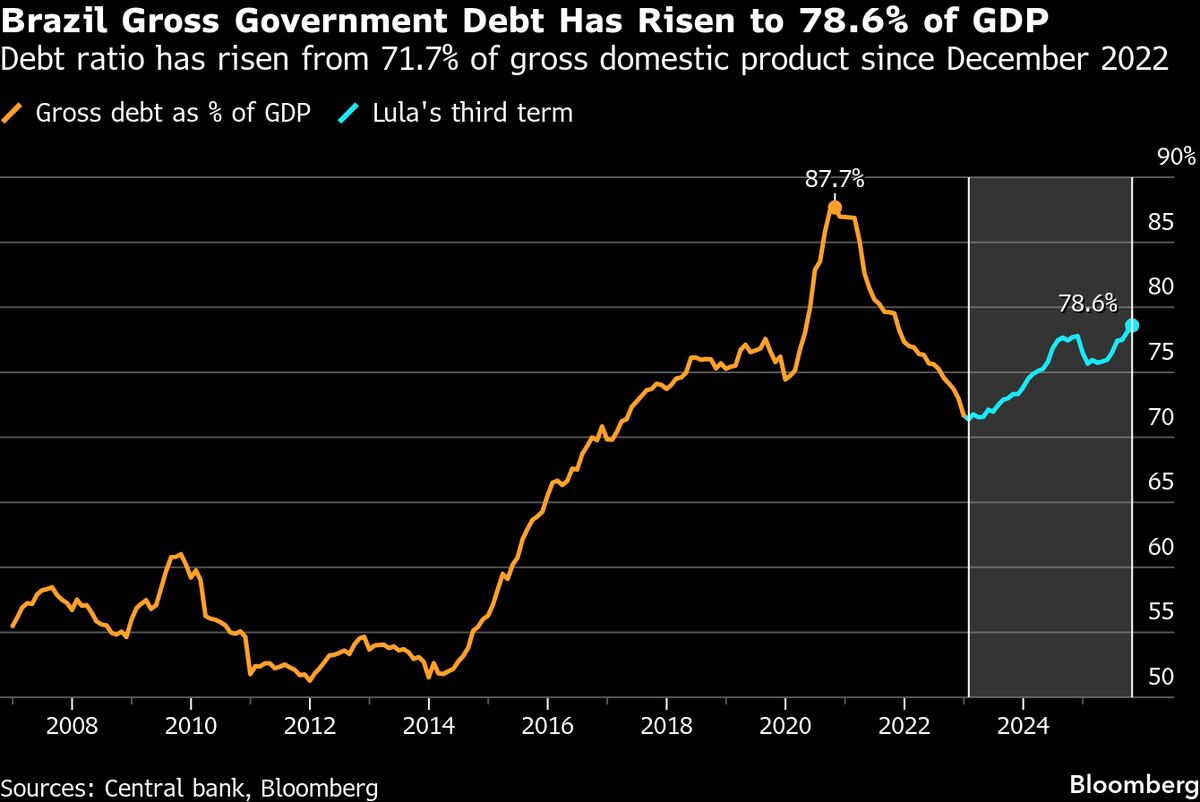
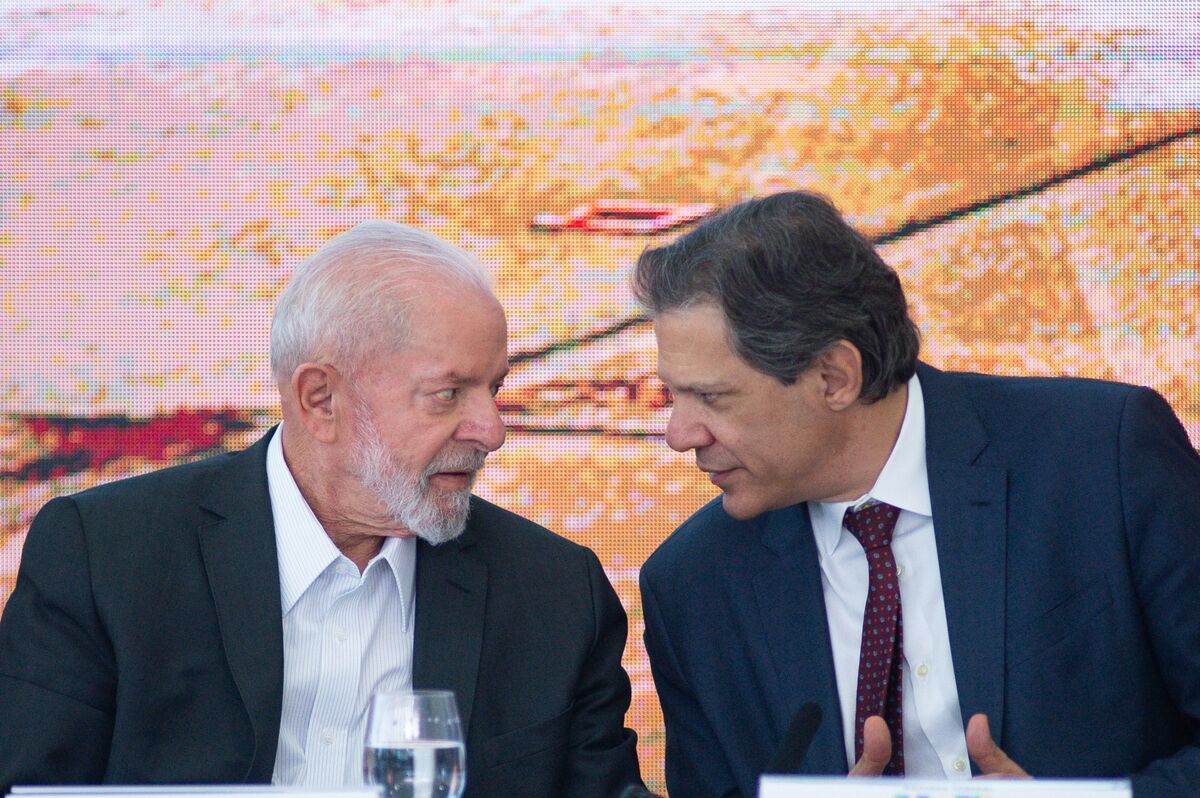
Brazilian lawmakers approved the final budget of President Luiz Inacio Lula da Silva’s term, backing a plan that will ultimately demonstrate just how hard it is for the government to comply with fiscal rules it created three years ago.
Brazil’s central bank chose to keep a degree of freedom about when it will start easing monetary policy as inflation expectations remain above target through 2028 despite weaker economic activity.
Gabriel Galipolo Photographer: Ton Molina/Bloomberg
Brazil’s central bank held its key interest rate steady at a nearly two-decade high and refrained from indicating the start of easing is near as inflation forecasts run above target despite a softer economy.
The Central Bank of Brazil headquarters in Brasilia, Brazil, on Monday, Aug. 4, 2025. Brazil's central bank board voted unanimously to keep rates at 15% on July 30, leaving policy exceptionally tight despite looming growth risks from US tariffs.
Brazil’s central bank will likely hold its interest rate at a nearly two-decade high on Wednesday as above-target inflation expectations cut short debate on the start of easing even as the economy weakens.
Gabriel Galipolo, governor of the Central Bank of Brazil
Brazil’s economic team will be able to exclude 10 billion reais ($1.8 billion) from next year’s fiscal target as part of a plan to help the country’s postal service that’s facing a serious financial crisis.

 Anmelden