Treasury Secretary Scott Bessent backed the idea of reconsidering the Federal Reserve’s 2% inflation target once the US has sustainably brought price increases back down to that pace.
US Secretary of the Treasury Scott Bessent speaks in the Oval Office of the White House on Dec. 11 in Washington.
Goldman Sachs sees “especially strong” start to 2026 while Citigroup says “we are skeptical”
A job seeker holds a flier during the SacJobs Career job fair in Sacramento, California, US, on Thursday, Nov. 13, 2025. The October jobs report will be released without a reading of the unemployment rate, President Donald Trump's top economic adviser said Thursday. Photographer: David Paul Morris/Bloomberg
South American governments are shifting right, stoking optimism on growth. But challenges are deep.
The Colorados de Bolivia's Honor Guard perform the changing of the guard ceremony outside the Presidential Palace at the Plaza Murillo in La Paz, Bolivia, on Wednesday, Nov. 12, 2025. The promise of change is spurring cautious optimism among Bolivians who voted for the pro-business Paz in this year’s elections, rejecting the Movement Toward Socialism (MAS) party that has dominated politics since former President Evo Morales took office in 2006 promising to lift up the poor. Photographer: Marcelo Perez Del Carpio/Bloomberg
After decades of letting Chinese firms buy up companies, the US and Europe ready for a fight over the “means of production.”
The 52Nijmegen high-rise building which houses the Nexperia Holding BV headquarters on the Noviotech Campus in Nijmegen, Netherlands, on Friday, Oct. 24, 2025. Nexperia notified its Japanese automotive customers that it may no longer be able to guarantee supply, triggering renewed concern about upheaval at the Dutch chipmaker snarling global supply chains. Photographer: Lina Selg/Bloomberg
Central bank decisions in Europe and beyond highlight a waning impulse for monetary policy action.
Christine Lagarde, president of the European Central Bank (ECB), at a rates decision news conference in Frankfurt, Hesse, Germany, on Thursday, Dec. 18, 2025. The European Central Bank left interest rates unchanged for a fourth straight meeting as inflation hovers around target and the euro zone weathers global shocks. Photographer: Alex Kraus/Bloomberg
Artificial intelligence is now absorbing a bigger share of the financing for capital spending.
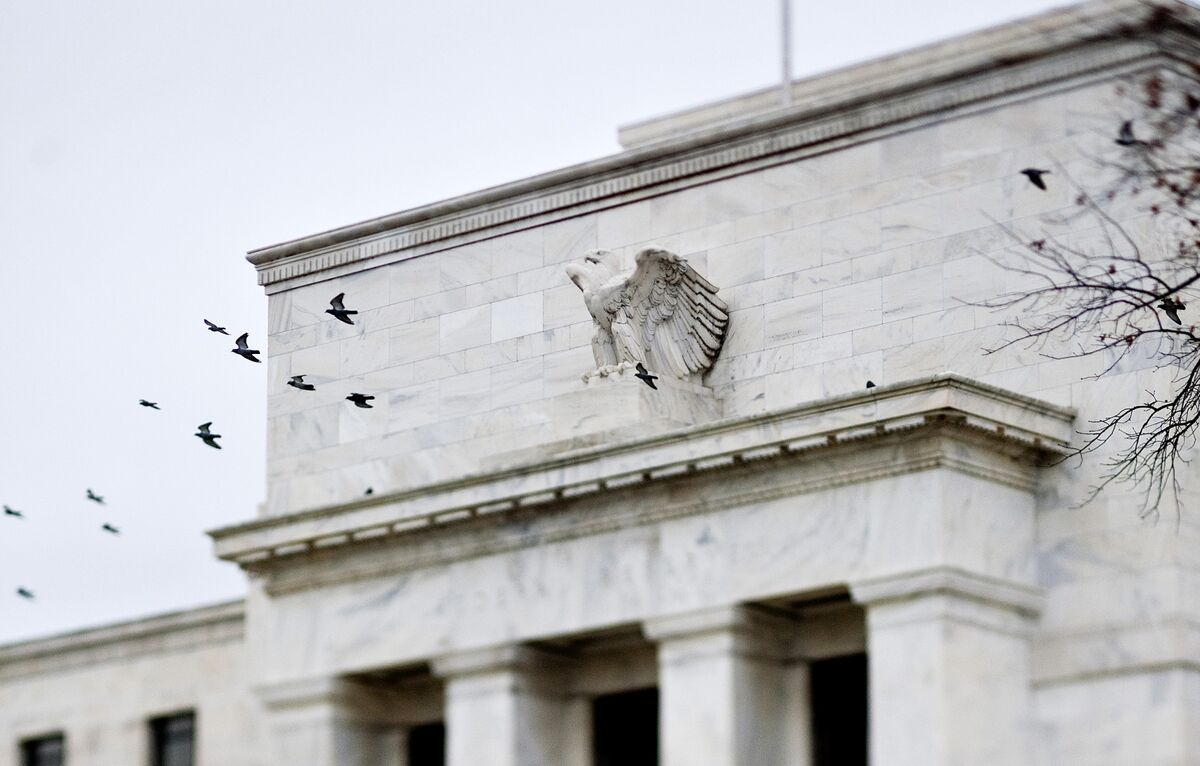
Birds fly past the Marriner S. Eccles Federal Reserve Board building in Washington, D.C., U.S., on Tuesday, Nov. 30, 2010. The Federal Reserve, under orders from Congress, plans today to identify recipients of $3.3 trillion in emergency aid the central bank provided as it fought the worst financial crisis since the Great Depression. Photographer: Joshua Roberts/Bloomberg
US central bankers signaled little appetite for further rate cuts.
Birds fly past the Marriner S. Eccles Federal Reserve Board building in Washington, D.C., U.S., on Tuesday, Nov. 30, 2010. The Federal Reserve, under orders from Congress, plans today to identify recipients of $3.3 trillion in emergency aid the central bank provided as it fought the worst financial crisis since the Great Depression. Photographer: Joshua Roberts/Bloomberg
Policymaking panel is seen having divided vote on Wednesday.
Jerome Powell, chairman of the US Federal Reserve, during the Hoover Institution's George P. Shultz Memorial Lecture Series in Stanford, California, US, on Monday, Dec. 1, 2025. The Federal Reserve said it was monitoring community and regional banks' commercial real estate loan portfolios amid concerns over "elevated interest rates, tighter underwriting standards, and lower commercial property values." Photographer: Jason Henry/Bloomberg
Fed meetings in 2026 will come under the shadow of a new incoming chair
Jerome Powell, chairman of the US Federal Reserve, during the Hoover Institution's George P. Shultz Memorial Lecture Series in Stanford, California, US, on Monday, Dec. 1, 2025. The Federal Reserve said it was monitoring community and regional banks' commercial real estate loan portfolios amid concerns over "elevated interest rates, tighter underwriting standards, and lower commercial property values." Photographer: Jason Henry/Bloomberg
How the Fed’s Easing Cycle Bears a Wary Resemblance to 1960s
Jerome Powell, chairman of the US Federal Reserve, during a news conference following a Federal Open Market Committee (FOMC) meeting in Washington, DC, US, on Wednesday, Oct. 29, 2025. Federal Reserve officials delivered their second consecutive interest-rate reduction to support a softening labor market, and said they would stop shrinking the central bank’s portfolio of assets on Dec. 1. Photographer: Al Drago/Bloomberg
Trump’s industrial renaissance hasn’t panned out. But he’s shrinking China as a source of imports.
Shipping containers stacked on the MSC Carmela at the APM Terminals in the Port of Callao in Callao, Peru, on Wednesday, Nov. 19, 2025. APM Terminals Callao, operator of the North Multipurpose Terminal at the Port of Callao, inaugurates MSC's new Alpaca service, which establishes a strategic and direct trade route between Asia and Peru. Photographer: Marco Garro/Bloomberg
Investors assume Kevin Hassett would be aligned with President Donald Trump should he lead the Fed.
Kevin Hassett, director of the National Economic Council, speaks to members of the media outside the White House in Washington, DC, US, on Friday, Oct. 24, 2025. Hassett said that Chinese actions on trade in the last few weeks have been "unacceptable," but there has been "sort of a thawing" in US-China relations in recent days as conversations continue. Photographer: Francis Chung/Politico/Bloomberg
Beijing is pulling the ladder up behind it when it comes to the market for low-tech goods.
Artificial Christmas tree branches sit on the floor as employees work on the production line at the Bosen Gongyi Co. factory in Yiwu, Zhejiang province, China, on Thursday, Oct. 25, 2018. U.S. President Donald Trump's trade war was supposed to be the Grinch to steal the Christmas cheer from this holiday-exporting hub about 175 miles southwest of Shanghai. But, so far at least, it looks as if the enduring power of globalization—and entrenched supply chains—is winning out. Photographer: Qilai Shen/Bloomberg
The global economy is flying blind into the AI revolution.
Alan Greenspan, former chairman of the Federal Reserve System, speaks during a Bloomberg Television interview in Washington, D.C., U.S., on Wednesday, July 24, 2019. Greenspan endorsed the idea that the U.S. central bank should be open to an insurance interest-rate cut, to counter risks to the economic outlook, even if the probability of the worst happening was relatively low. Photographer: Zach Gibson/Bloomberg
Time and again, history shows the power of unintended consequences.
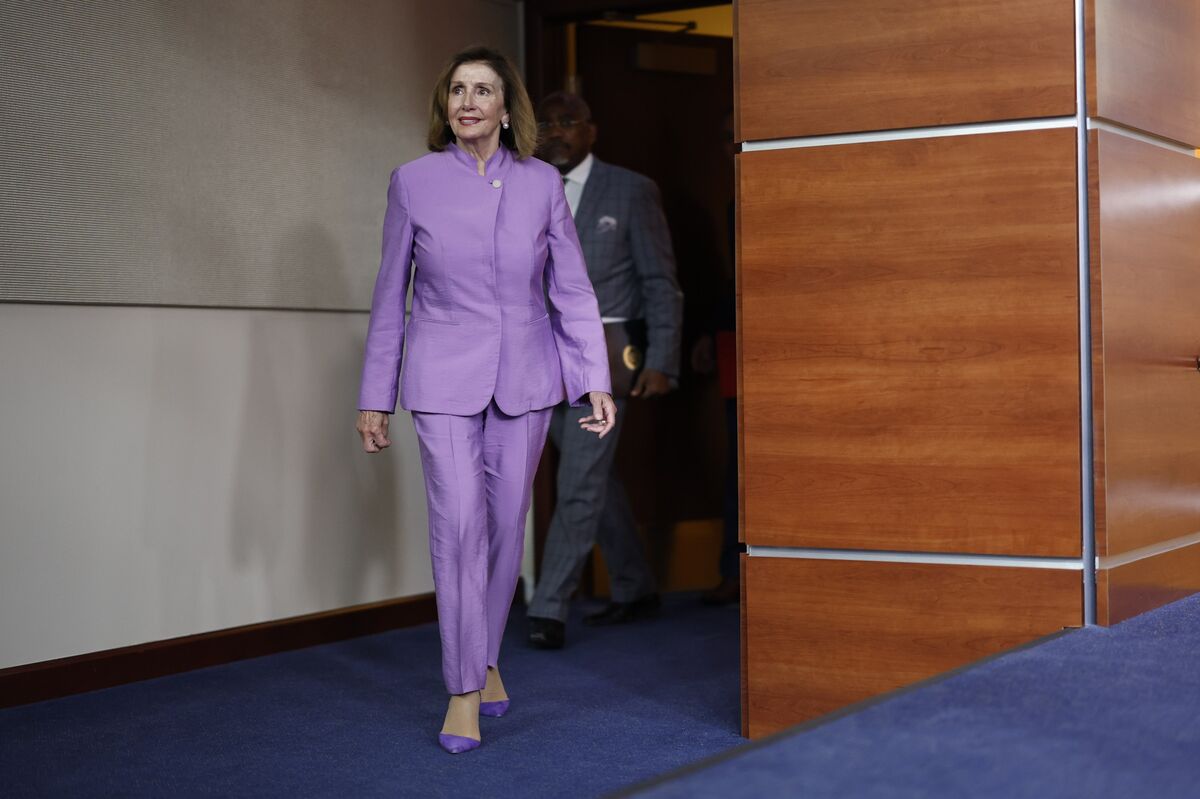
US House Speaker Nancy Pelosi, a Democrat from California, arrives for a news conference at the US Capitol in Washington, D.C., US, on Wednesday, Aug. 10, 2022. Pelosi's swing through Asia aimed to convey the United States' "strong and unshakable" support for the region but It ended up leaving many countries in stunned silence as China conducted unprecedented military drills around Taiwan. Photographer: Ting Shen/Bloomberg
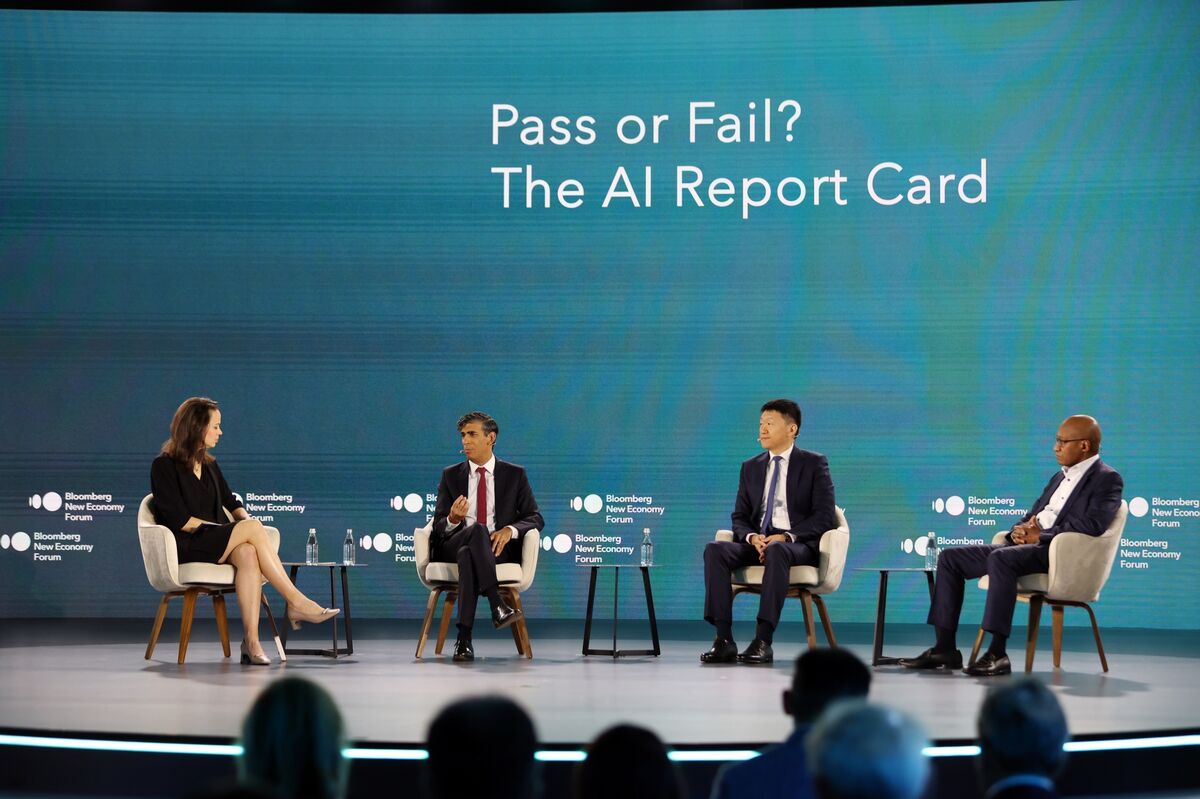
Speakers at this year’s New Economy Forum warned about a trio of bubbles
Rishi Sunak, former UK prime minister, from second left, Forrest Li, chief executive officer of Sea Ltd., and Mohamed Kande, global chairman of PricewaterhouseCoopers International Ltd. Photographer: Lionel Ng/Bloomberg
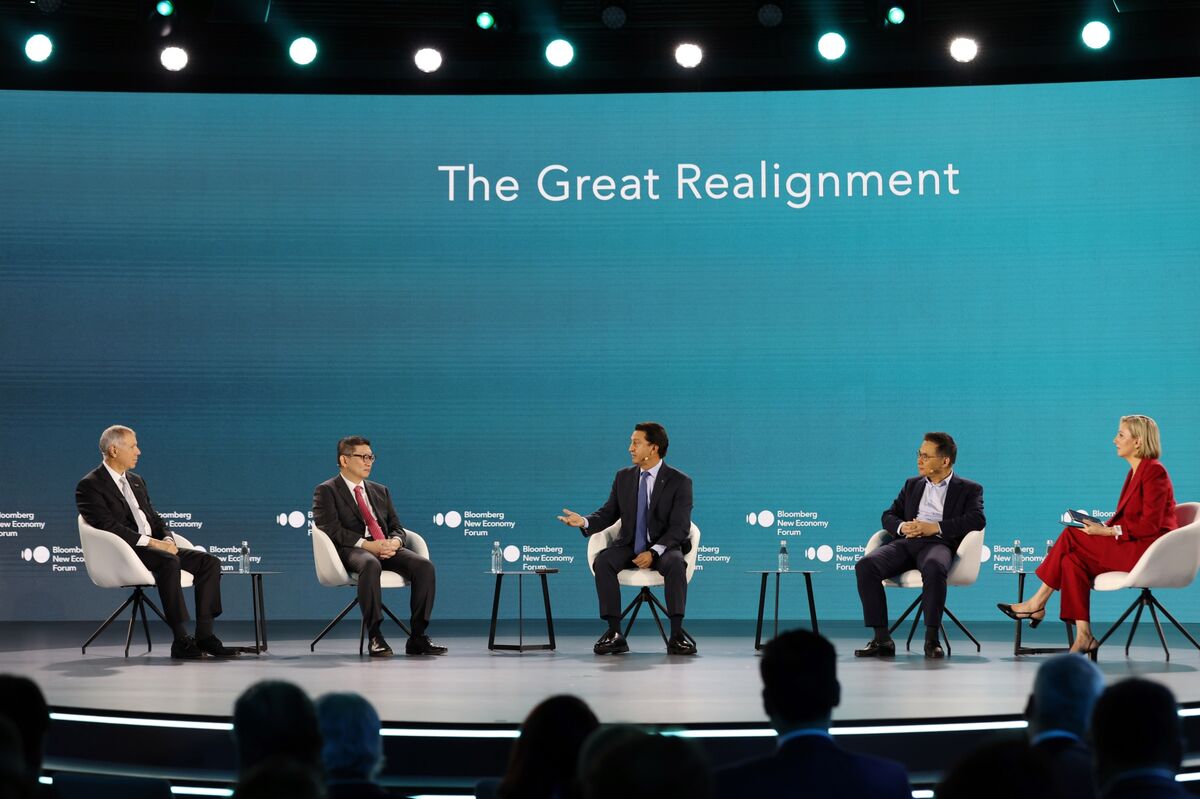
While the global economy is fragmenting, many areas of commerce remain intertwined
Georges Elhedery, chief executive officer of HSBC Holdings Plc, from left, Lim Chow Kiat, chief executive officer of GIC Pte., Jose Munoz, chief executive officer of Hyundai Motor Co. and Lei Zhang, chief executive officer of Envision Group, during the Bloomberg New Economy Forum in Singapore, on Wednesday, Nov. 19, 2025. The New Economy Forum is being organized by Bloomberg Media Group, a division of Bloomberg LP, the parent company of Bloomberg News. Photographer: Lionel Ng/Bloomberg

 Anmelden