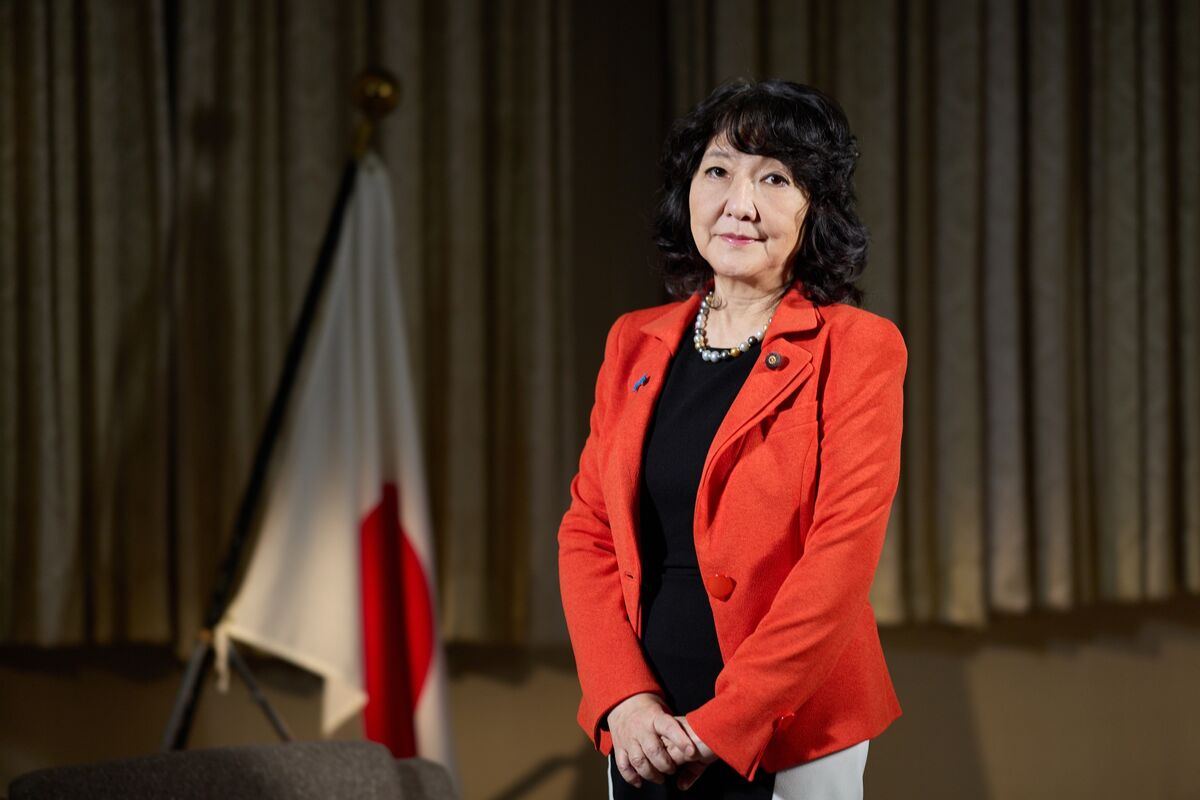
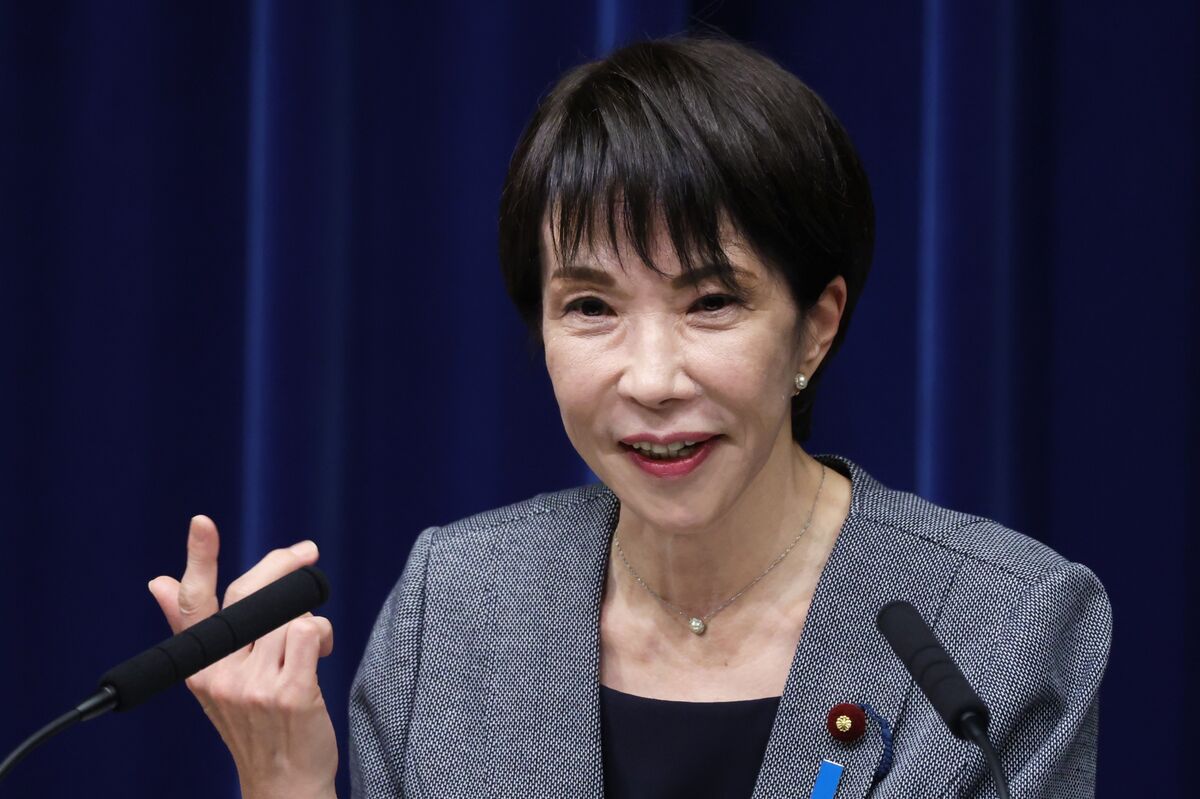
Japanese Finance Minister Satsuki Katayama said she will communicate with financial markets on Monday if needed, as she tried to provide early reassurance and a warning for market players following a historic election win for Prime Minister Sanae Takaichi.
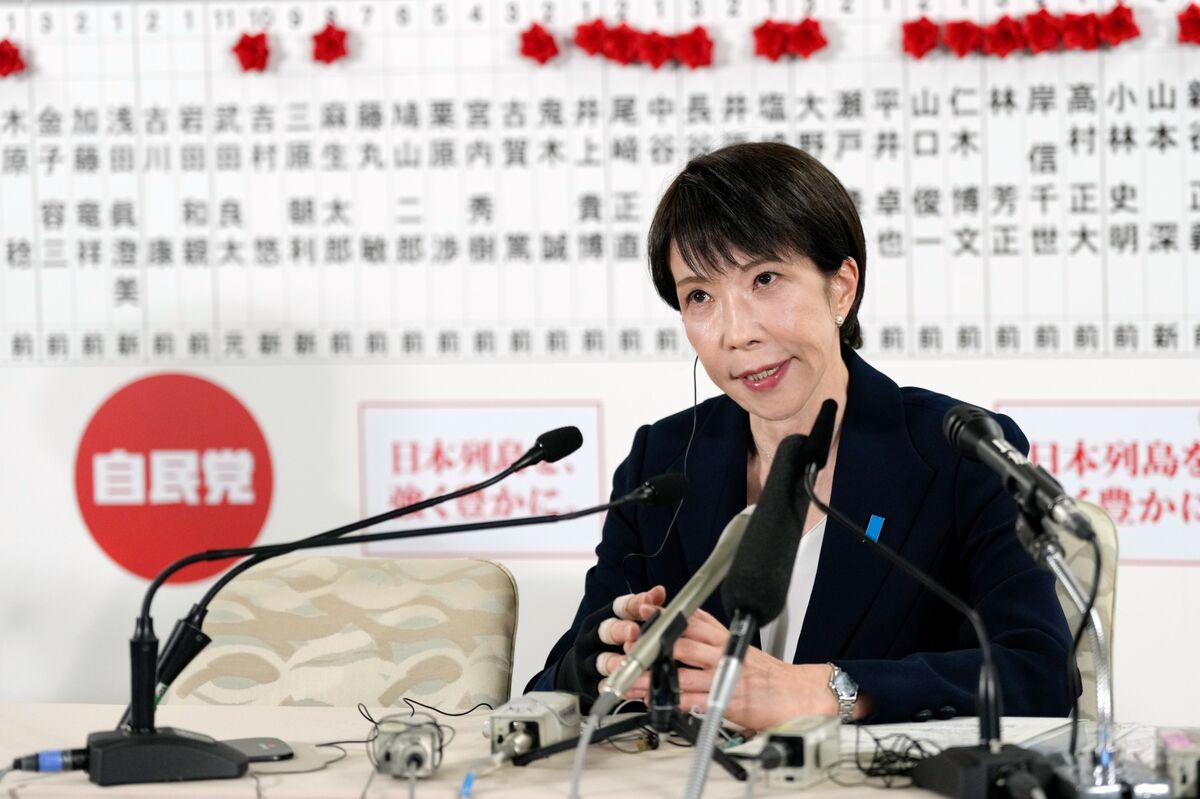
Japanese Prime Minister Sanae Takaichi stuck to a cautious line on fiscal policy and a sales tax reduction in her first comments since polls closed with her ruling party on track for a landslide victory.
Sanae Takaichi speaks at the Liberal Democratic Party's headquarters in Tokyo on Feb. 8. Photographer: Toru Hanai/Bloomberg
As the nation decides how assertive it wants to be, a new centrist challenger is injecting uncertainty into the election.
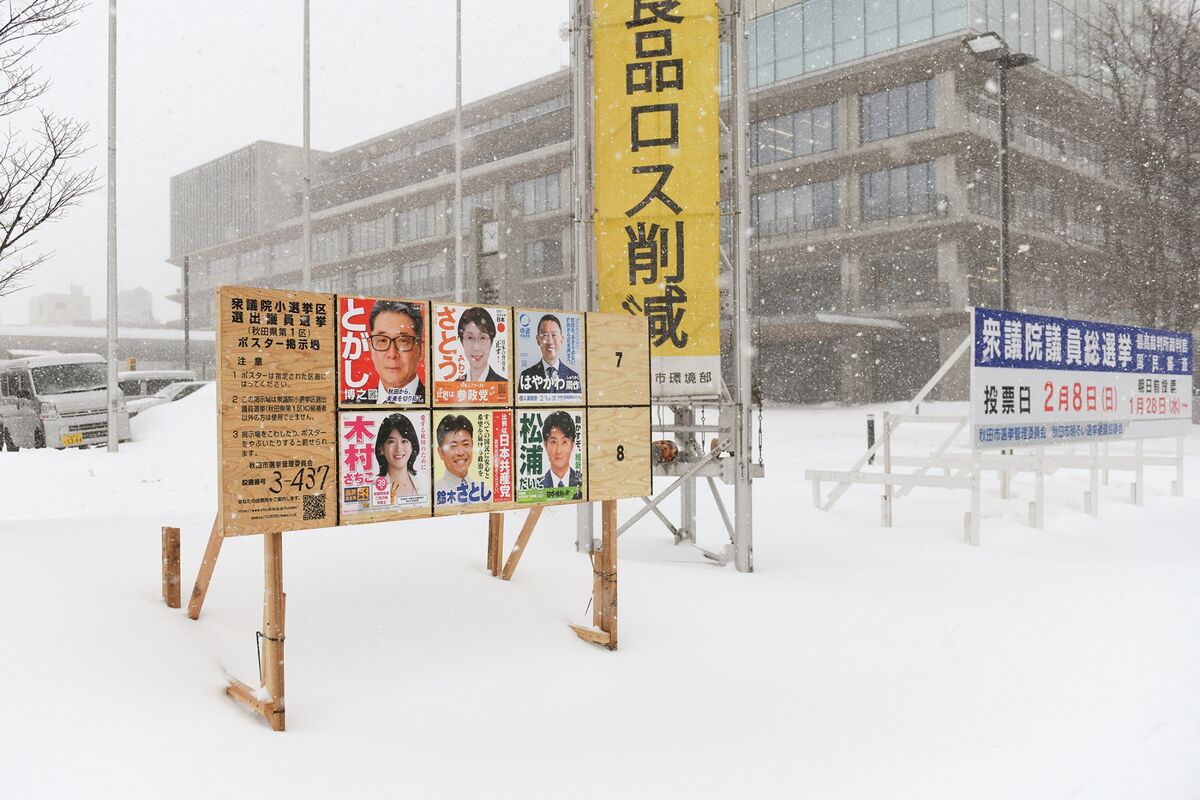
A bulletin board displaying posters of the six candidates for the election for the House of Representatives in Akita city in Akita prefecture, Japan, on Friday., Jan. 30, 2026.
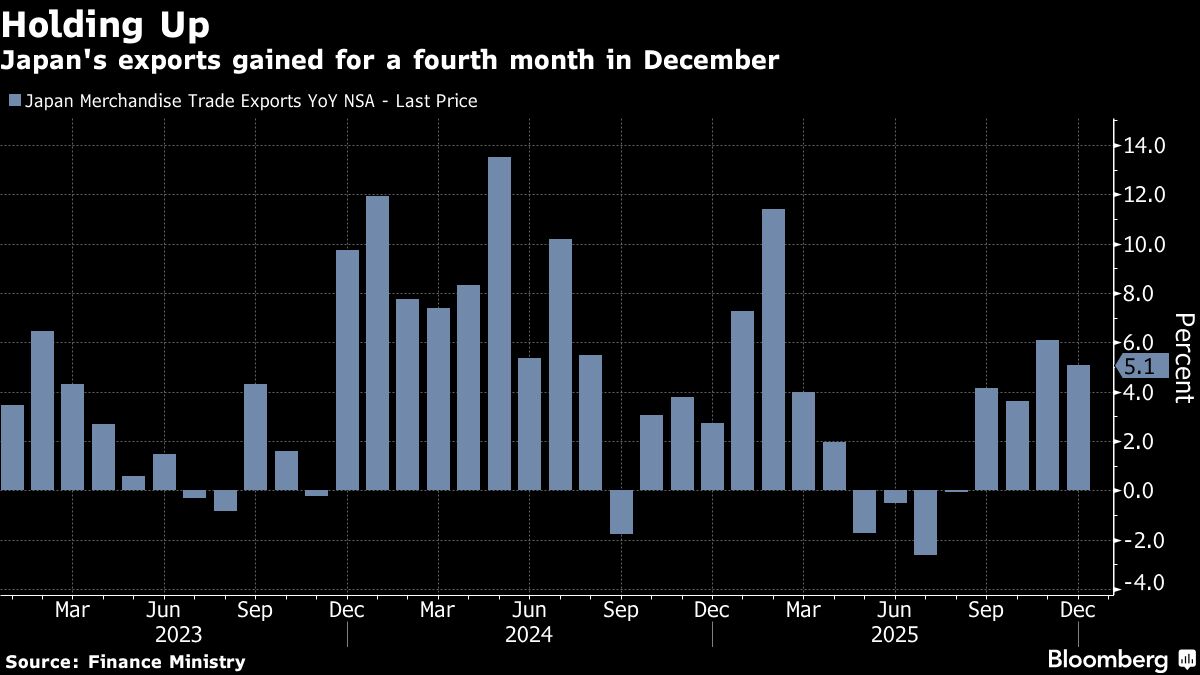
Japan’s exports managed to rise last year despite the first fall in shipments to the US since the pandemic, in a year that was roiled by tariffs from President Donald Trump.
Japanese officials played down a sudden meltdown in the Japanese bond market after a tax cut pledge by Prime Minister Sanae Takaichi helped trigger a surge in 40-year bond yields to the highest in decades.
Prime Minister Sanae Takaichi’s bid to widen her majority through a snap election faces greater risk after Japan’s largest opposition party and a former ruling coalition partner agreed to form a new party.
Japan’s finance minister and its top currency official issued fresh warnings to speculators after the yen weakened to its lowest level against the dollar in 18 months amid reports of a snap general election.
Japanese Prime Minister Sanae Takaichi’s bet on high popularity ratings for a victory at the polls that cements her position as leader may prove to be riskier than expected without the support of an electoral partner that can turn out voters for the ruling party.
Japanese firms are still evaluating the effects of China’s latest export controls, with any impact unlikely to be apparent until next month, according to a person familiar with the matter.
Japanese Prime Minister Sanae Takaichi sought deeper ties with South Korean President Lee Jae Myung in a summit that featured a surprise drum session together as Tokyo moves to contain a deepening dispute with China and counter Beijing’s efforts to drive a wedge between key US allies.
Japanese Prime Minister Sanae Takaichi’s reported plan for a snap election fueled a rally in stocks while pushing down bonds and driving the yen deeper into the intervention-risk zone.
Japan is ramping up efforts to reach out to its Group of Seven peers and beyond amid mounting concerns over China’s grip on rare earths as the dispute with Beijing escalates.
Japan protested China’s deployment of a mobile drilling vessel in an area in the East China Sea known for gas reserves, as diplomatic tensions continue to escalate between Asia’s two largest economies.
Japan’s response to China’s latest export controls is likely to be cautious, reflecting both limited options for retaliation and a lack of appetite to escalate an already fraught relationship with its largest trading partner.
China started an anti-dumping probe into a key chipmaking material from Japan, escalating the dispute between Asia’s largest economies shortly after Tokyo officials rebuked Beijing over potentially wide-ranging export controls.
Hours after President Xi Jinping posed for selfies with South Korea’s Lee Jae Myung in Beijing, China sent a very different message to Japan, escalating their dispute by imposing export controls.
Lee Jae Myung, left, with Xi Jinping in Beijing on, Jan. 5.
America’s allies offered a measured response after US troops captured Venezuelan leader Nicolas Maduro in a raid, a move that sent shockwaves around the world and highlighted divisions among governments.
TOPSHOT - Venezuela's President Nicolas Maduro gestures during a rally to mark the anniversary of the Battle of Santa Ines, in Caracas on December 10, 2025. (Photo by Federico PARRA / AFP via Getty Images)
Japan’s industry ministry is set to nearly quadruple its budgeted support for cutting-edge semiconductors and artificial intelligence development to about ¥1.23 trillion ($7.9 billion) for the fiscal year starting in April.
A prototype of a Rapidus 300mm wafer displayed at the Semicon Japan exhibition. Photographer: Kiyoshi Ota/Bloomberg
A US-Japan consultation panel held its first meeting to consider initial projects for a $550 billion investment pledge that is a pillar of the two countries’ trade deal.
US President Donald Trump, left, and Sanae Takaichi, Japan's prime minister, during a trade signing ceremony at the Akasaka Palace state guest house in Tokyo, Japan, on Oct. 28.
Japan’s exports to the US rose for the first time since Donald Trump announced baseline tariffs in early April, the latest indication that economies are faring better than expected in a more protectionist global trade environment.
A container ship at the Oi Container Terminal in Tokyo. Photographer: Akio Kon/Bloomberg

 Anmelden