China will press ahead with building a unified market to unleash domestic consumption as countries around Asia face a “pivotal juncture” in the transformation of the global economy, a top economic official said.
China will set a lower economic growth goal for 2026 than last year, the South China Morning Post reported, in a sign top leaders may refrain from measures to reverse a slowdown that intensified in recent months.
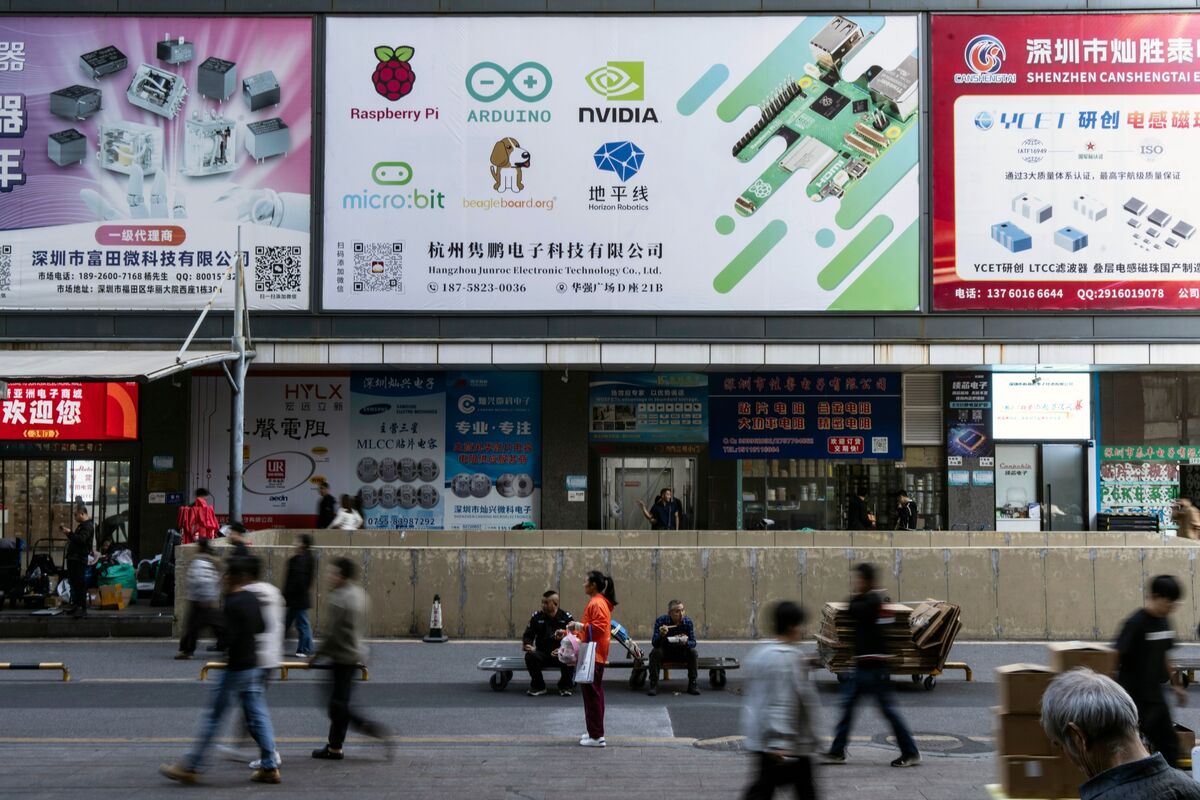
Stores in the Huaqiangbei electronics market area in Shenzhen, China, on Wednesday, Jan. 14, 2026. China's economy likely capped 2025 with its weakest quarterly growth in three years, exposing a lopsided reliance on exports over consumption that’s set to extend into coming months. Photographer: Qilai Shen/Bloomberg
China’s consumer-sensitive sectors are lagging further behind growth in industries linked to manufacturing and tech, illustrating a sharp divide in an economy increasingly exposed to foreign demand.
China has announced a slew of incentives to spur investment and consumption, including a 500 billion-yuan ($72 billion) loan guarantee facility to encourage private companies to borrow for expansion.
As Xi Jinping battles unprecedented deflation and shrinking investment, he’s betting that China can sell more and more goods to the world to drive growth. To that end, Donald Trump’s threats against key US allies are coming at a good time.
Container ships at the Yangshan Deepwater Port in Shanghai, China, on Wednesday, May 14, 2025. China and the US agreed to temporarily lower tariffs levied against each other's products — the first major de-escalation in the trade row that was touted by US President Donald Trump as a "total reset" of bilateral ties.
China’s economy likely capped 2025 with its weakest quarterly growth in three years, exposing a lopsided reliance on exports over consumption that’s set to extend into coming months.
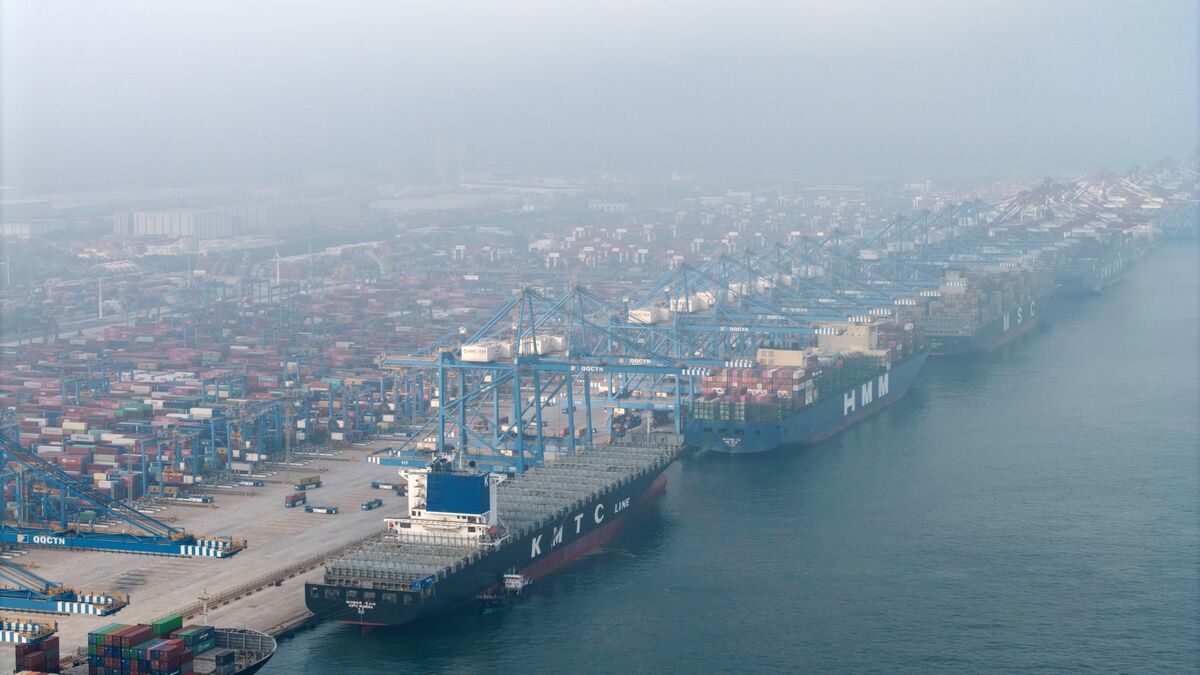
Container ships moored at the Qingdao Port in Qingdao, China.
China’s exports ended last year with a growth spurt and sent its trade surplus to a record $1.2 trillion in 2025, extending a boom that’s seen factories escape Donald Trump’s tariffs by making deeper inroads into markets beyond the US.
China announced initial public spending plans worth a total of $51 billion to boost consumption and investment next year, moving early to shore up demand and cushion the economy against rising external headwinds.
China said it will expand government spending and improve how it deploys capital in 2026, aiming to balance supporting growth and containing debt risks.
Chinese President Xi Jinping lashed out at inflated growth numbers and vowed to crack down on the pursuit of “reckless” projects that have no purpose except showing superficial results.
Key economic data for November are set to show China’s domestic demand remained subdued — or even weakened further — offsetting the country’s solid performance in exports.
Workers on the assembly line at the BYD Co. factory in Zhengzhou, Henan province, China.
China’s top leaders are signaling they are on alert for a potential flareup of tensions in global commerce as they draw up economic plans for next year, after amassing a record trade surplus despite the tariff war with the US.
China’s annual trade surplus exceeded $1 trillion for the first time despite a deepening plunge in shipments to the US, risking a backlash from markets flooded by goods from the world’s biggest manufacturing nation.
China’s leaders are widely expected to stick with its manufacturing-led growth strategy in key policy meetings this month, even as calls grow at home and abroad for a more urgent shift toward consumption.
A worker on the production line for kitchen utensils at a factory near Zhuhai, China.
Until this year, only a handful of cities in China allowed schools to go on a break each fall. But in recent months, at least 27 others have joined the list, with more possibly on the way.
Tourists walking on glass-bottomed Ruyi Bridge at Shenxianju scenic area in Zhejiang Province on Nov. 15. Photographer: Wang Huabin/VCG/Getty Images

 Anmelden