The Swiss National Bank’s determination to cap gains in the franc will draw the spotlight in a decision that is likely to avoid the more drastic option of negative borrowing costs.
Swiss National Bank President Martin Schlegel received a salary of 986,200 Swiss francs ($1.2 million) in 2025, ensuring he remains one of the world’s best-paid central bank chiefs.
The Swiss National Bank largely kept out of currency markets in the final three months of 2025, avoiding interventions after it promised to the US not to steer the franc for an economic advantage.
A plan by Switzerland’s right-wing People’s Party to cap the country’s population at 10 million still has strong support from the public despite repeated pushback by politicians and business leaders against such a move.
A prolonged war in the Middle East that dislodges inflation expectations could ultimately result in financial-market fallout and fiscal trouble, the Bank for International Settlements warned.
A US Navy fighter jet prepares to launch from USS Abraham Lincoln, in a photo released on March 2.
The Swiss National Bank is very likely to be intervening in currency markets to curb the franc’s strength, according to Karsten Junius, chief economist at Bank J Safra Sarasin.
Switzerland voted to enshrine the availability of cash in its constitution, assenting to a push designed to guard against the demise of physical money.
Banknotes in denominations of 10, 20, 50 100, 200 and 1000 Swiss francs are photographed in Lausanne on December 23, 2025. (Photo by Fabrice COFFRINI / AFP via Getty Images)
Switzerland wants to continue talks with the US on a legally binding trade agreement even after the Supreme Court scrapped the legal base for most of Donald Trump’s sweeping tariffs.
A Swiss national flag on a boat on Lake Geneva in Geneva. Photographer: Andrew Kravchenko/Bloomberg
Swiss National Bank Vice-President Antoine Martin said the central bank’s willingness to intervene to stem gains in the franc has risen amid fallout in global markets from the US war in Iran.
Switzerland had only a minimum of inflation in February for a third month, highlighting the challenge for the central bank as it tries to avoid reintroducing negative interest rates.
The Zurich HB rail station beyond a busy retail street in Zurich, Switzerland, on Saturday, March 16, 2024. The Swiss National Bank will announce interest rates on March 21.
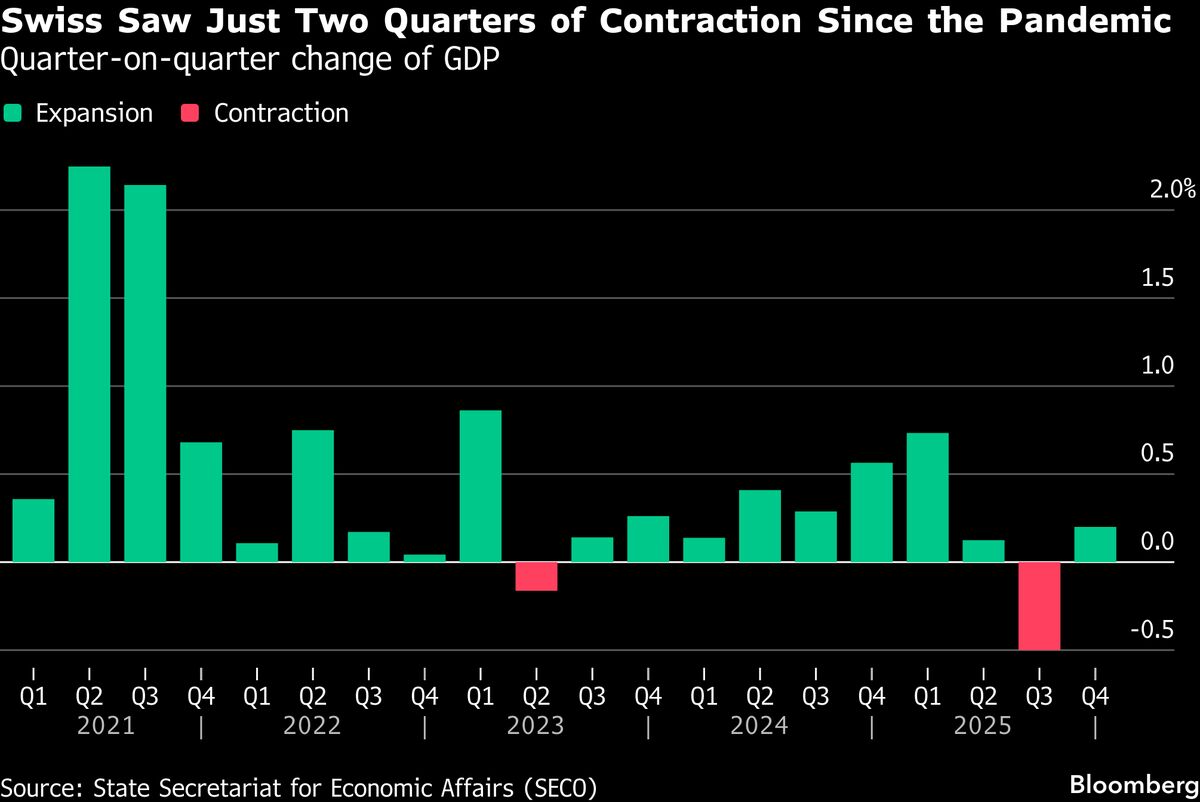
Switzerland’s pharmaceutical industry drove a recovery after outsized US tariffs plunged its export-focused economy into only the second contraction since the pandemic.
World Economic Forum Chief Executive Officer Børge Brende is stepping down from his position after it emerged he had ties with convicted pedophile Jeffrey Epstein.
Switzerland looks set to enshrine the availability of cash in its constitution next month, manifesting a public desire that physical money must remain despite the widespread shift toward digital payments.
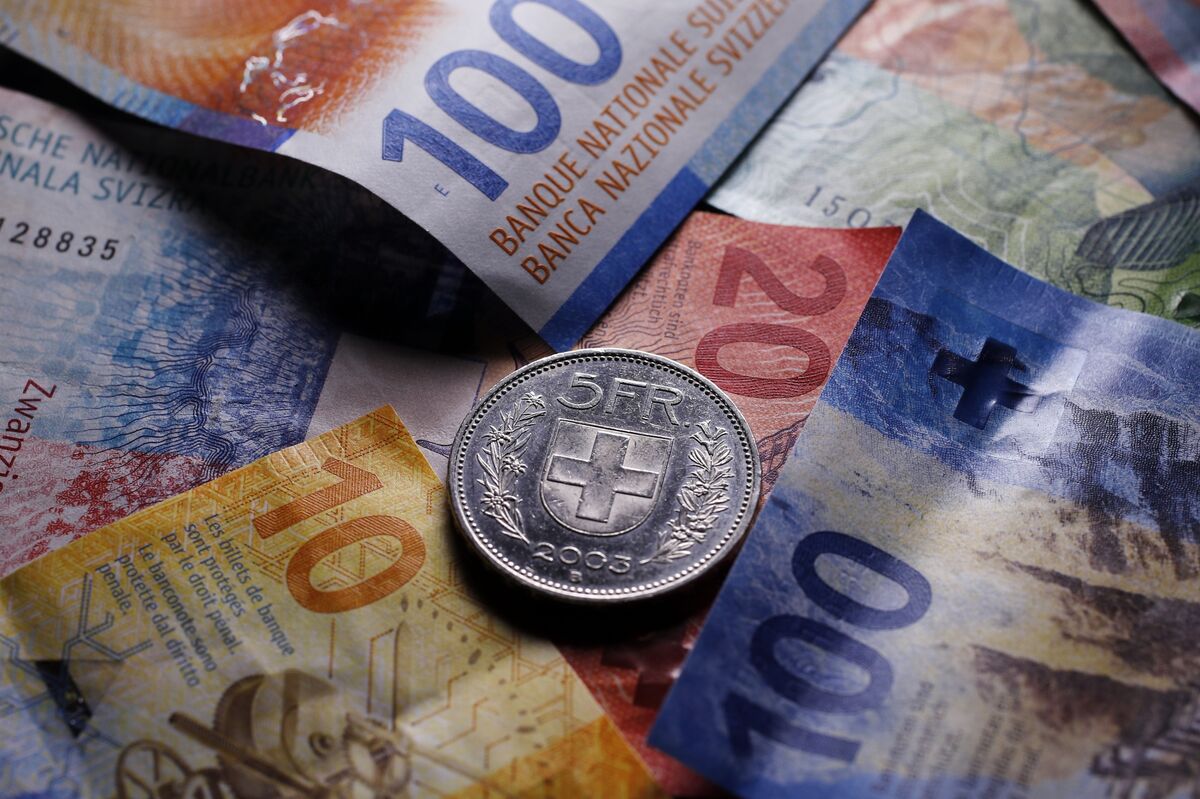
A five Swiss franc coins sits on top of Swiss franc banknotes sit in an arranged photograph in Bern, Switzerland, on Saturday, March 14, 2020. Pressure is intensifying on the Swiss National Bank to join policy makers around the world who’ve cut interest rates and increased stimulus in response to the coronavirus outbreak. Photographer: Stefan Wermuth/Bloomberg
Swiss inflation stayed just above zero in January, offering limited respite to the Swiss National Bank from pressure to reintroduce negative interest rates.
Shoppers in Zurich. Photographer: Pascal Mora/Bloomberg
 Anmelden