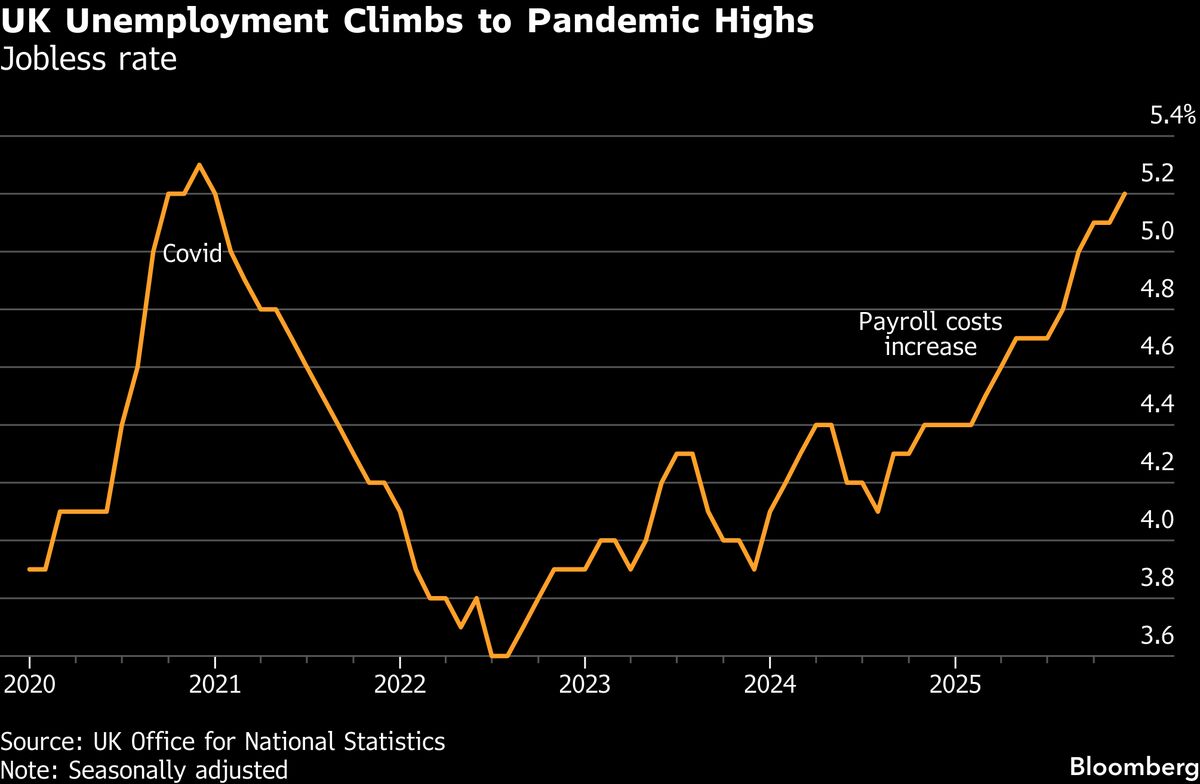
UK unemployment held steady and employers hired more staff in early signs that the labor market may be stabilizing ahead of the Bank of England’s interest-rate decision later today.
Workers pass Bank London Underground station in the City of London. Photographer: Jose Sarmento Matos/Bloomberg
Non-alcoholic beer is being added to the list of goods used to measure UK inflation while different wine categories are merged into one, in a sign Britons are becoming more health-conscious.
A customer in the wine and beer section inside a store in London. Photographer: Simon Dawson
From geopolitical angst to the scarring effect of past inflation episodes, theories abound on why British consumers are so reticent. For Prime Minister Keir Starmer, part of the explanation may be more personal.
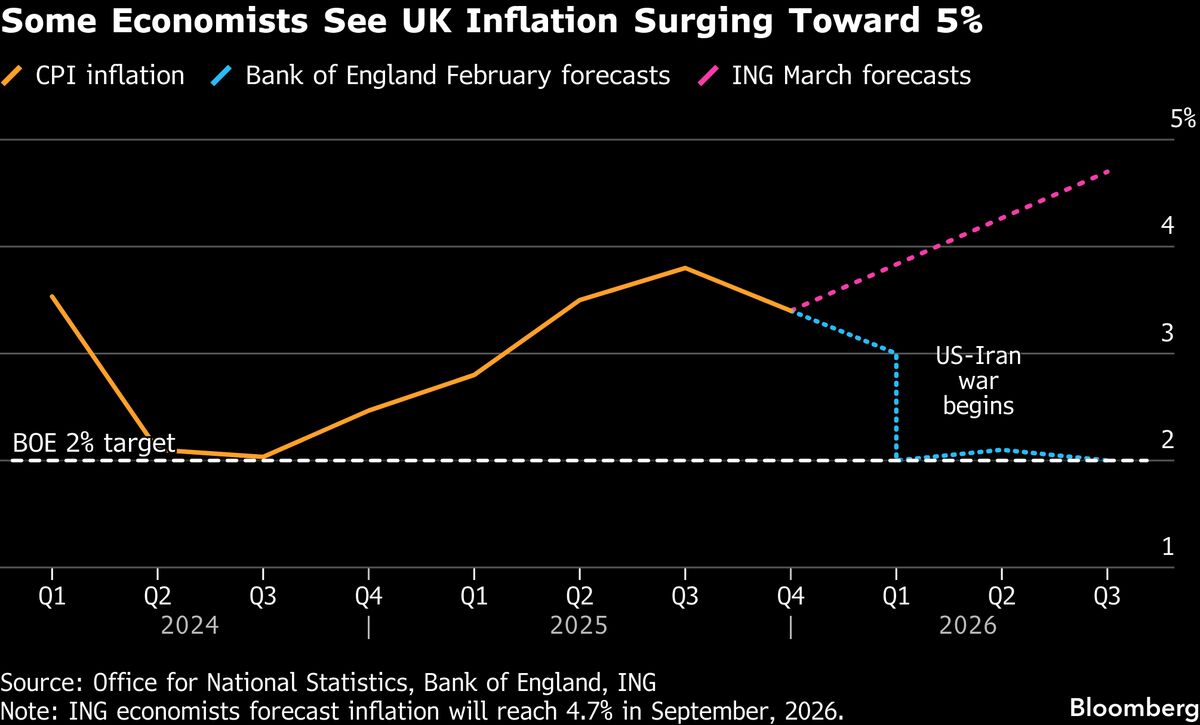
UK households had been expecting inflation to slow over the coming year, according to a Bank of England survey that was conducted before war erupted in the Middle East and sent oil prices soaring.
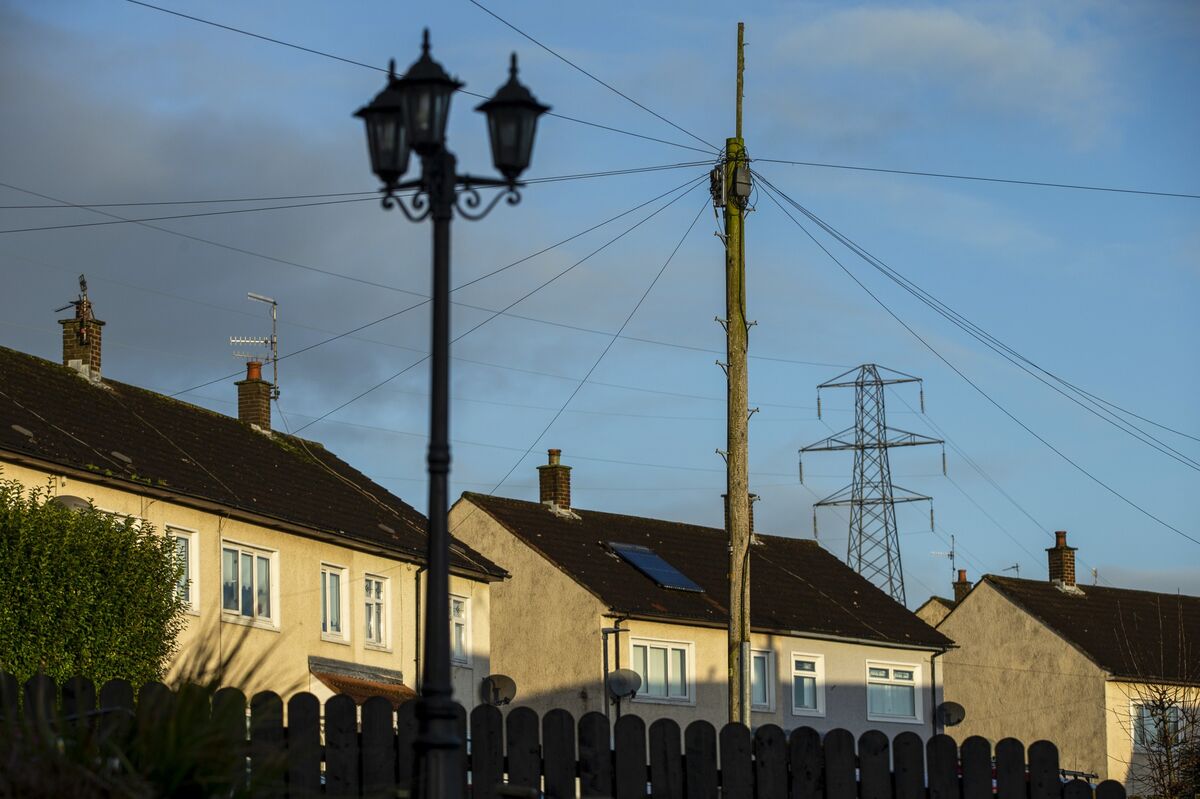
Electrical power lines hang from a transmission pylon among houses in Belfast, Northern Ireland, U.K., on Friday, Jan. 3, 2020. With the U.K. due to leave the European Union, questions remain over trading agreements and Ireland's 12-year-old single electricity market, known as the SEM.
The UK economy unexpectedly failed to grow in January, suggesting activity was stalling even before conflict in the Middle East threatened to deliver a fresh blow to consumers and businesses.
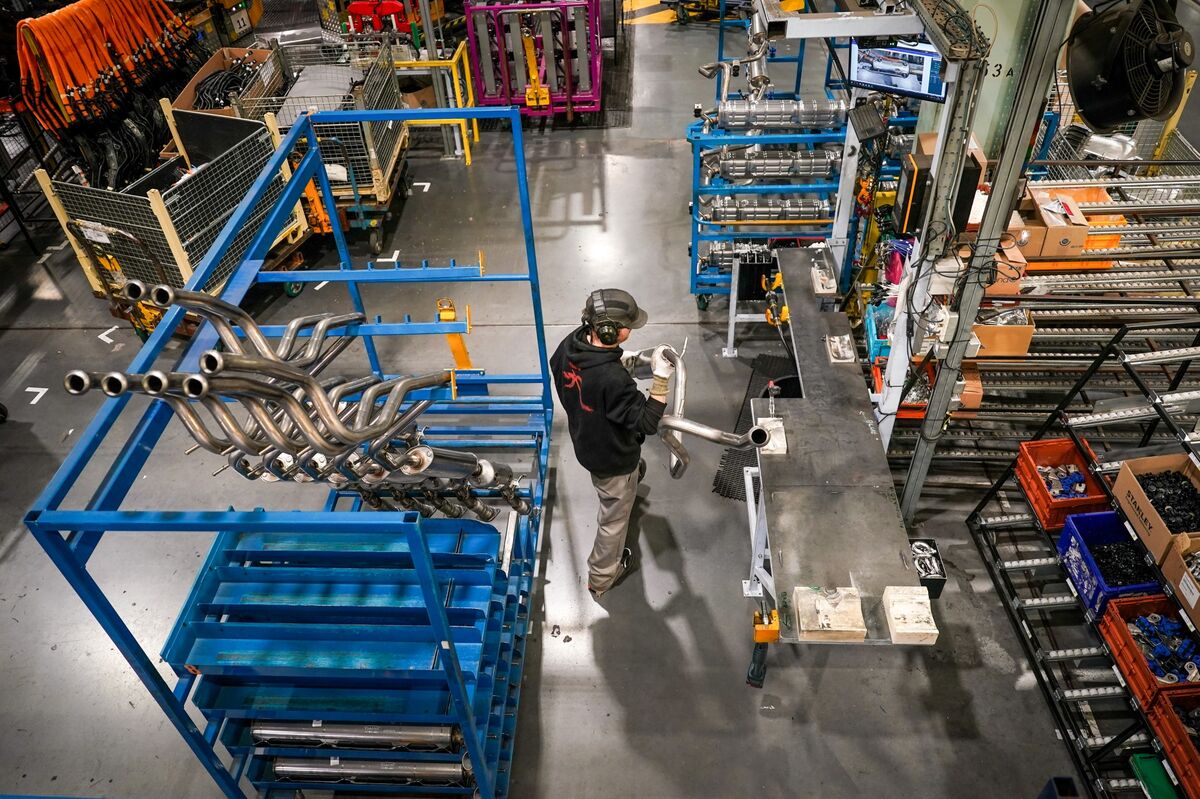
Vehicle manufacturing in Sunderland, UK. Photographer: Ian Forsyth/Bloomberg
British estate agents are growing increasingly pessimistic about the housing market, a survey found, as war in the Middle East dashes hopes of lower borrowing costs.
Residential houses in Brighton, UK, on Monday, Jan. 5, 2026. Brighton, an area popular with London commuters, was among the top 10 underperformers for house prices in 2025, seeing a 4.8%, or £20,000, plunge. Photographer: Jason Alden/Bloomberg
UK consumer sentiment has dropped sharply since war broke out in the Middle East, according to a new survey, as the global consequences of the conflict start to take their toll on economies such as Britain’s.
Britain’s jobs market slowdown was showing signs of bottoming-out in the weeks before war broke out in the Middle East, according to a survey that feeds into the Bank of England’s thinking on the state of the UK economy.
Commuters cross London Bridge in the City of London, UK, on Monday, Feb. 16, 2026. UK unemployment rose to a near five-year high and wage growth eased as the labor market continued to weaken, setting up a potential interest-rate cut by the spring. Photographer: Jose Sarmento Matos/Bloomberg
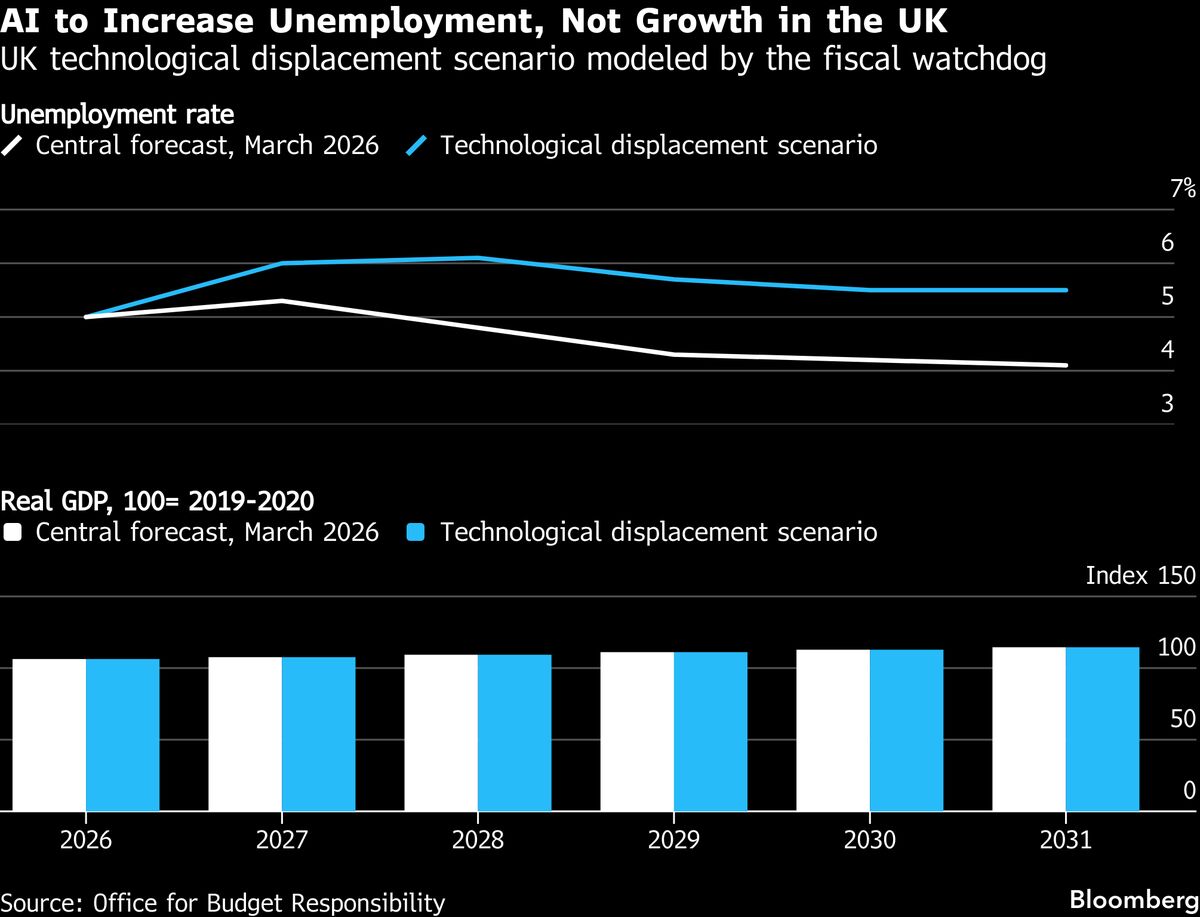
Artificial intelligence could cost the UK jobs without delivering any growth in return, according to an analysis conducted by the Office for Budget Responsibility.
UK home prices rose again, according to one of the country’s top mortgage lenders, with the property market appearing to be on track for a strong 2026.
Residential homes in view of skyscrapers in the Canary Wharf district, in London, UK, on Monday, Feb. 17, 2025. London faces the biggest bottlenecks of house sales in the UK as buyers and sellers rush to complete deals before a property tax increase comes into force, Rightmove said.
UK consumer confidence declined for the first time in three months as rising unemployment and stretched household budgets loomed over the economic outlook.
Shoppers at Ridley Road Market in the Hackney borough of London, UK.
The Bank of England is seeing signs of a long-awaited productivity revival as British firms lay off workers, in a “dishoarding“ of excess labor built up after the pandemic.
The Bank of England (BOE) headquarters in the City of London, UK, on Thursday, Feb. 1, 2024. The Bank of England is likely on Thursday to deliver a brighter outlook for the UK economy, reducing its forecast for inflation this year and potentially opening the way to interest-rate reductions that could boost growth.
British firms boosted output at the fastest pace in almost two years, according to a closely watched survey suggesting the bounce-back at the start of 2026 is gaining ground.
An employee monitors newly manufactured bottles at a factory in Elton.
UK retail sales started the year with the fastest growth in 20 months, an unexpected surge that could boost the Labour government’s efforts to revive the economy.
Shoppers in London. Photographer: Jason Alden/Bloomberg
Youth unemployment in Britain has soared above the European Union average for the first time, with the Labour government accused of making the situation worse by hiking the minimum wage and planning to bolster employment laws.
Commuters in the City of London. Photographer: Jason Alden/Bloomberg
Housebuilding in England is on track to fall to its lowest level in more than a decade, pushing Prime Minister Keir Starmer’s pledge to deliver 1.5 million homes further out of reach.
A housing development in Maldon, UK. Photographer: Chris Ratcliffe/Bloomberg
UK unemployment reached its highest since the pandemic and wage growth eased as the labor market continued to weaken, prompting traders to increase bets on further interest-rate cuts from the Bank of England.
UK home sellers refrained from increasing prices further this month as an abundance of properties on estate agents’ books strengthened the bargaining power of buyers, according to a survey by Rightmove.
A passenger train on a viaduct passing residential housing in Brighton, UK, on Monday, Jan. 5, 2026. Brighton, an area popular with London commuters, was among the top 10 underperformers for house prices in 2025, seeing a 4.8%, or £20,000, plunge. Photographer: Jason Alden/Bloomberg

 Anmelden