The Czech government said it’s considering regulating retail margins at gas stations after Prime Minister Andrej Babis criticized the two largest fuel distributors in the country for what he called “outrageous” prices at the pumps.
03 June 2025, Czech Republic, Asch: A man fills up at a petrol station in Asch, Czech Republic, with the terms "Benzin" and "Nafta" written above the pumps. Comparing fuel prices is particularly worthwhile in border regions. Photo: Pia Bayer/dpa (Photo by Pia Bayer/picture alliance via Getty Images)
Czech policymakers said they were keeping all options on interest rates open in the face of a global energy shock, though signaled there was no imminent danger of a surge in inflation.
Czech policymakers are poised to keep interest rates on hold as inflation running below target provides a cushion against the immediate impact of surging oil costs.
The Czech central bank can wait out a global surge in oil prices without raising interest rates because inflation will likely stay under control even with higher fuel costs, according to board member Jan Kubicek.
Czech wage growth unexpectedly accelerated in the fourth quarter, dealing a fresh blow to chances that the central bank will be able to cut interest rates this year.
Czech inflation unexpectedly slowed further in February but the energy shock from the Iran war may limit the central bank’s room for resuming interest rate cuts.
Czech consumer prices rose 1.4% from a year earlier. Photographer: Milan Jaros/Bloomberg
The rally that’s taken the Hungarian forint to two-year highs is unlikely to be derailed by a potential interest rate cut on Tuesday, the country’s first in over a year.
The Czech central bank may have “some room” to lower interest rates if it sees easing pressures in core inflation but it will still keep borrowing costs higher than before the coronavirus pandemic, the bank’s governor said.
Czech policymakers are set to hold interest rates at their first meeting of 2026 as slowdown in headline inflation below target may open room for more monetary easing this year.
The Zizkov Television Tower, top right, beyond rooftops and buildings early morning in Prague, Czech Republic, on Friday, Nov. 28, 2025. Czech economic growth accelerated more than expected in the third quarter, adding to reasons for the central bank to maintain tight monetary policy. Photographer: Milan Jaros/Bloomberg
Economic growth in the Czech Republic accelerated last year, driven mainly by domestic demand as households increased spending fueled by rising incomes.
A waiter serves customers at the terrace area of a cafe on Celetna street in Prague, Czech Republic, on Sunday, July 30, 2023. The Czech economy is struggling to recover from a short recession as high interest rates and shrinking real wages curb consumption, spurring a debate about when monetary easing should start.
Czech policymakers may have room to make an interest-rate cut this year, though more evidence that inflationary pressures are easing will be needed, according to a member of the central bank’s board.
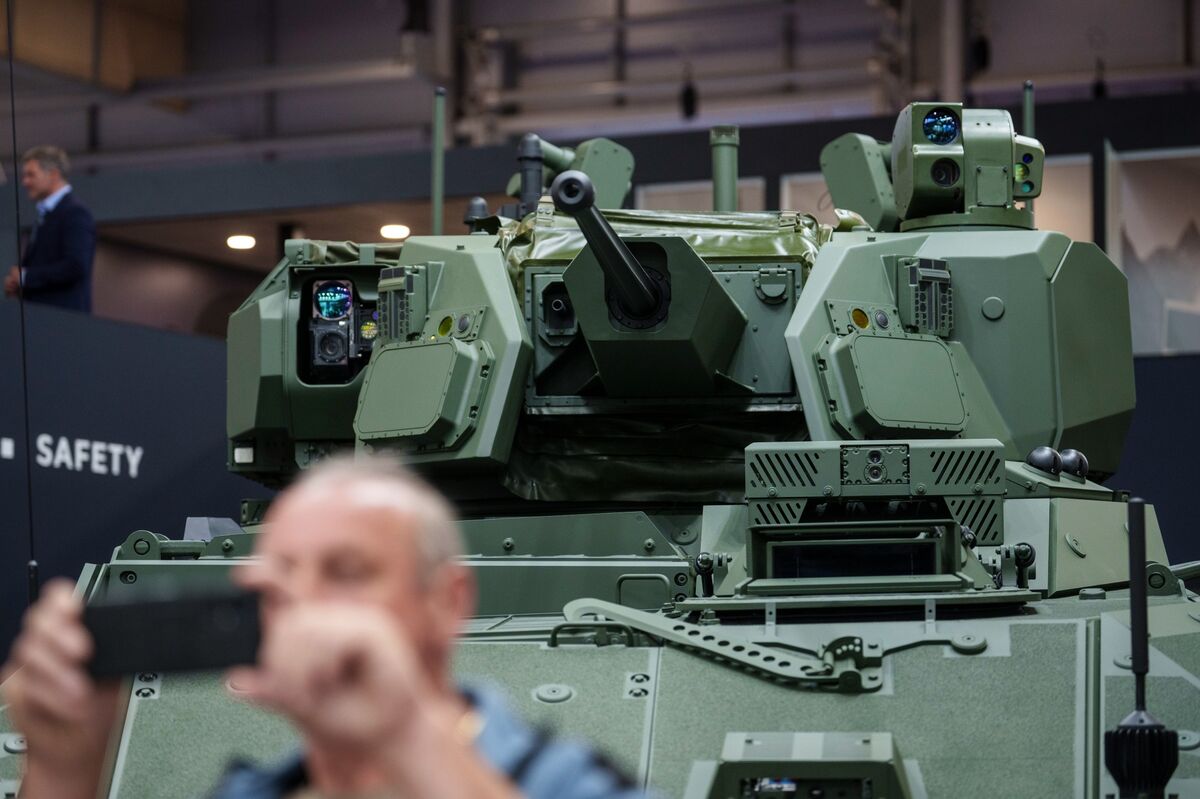
The Czech Republic’s new government will seek to transform the defense industry into an engine of the nation’s export economy as the flagship auto sector faces stiffening competition, a senior cabinet member said.
A Pandur 8x8 EVO wheeled armoured vehicle at the Czechoslovak Group AS stand at the International Defence and Security Technologies Fair in Brno, Czech Republic.
Some emerging-market currencies were jolted on Wednesday by a series of US policy moves that sent the Brazilian real tumbling and the Korean won to a session high.
Alibaba Group Holding Ltd. signage on the floor at the New York Stock Exchange.
A key gauge of underlying price pressures in the Czech Republic remains elevated and requires tight monetary policy, even as headline inflation may undershoot the target this year, according to the central bank.
The headquarters of the Czech central bank in Prague. Photographer: Martin Divisek/Bloomberg
The Czech central bank posted a loss in 2025 after two profitable years as the impact of a stronger koruna outweighed record income generated by its foreign currency reserves.
The Czech central bank, also known as Ceska Narodni Banka (CNB), in Prague, Czech Republic, on Sunday, July 30, 2023. The Czech economy is struggling to recover from a short recession as high interest rates and shrinking real wages curb consumption, spurring a debate about when monetary easing should start.
The Czech Republic’s budget deficit exceeded the target for 2025, leaving the new government scrambling to find savings and financing for its priorities.
The Czech central bank needs to maintain a tight monetary stance to keep inflation under control but is leaving all options open for interest rate decisions this year, according to Governor Ales Michl.
The Czech central bank signaled it would look past a slowdown in inflation next year due to a government push to lower energy bills, saying that domestic price risks still warranted caution on interest rates.

 Anmelden