South Korea’s outgoing central bank governor said monetary and fiscal policy are becoming less sufficient as primary tools for steering the economy, urging structural reforms as he steps down after a four-year term in which he dealt with repeated systemic shocks.
South Korea’s central bank governor nominee Shin Hyun Song warned that soaring oil prices and a weaker won are likely to push inflation higher, while weighing on economic growth, highlighting the policy challenges he is likely to face at the start of his tenure.
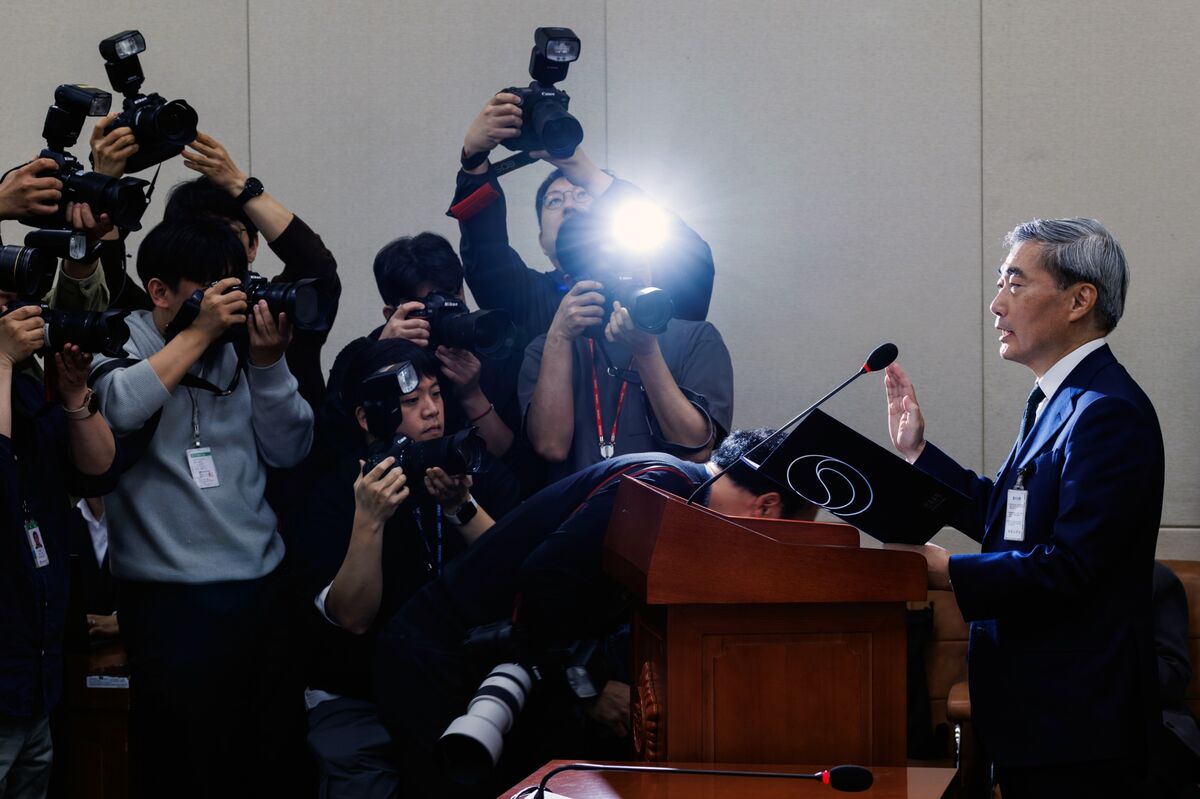
Shin Hyun Song takes an oath at the National Assembly in Seoul on April 15.
South Korea’s import prices posted their biggest surge in nearly three decades, underscoring the scale of cost pressures rippling through the economy as the Iran war spurs a spike in oil and weighs on the won.
South Korea’s central bank governor nominee Shin Hyun Song said he sees greater risks of higher inflation than slower growth from the current turmoil in the Middle East, a comment that suggests he may start his tenure with a slightly hawkish tilt on interest rates.
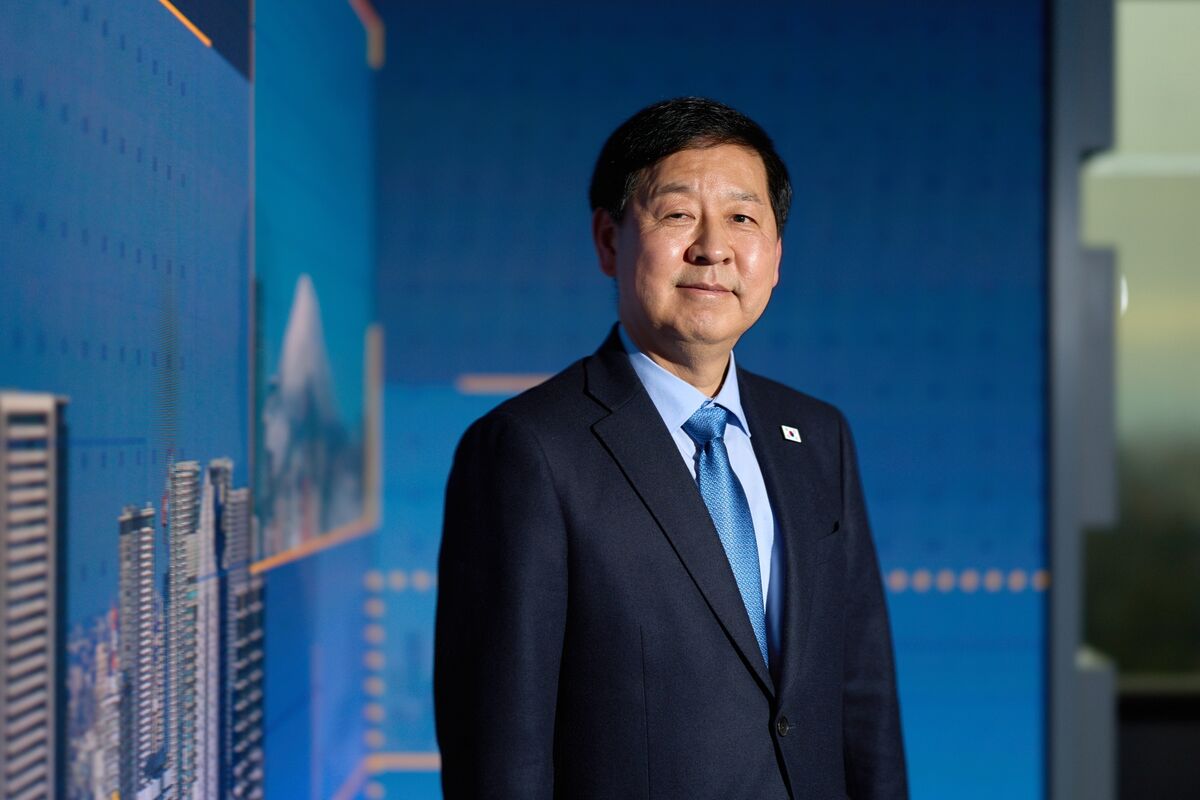
Shin Hyun Song Photographer: Dhiraj Singh/Bloomberg
Bank of Korea Governor Rhee Chang Yong warned that inflation may considerably outpace forecasts this year as the US-Iran conflict threatens the economy with a larger supply shock than seen after the Russian invasion of Ukraine.
Rhee Chang Yong attends a monetary policy meeting on April 10. Photographer: SeongJoon Cho/Bloomberg
Rhee Chang Yong kept interest rates unchanged at his last rate decision as head of South Korea’s central bank, leaving his successor with an open hand on how to proceed with policy and a wider range of tools to provide guidance.
South Korea posted its biggest current account surplus on record in February as booming semiconductor exports lifted the goods balance before the Iran war began to ripple through energy markets and global shipping.
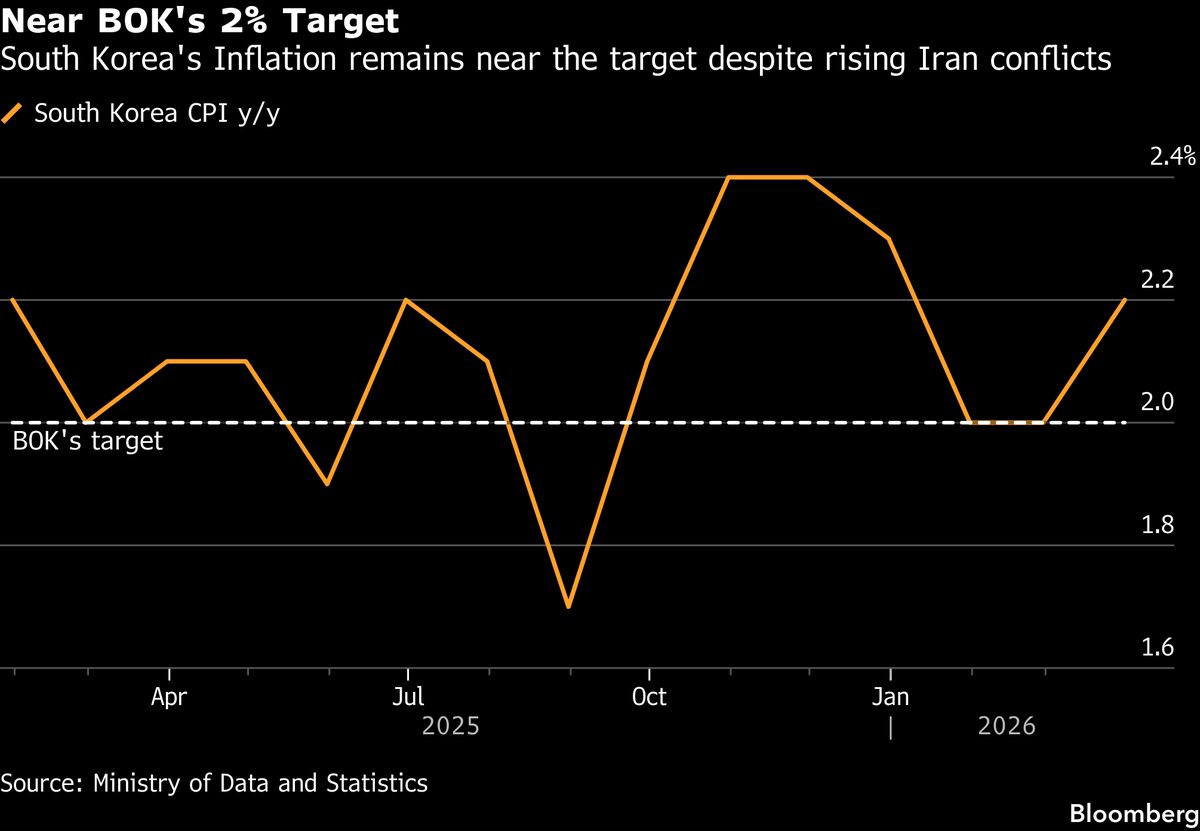
South Korea’s consumer inflation edged up just beyond the central bank’s 2% target, signaling building price pressures as the escalating Iran conflict pushes global energy costs higher.
South Korea’s exports continued to surge in March as record semiconductor shipments driven by the artificial intelligence boom and demand from China helped cushion the economy even as external risks intensify amid the war in Iran.
Bank of Korea governor nominee Hyun Song Shin played down the importance of recent slides in the local currency and cautioned against simplistic labeling of policy as dovish or hawkish as he prepares for a confirmation hearing.
Hyun Song Shin in Incheon on March 30. Photographer: SeongJoon Cho/Bloomberg
South Korea unveiled a supplementary budget worth billions of dollars to cushion its economy from the fallout of the Iran war, as soaring oil prices and global supply disruptions intensify pressure on households and businesses.
South Korean President Lee Jae Myung called on the public to pare back power usage and ride public transport rather than driving cars as his government mounts a national effort to avoid energy shortages should the Iran conflict drag on.
Lee Jae Myung Photographer: SeongJoon Cho/Bloomberg
South Korea is stepping up contingency planning for a worst-case Middle East scenario, with Prime Minister Kim Min-seok warning that the government must strengthen its preemptive response systems as the conflict shows signs of persisting.
A man fills up a truck at a petrol station of an Inland Container Depot (ICD) terminal in Uiwang on March 13, 2026. Brent crude inched further above 100 USD a barrel and stocks fell in early Asian trade on March 13, after Iran vowed to attack oil resources in the Middle East and keep choking the Strait of Hormuz. (Photo by Jung Yeon-je / AFP via Getty Images)
South Korea’s consumer confidence fell in March to the lowest in 10 months as the war in Iran darkened the outlook for growth and prices, tempering optimism from the elevated levels seen earlier this year.
Signage welcoming K-pop band BTS and their fans, known collectively as ARMY, in the Myeongdong shopping district in Seoul, South Korea, on Wednesday, March 18, 2026. After a near four-year hiatus, K-pop megastars BTS are back with a new album, a live-stream deal with Netflix Inc. — and a world tour that could rival Taylor Swift’s record-breaking $2 billion Eras Tour in earnings.
Hyun Song Shin, the Oxford-educated economist picked to helm the Bank of Korea, has dedicated his career to studying financial risks. Now, war in the Middle East will put that experience to the test — with earlier rate hikes the likely outcome.
Hyun Song Shin Photographer: Dhiraj Singh/Bloomberg
South Korea’s export growth maintained momentum in early March, signaling resilient demand even as surging energy prices and renewed trade uncertainty cloud the outlook for global demand.
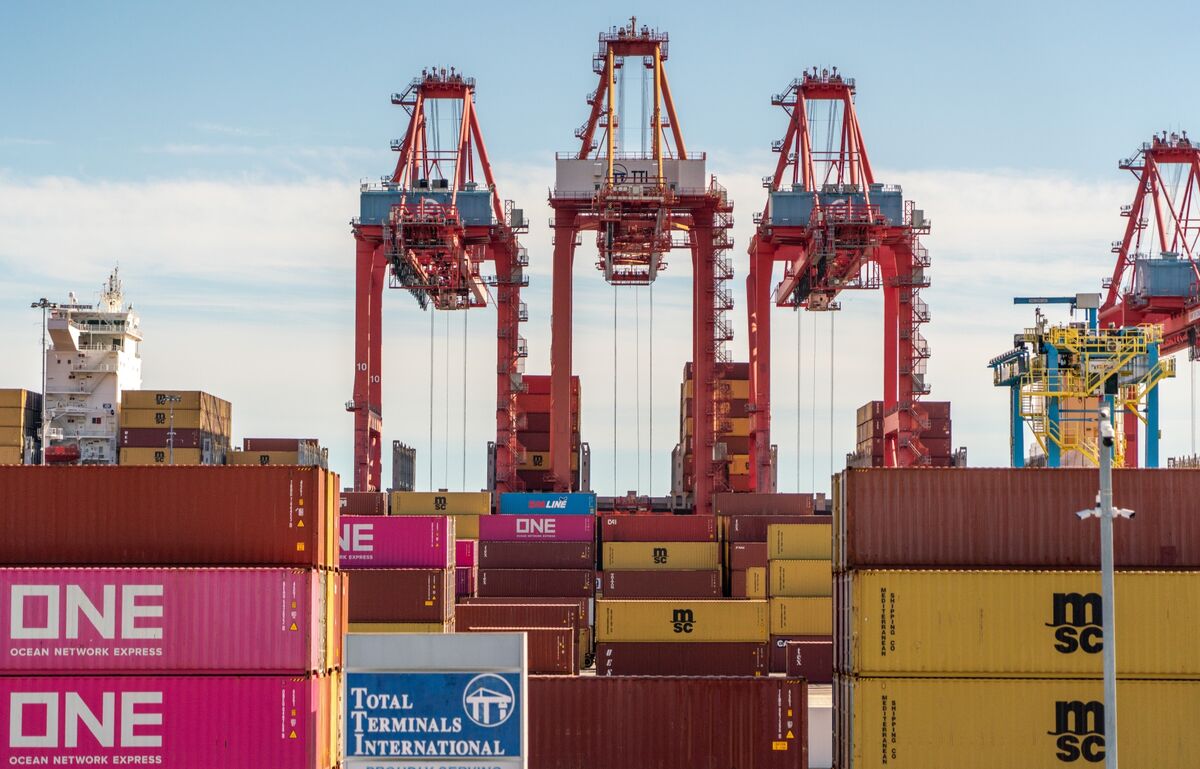
Shipping containers at the Busan Port Terminal (BPT) in Busan, South Korea, on Tuesday, July 22, 2025. South Korea is scheduled to release its gross domestic product (GDP) figures on July 24. Photographer: SeongJoon Cho/Bloomberg
The Bank of Korea is likely to raise its policy rate to 3% this year as a surge in global oil prices drives inflation higher, according to Citigroup Inc.
The Bank of Korea Money Museum in Seoul. Photographer: SeongJoon Cho/Bloomberg
South Korea will use extra tax revenue to fund a supplementary budget to cushion households and businesses from surging oil prices triggered by the Iran war, the nation’s finance minister said.
South Korea’s parliament approved a special bill required to implement a pledge to invest $350 billion in the US — hours after President Donald Trump’s administration sought new legal grounds for tariffs on Seoul.
Donald Trump threatened duties of up to 25% on US imports of Korean goods a government facility. Photographer: Kyle Grillot/Bloomberg
South Korea will implement all available policy measures as needed, including a possible supplementary budget, to cushion the economy from the impact of escalating tensions in the Middle East, according to Finance Minister Koo Yun Cheol.

 Anmelden