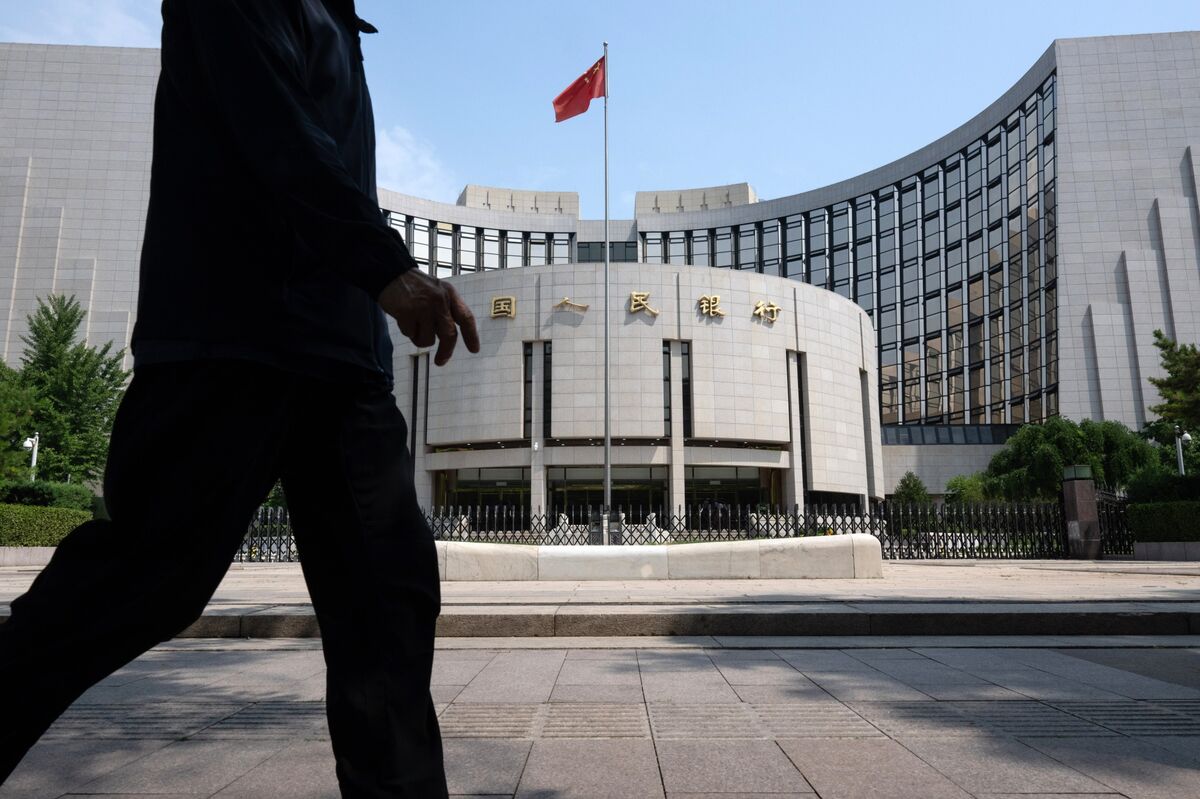
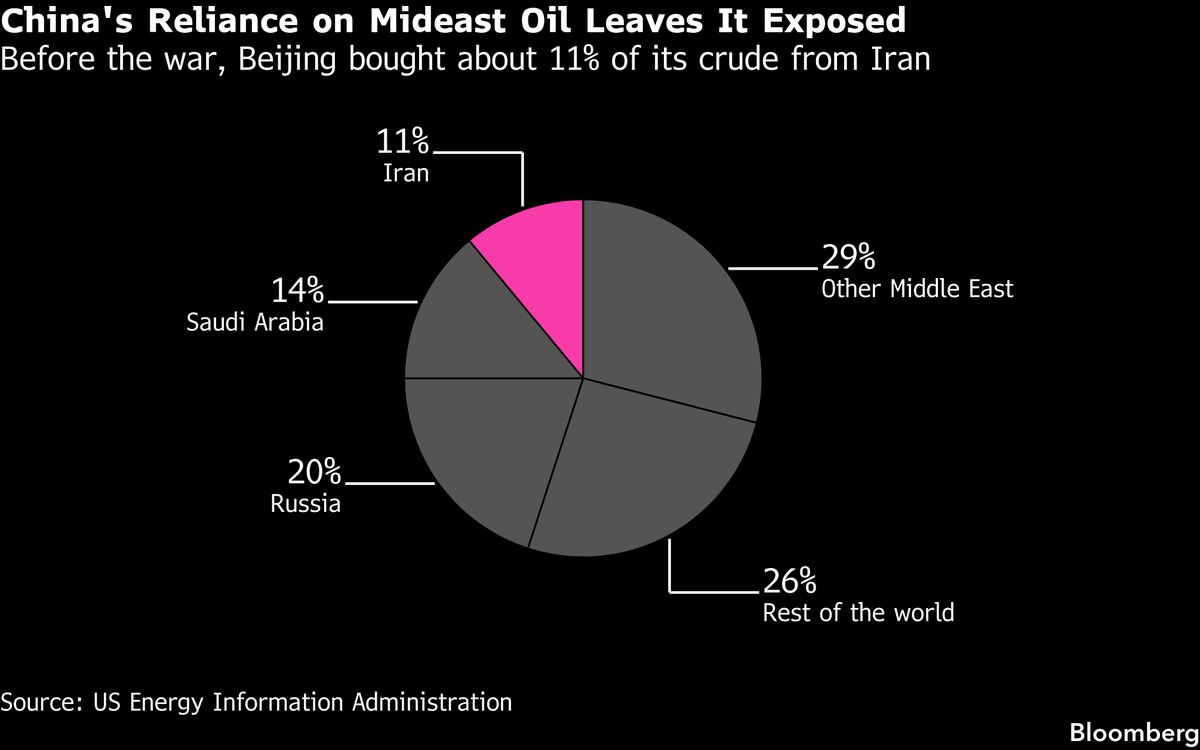
China’s central bank has warned on the risks of imported inflation from higher oil prices stemming from the war in Iran, offering no hint of preparing to ease policy as it looks to ensure that its interest rates reach the economy.
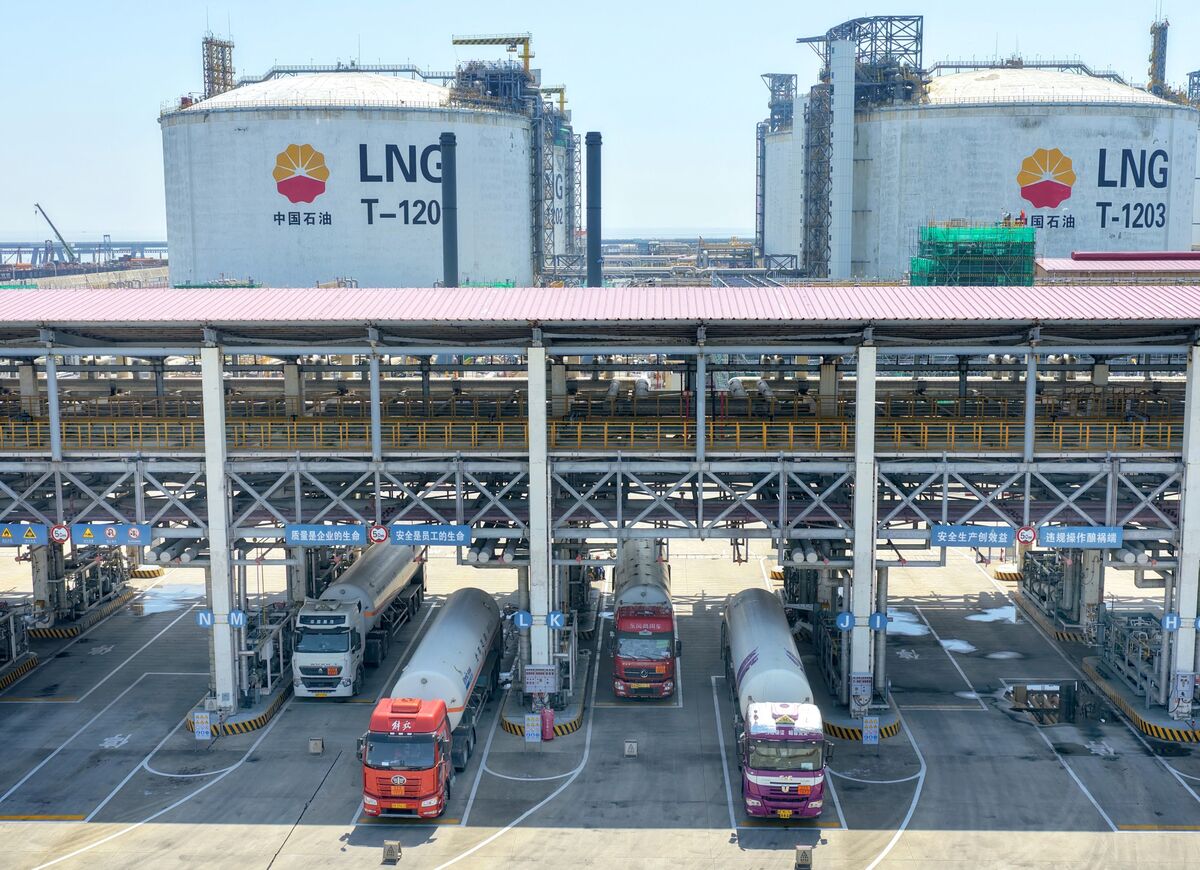
Liquid natural gas tankers wait at a loading station at the PetroChina Jiangsu LNG terminal at Yangkou port in Rudong, China.
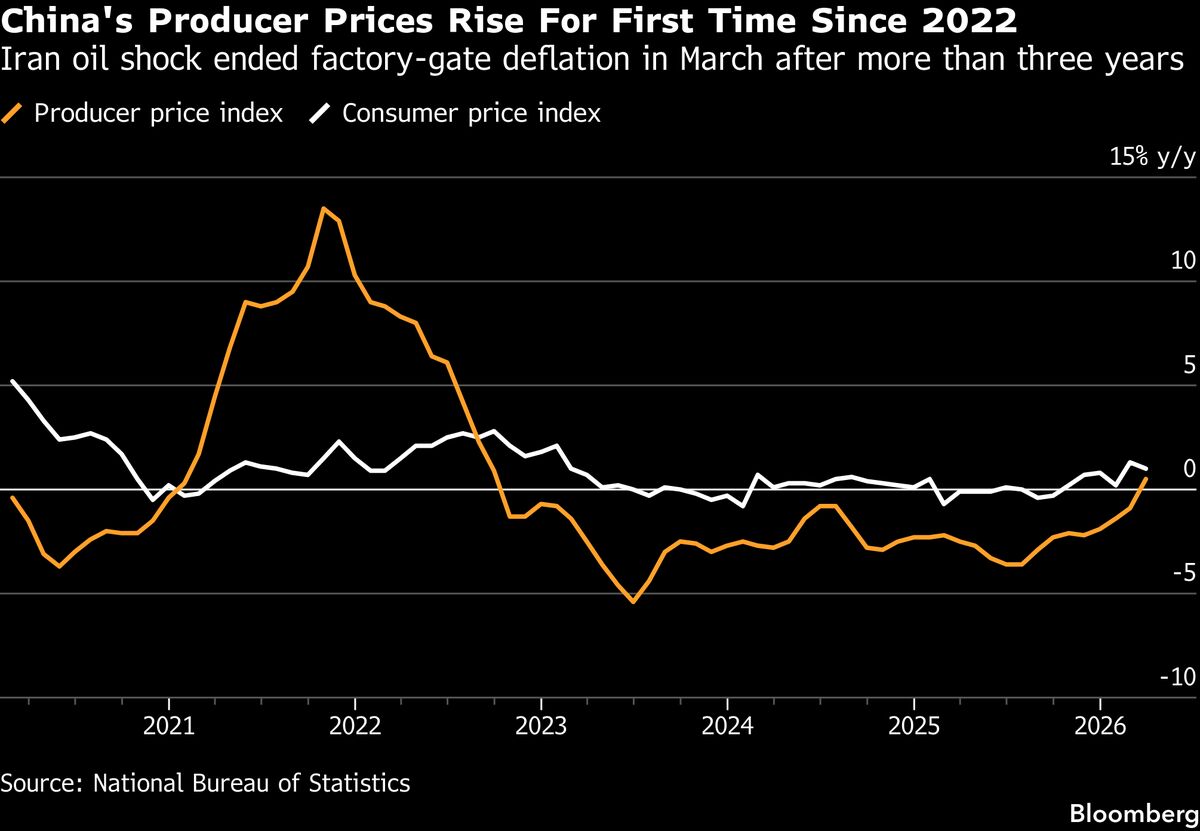
China’s factory prices grew at the fastest pace since the pandemic four years ago as the fallout from the Iran war sharply raises costs and leaves profits under pressure.
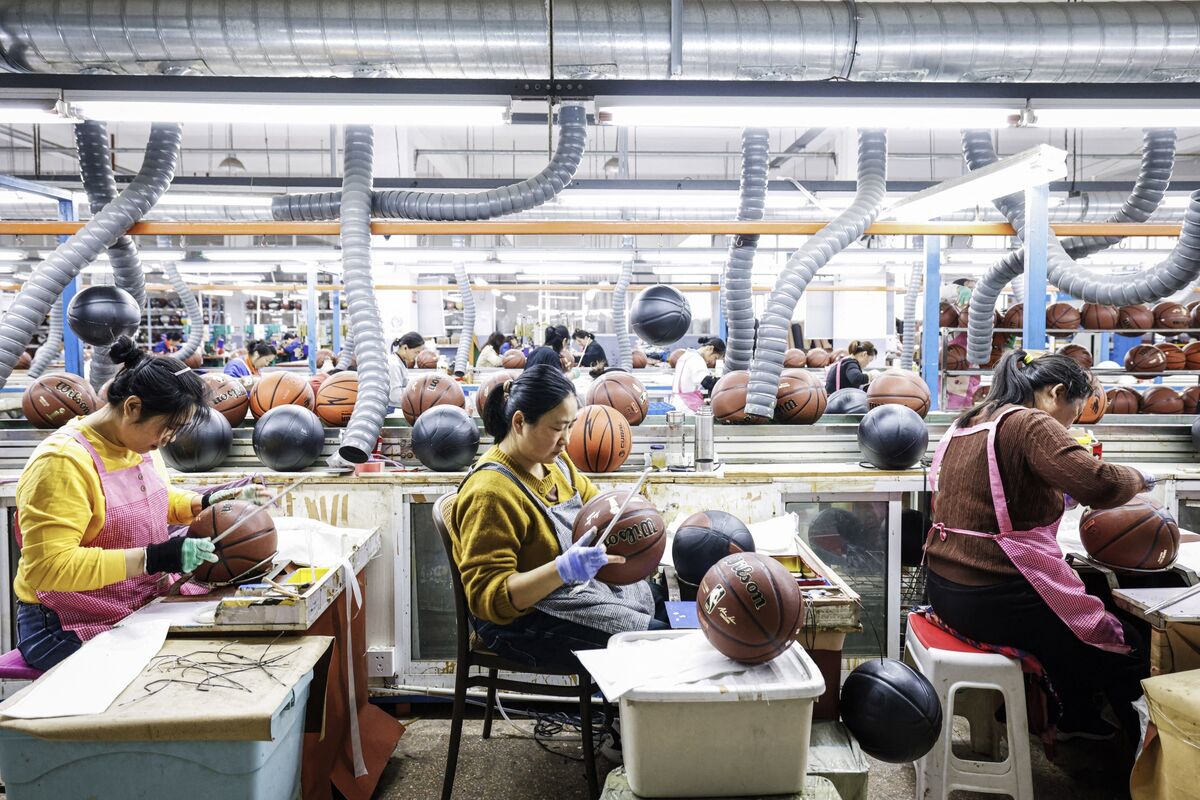
TOPSHOT - Employees produce basketballs that will be exported to Europe at a factory in Sihong, in eastern China's Jiangsu province on March 25, 2025. (Photo by CN-STR / AFP via Getty Images) / China OUT
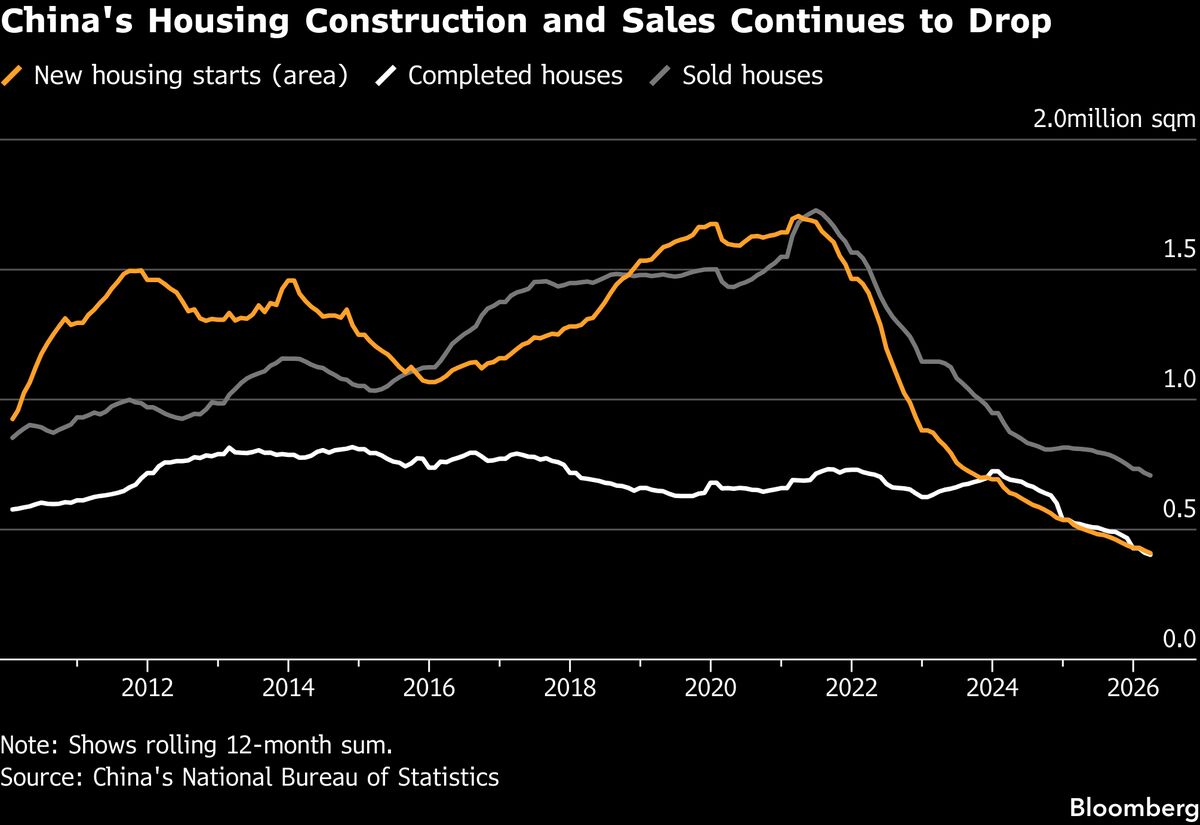
Just months into China’s housing downturn, the nation’s second-biggest developer declared the worst is over. A year later, its chairman backtracked on the call, and by 2025, it was teetering on the brink of a default.
Chinese construction activity suffered its biggest slump since the early stages of the Covid pandemic and the services sector fell back into contraction, even as exports kept factories humming despite the disruptions caused by the war in Iran.
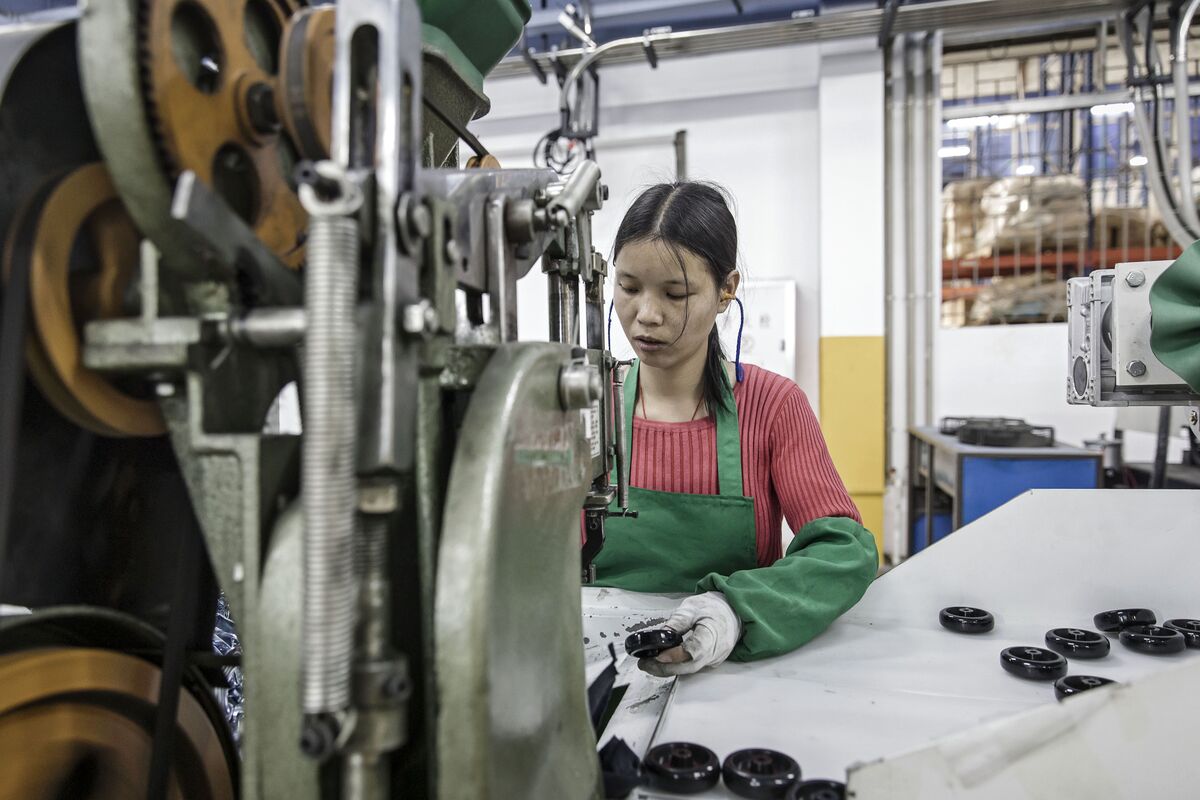
A workers handles a caster wheel at a factory in Foshan, China.
Economists at Goldman Sachs Group Inc. and Nomura Holdings Inc. joined peers at other major global banks in abandoning calls for China’s monetary easing this year, as top leaders convey confidence in growth and little urgency to step up support.
China’s top leaders pledged to counter external shocks and enhance energy security, while highlighting better-than-expected growth so far this year after the Iran war caused turmoil in global energy markets.
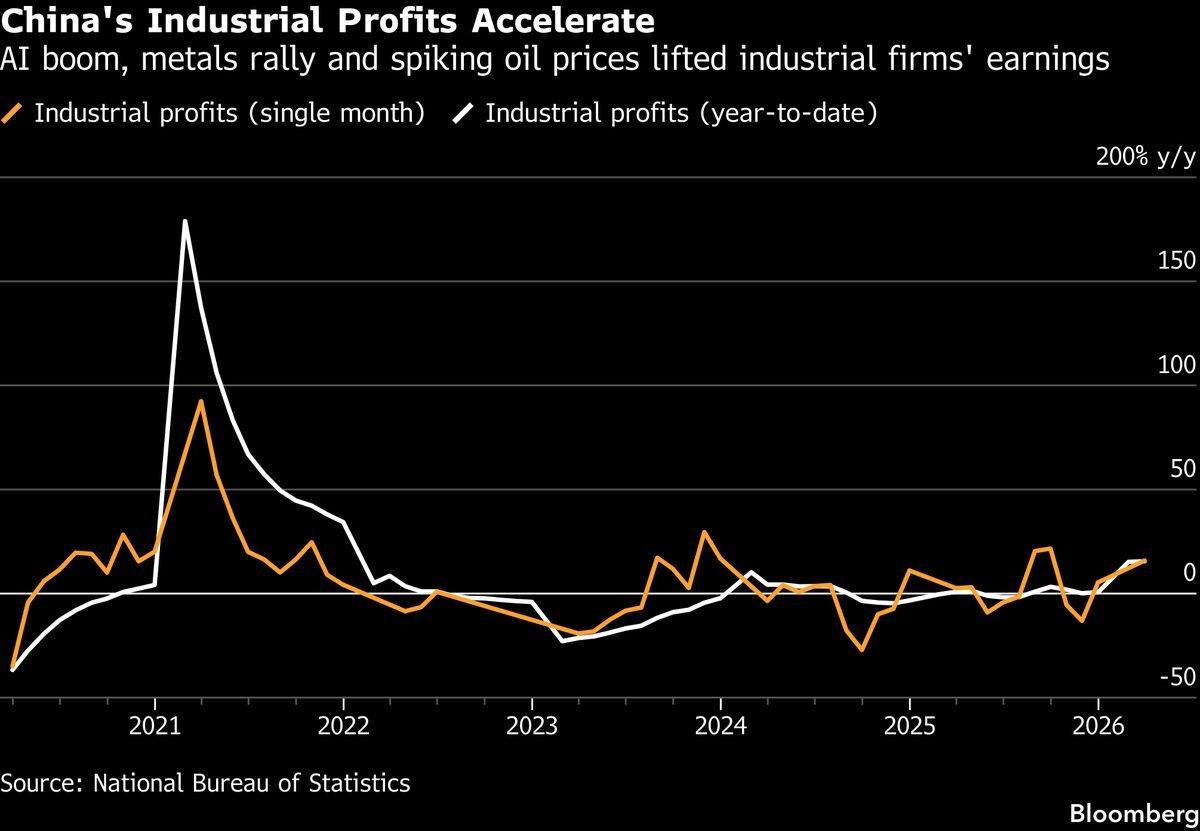
China’s industrial firms ended the first quarter with faster growth in earnings, an acceleration that hid a widening split between companies under pressure from higher costs and others benefiting from rising oil prices and the global artificial intelligence boom.
Economists have sharply upgraded their forecasts for China’s import growth and now expect it to overtake the pace of expansion in exports for the first time since 2021, keeping the trade balance from ballooning much beyond last year’s record.
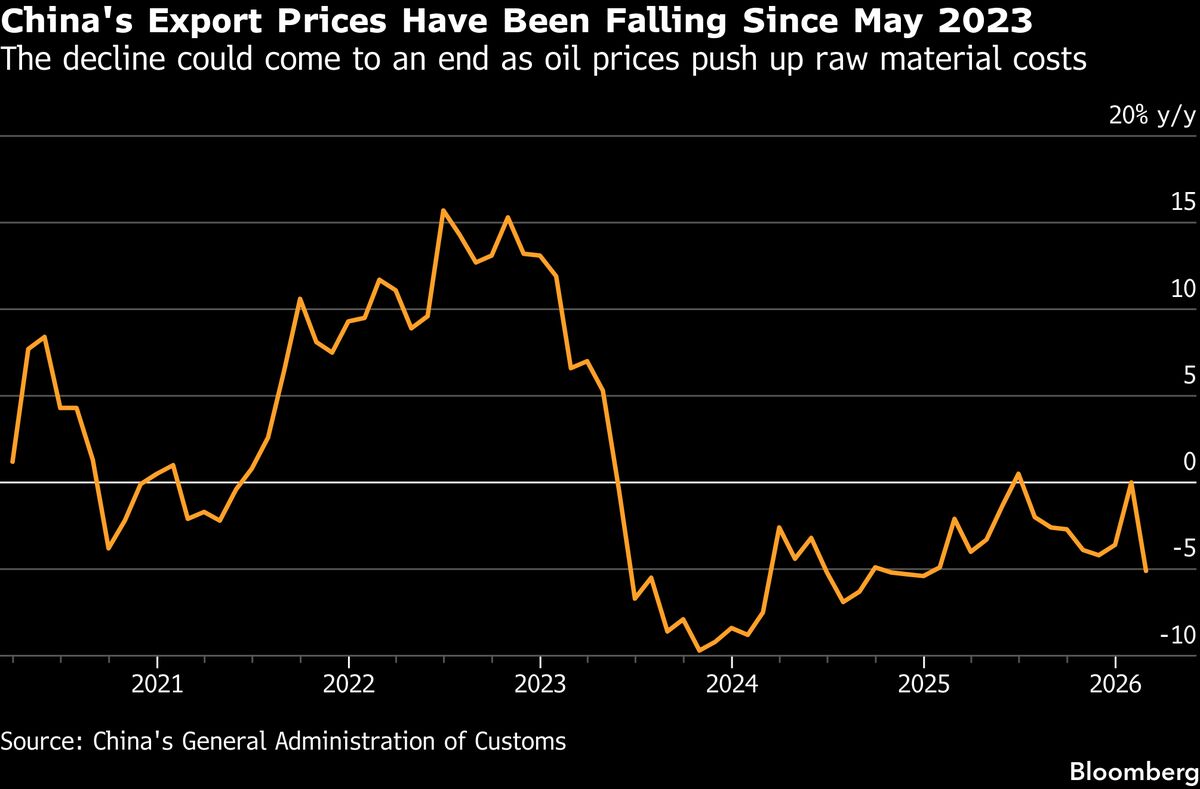
Chinese exporters are beginning to lift prices on everything from swimsuits to air conditioners as the Iran war drives up oil-linked input costs, signaling that global consumer inflation is likely to accelerate.
An unexpected deterioration in China’s labor market has reached the key demographic of early-career workers, as seasonal pressures amplified spillovers from the war in Iran while wider use of artificial intelligence raises risks for employment.
China’s economic growth rebounded more than expected in the first quarter, suggesting limited spillovers so far from the war in Iran but revealing few signs of turnaround in weak consumer spending.
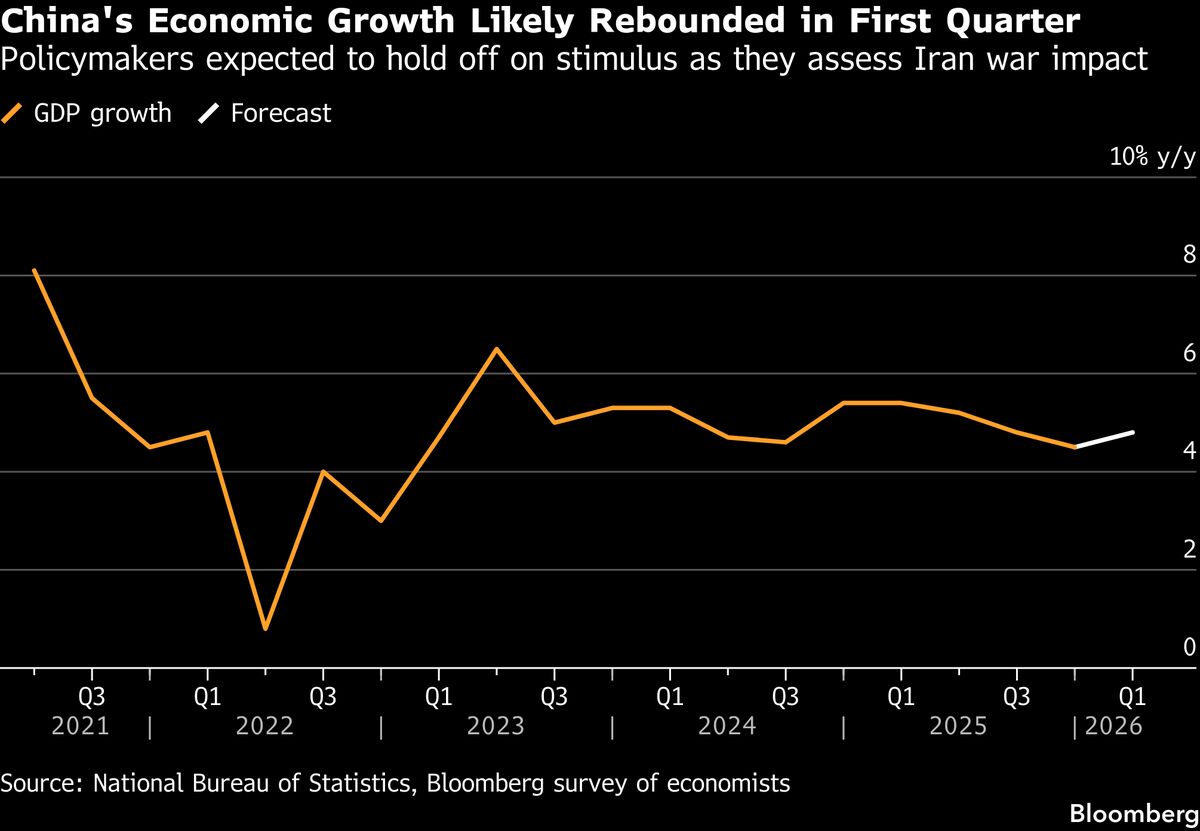
China’s growth likely rebounded in the first quarter of 2026, offering policymakers time to assess the impact of the Iran war on the world’s second-largest economy before stepping in with stimulus.
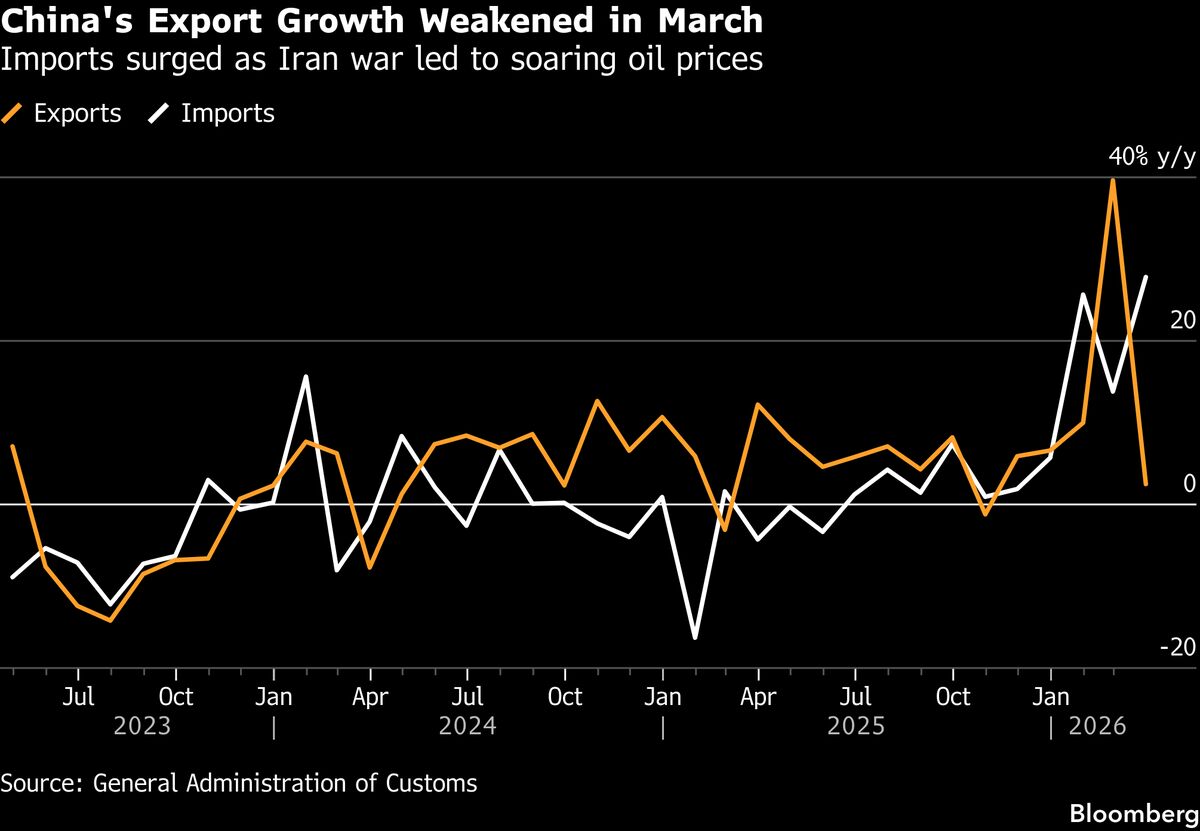
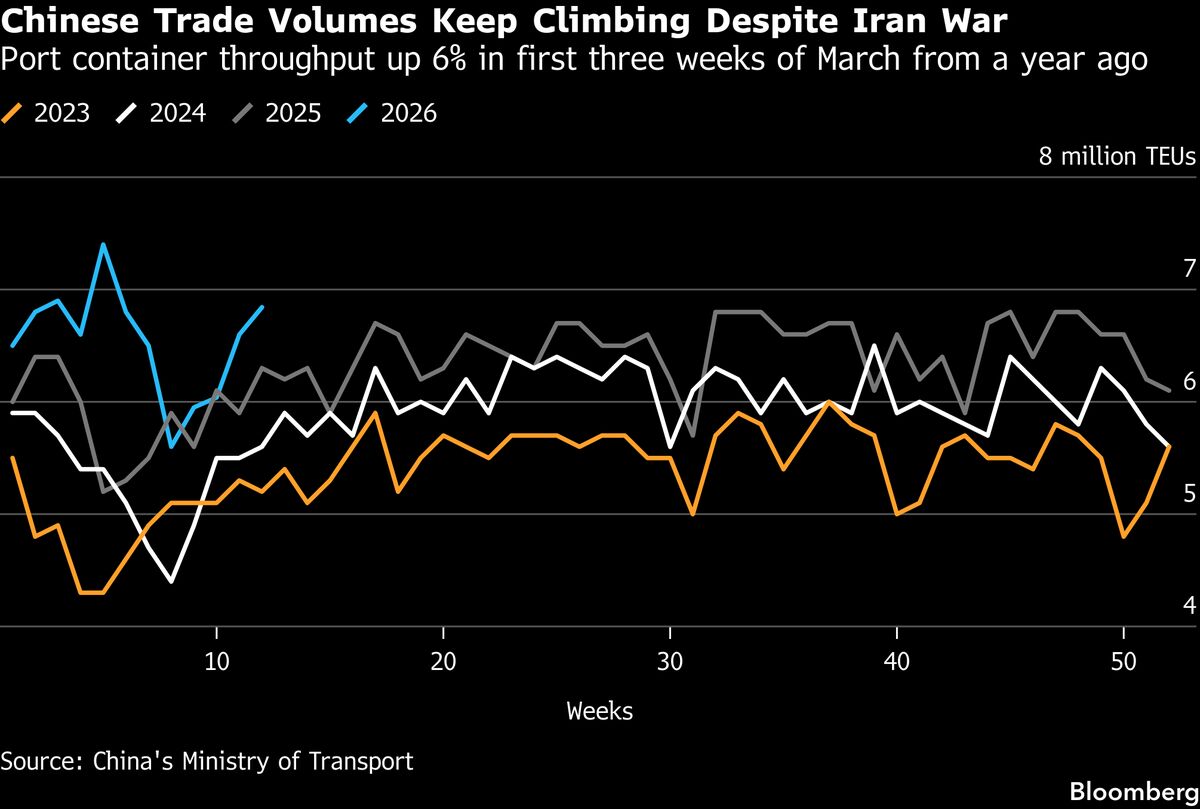
China’s export growth slowed sharply in March while imports surged, as seasonal factors added to the fallout of the war in Iran on global energy supply.
China’s factories saw a huge run-up in input costs even as their activity expanded for the first time this year, in one of the first tangible signs of spillover from the conflict in the Middle East that’s threatening profits.
When China’s Premier Li Qiang stood before global executives in Beijing last weekend pledging stability for his nation’s economy, toy factory manager Huang Shan had just laid off half his workers — undone by a war that’s rapidly reshaping the outlook for millions of smaller firms.
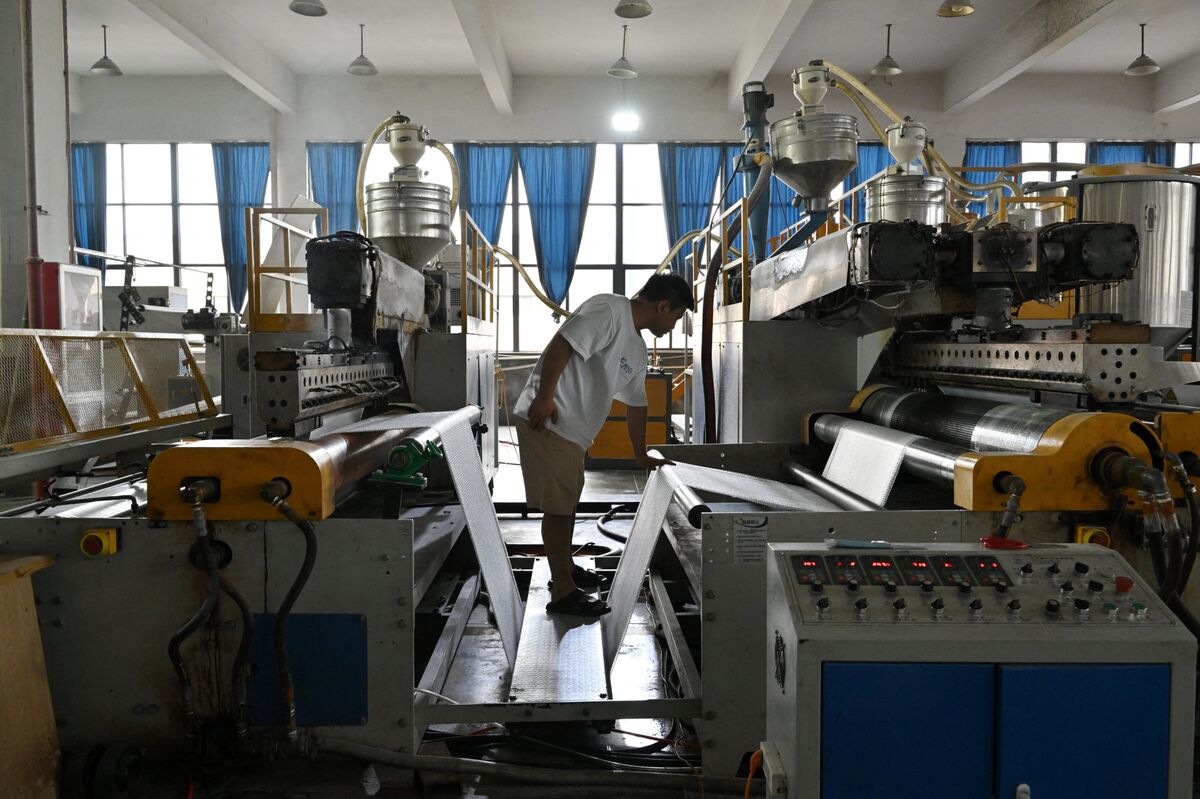
An employee works at a plastic factory in Yiwu, Zhejiang province. Photographer: Adek Berry/AFP/Getty Images
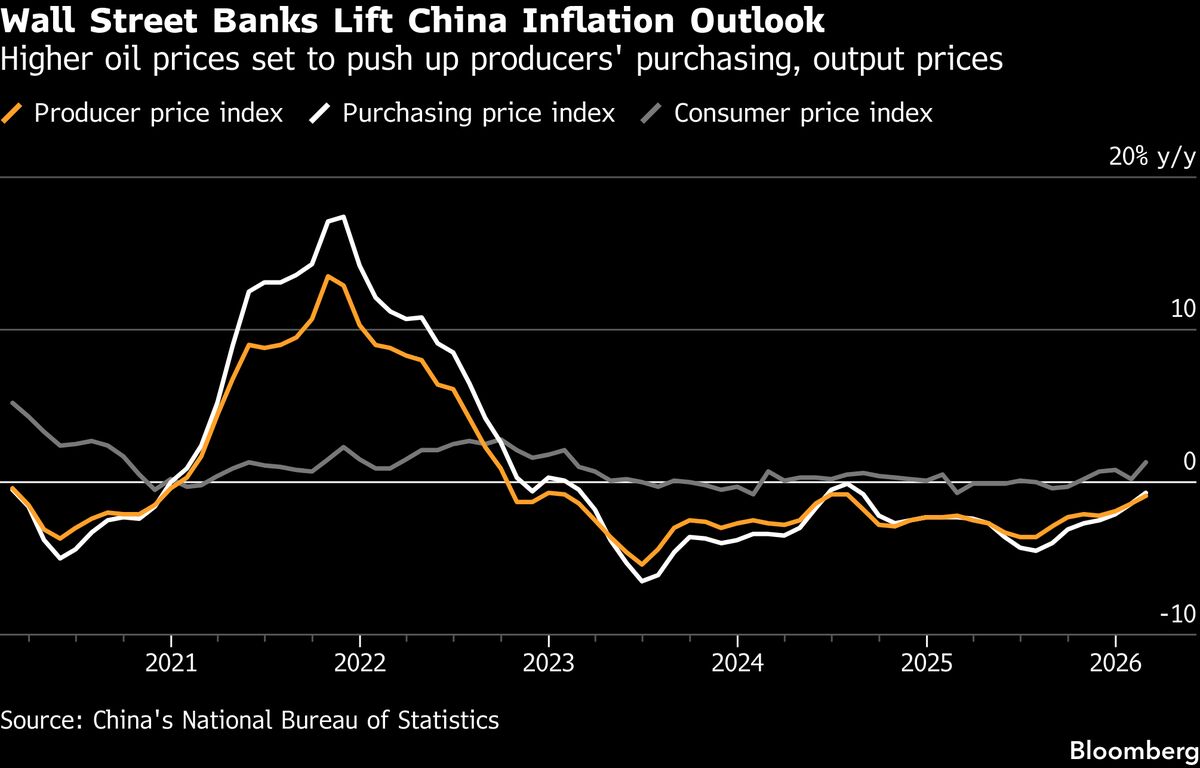
Some of the biggest US banks raised their projections for China’s inflation this year and pushed back predictions for its next interest-rate cut, as the escalating conflict in Iran sends oil prices higher.
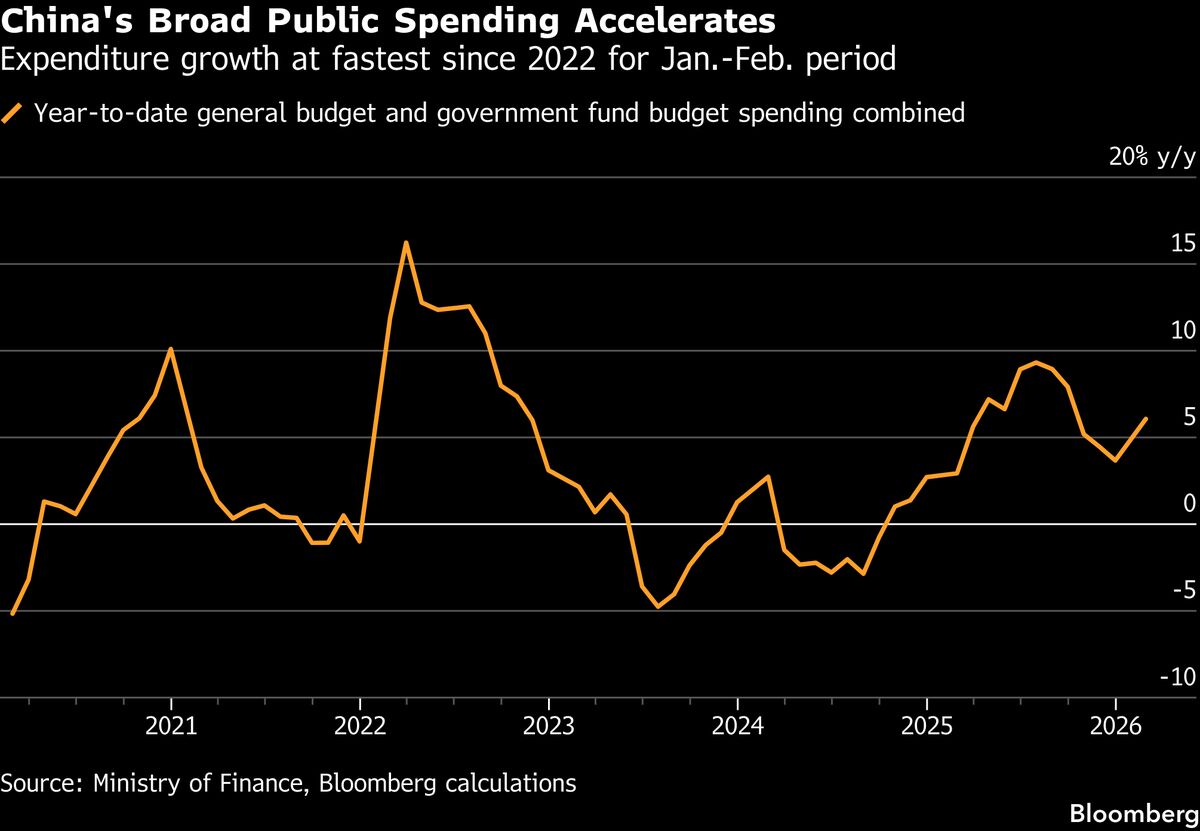
China’s government spending got off to its fastest start to any year since 2022, likely an effort by authorities to fortify the economy in the face of rising external uncertainty.
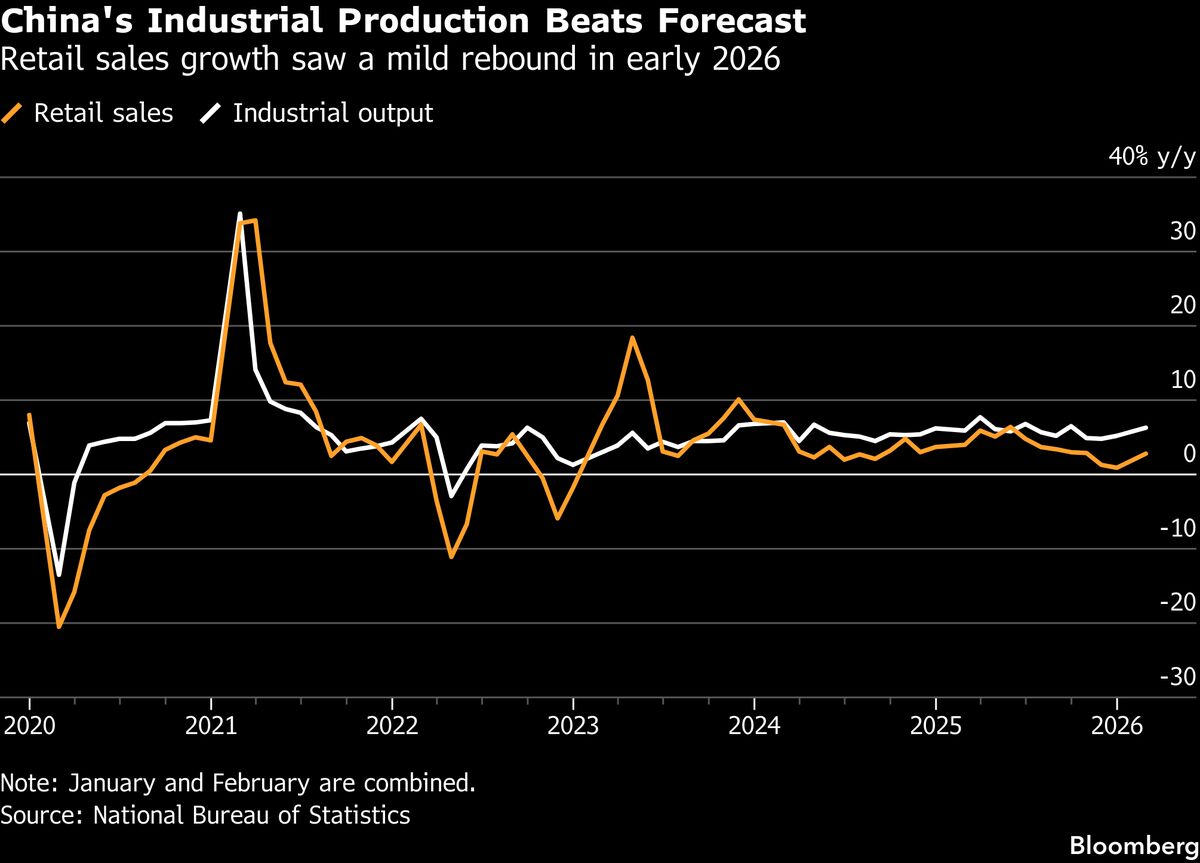
China’s economy rebounded in early 2026 with a surprising uptick in domestic consumption and investment, an acceleration that may prove hard to sustain if the war in Iran stalls exports.
China’s credit expansion surprisingly picked up from a year ago in February, helped by improved corporate lending despite slower government bond sales.
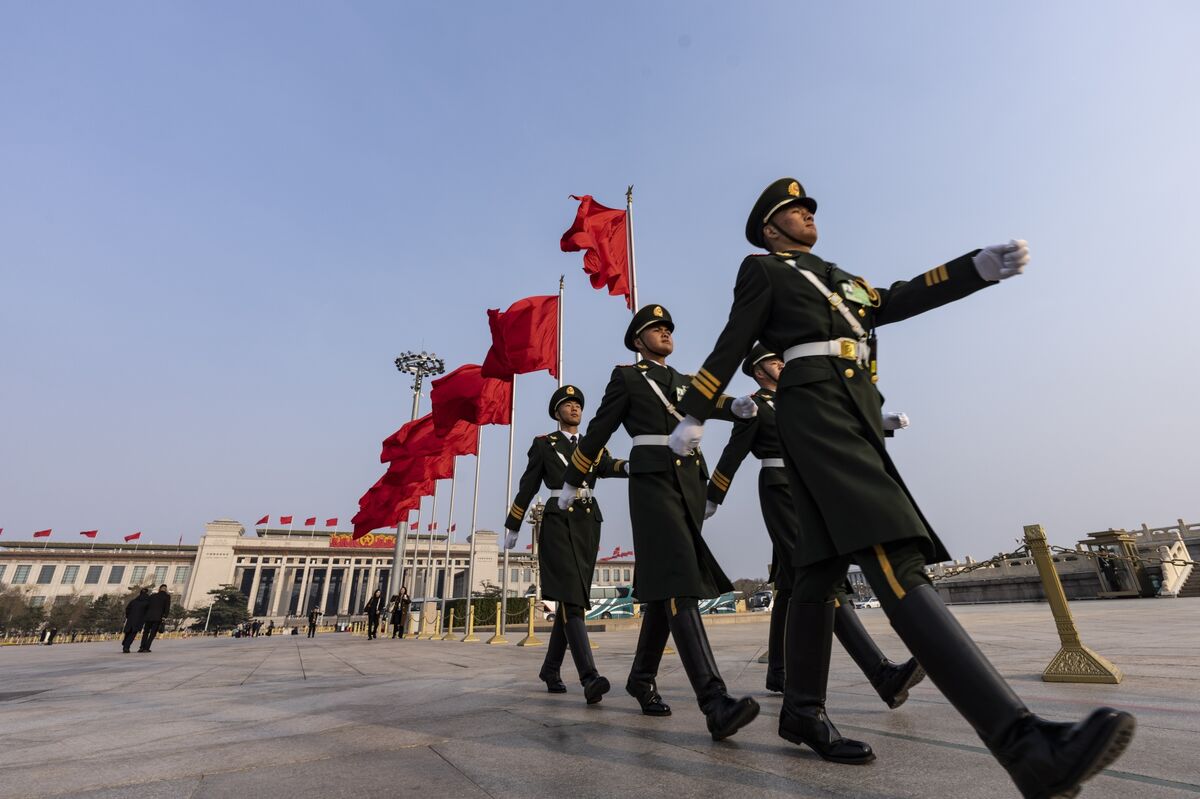
Members of the People's Armed Police walk through Tiananmen Square after the closing session of the National People's Congress (NPC) in Beijing, China, on Thursday, March 12, 2026. China adopted a law cementing President Xi Jinping's push to assimilate the country's ethnic minorities, another shift away from Beijing's long-held policy of giving such groups at least symbolic autonomy.

 Anmelden