Hedge funds are betting that a weak economic backdrop will force the Reserve Bank of New Zealand to undershoot expectations of five quarter point rate increases priced in the swaps market.
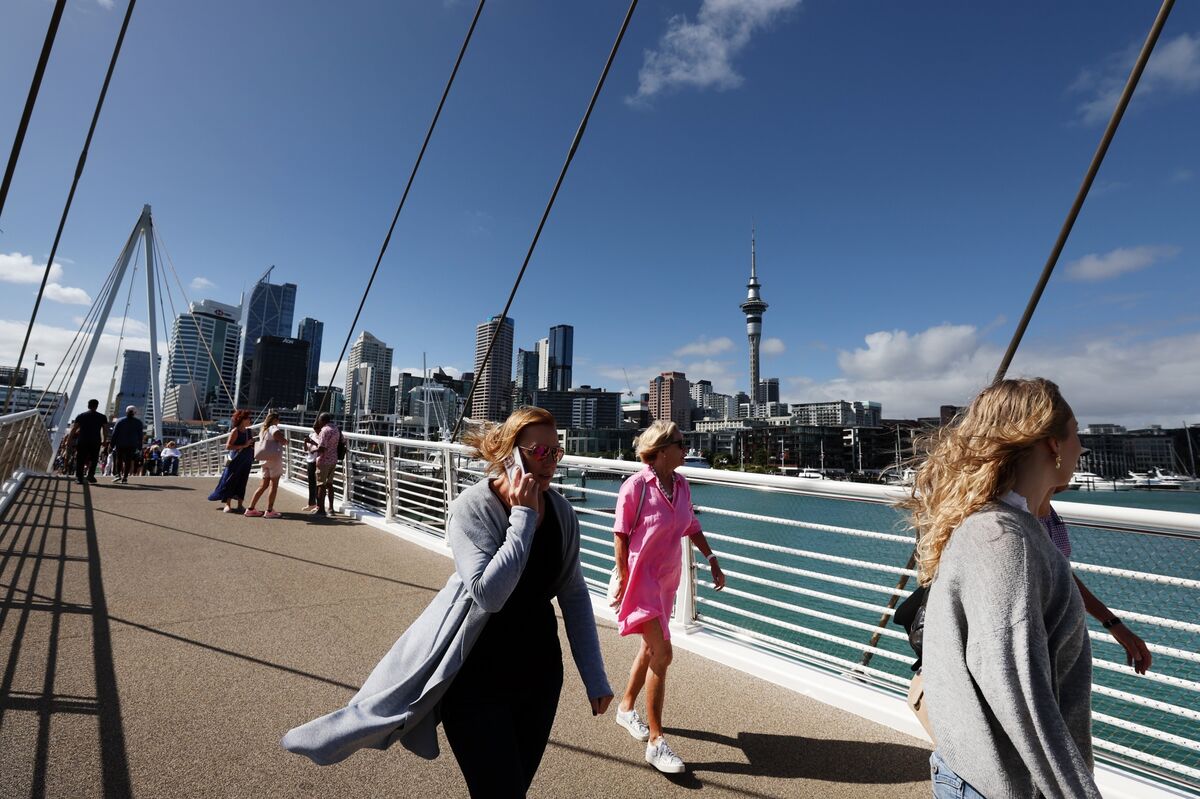
Pedestrians cross a bridge as the Sky Tower and other buildings stand in the background in Auckland, New Zealand, on Saturday, Feb. 22, 2025. New Zealand’s central bank will slow the pace of interest-rate cuts after a third straight reduction of 50 basis points, saying lower borrowing costs should begin to stoke an economic recovery.
Australia’s Treasurer Jim Chalmers on Sunday reiterated that overhauling the nation’s capital gains tax laws is aimed at fixing a broken housing market.
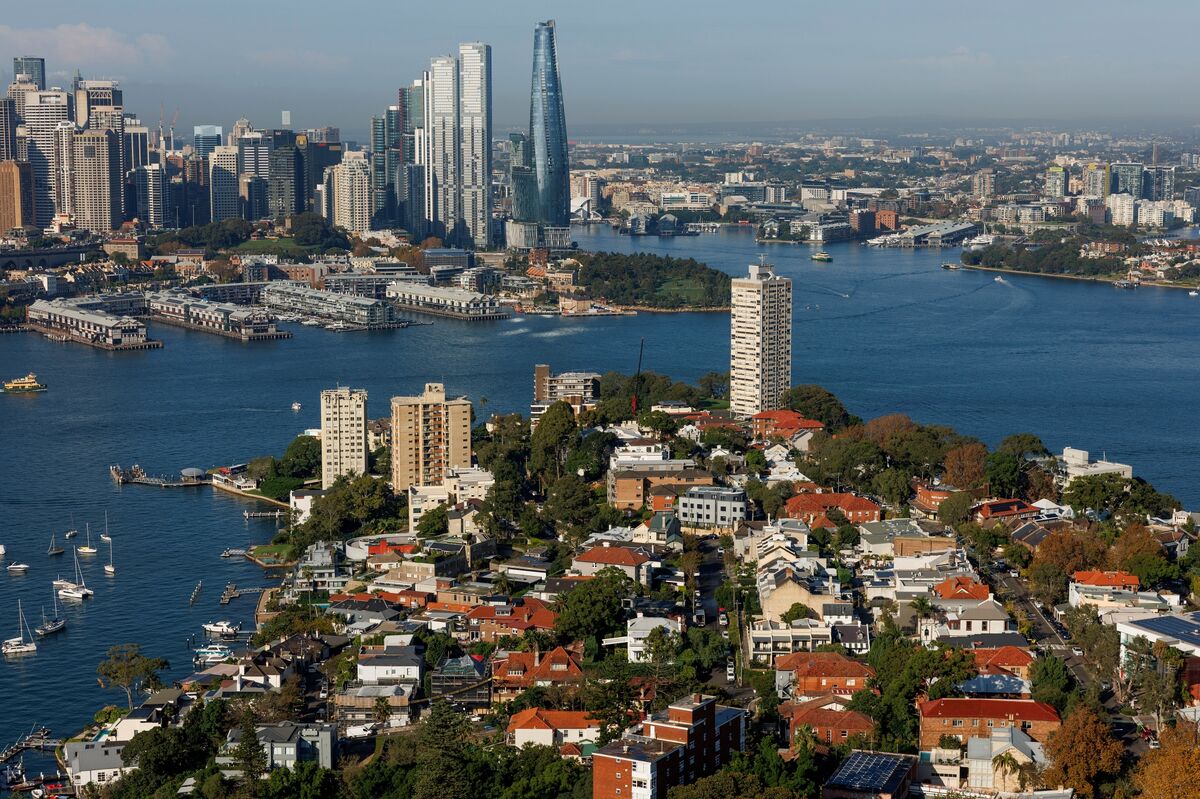
Residential and commercial buildings along Sydney Harbour in Sydney, Australia, on Tuesday, April 29, 2025. Australian capital city house prices continue to rise, and hotly anticipated interest rate cuts later this year could add further fuel to the fire, leaving some buyers and renters struggling to keep roofs over their heads. Photographer: Brendon Thorne/Bloomberg
The Australian dollar’s rally may fade with the Reserve Bank of Australia set to signal a slower pace of interest rate hikes after a widely expected increase this week, according to top forecasters.
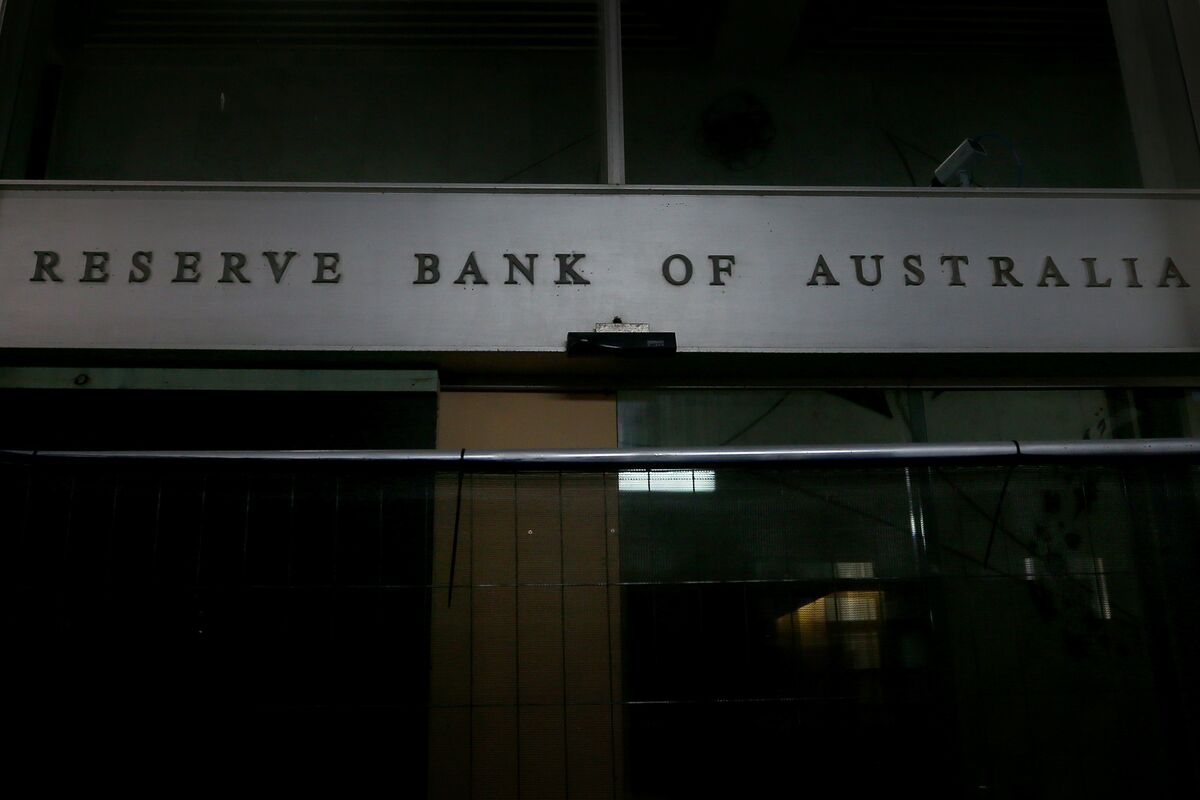
The Reserve Bank of Australia (RBA) building is seen behind construction fences on August 06, 2024 in Sydney, Australia. The markets are closely attuned to the RBA's next rates decision, with inflation persisting even as rates have been elevated for an extended time after the end of the COVID-19 pandemic.
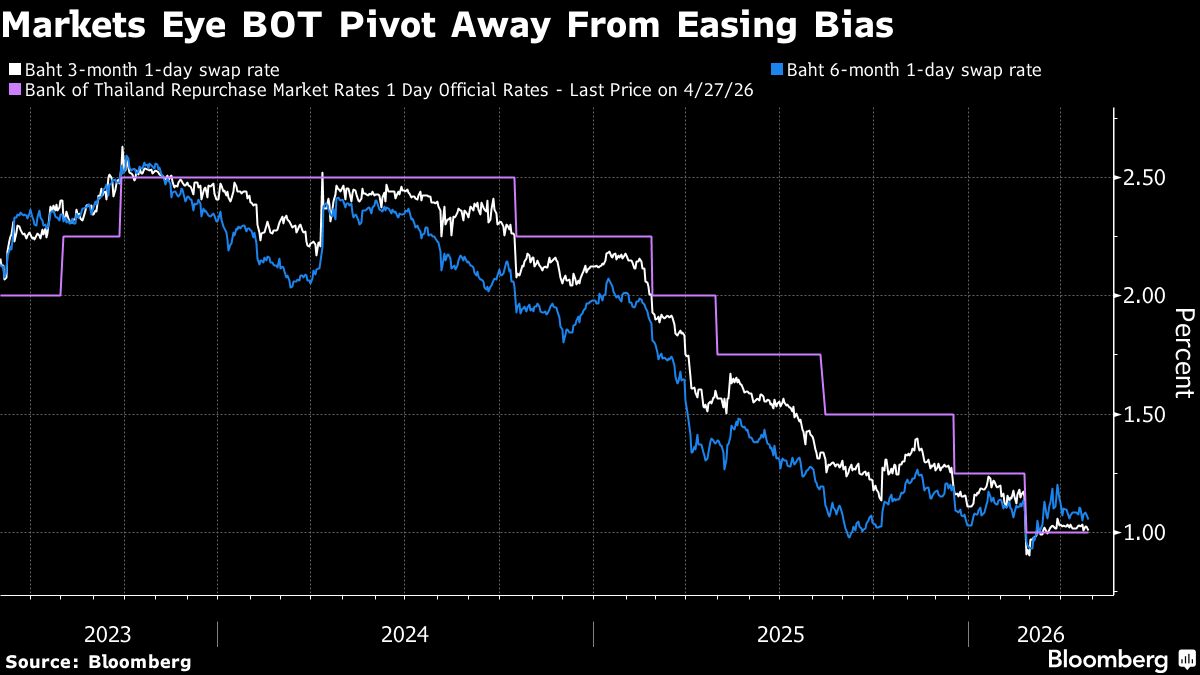
The Bank of Thailand will likely keep borrowing costs at their lowest in nearly four years to shield the fragile economy from the impact of the global oil shock.
New Zealand’s benchmark bond yields rose to the highest since 2024 after the country’s AA+ credit rating outlook was cut to negative by Fitch Ratings.
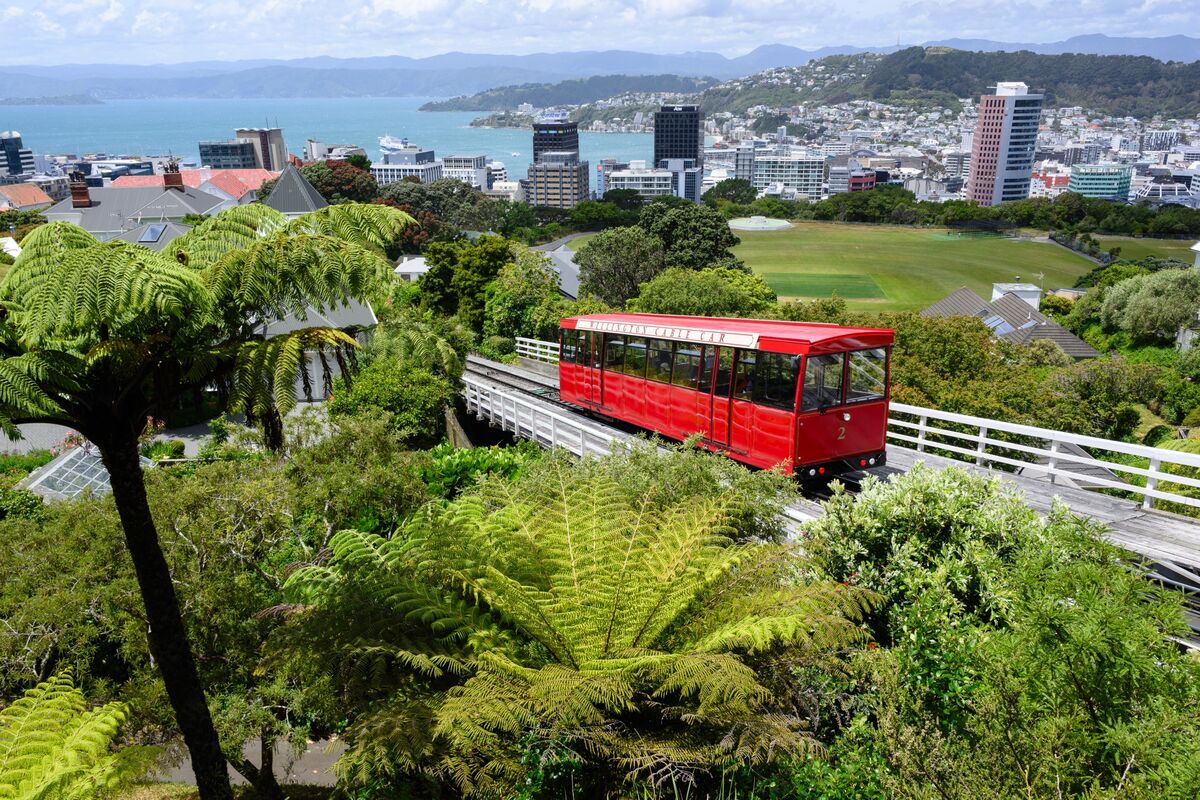
A cable car travels above the central business district in Wellington, New Zealand, on Monday, Dec. 15, 2025. New Zealand is scheduled to release its gross release gross domestic product (GDP) figures on Dec. 18.
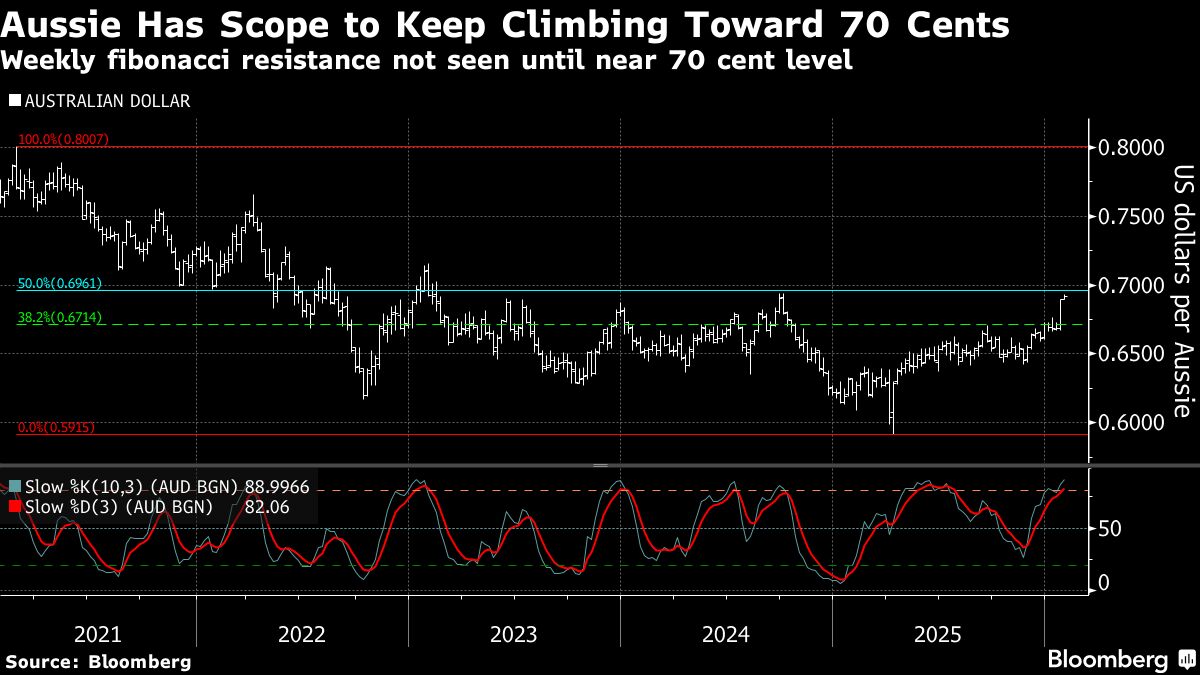
The Australian dollar is nearing its strongest level in three years propelled by the central bank’s hawkishness and as the threat of a joint US-Japan yen defense weighs on the greenback.
Australian unemployment unexpectedly fell in December as the economy added more jobs than anticipated, prompting traders to boost bets that the Reserve Bank will be forced to raise interest rates as early as next month.
The dollar is coming under pressure after President Donald Trump announced a 10% tariff on European countries opposed to his plans to seize Greenland, raising jitters around holding American assets amid erratic US policy.
Donald Trump in Washington, DC, on Jan. 16. Photographer: Aaron Schwartz/Bloomberg
Australia’s debt manager has cut its bond issuance plans for the fiscal year ending June 2026 more than expected, after the government forecasted stronger revenue from improved economic growth.

 Anmelden