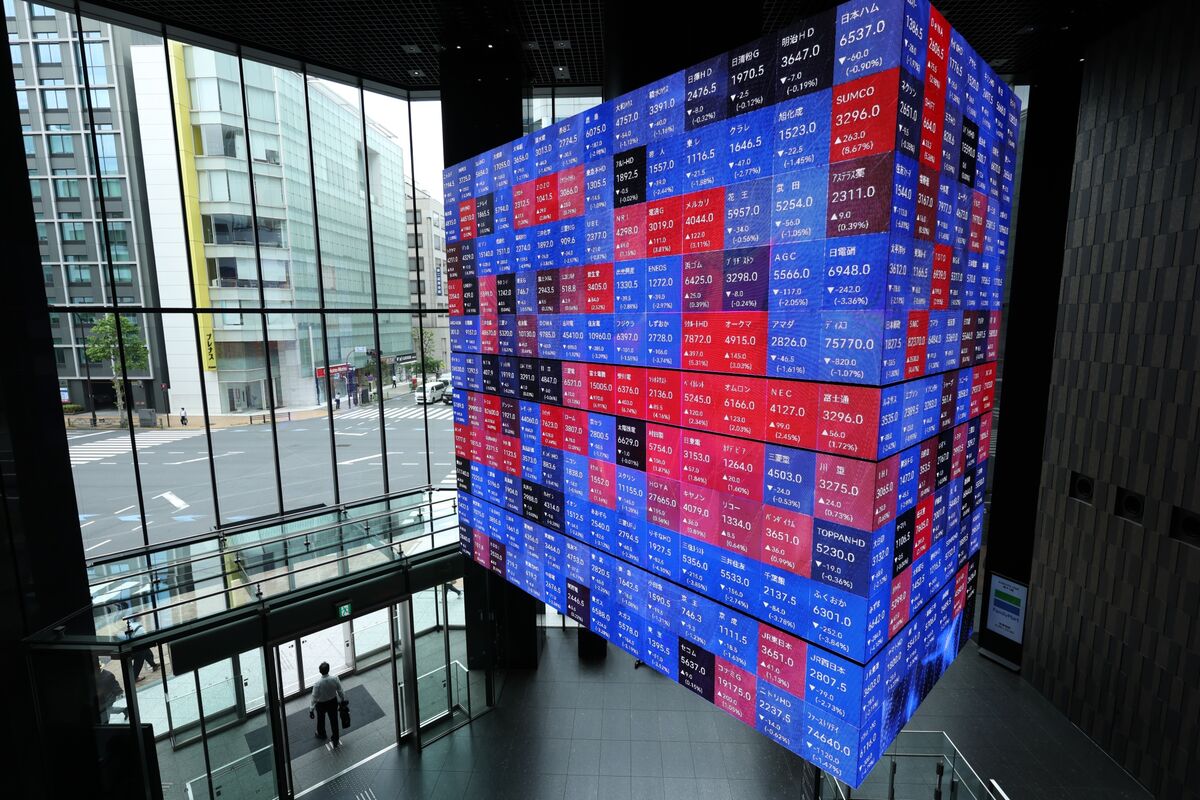
Japan’s biggest companies reduced capital spending in the first quarter even as ordinary profits at manufacturers reached a record, as emerging uncertainty from escalating turbulence in the Middle East clouded prospects for future growth.
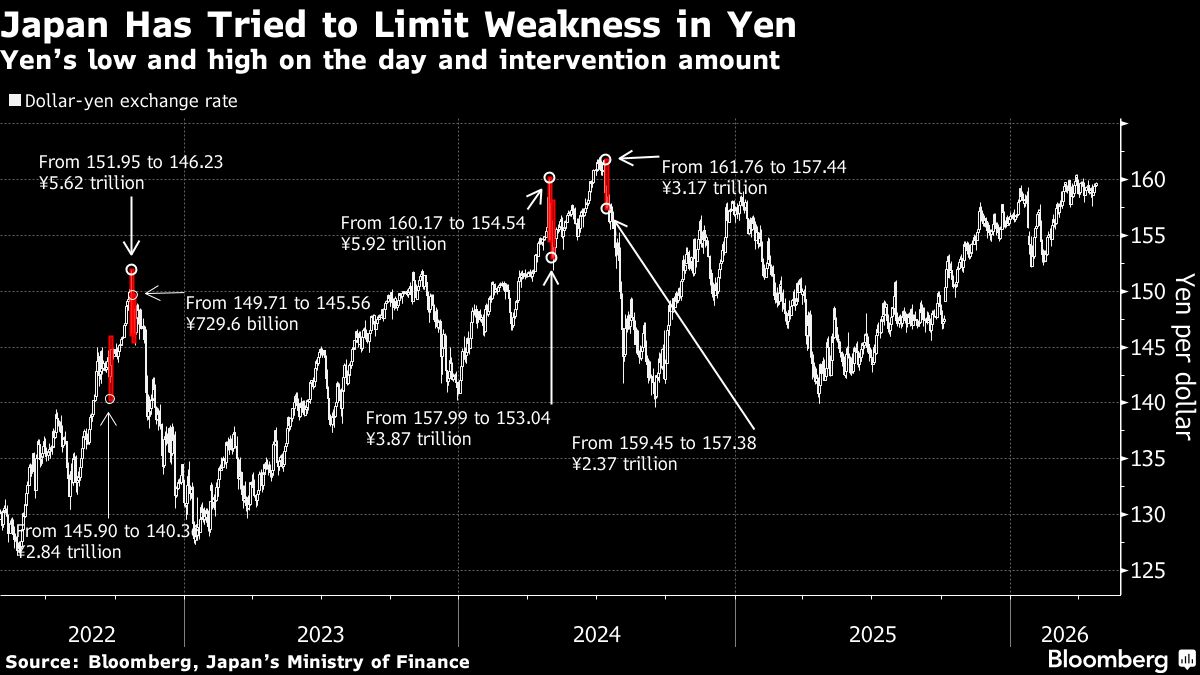
Japan used a record of almost $74 billion over the past month to prop up the yen after the currency slid past 160 per dollar, according to Finance Ministry data confirming the government’s first market intervention since 2024.
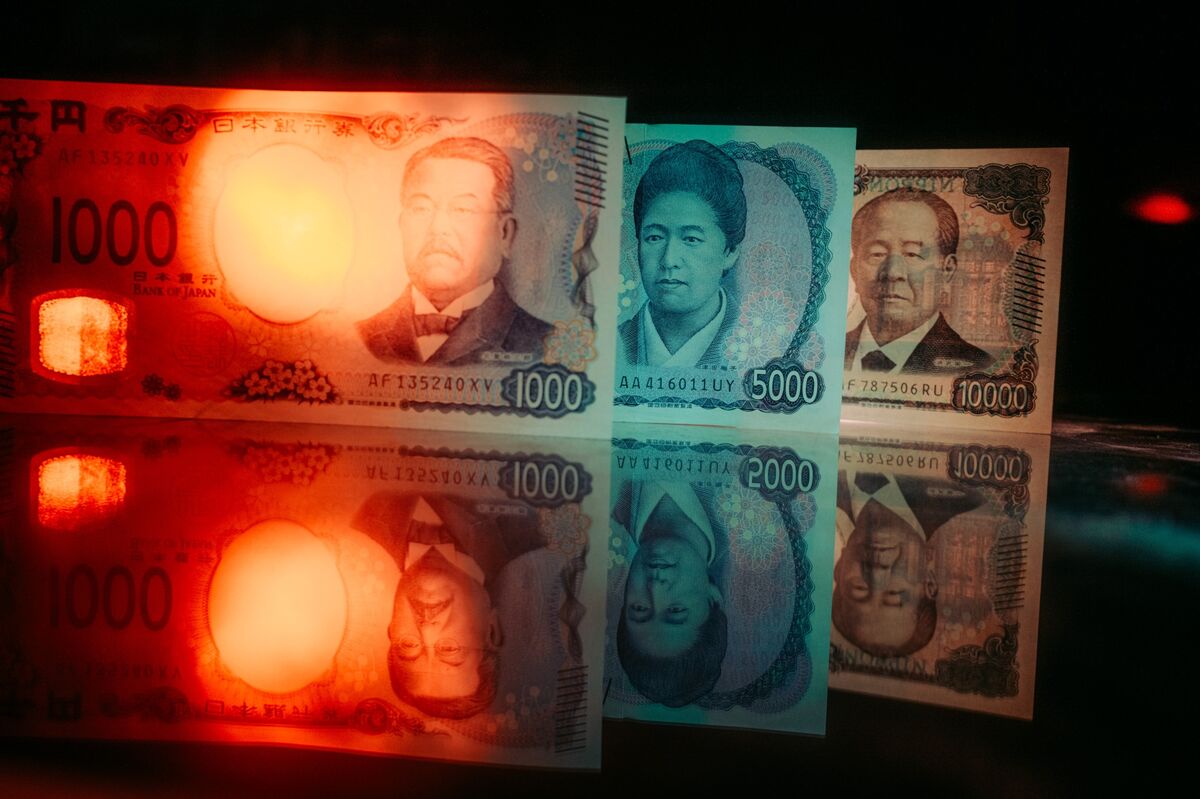
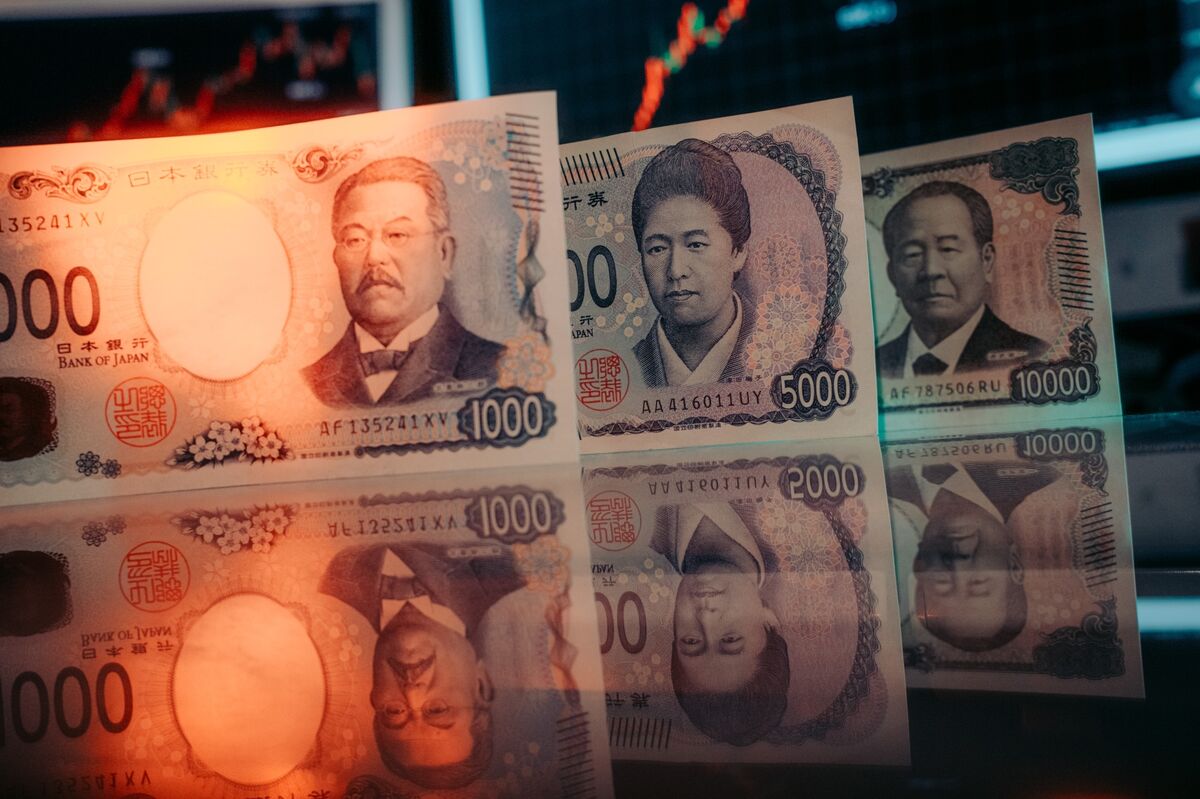
Japanese banknotes arranged in Kyoto, Japan, on Tuesday, Jan. 27, 2026. The yen is now hovering around its strongest level since October after comments from Japanese officials fueled speculation that the government may intervene in the market to prevent the currency from resuming its slide.
Japan plans to use so-called bridging bonds to help finance Prime Minister Sanae Takaichi’s investment plans, the government’s top spokesperson said, a development that comes as investors are already concerned about more debt issuance.
The government will use about $3.2 billion from the reserve fund for this year’s annual budget to finance utility subsidies, Japanese Finance Minister Satsuki Katayama said.
Japan slipped behind China to become the world’s third largest creditor nation in 2025, despite setting a fresh record for its tally of overseas assets.
Japanese Prime Minister Sanae Takaichi said the government will finance its extra budget without increasing bond issuance on a calendar basis, in a likely attempt to ease market concerns over government finances.
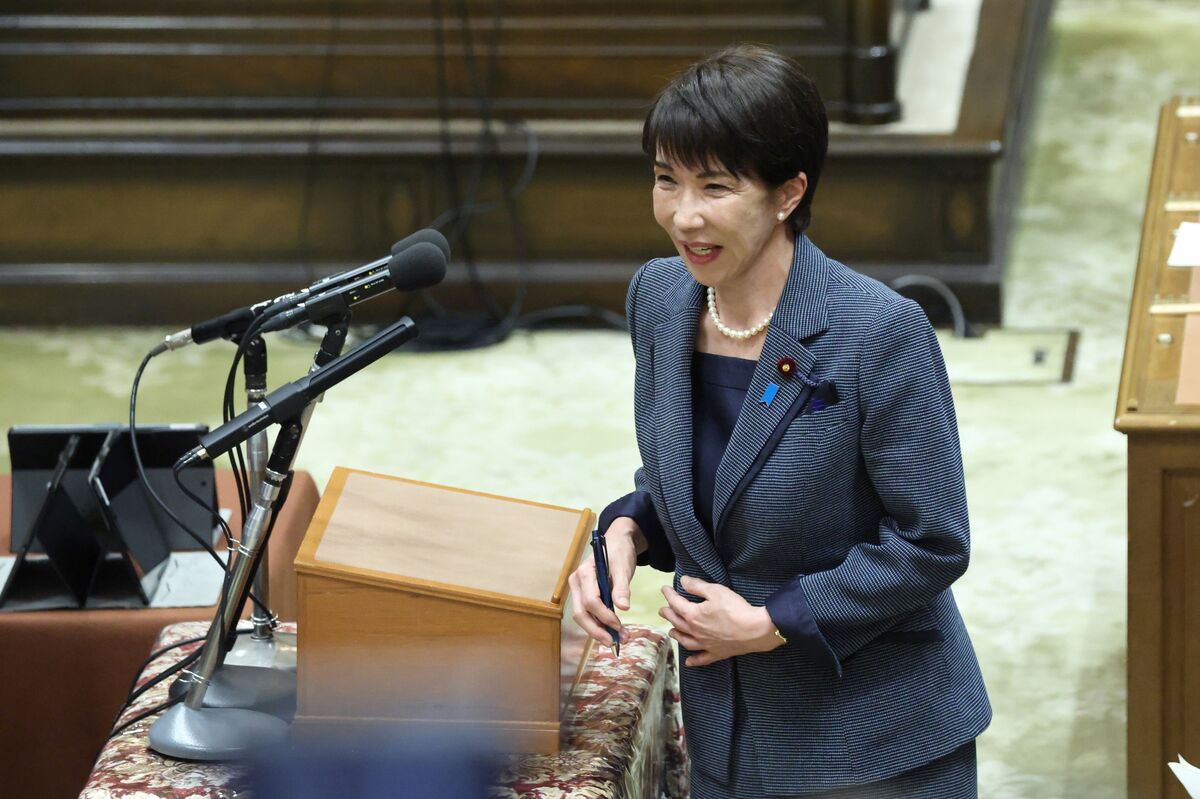
Sanae Takaichi, Japan's prime minister, reacts after a party leaders' debate at the lower house of parliament in Tokyo, Japan, on Wednesday, May 20, 2026. Takaichi said she expects to compile an extra budget without relying too heavily on bond issuance for the funding.
Japan’s extra budget will likely be in the region of $19 billion, Finance Minister Satsuki Katayama suggested while playing down the likely impact of the extra spending on government finances.
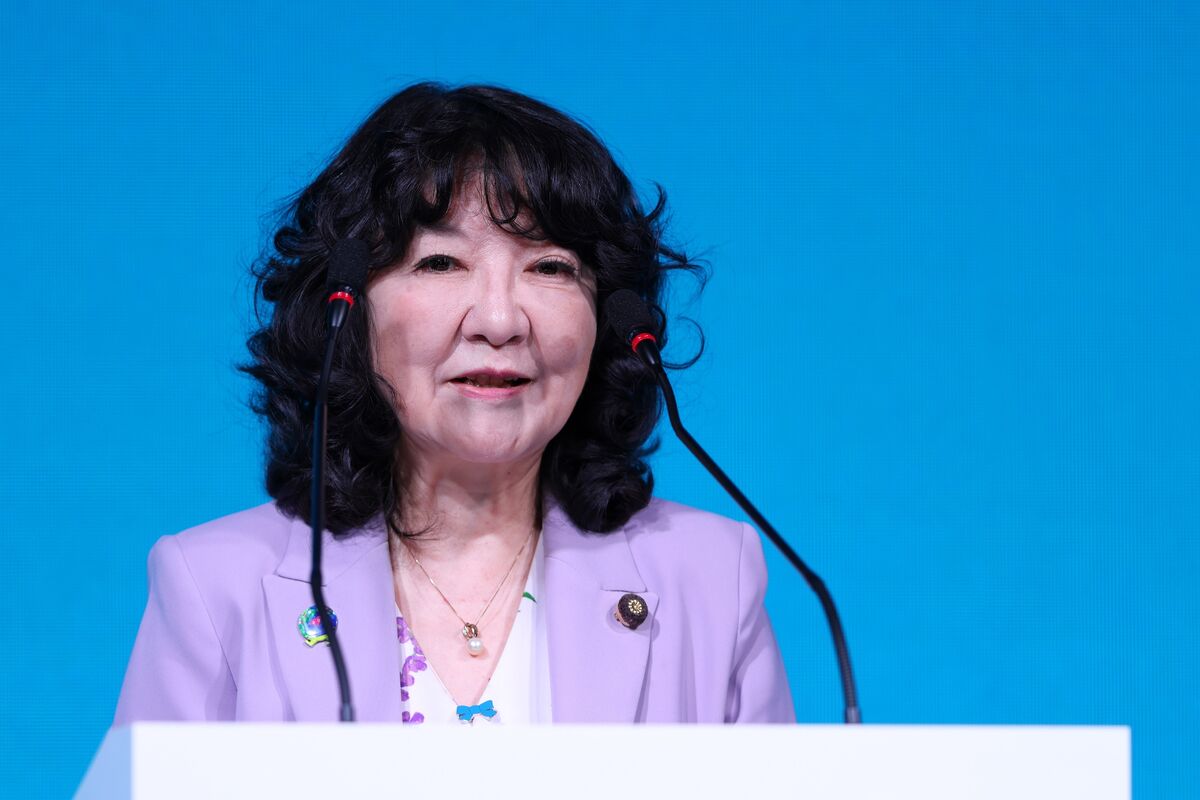
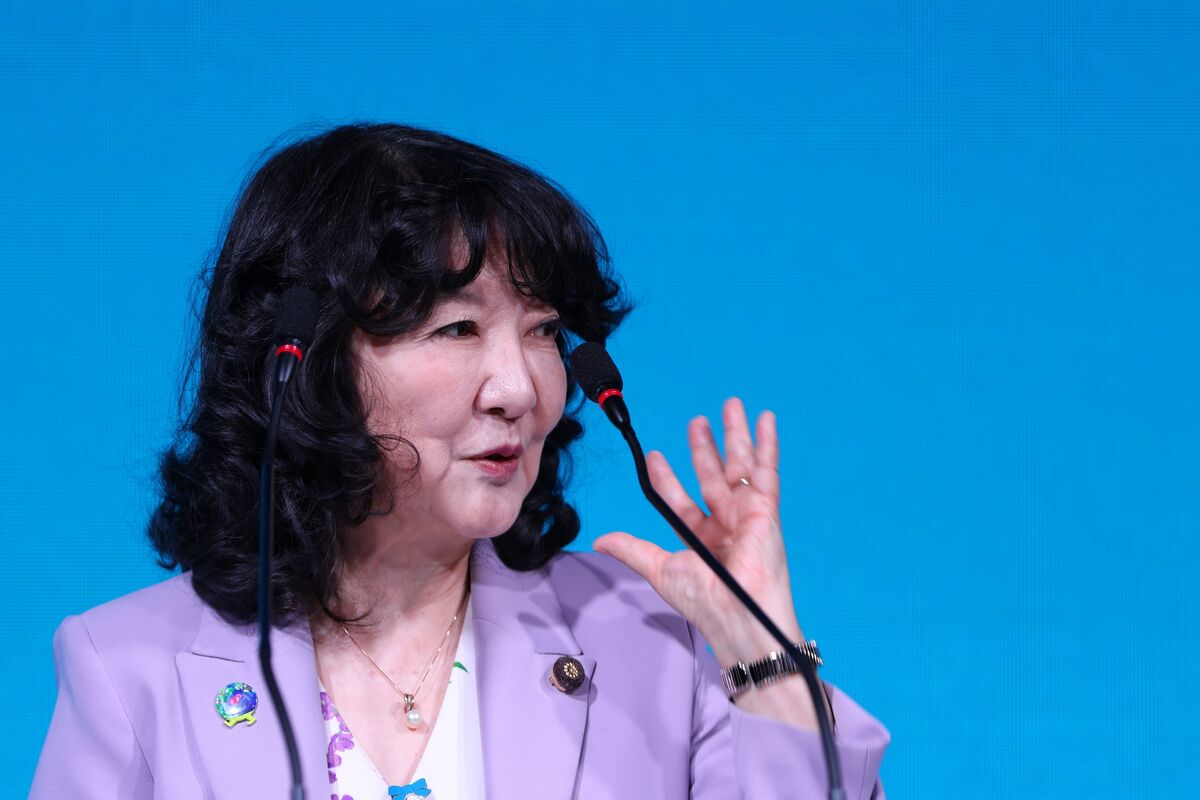
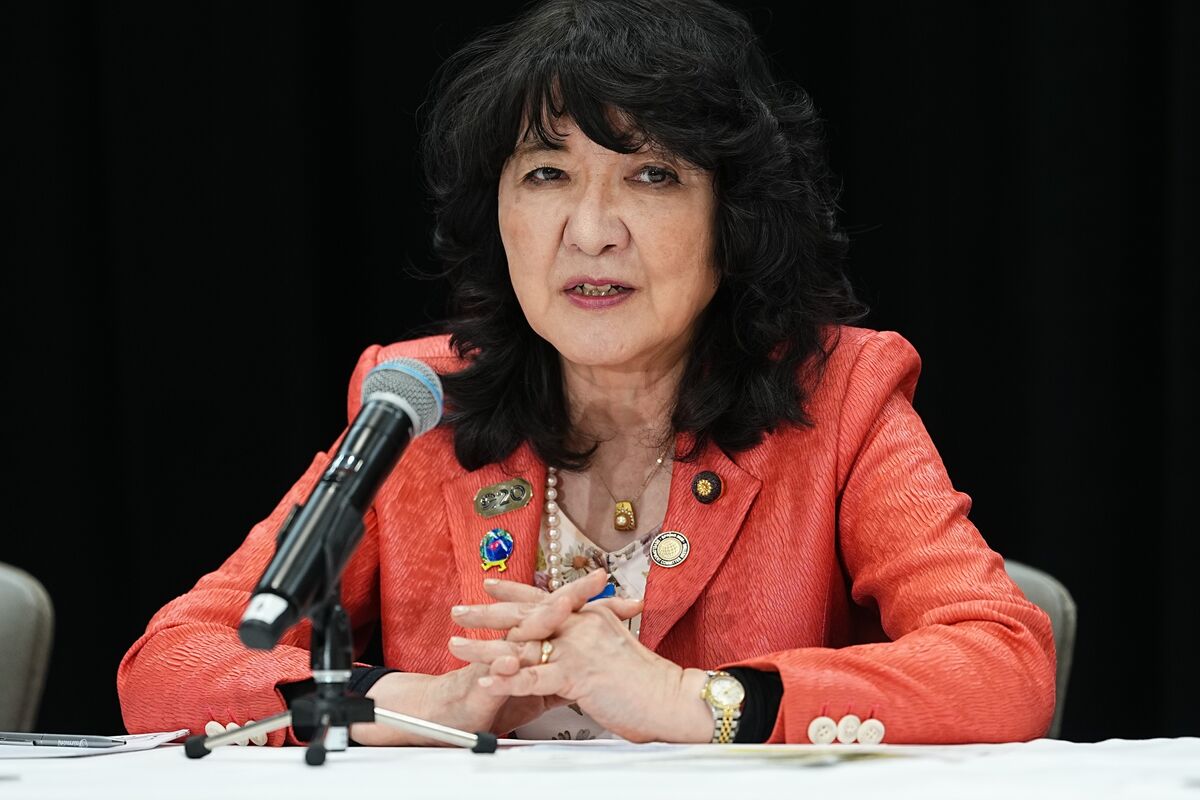
Bank of Japan Board Member Junko Koeda signaled support for raising benchmark interest rates, the latest indication that momentum is building for a move as early as next month.
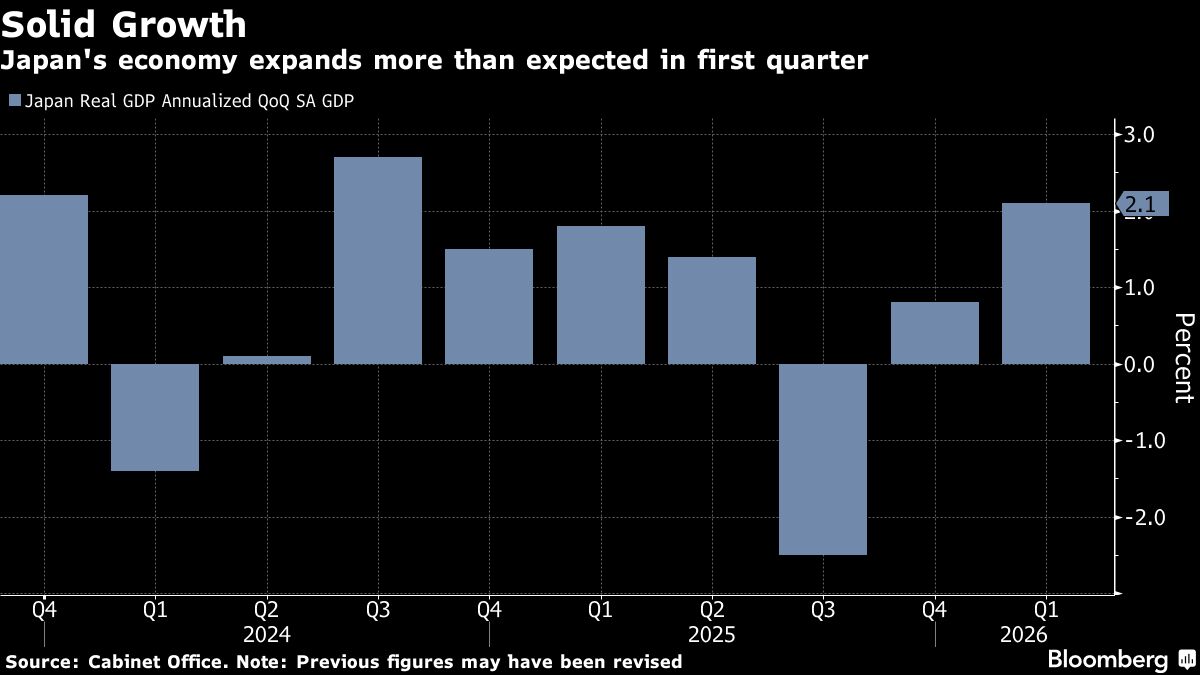
Japan’s economy grew much faster than expected at the start of the year, supporting the case for further Bank of Japan interest-rate hikes, though the outlook remains highly uncertain due to the Middle East conflict.
Japanese Prime Minister Sanae Takaichi called for an extra budget in response to rising commodity prices driven by the ongoing Middle East conflict, backtracking on her insistence that such a measure wasn’t necessary and helping spark fresh record highs in super-long bond yields.
Japanese Finance Minister Satsuki Katayama reiterated that the government doesn’t need to compile an extra budget for now, adding that a recent rise in yields on Japanese government bonds is part of a broader global trend.
Satsuki Katayama, Japan's finance minister, speaks to members of the media during the International Monetary Fund (IMF) and World Bank Spring meetings in Washington, DC, US, on Thursday, April 16, 2026. The International Monetary Fund downgraded its growth projection for the year after the war in the Middle East triggered a major oil shock and included the possibility of a downturn if the conflict drags on and energy infrastructure is severally damaged.
The Bank of Japan’s policy rate is expected to reach 2% by the end of 2027, according to a new estimate from the Organisation for Economic Co-operation and Development.
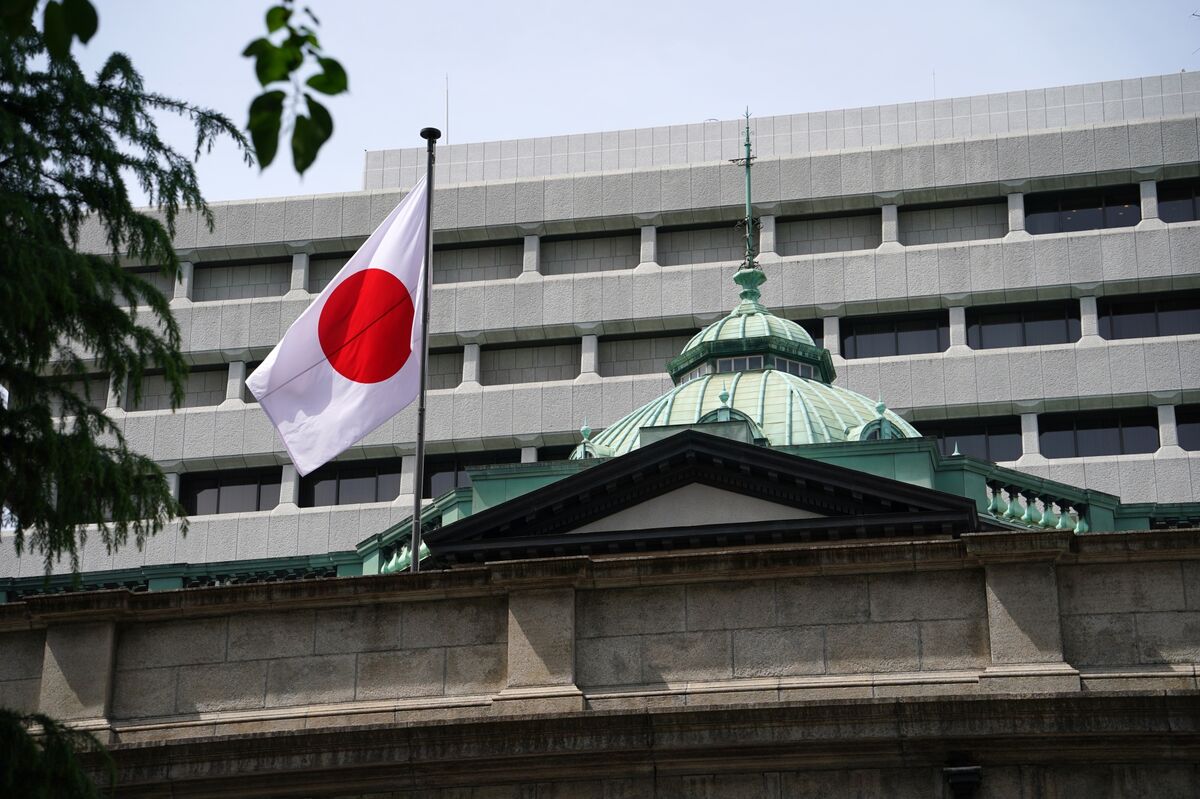
A Japanese flag flies outside the Bank of Japan (BOJ) headquarters in Tokyo, Japan, on Tuesday, April 28, 2026. The Bank of Japan left its benchmark interest rate unchanged in a split vote that increased the likelihood of a hike in June and pushed the yen higher.
Japan’s foreign currency reserves at the end of April were largely unchanged from the previous month, likely an indication that recent currency intervention in the market came too close to the end of the month to be reflected in the data.
Japanese yen banknotes arranged in Kyoto, Japan, on Tuesday, Jan. 27, 2026. The yen is now hovering around its strongest level since October after comments from Japanese officials fueled speculation that the government may intervene in the market to prevent the currency from resuming its slide. Photographer: Kentaro Takahashi/Bloomberg
A key panel advising Japan’s government urged the Bank of Japan to consider risks of worsening corporate funding conditions when formulating monetary policy, in a sign that Governor Kazuo Ueda may face pushback if he seeks to raise the benchmark rate next month.
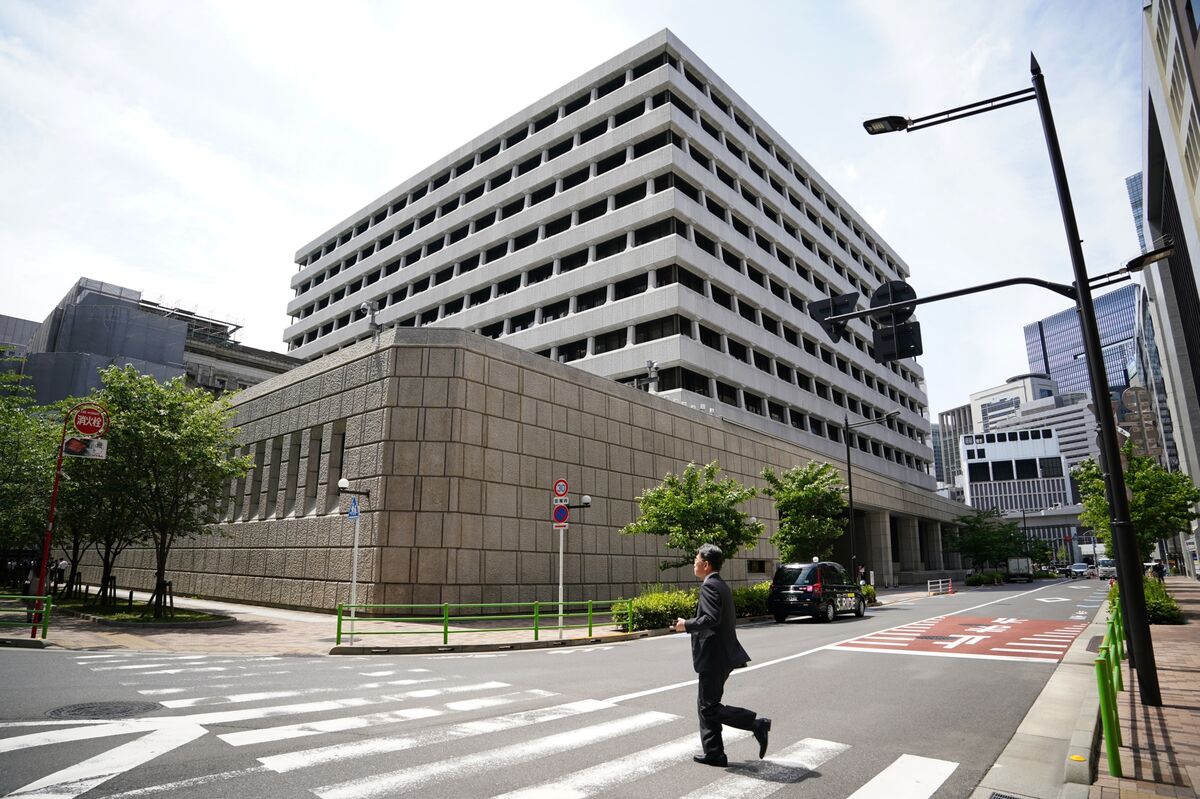
The Bank of Japan headquarters in Tokyo. Photographer: Toru Hanai/Bloomberg
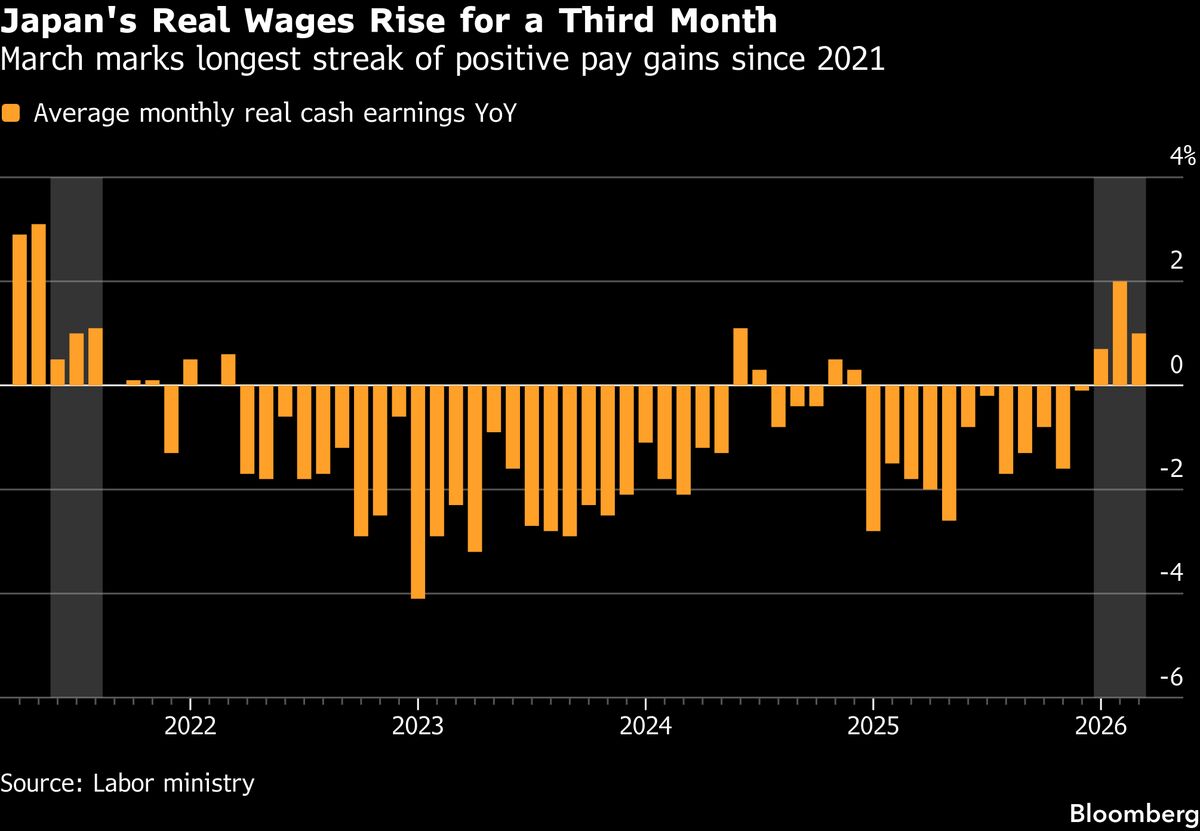
Japanese workers’ real wages rose in March for a third consecutive month, supporting the Bank of Japan’s case for further interest rate hikes even as the Middle East conflict clouds the economic outlook.
Japan is prepared to respond on all fronts to speculative moves in the foreign exchange market, the nation’s top currency official signaled, after authorities were suspected of having conducted intervention over the holiday period.
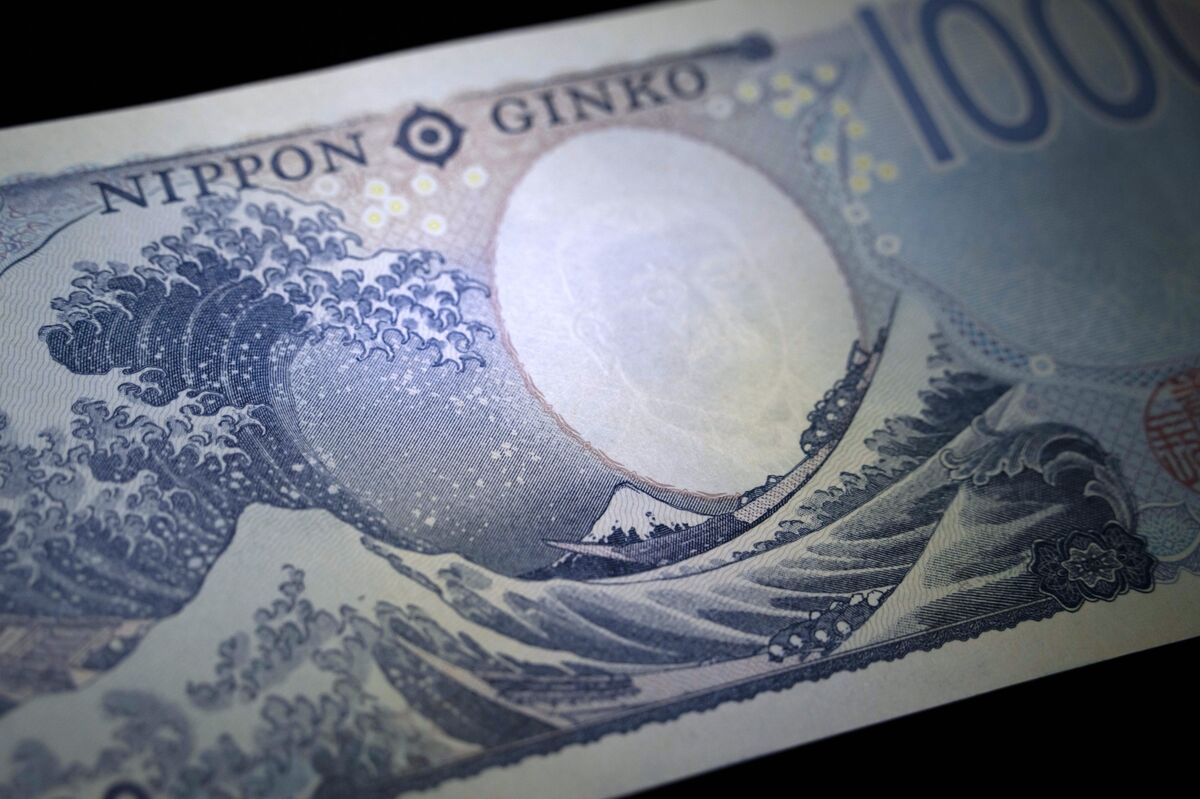
A Japanese 1000yen banknote arranged in Tokyo, Japan.
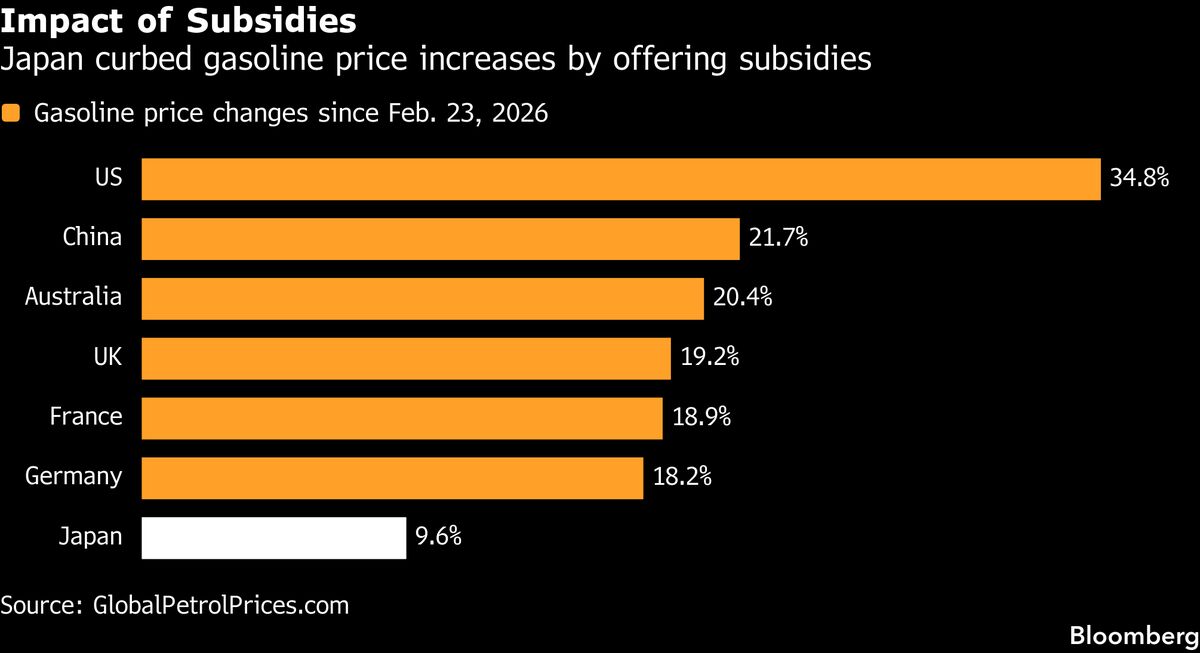
Japan and other economies should limit fuel subsidies to those most in need, the Asian Development Bank’s chief economist said, as prolonged Middle East tensions strain public finances.
Japan’s authorities stand ready to respond as needed to moves in the currency market around the clock, the finance minister said, in a warning to speculators just hours before the Bank of Japan’s policy decision.
Satsuki Katayama, Japan's finance minister, during a budget committee session at the upper house of parliament in Tokyo, Japan, on Monday, April 27, 2026. The war in the Middle East is putting pressure on the Japanese government to consider energy-saving measures, a challenge for Prime Minister Sanae Takaichi as she seeks to calm public anxiety over potential shortages.
Japan’s Finance Minister Satsuki Katayama warned that officials are in close contact around the clock with their US counterparts as Tokyo remains on high alert over speculative moves that are keeping the yen weak.
At the IMF meetings, Beijing rejected criticism from others about its trade position.
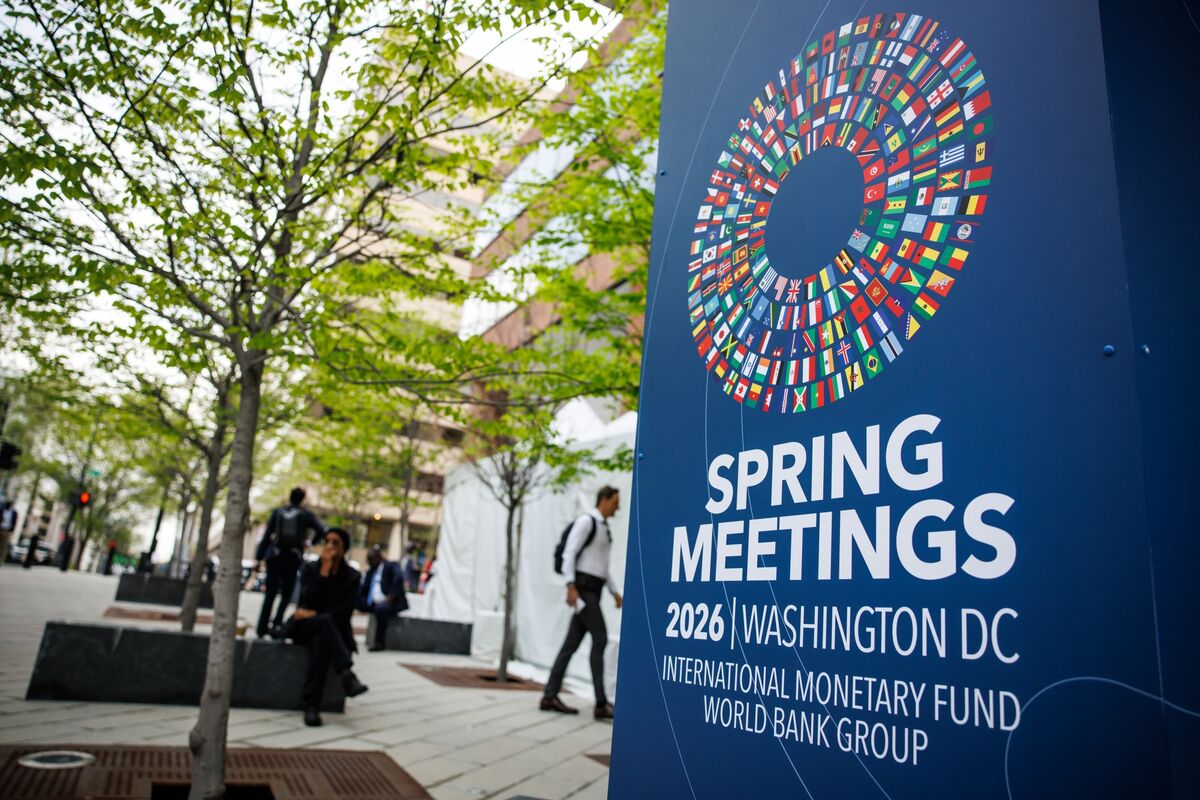
International Monetary Fund (IMF) and World Bank Spring meetings signage outside the IMF headquarters in Washington, DC, US, on Monday, April 13, 2026. The International Monetary Fund said that the conflict in the Middle East is a major supply shock that will test the resilience of a world with limited scope for fiscal support, even as US and Iran have negotiated a two-week ceasefire. Photographer: Samuel Corum/Bloomberg

 Anmelden