South Korean President Lee Jae Myung vowed to ramp up investment for a range of future growth engines and to leverage excess tax revenue generated by the surging semiconductor industry for the wider good.
Lee Jae Myung on April 2. Photographer: SeongJoon Cho/Bloomberg
South Korean President Lee Jae Myung is placing his hopes on former Naver Corp. chief executive Han Seong Sook to help better utilize the nation’s tech expertise for future growth and ensure its benefits spread more widely through the economy.
Lee Jae Myung Photographer: SeongJoon Cho/Bloomberg
South Korea’s current-account surplus remained near record levels in April, underscoring the strength of the country’s semiconductor-driven export boom.
South Korea’s consumer inflation accelerated to the fastest pace in more than two years, reinforcing the central bank’s tilt toward higher interest rates as the impact from the Middle East conflict ripples across the economy.
Morning commuters ride escalators outside Seoul Station in Seoul. Photographer: SeongJoon Cho/Bloomberg
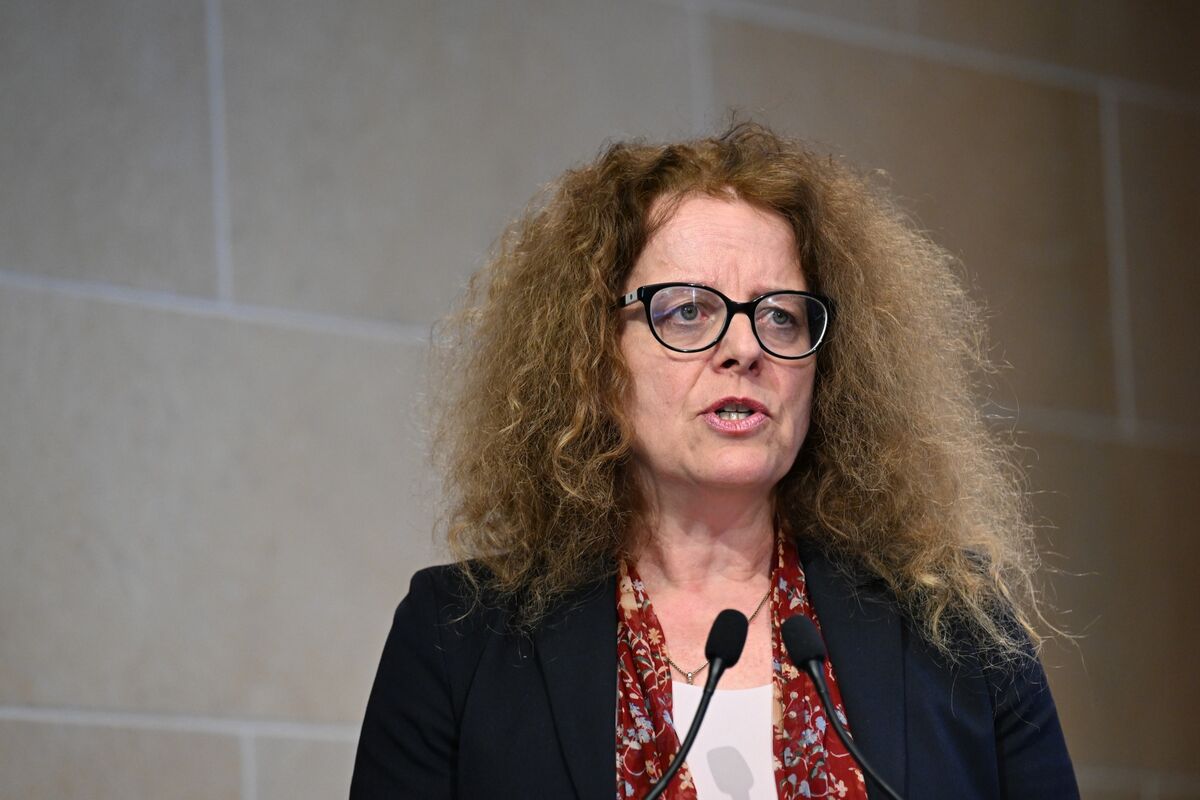
The European Central Bank can no longer look through the inflationary impact of the war in Iran as price pressures spread beyond energy and the risk of unanchored inflation expectations rises, according to Executive Board member Isabel Schnabel.
Isabel Schnabel, executive board member of the European Central Bank, speaks at a Peterson Institute of Economics (PIIE) event during the International Monetary Fund (IMF) and World Bank Spring meetings in Washington, DC, US, on Thursday, April 16, 2026. The International Monetary Fund downgraded its growth projection for the year after the war in the Middle East triggered a major oil shock and included the possibility of a downturn if the conflict drags on and energy infrastructure is severally damaged.
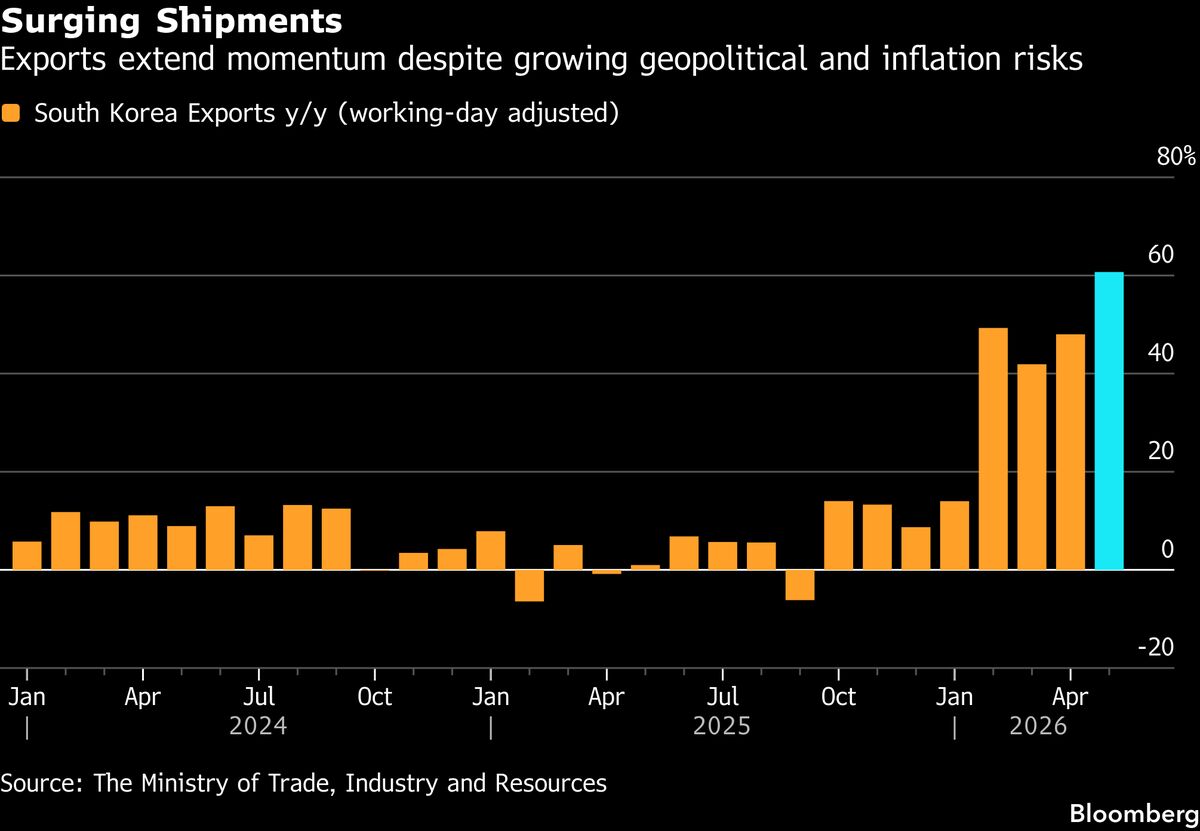
South Korea’s exports extended their strong run in May, reinforcing the central bank’s increasingly hawkish stance as booming semiconductor demand continues to underpin growth despite rising geopolitical and inflation risks.
Federal Reserve Bank of Minneapolis President Neel Kashkari said it’s too early to conclude that interest rates need to rise, while arguing that the central bank should keep all options on the table.
Neel Kashkari, president and chief executive officer of the Federal Reserve Bank of Minneapolis, during the Bloomberg Invest event in New York, US, on Tuesday, March 3, 2026. The conference brings together the most influential voices across asset management, banking, private capital and wealth.
South Korea’s new central bank head Shin Hyun Song underscored a forceful hawkish policy shift after Thursday’s stand-pat decision, citing the need for higher interest rates as concerns intensify over financial stability and higher inflation fueled by the Middle East crisis.
Bank of Korea (BOK) signage displayed atop the central bank's headquarters in Seoul, South Korea, on Wednesday, Feb. 11, 2026. South Korea is likely to roll out around 10 trillion won ($6.8 billion) in fresh fiscal stimulus as early as March to address uneven economic growth, with support expected for sectors including culture and the arts, Citigroup said in a January report.
South Korea’s central bank is widely expected to keep its policy rate unchanged this week, with investors watching for signs policymakers are formally shifting to a hawkish stance as inflation risks intensify and growth proves more resilient than expected.
The Bank of Korea (BOK) complex in Seoul, South Korea, on Wednesday, Feb. 11, 2026. South Korea is likely to roll out around 10 trillion won ($6.8 billion) in fresh fiscal stimulus as early as March to address uneven economic growth, with support expected for sectors including culture and the arts, Citigroup said in a January report.
South Korea unveiled a roadmap to develop nuclear-powered submarines and deploy the first vessel by the late 2030s, as President Lee Jae Myung convened a new defense strategy council Tuesday focused on strengthening the nation’s military autonomy.
Samsung Electronics Co.’s bonus deal with workers risks turning South Korea’s AI-driven chip boom into a new source of inflation and housing-market pressure that the Bank of Korea will have to address, according to Bloomberg Economics.
A Samsung Electronics 12-layer HBM3E. Photographer: SeongJoon Cho/Bloomberg
The housing rally in South Korea’s capital continues to regain momentum, an outcome that is likely to reinforce concerns at the nation’s central bank that rising property prices could complicate the policy outlook as the Iran conflict fuels inflationary pressures.
South Korea’s export growth remained robust in the first 20 days of May, signaling resilient external demand at a time when higher oil prices and broader inflation concerns are complicating the outlook for policymakers.
South Korea’s household loan growth accelerated in the first quarter, highlighting persistent housing-related financial risks facing the Bank of Korea ahead of its first rate-setting meeting under the new governor next week.
South Korean President Lee Jae Myung said he talked with President Donald Trump about the outcome of the US leader’s recent summit in Beijing and ways to bolster bilateral cooperation amid shifting geopolitical dynamics.
A housing rally in South Korea’s capital gained momentum, reinforcing the case for the nation’s central bank to shift to a hawkish tilt later this month as it grapples with mounting inflationary pressures from the Iran conflict.
South Korea strongly condemned what it described as an attack on a civilian cargo vessel in the Strait of Hormuz after a government investigation found the ship was struck by unidentified objects, though it stopped short of assigning blame.
South Korea’s consumer inflation picked up as surging energy costs began to feed more forcefully into the domestic economy, with price gains matching the fastest pace since July 2024.
South Korea’s exports extended this year’s surge in April as booming semiconductor demand continues to anchor growth, despite mounting risks from higher energy prices linked to the Iran turmoil.
Shipping containers at the Busan Port Terminal in Busan, South Korea. Photographer: SeongJoon Cho/Bloomberg
Surging global demand for artificial intelligence technology fueled a first-quarter rebound for South Korea, giving the export-dependent economy momentum as it now grapples with surging energy prices and waning consumer confidence.

 Anmelden