A growing number of Chinese economists are forecasting the country will keep its policy interest rate unchanged throughout 2026, though an adviser to the central bank said such a move still remains a possibility.
China’s consumer spending and investment slumped to levels unseen since the pandemic, exposing risks for the economy even as it benefits from booming exports and a de-escalation of tensions around Iran.
Shoppers and visitors walk along Nanjing Road East in Shanghai.
China’s consumer inflation unexpectedly stalled in May even as factory prices gained at the fastest pace in almost four years, storing up risks for company profits as poor demand at home seals off the economy from a global commodities rally.
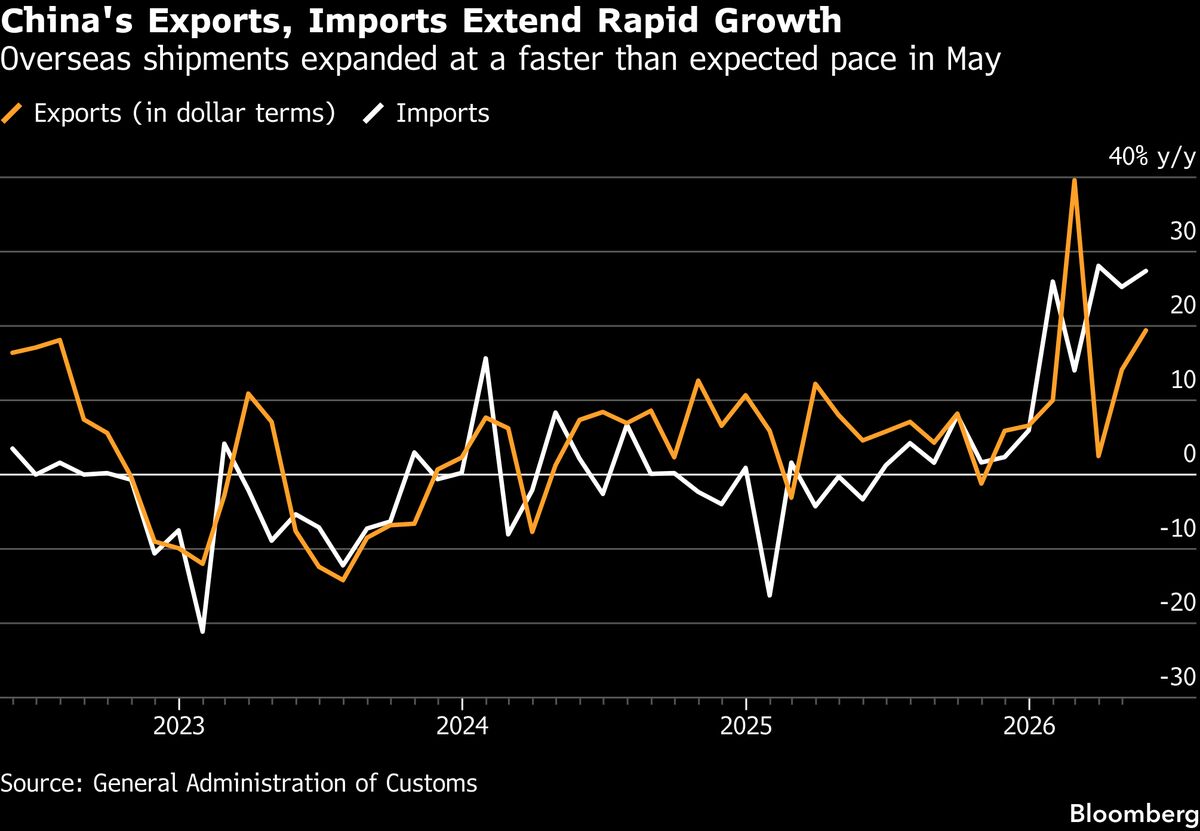
China’s exports and imports expanded rapidly in May, topping forecasts as a global investment supercycle in artificial intelligence drives up prices and demand for hardware made by the world’s manufacturing powerhouse.
China’s industry saw profit gains concentrated in a handful of sectors swept up in the global artificial intelligence boom or benefiting from higher oil prices, masking fragility in the economy as overall earnings soared at the fastest in more than two years.
China scaled back government spending at its fastest pace in six months in April, a move that contributed to an unexpected slowdown in the economy across the board.
China’s growth slowed across the board in April with investment resuming declines, calling into question the government’s reluctance to add stimulus to the economy as a global energy crisis hits factories and consumers across the world.
China’s central bank has warned on the risks of imported inflation from higher oil prices stemming from the war in Iran, offering no hint of preparing to ease policy as it looks to ensure that its interest rates reach the economy.
Liquid natural gas tankers wait at a loading station at the PetroChina Jiangsu LNG terminal at Yangkou port in Rudong, China.
China’s factory prices grew at the fastest pace since the pandemic four years ago as the fallout from the Iran war sharply raises costs and leaves profits under pressure.
TOPSHOT - Employees produce basketballs that will be exported to Europe at a factory in Sihong, in eastern China's Jiangsu province on March 25, 2025. (Photo by CN-STR / AFP via Getty Images) / China OUT
Just months into China’s housing downturn, the nation’s second-biggest developer declared the worst is over. A year later, its chairman backtracked on the call, and by 2025, it was teetering on the brink of a default.
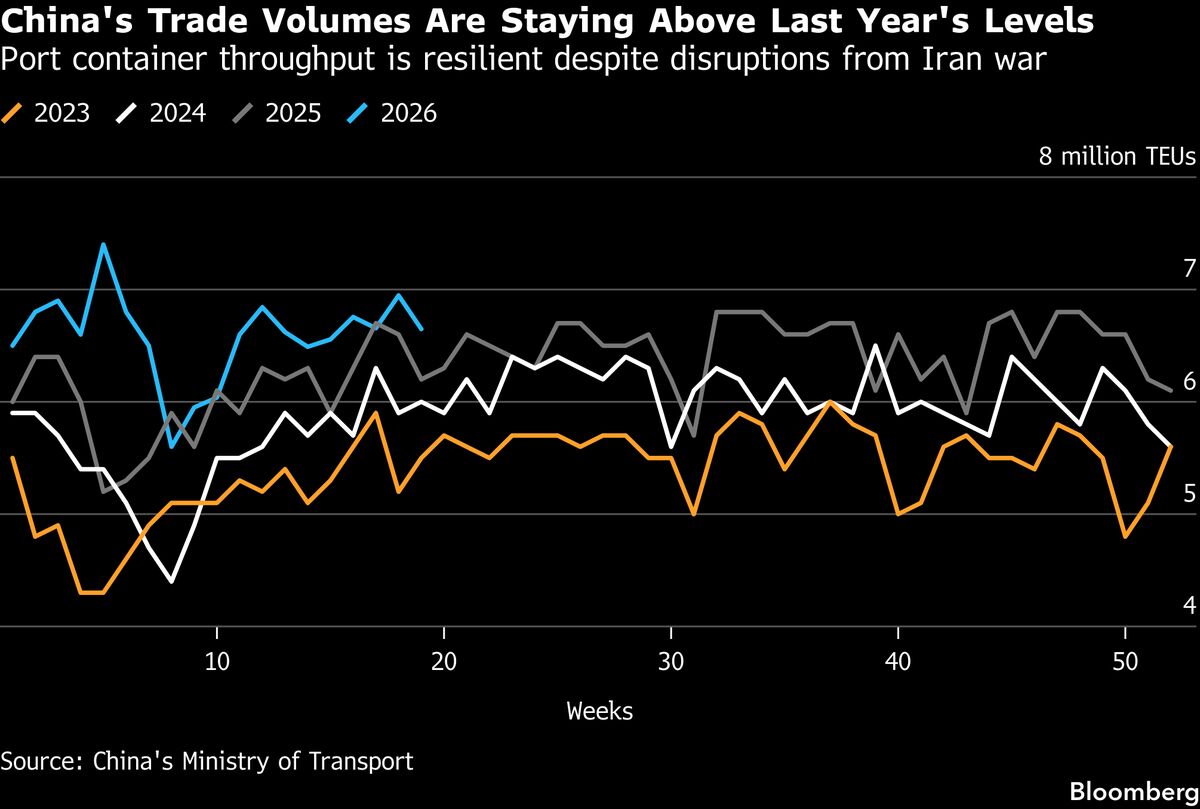
Chinese construction activity suffered its biggest slump since the early stages of the Covid pandemic and the services sector fell back into contraction, even as exports kept factories humming despite the disruptions caused by the war in Iran.
A workers handles a caster wheel at a factory in Foshan, China.
Economists at Goldman Sachs Group Inc. and Nomura Holdings Inc. joined peers at other major global banks in abandoning calls for China’s monetary easing this year, as top leaders convey confidence in growth and little urgency to step up support.
China’s top leaders pledged to counter external shocks and enhance energy security, while highlighting better-than-expected growth so far this year after the Iran war caused turmoil in global energy markets.
China’s industrial firms ended the first quarter with faster growth in earnings, an acceleration that hid a widening split between companies under pressure from higher costs and others benefiting from rising oil prices and the global artificial intelligence boom.
Economists have sharply upgraded their forecasts for China’s import growth and now expect it to overtake the pace of expansion in exports for the first time since 2021, keeping the trade balance from ballooning much beyond last year’s record.
Chinese exporters are beginning to lift prices on everything from swimsuits to air conditioners as the Iran war drives up oil-linked input costs, signaling that global consumer inflation is likely to accelerate.
An unexpected deterioration in China’s labor market has reached the key demographic of early-career workers, as seasonal pressures amplified spillovers from the war in Iran while wider use of artificial intelligence raises risks for employment.
 Anmelden