South African President Cyril Ramaphosa appointed former National Treasury budget chief Michael Sachs as his economic adviser, bringing a respected fiscal policy technocrat back into the government as the country seeks to accelerate growth and deepen economic reforms.
South Africa’s newly appointed tax commissioner warned that the Iran war could undermine the government’s ability to meet its revenue targets, as rising fuel prices drive costly subsidies and threaten to slow economic growth.
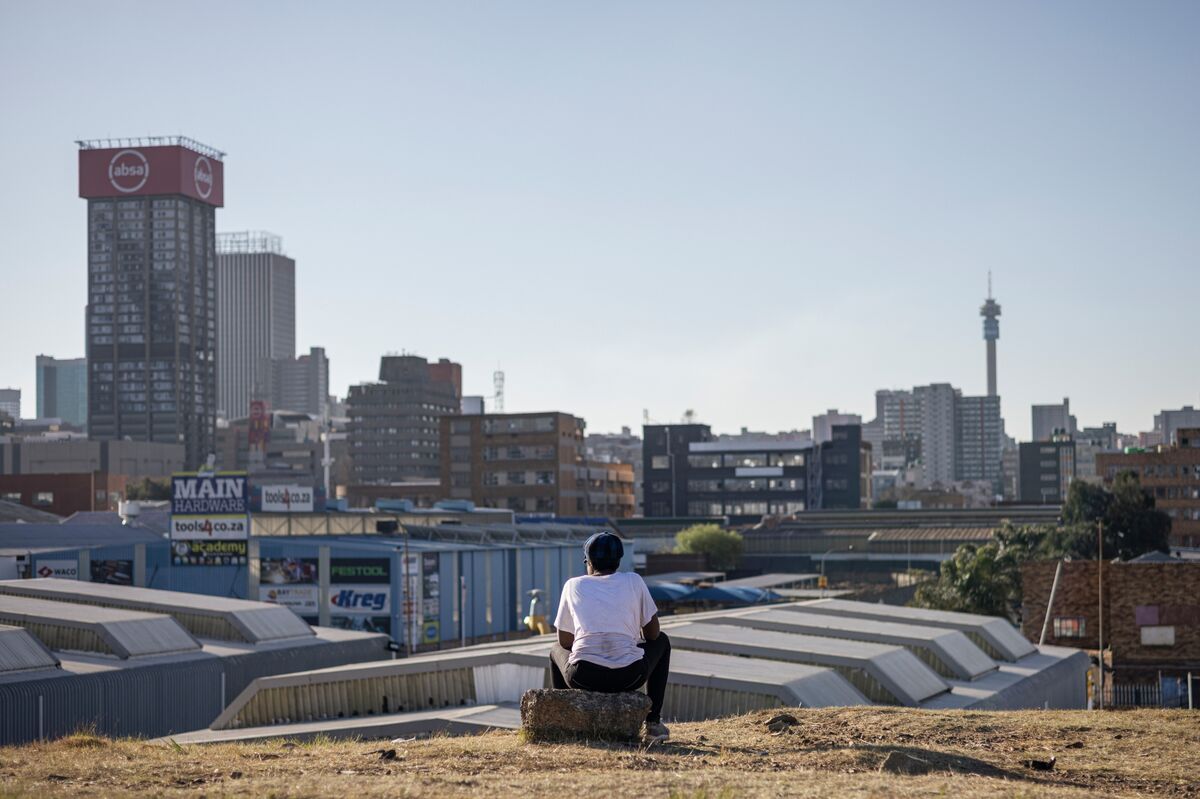
A resident looks out towards the skyline of the central business district in Johannesburg.
South Africa’s foreign ministry is stepping up diplomatic efforts to quell growing concern on the continent about rising anti-immigrant sentiment in the country.
Anti-immigration protesters in Hillbrow, Johannesburg, on April 30. Photographer: Wikus De Wet/AFP/Getty Images
South Africa extended cuts to fuel taxes as the prolonged conflict in the Middle East threatens to raise domestic gasoline and diesel prices even further.
A gas station in Pretoria, South Africa. Photographer: Waldo Swiegers/Bloomberg
President Cyril Ramaphosa pitched South Africa as a reform-driven investment haven at a time of increasing global uncertainty as he set a target of attracting 3 trillion rand ($177 billion) of capital to the country over the next five years. He increased this figure from 2 trillion rand in a speech late Tuesday.
Cyril Ramaphosa speaks at the South Africa Investment Conference in Johannesburg, South Africa, on Tuesday, March 31, 2026.
South Africa cut fuel taxes to cushion a surge in oil prices driven by the war in Iran, with gasoline and diesel costs set for their steepest increase in almost two decades.
South Africa’s central bank is likely to go on the offensive against inflation and raise interest rates as soon as its next meeting in May, according to Morgan Stanley.
South Africa’s National Treasury signaled it has little room to mitigate against the impact of a looming fuel-price shock stemming from the war in the Middle East.
A gas station in Pretoria. Photographer: Waldo Swiegers/Bloomberg
Surging oil prices triggered by the Middle East conflict is likely to push South African inflation higher and see policymakers keep interest rates unchanged for months, according to Morgan Stanley.
Lesetja Kganyago, governor of South Africa’s Reserve Bank.
Prolonged higher oil prices could force the South African central bank to consider raising interest rates as a weaker rand pushes inflation higher than it’s prepared to tolerate.
Lesetja Kganyago, governor of the South African Reserve Bank.
South Africa’s central bank said it’s monitoring the market and is ready to take action in the event of major dysfunction after the worst bond selloff since the outbreak of the pandemic.
Traffic near street vendors in the central business district in Johannesburg, South Africa, on Wednesday, Feb. 18, 2026. South Africa’s unemployment rate dropped to the lowest level in more than five years in the fourth quarter, as the community and social services and construction sectors added workers.
The head of South Africa’s budget office resigned last week, after helping the National Treasury stabilize public debt.
Edgar Sishi, deputy director general of the National Treasury's Budget Office, during an interview following the mid-term budget in Cape Town, South Africa, on Wednesday, Oct. 26, 2022. South Africa is hiring an independent contractor to advise on conditions it should attach to debt relief for state-owned power utility Eskom Holdings SOC Ltd., Finance Minister Enoch Godongwana said today.
South Africa’s latest budget painted an encouraging picture of improving public finances, according to Moody’s Ratings, while cautioning that “meaningful” debt reduction will require stronger economic growth.
Enoch Godongwana in Cape Town on Feb. 25, 2026, to present his annual budget speech.
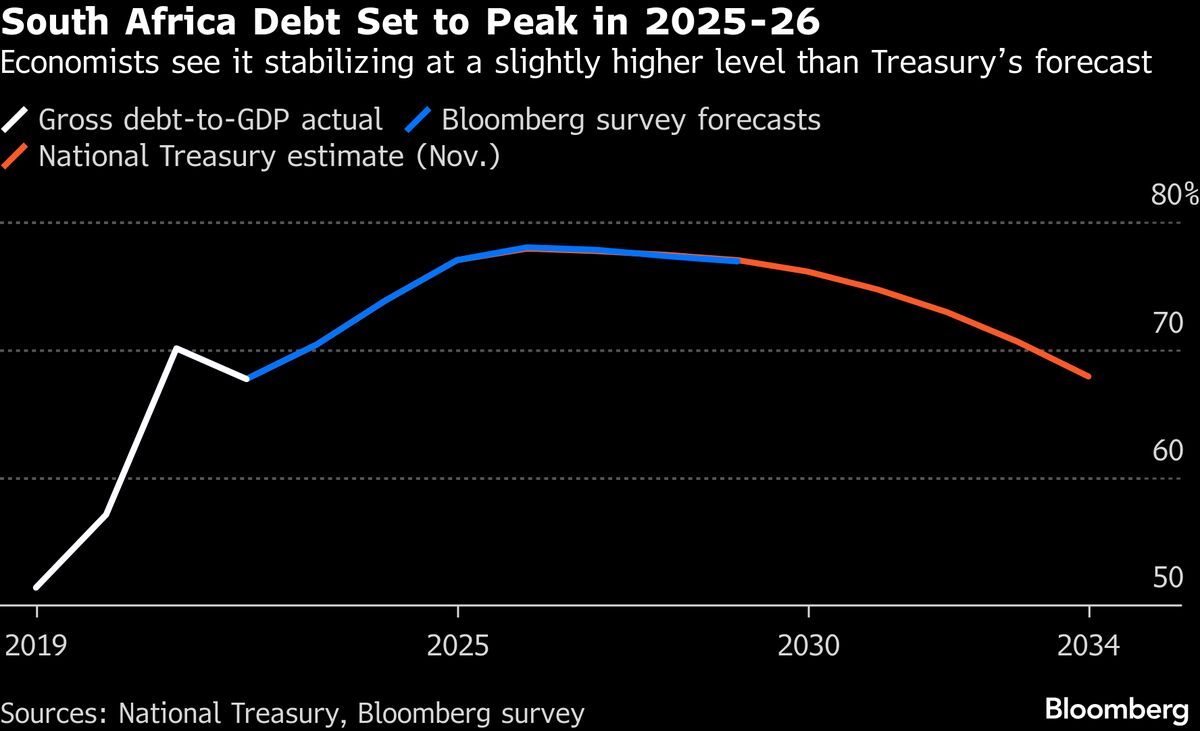
South Africa’s debt will peak this fiscal year after rising for nearly two decades, a turning point that creates space to support the economy through tax relief and infrastructure investment. Government bonds rallied.
South African government debt is finally set to peak after rising for nearly two decades, a payoff from years of spending restraint and a commodities-driven revenue windfall.
The rally in South African bonds is set to gain further impetus when Finance Minister Enoch Godongwana unveils his budget later this month, according to analysts at Morgan Stanley.
South African President Cyril Ramaphosa pledged to accelerate measures to fire up the economy, draw investment and make the government more efficient, an undertaking that will provide further impetus to a blistering markets rally if implemented.
Cyril Ramaphosa, South Africa's president, delivers the state-of-the-nation address in Cape Town, South Africa, on Thursday, Feb. 12, 2026. Ramaphosa pledged to accelerate measures to fire up the economy, draw investment and make the government more efficient, an undertaking that will provide further impetus to a blistering markets rally if implemented.
The head of economic research at South Africa’s central bank is taking early retirement from the institution, reducing the number of voting members on the monetary policy committee.
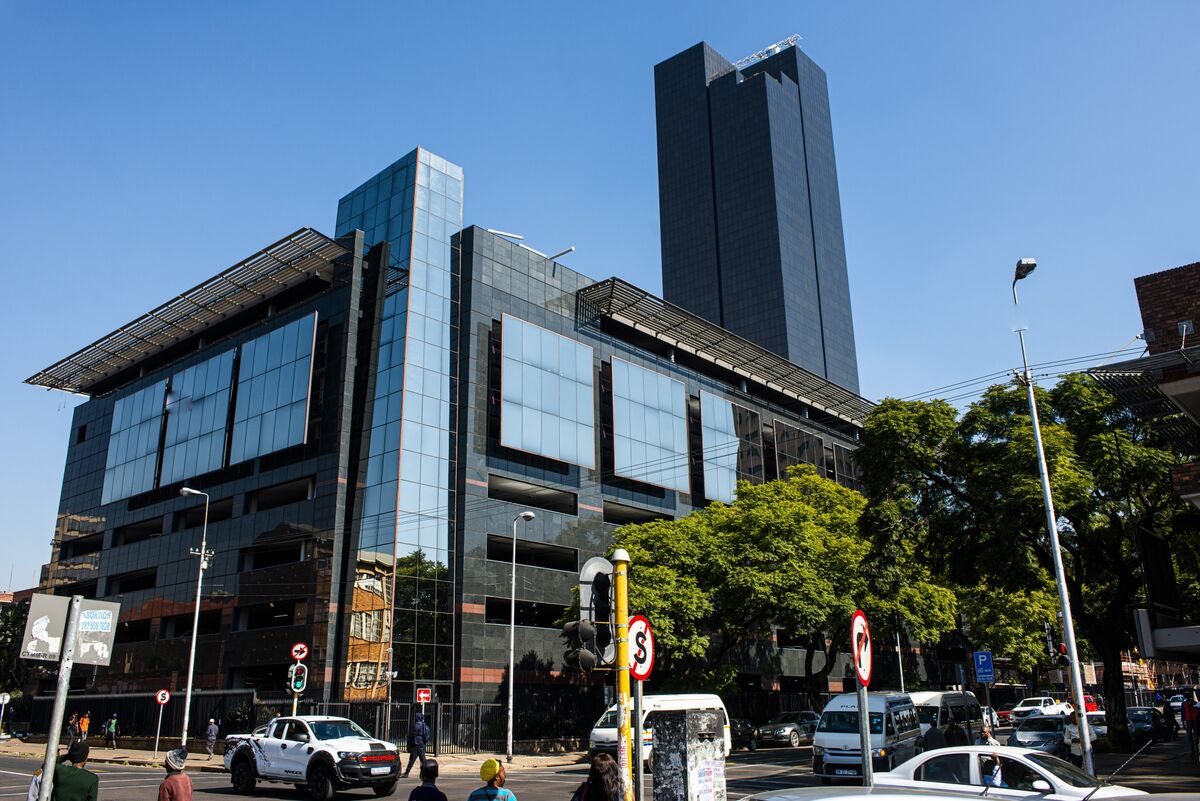
The South African Reserve Bank in Pretoria, South Africa.
South Africa risks losing preferential access to the US market under a key African trade pact that’s before Congress, though the economic impact would likely be limited even if the country is excluded.
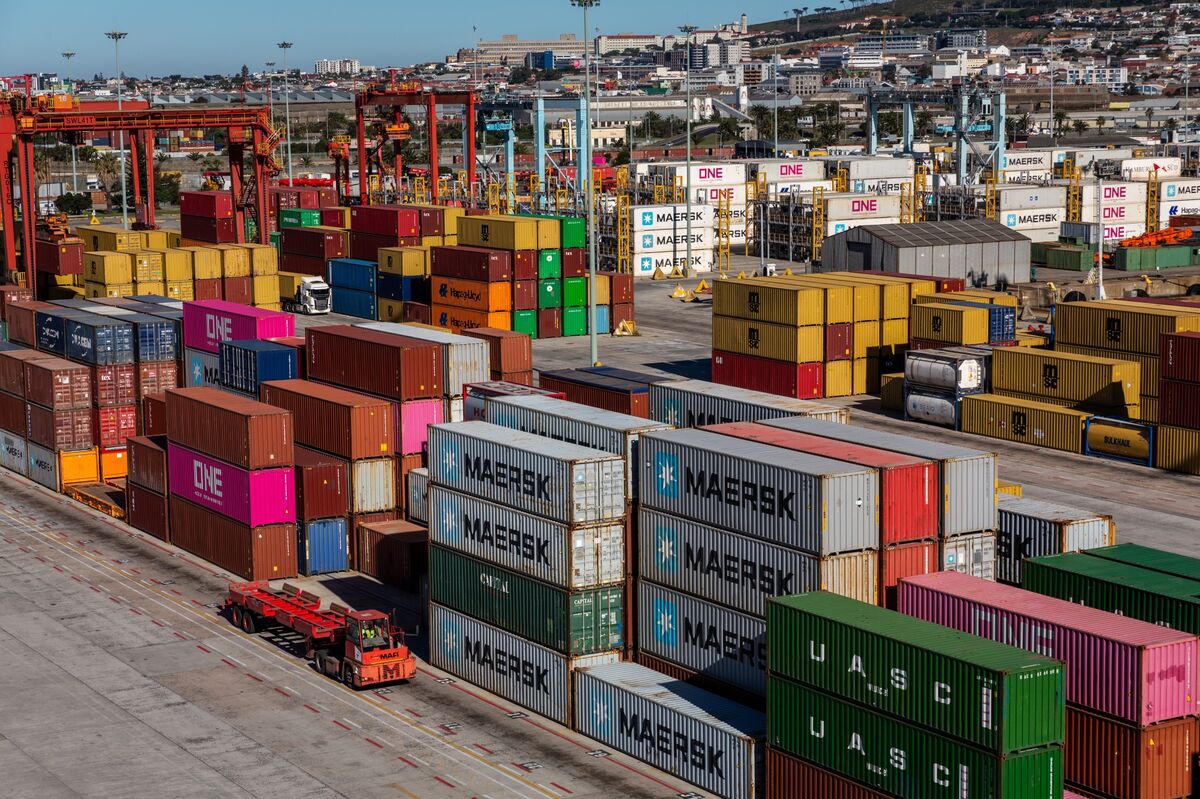
Containers stacked on a dock at the Port of Cape Town. Photographer: Dwayne Senior/Bloomberg
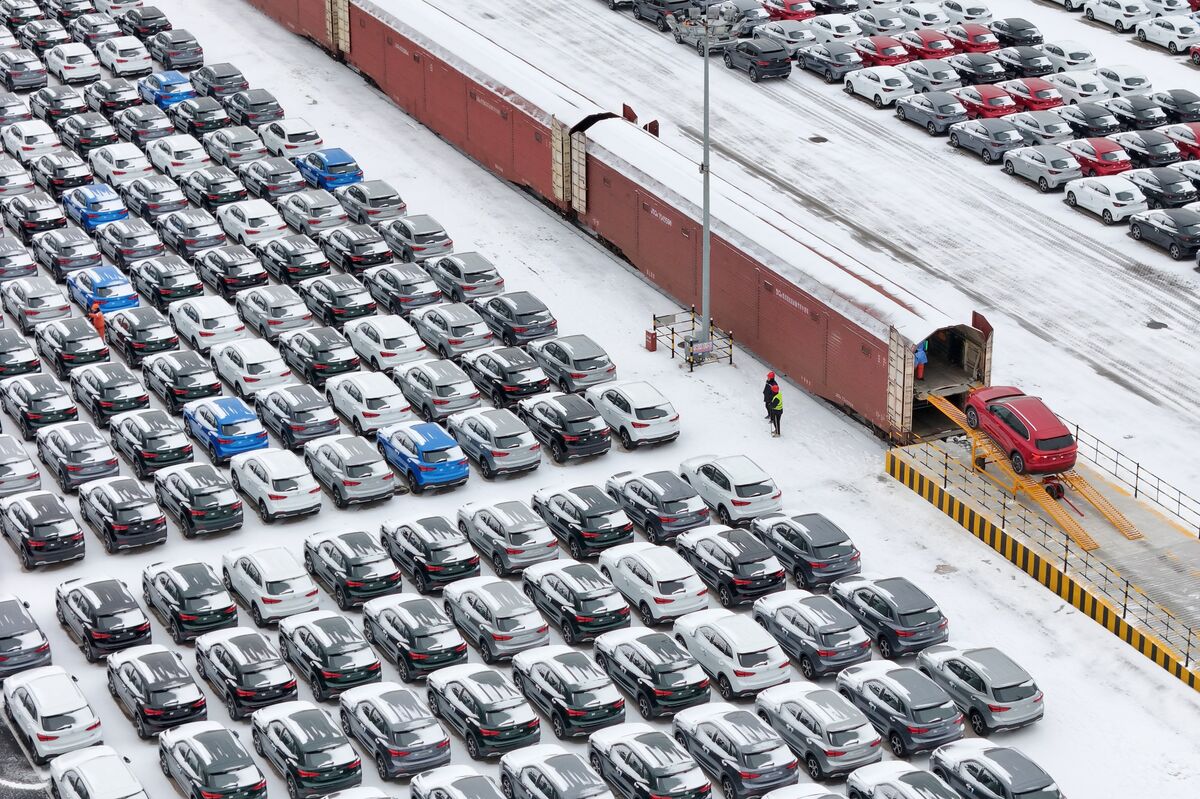
South Africa is considering imposing tariffs of as much as 50% on vehicles from China and India as it moves to protect its automotive industry from a flood of imports.
Vehicles bound for export at a port in Yantai, China.

 Anmelden