Japanese Prime Minister Sanae Takaichi flagged the importance of encouraging households and the Government Pension Investment Fund to increase their investment in Japanese financial assets, further fueling expectations of possible allocation changes at the fund.
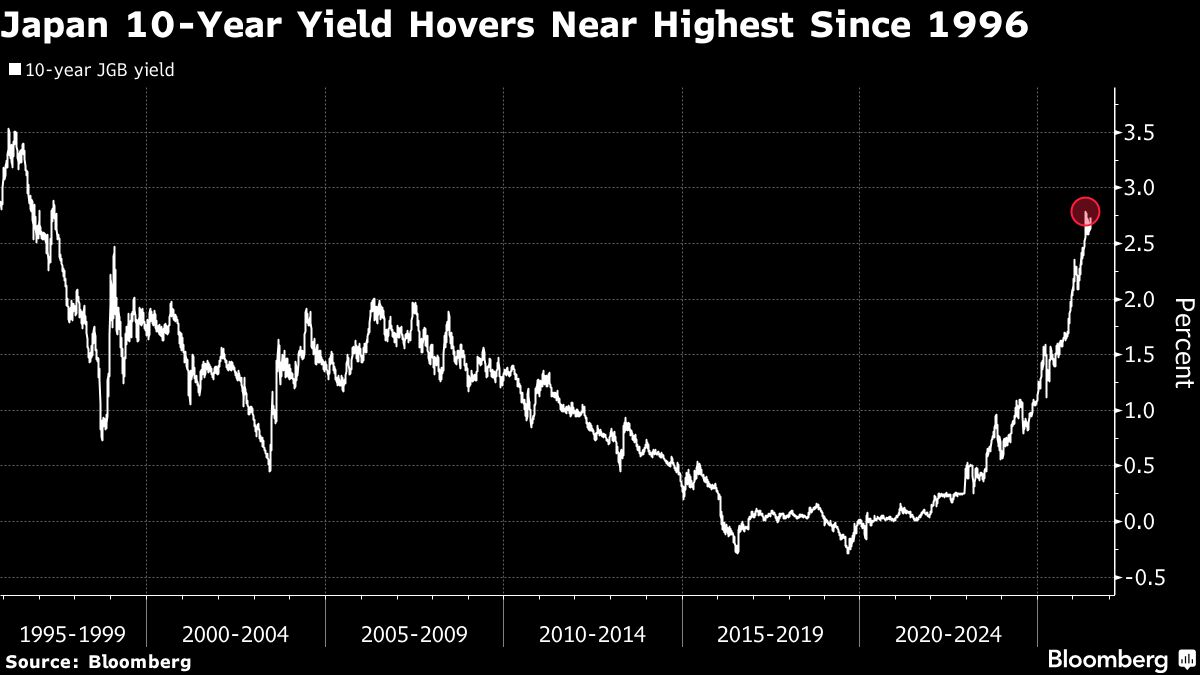
Japanese bonds dropped after demand at a sale of benchmark 10-year notes fell to the lowest since April on growing fiscal concerns and worries the Bank of Japan isn’t raising rates quickly enough to contain inflation.
The yen’s pause just shy of a four-decade low has yielded an unexpected result: it is the best-performing Group-of-10 currency against the dollar so far this month.
The yen remained within reach of its weakest level in four decades on Friday, even after Japan warned that it stands ready to take “bold action” to defend the currency.
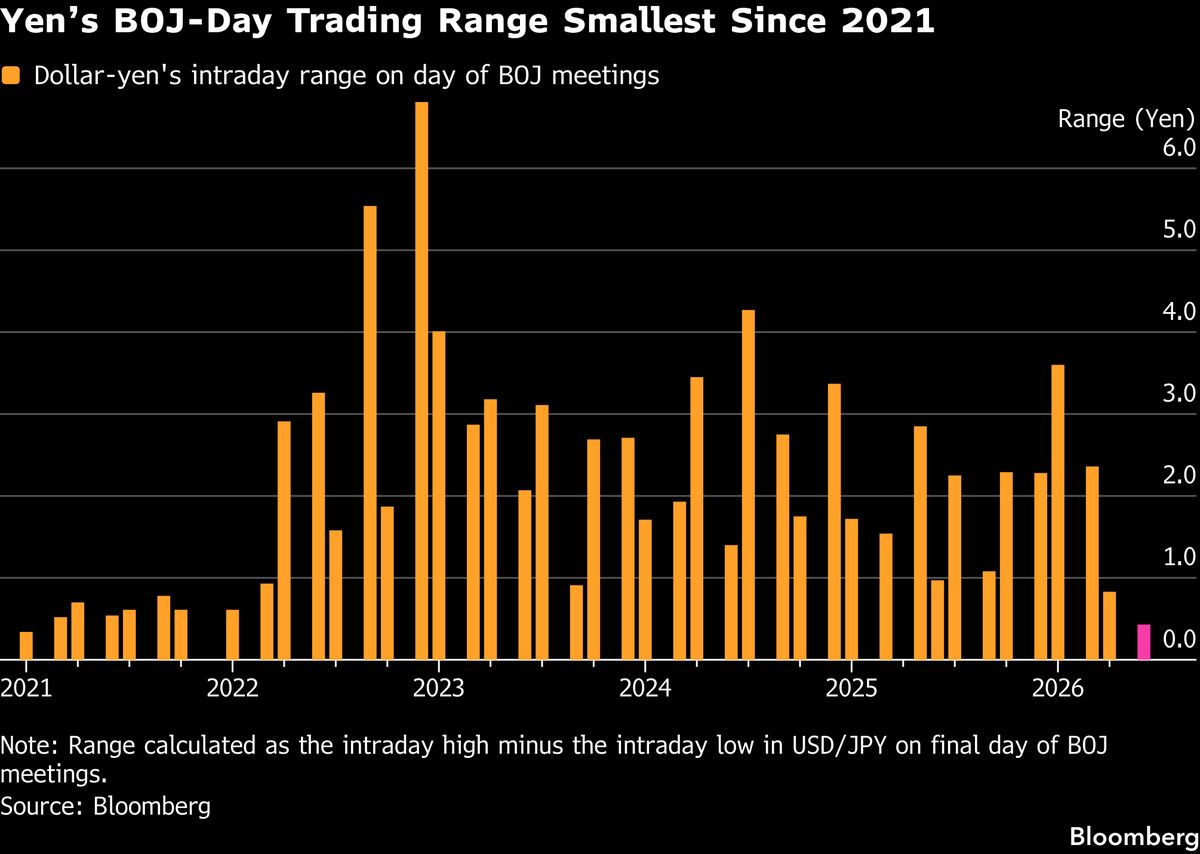
The Bank of Japan managed to keep financial markets relatively stable following its policy decision, leaving the yen in a narrow range that’s still historically weak.
Bank of Japan Governor Kazuo Ueda’s hospitalization is generating uncertainty among investors over the central bank’s messaging at its policy meeting next week, even as they remain convinced officials will raise interest rates.
Japan used a record of almost $74 billion over the past month to prop up the yen after the currency slid past 160 per dollar, according to Finance Ministry data confirming the government’s first market intervention since 2024.
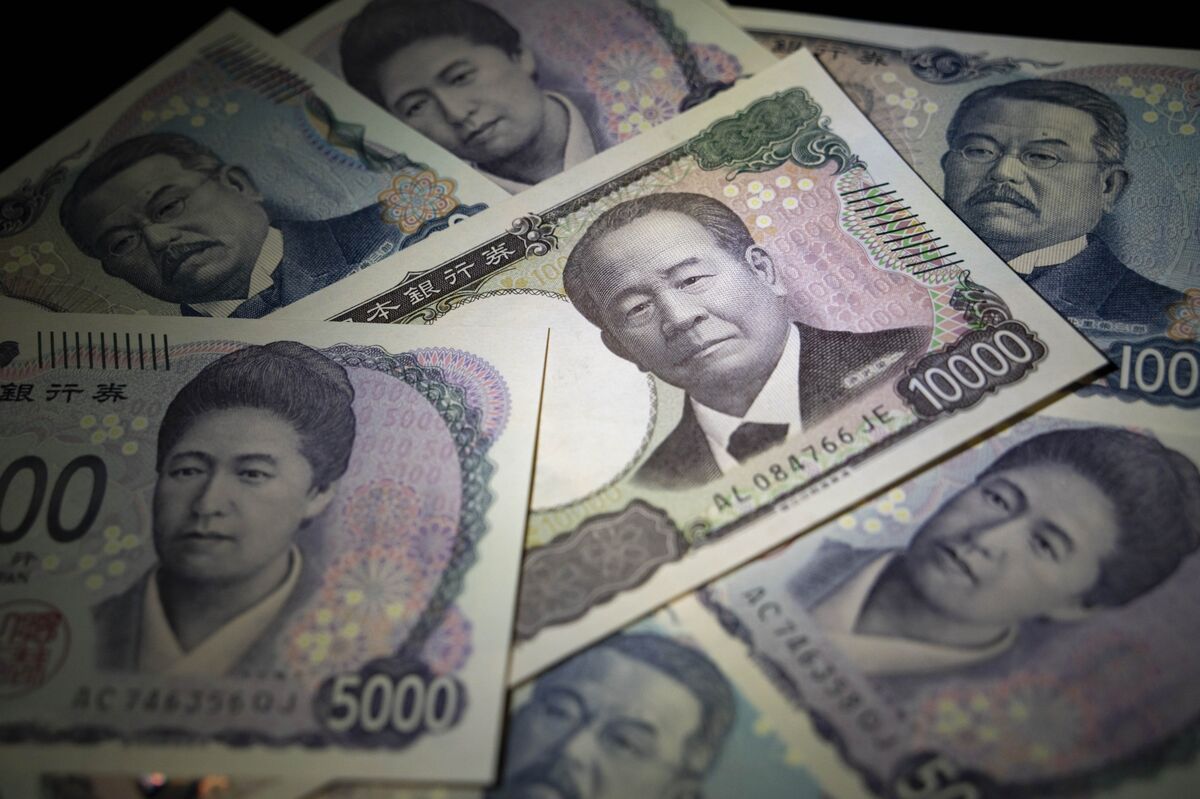
Japanese banknotes arranged in Kyoto, Japan, on Tuesday, Jan. 27, 2026. The yen is now hovering around its strongest level since October after comments from Japanese officials fueled speculation that the government may intervene in the market to prevent the currency from resuming its slide.
A Bank of Japan survey of market participants found a split over whether the central bank should stop tapering its bond purchases or continue to reduce them from next April after sticking with its current plan until then.
Investors are on alert for the yen’s potential breach of 160 against the dollar, while Japanese stocks and government bond futures declined, ahead of the Bank of Japan’s rate decision announcement on Thursday.
The yen is on track for its biggest weekly gain since November 2024 on confidence Prime Minister Sanae Takaichi’s election victory will allow her to expand fiscal stimulus while maintaining the trust of financial markets.
The yen is unlikely to stanch its recent weakness after the Bank of Japan held rates as expected, according to strategists, who saw the decision as tilting slightly hawkish.
Japanese 10,000 yen, left, and US 100 dollar banknotes.
Japanese government bonds fell and food-related stocks surged in Japan after reports of a possible cut to food tax ahead of a snap election expected to be held next month.
 Anmelden