UK employers shed more workers in July and job vacancies hit a fresh five-year low as demand for staff remained tepid in the face of heightened uncertainty from events at home and abroad.
Most British businesses say artificial intelligence has created new roles, according to a survey that suggests firms are moving beyond experimentation and starting to reshape hiring around the technology.
UK consumer prices will grab headlines in the coming week, with an AI-driven memory-chip shortage and higher energy costs keeping the Bank of England on guard.
British shoppers retreated during the July heat wave, prioritizing small treats and cutting back elsewhere as the recent consumer boost showed signs of fading.
Hiring at British businesses held steady in July, ending a downturn stretching back to the Liz Truss crisis in 2022, according to a closely watched survey.
British firms developing and using artificial intelligence are becoming more productive but gains are coming at the expense of jobs, according to analysis by the Bank of England.
UK employers are creating jobs for experienced staff with artificial intelligence skills and cutting back elsewhere, according to new figures that show how the technology is starting to create a two-track labor market.
Bank of England Chief Economist Huw Pill said the wild swings in energy and commodity prices due to the Iran war could linger into 2027, highlighting the risk that inflation stays elevated for longer and forces policymakers to respond
UK house prices returned to growth in July, one of the country’s largest mortgage lenders said, as buyers weather higher borrowing costs linked to the Iran war better than expected.
UK mortgage approvals ticked up in June, with the housing market showing some resilience in the face of higher borrowing costs and political turbulence.
UK retail sales defied expectations again with a surprisingly strong rise in June, as sunny weather and the World Cup outweighed any concern among shoppers over the cost of living.
Britons put the Iran war energy shock behind them this month as the soccer World Cup and Prime Minister Andy Burnham’s promise to help with living costs lifted the national mood, according to a survey.
The UK economy unexpectedly grew in May, suggesting that consumers and businesses were more resilient than feared in the face of political turbulence and the Iran war energy shock.
A heat wave and the World Cup prompted Britons to splash out on pints of beer, clothes and electronics in June, potentially boosting economic activity.
Advertising hoarding around a Nike Inc. store in London. Photographer: Jason Alden/Bloomberg
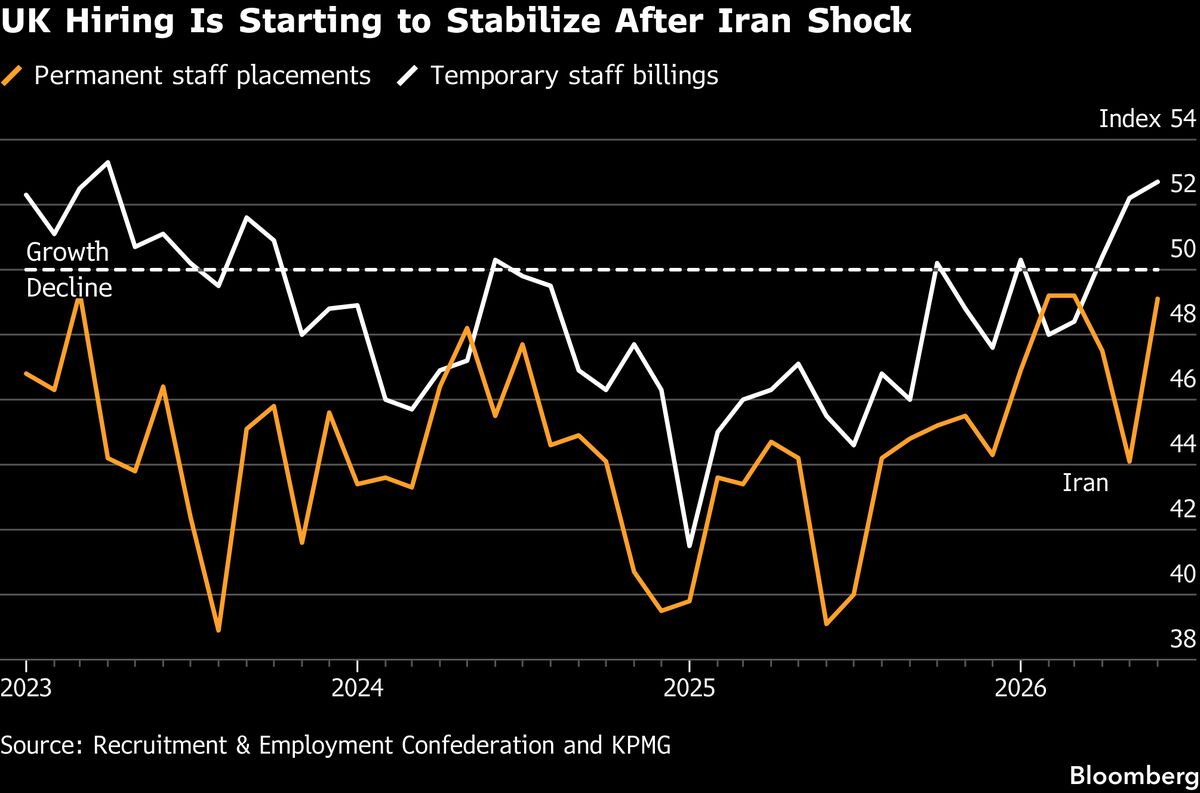
The UK jobs market is showing signs of moving past a slump induced by the conflict in the Middle East, according to a survey watched by rate setters at the Bank of England.
Search for “finance analyst” and you’re likely to find around 80 vacancies in London, according to a prominent recruitment website. If that seems like a surprisingly low number for one of the world’s biggest banking and corporate hubs, it’s because it is — four years earlier, the same website featured more than 350 of these roles.
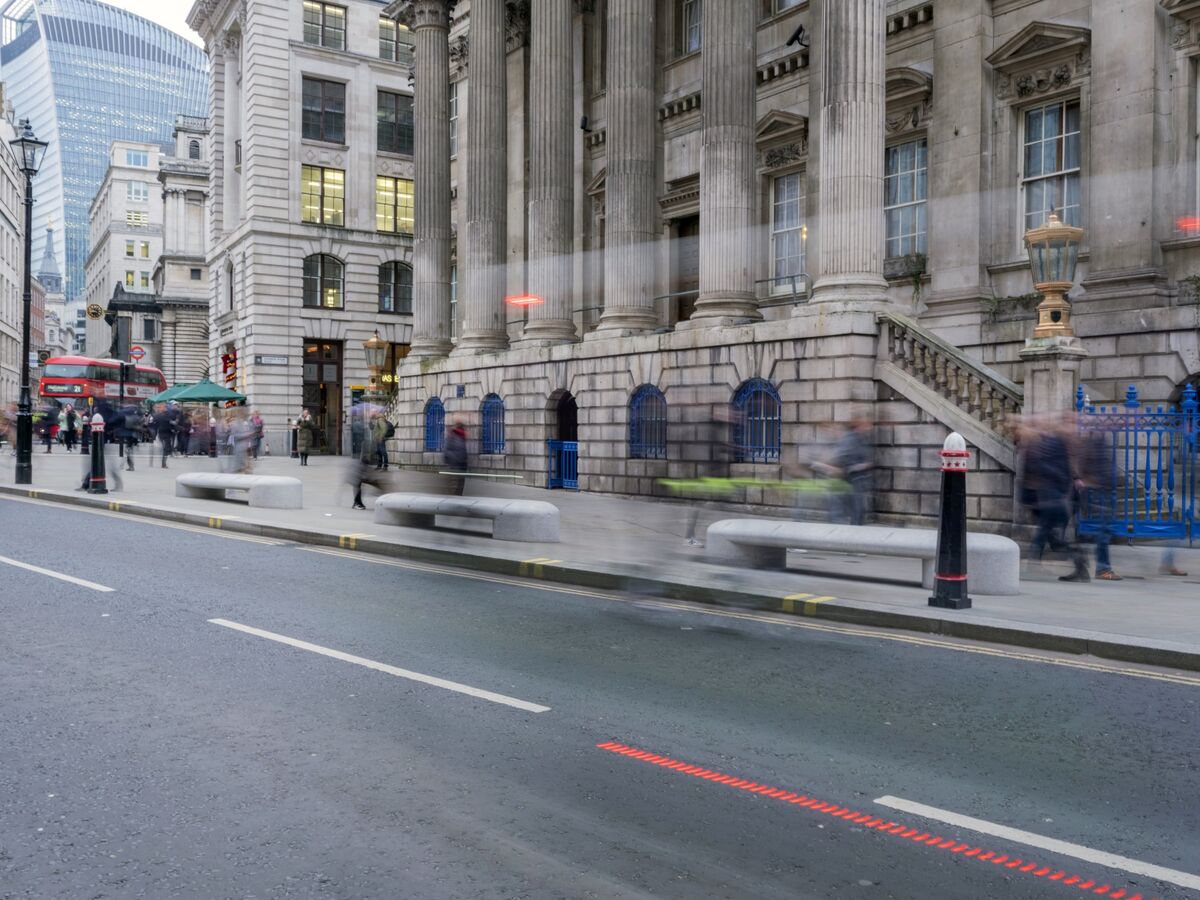
New granite benches on Mansion House Street near Bank Junction in the City of London, UK, on Wednesday, Jan. 17, 2024. A quiet revolution in the financial district will rip out roadways and install wider sidewalks, new bike lanes and more public squares and open spaces friendly to pedestrians.
Britons expect inflation to accelerate sharply in the coming year while businesses are turning more pessimistic, according to two Bank of England surveys that highlight the growing trade-off posed by the Iran war.
A supermarket in the UK. Photographer: Henry Nicholls/AFP/Getty Images

 Anmelden