Thailand’s economic growth slowed dramatically in the second quarter, lagging its Southeast Asian peers, as higher energy prices countered stronger investment and government stimulus.
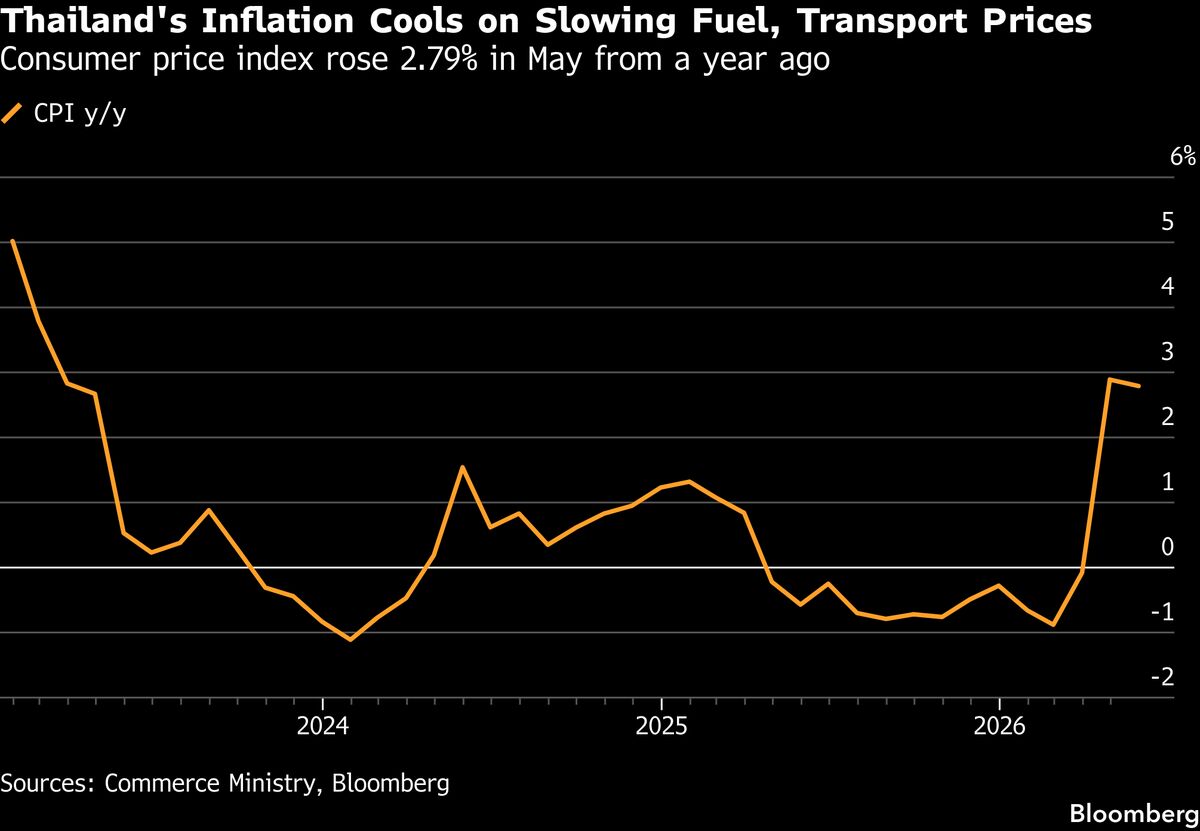
Thailand’s inflation unexpectedly eased for a third straight month, bolstering the central bank’s view that it can keep interest rates on hold to support the economy.
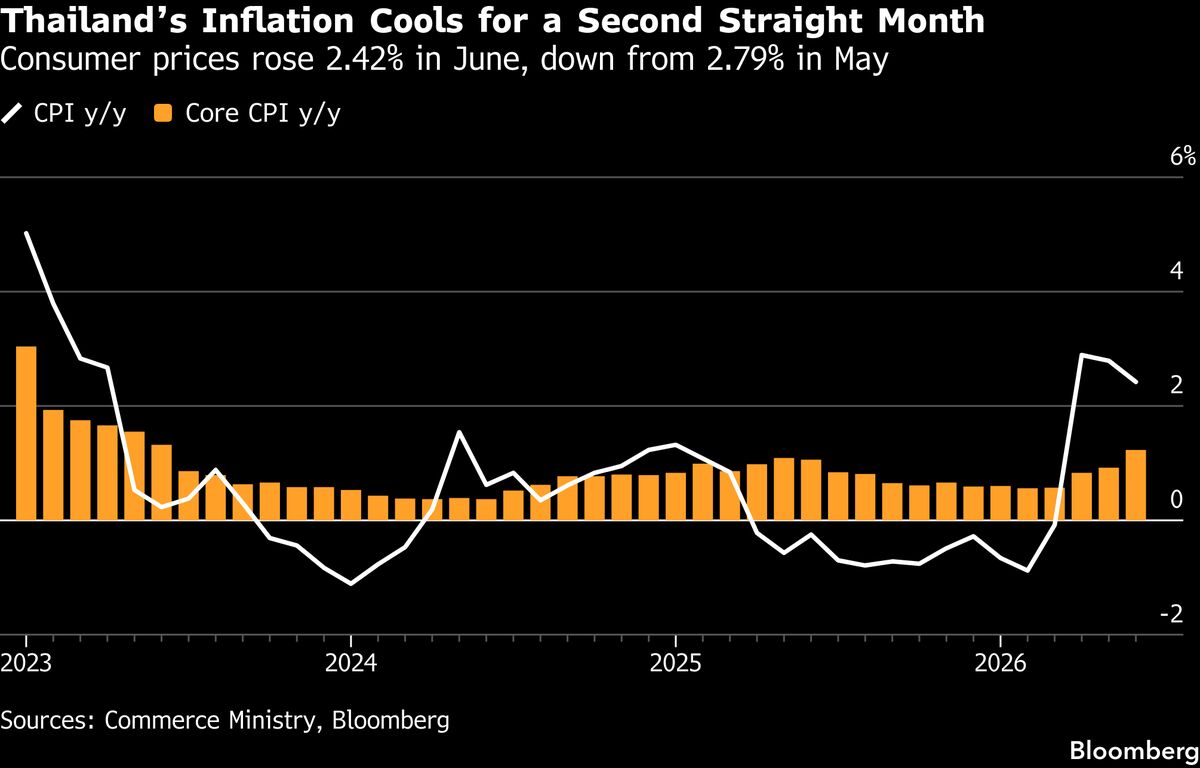
Thailand’s headline inflation slowed for a second straight month in June even as underlying price pressures continued to build, reinforcing the central bank’s view that the recent pickup in prices unlikely warrants an immediate interest-rate increase.
Bank of Thailand Governor Vitai Ratanakorn said the current policy rate remains “appropriate” even as inflation accelerates and some central bank peers turn more hawkish in response to higher energy prices.
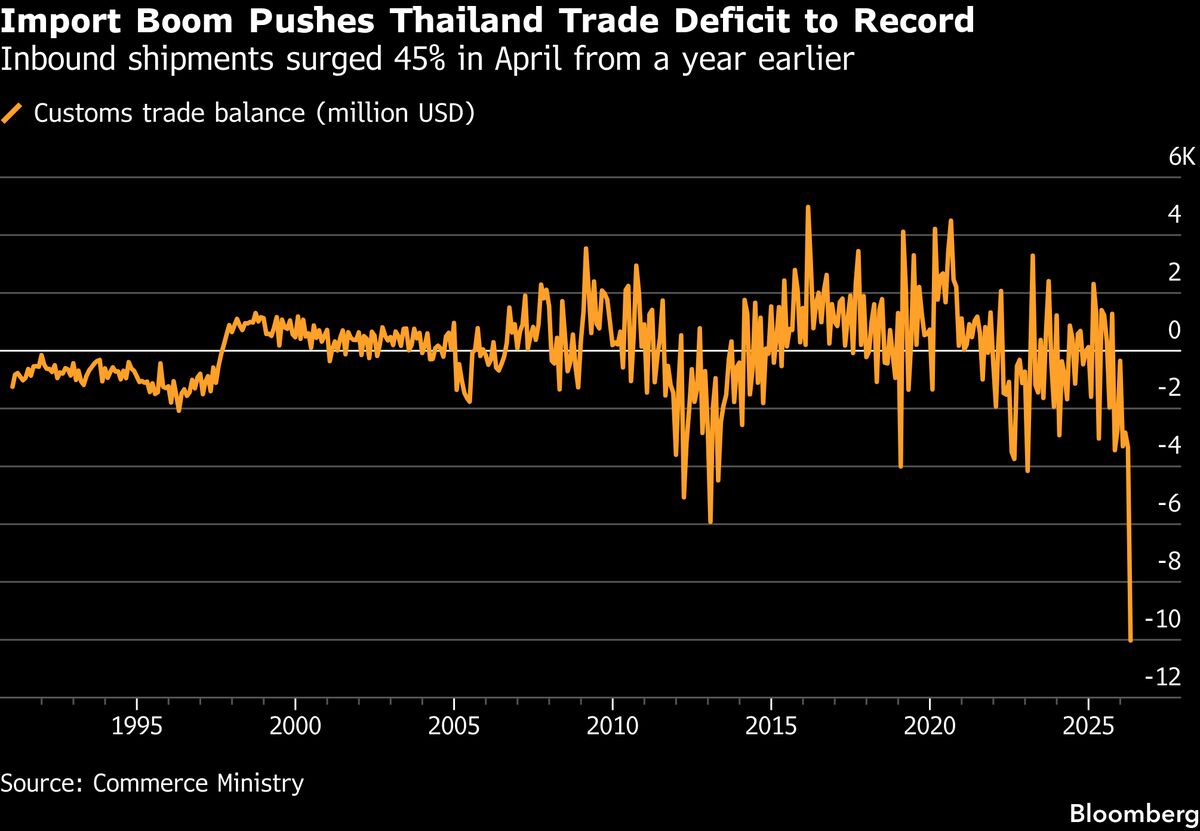
Higher imports of capital goods and raw materials, along with soaring oil and gas prices, pushed Thailand’s trade deficit to its widest level on record dating back to 1991.
Thailand’s top finance official said the government is preparing a package to address a looming cost-of-living crisis, even as economic growth handily beat estimates in the first quarter.
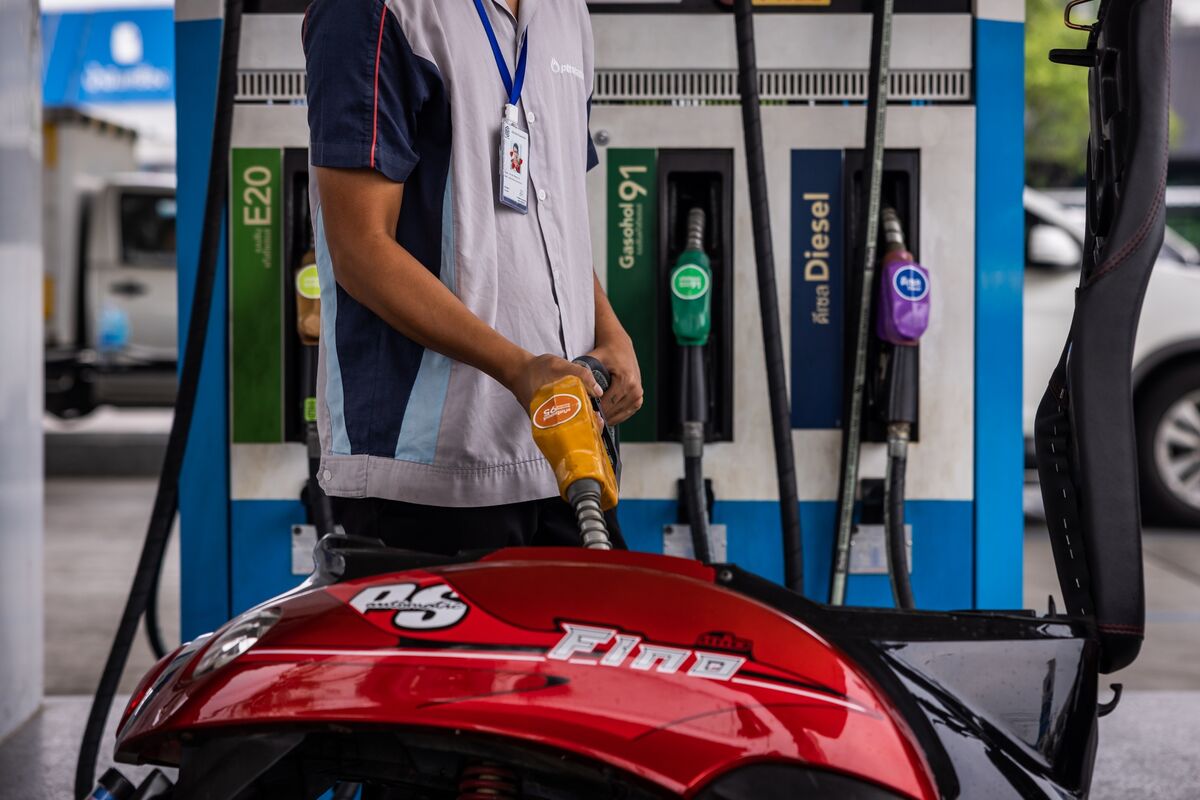
An employee refuels a customer's motorcycle at a PTT Pcl gas station in Bangkok, Thailand, on Wednesday, Feb. 15, 2023. PTT is scheduled to report results on Thursday. Photographer: Andre Malerba/Bloomberg
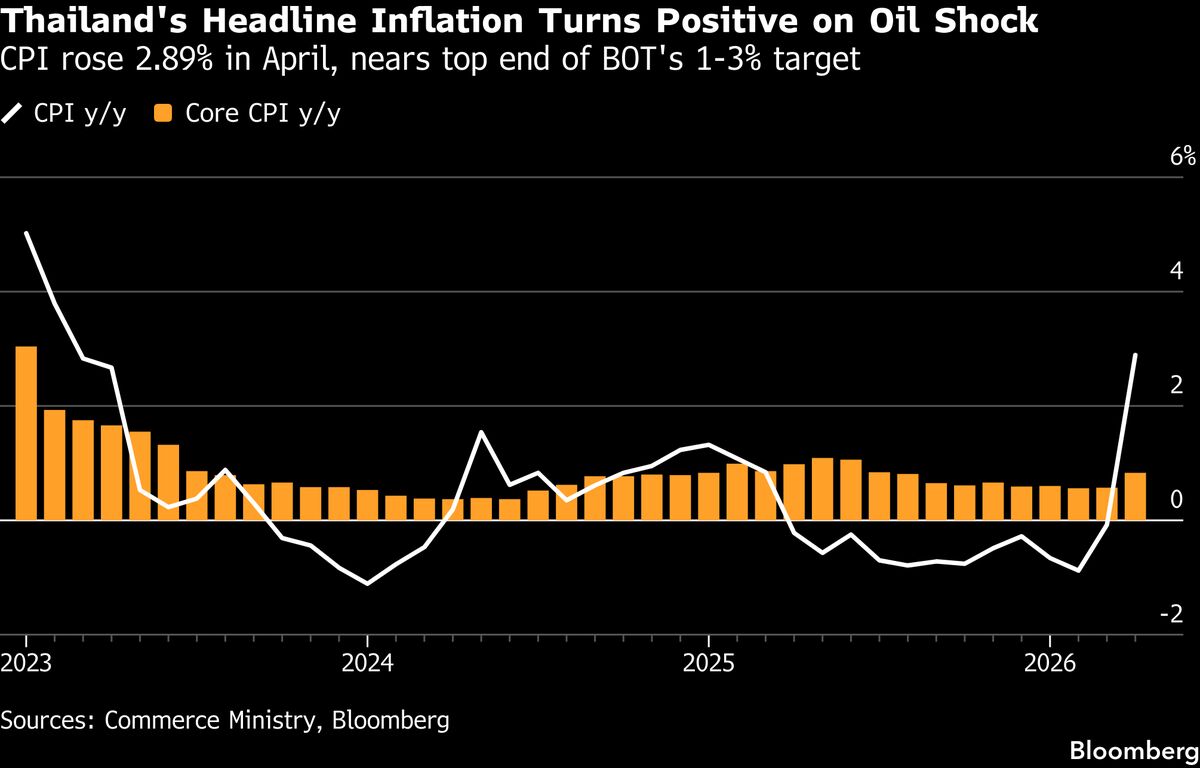
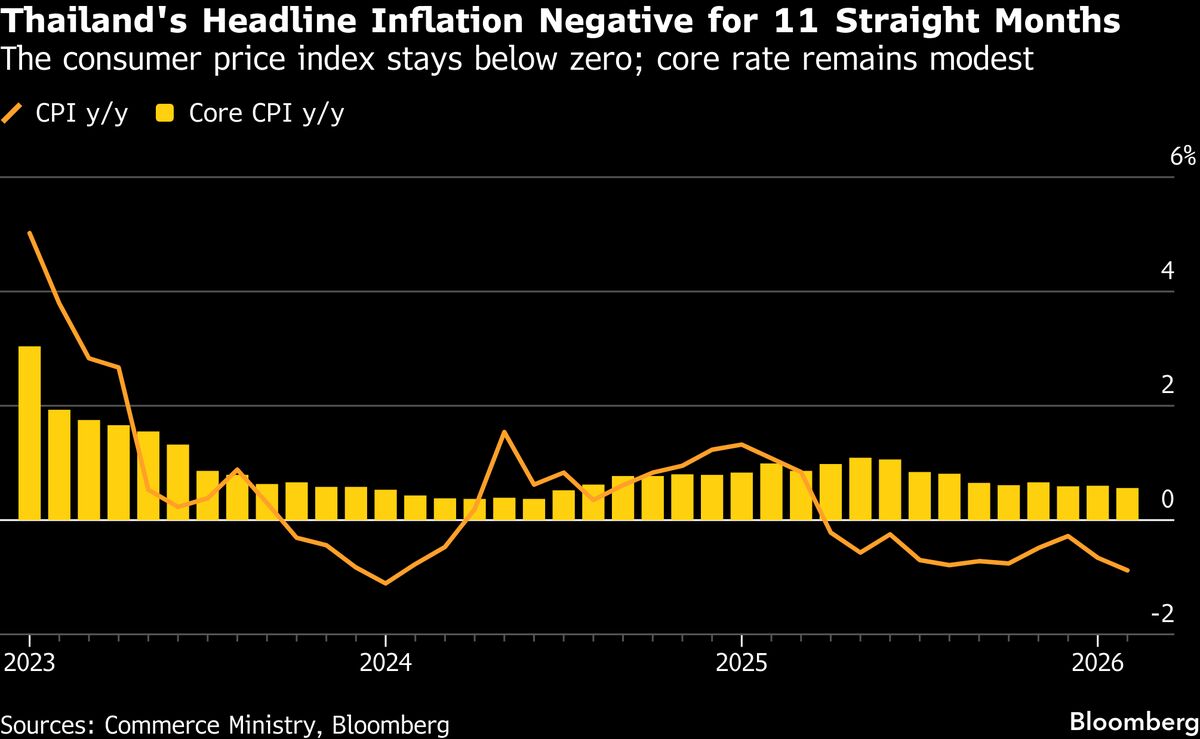
Higher oil prices linked to the Iran conflict pushed Thailand’s inflation to near the top end of the central bank’s target, ending a yearlong stretch of falling prices.
Thailand’s government plans to raise 400 billion baht ($12 billion) in new debt to support farmers, low-income households, and small businesses affected by the fallout from the Middle East conflict, while accelerating the country’s shift away from fossil fuels.
The Bank of Thailand will keep its interest rate at the current level “for as long as possible” to support the economy, even though inflation is set to accelerate due to the Middle East conflict, according to Governor Vitai Ratanakorn.
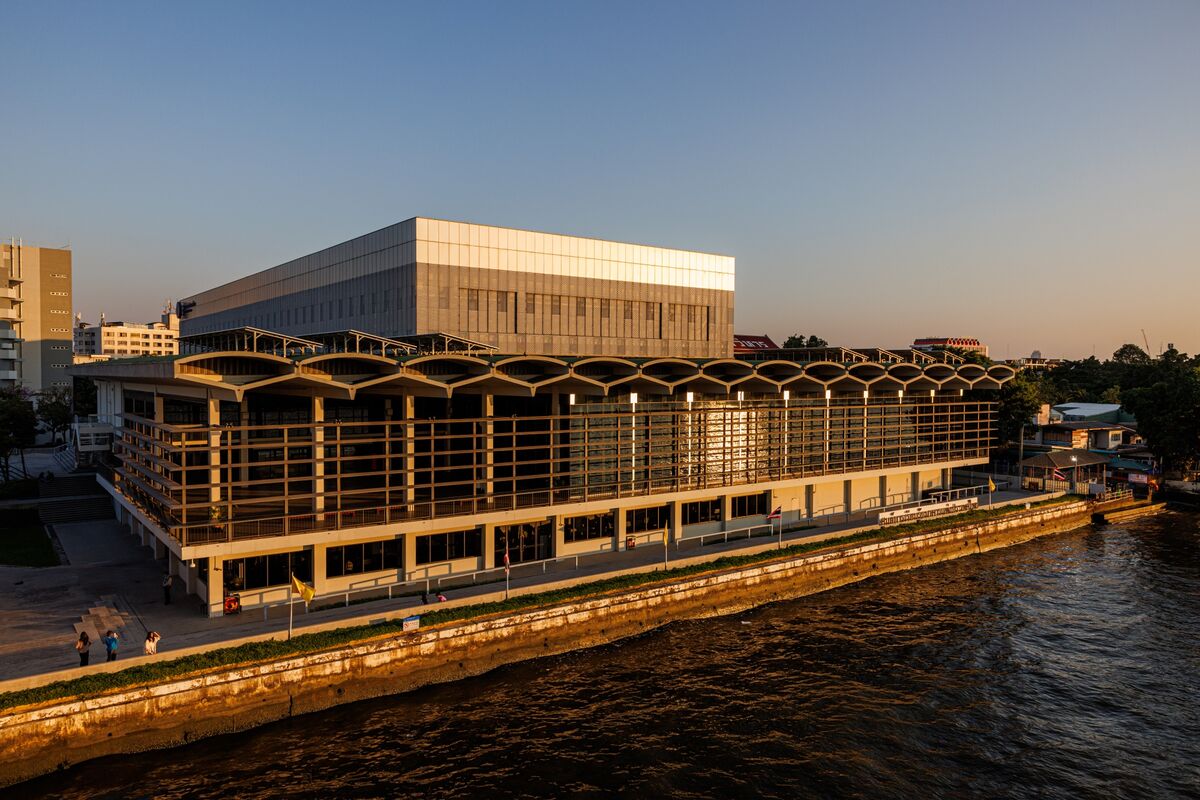
The Bank of Thailand complex that houses the learning center, museum and offices, seen from the Rama VIII bridge in Bangkok, Thailand, on Thursday, Feb. 22, 2024. Growing political pressure aside, Thailand’s weak economy adds to the case for the central bank to cut interest rates sooner rather than later, according to money managers.
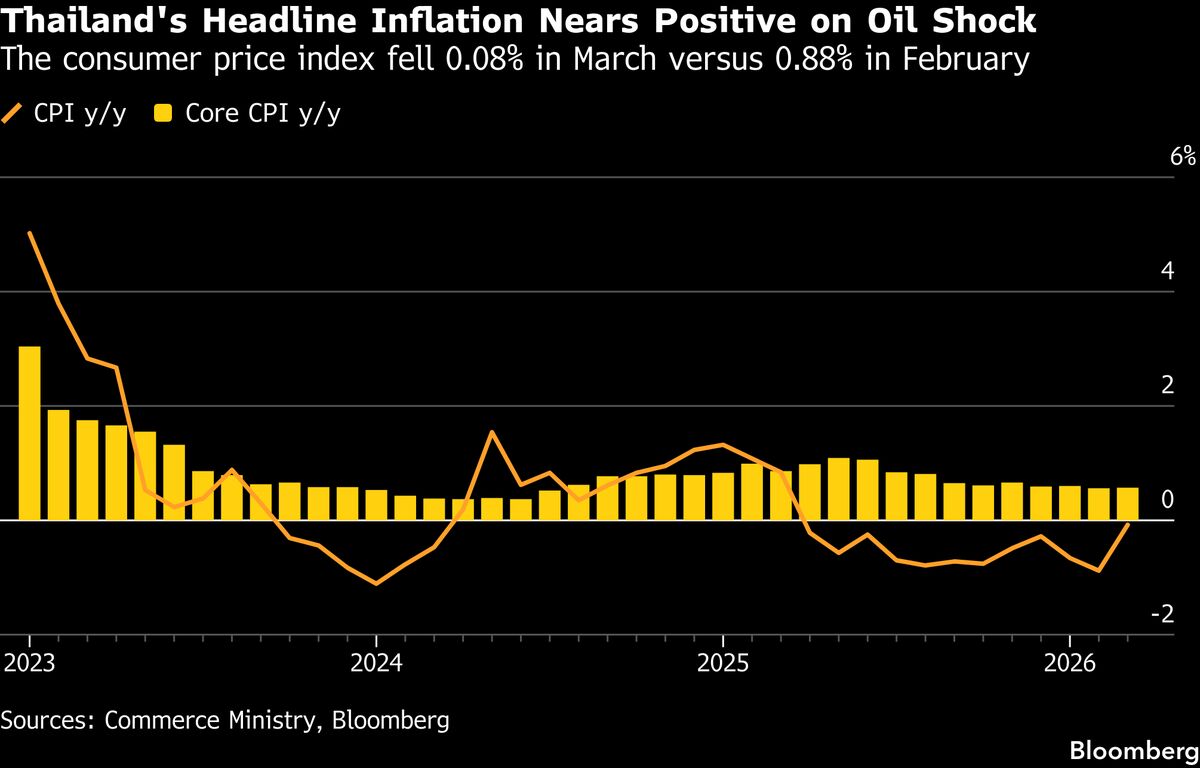
Thailand’s yearlong stretch of falling prices is nearing an end, as higher oil costs and Middle East supply disruptions begin feeding through to inflation.
Thailand posted a higher-than-expected trade deficit for a second month as a jump in imports outpaced sluggish export growth, underscoring economic risks including a stronger baht that threatens competitiveness.
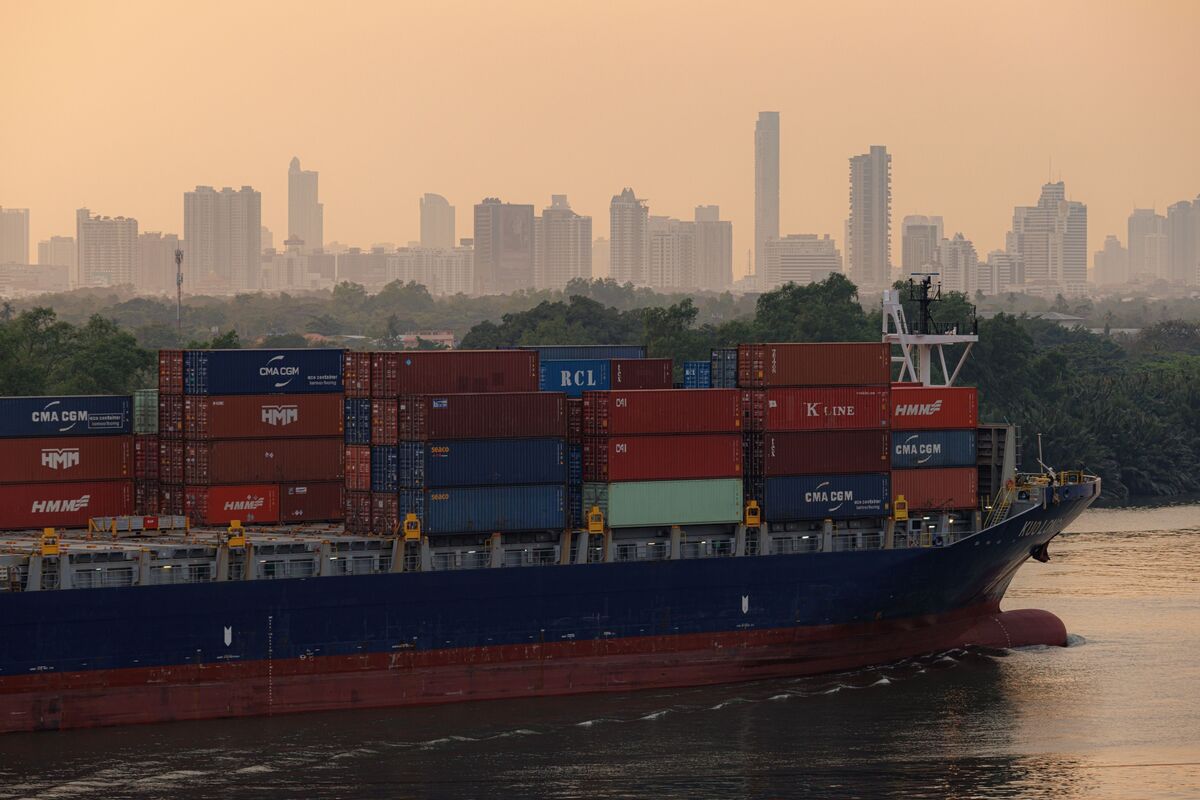
A container ship sails along the Chao Phraya river near the Bangkok Port.
 Anmelden