Vietnam’s central bank will seek to balance support for one of Asia’s fastest-growing economies with containing price pressures that are expected to flare up through the end of 2026.
Vietnam named the ex-head of the nation’s biggest agricultural lender to run the central bank, which is tasked with turbocharging growth despite tariffs, inflationary pressures and the war in the Middle East.
A man walks past the State Bank of Vietnam in Hanoi, Vietnam, on Monday, Oct. 22, 2007. Vietnam will raise its benchmark interest rate, lifting the maximum return that commercial banks can offer depositors to 18 percent a year, the Southeast Asian nation's central bank said.
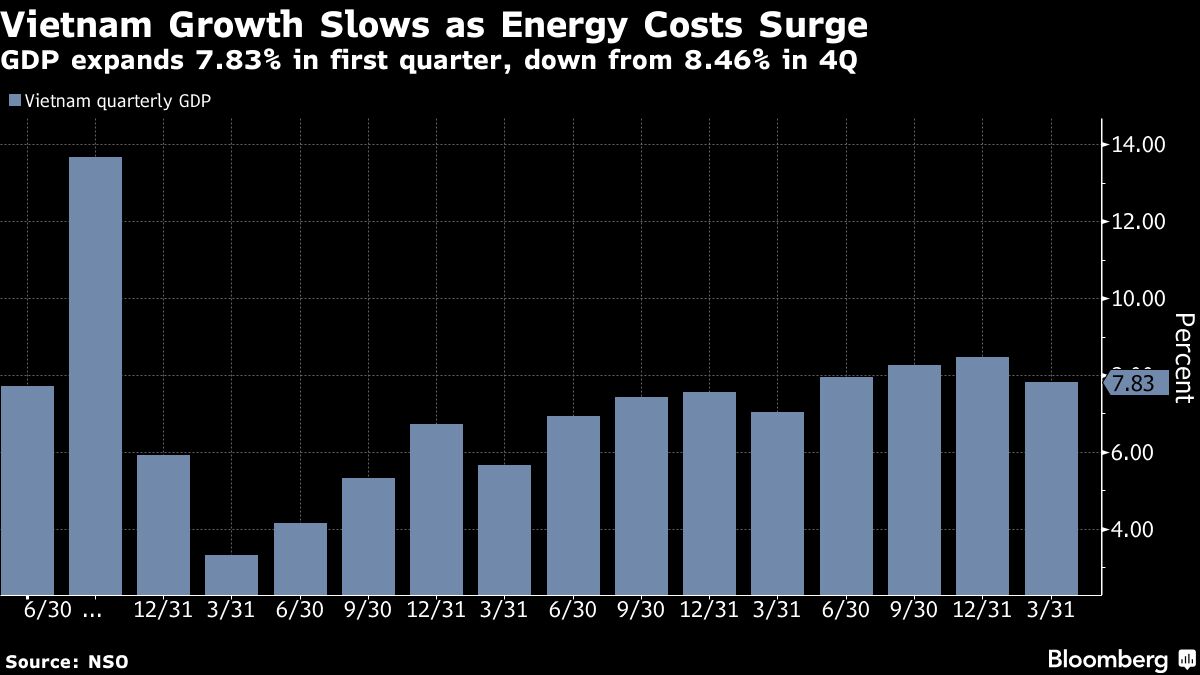
Vietnam’s economic momentum slowed in the first quarter as escalating tensions in the Middle East drive up energy costs and disrupt global trade routes, complicating General Secretary To Lam’s push for double-digit growth.
Vietnam’s leader To Lam has secured further authority from the ruling Communist Party to guide the country’s future and continue his aggressive “new growth model” for the economy.
Vietnam’s top leader said the country must pursue a “new model” to reach its 10% growth goal, highlighting the role of technology, private industries and rooting out corruption.
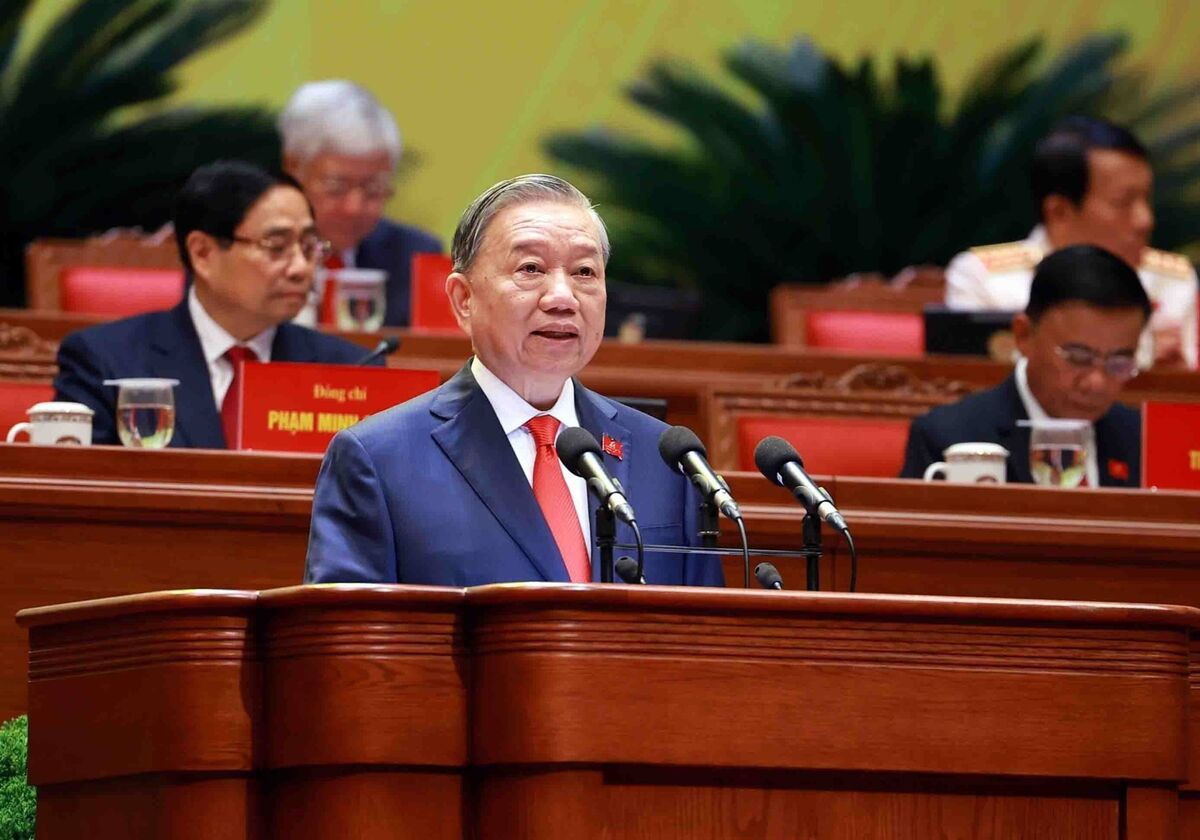
To Lam speaks at the National Congress in Hanoi on Jan. 20. Photographer: Bui Cuong Quyet/VNA/AP Photo
Vietnam’s economy grew faster than expected last quarter as manufacturing, investment and trade gained momentum despite President Donald Trump’s tariffs.
A worker operates a screw manufacturing machine at the Dong Phuong Bolts & Screws Manufacturer factory in Di An City, Binh Duong Province, Vietnam, on Thursday, April 10, 2025. With almost half of the $34.5 billion of goods exported out of Binh Duong last year shipped to the US, the region is especially vulnerable to tariff shocks.
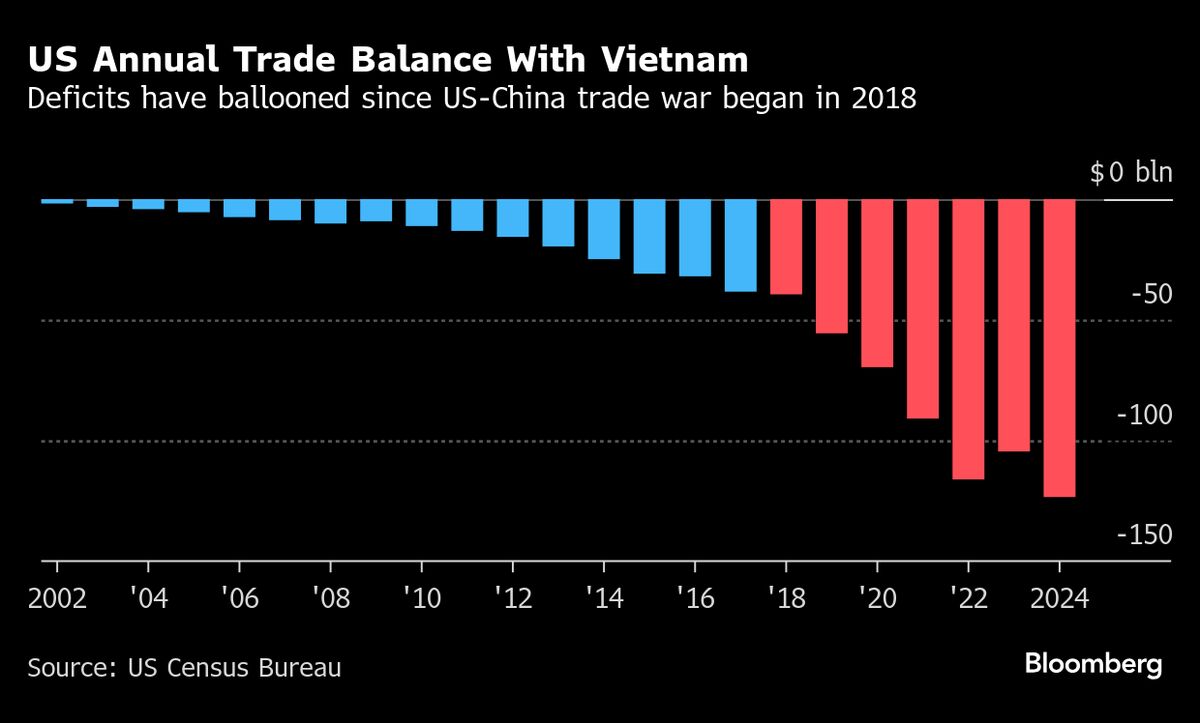
Vietnam’s exports to the US climbed to a new high, driving the trade surplus above last year’s level, even as negotiators push to finalize a tariff deal meant to rein in the gap.

 Anmelden