Mexico’s government still has faith that it can reach a trade deal with the US, despite their recent decision to delay a round of talks that had been scheduled for this month.
Mexican President Claudia Sheinbaum is proposing sweeping changes to corporate income tax rules to raise as much as 140 billion pesos ($8.2 billion) next year, part of an effort to narrow the budget deficit but one that risks squeezing low-margin businesses.
Mexico is trying to figure out how to reignite growth at its once-booming beach destinations, where visits by big-spending travelers have slowed in another bleak sign for a struggling economy.
Mexico’s annual inflation rate rose less than forecast in August, providing central bankers scant respite but unlikely to alter their near-term plans to hold interest rates steady.
Mexico’s fiscal deficit would narrow next year even as the government plans more funding for public works and social programs, according to the 2027 budget proposal from leftist President Claudia Sheinbaum.
Mexico is weighing plans to impose further trade restrictions on selected products from China and other countries while raising existing import taxes on others, according to four people familiar with the matter.
With waterways from the Panama Canal to the Strait of Hormuz and the Red Sea facing disruptions, Mexico is pitching a land route in the south as an alternative for global trade.
Mexico’s central bank kept its benchmark interest rate steady while signaling no change at its next meeting, as policymakers weighed slowing inflation and a weakening economy against persistent services inflation and risks from the war in the Middle East.
The US has asked Mexico to mirror Washington’s tariff wall against Chinese steel and aluminum by imposing Section 232-style duties on imports from outside North America, according to four people with direct knowledge of the matter.
Mexico’s annual inflation slowed as expected in early July, supporting the central bank’s consensus view that keeping borrowing costs at current levels is appropriate.
Mexico’s growing fleet of Chinese-made heavy trucks is becoming a new obstacle in its quest for relief from US tariffs, as Washington presses for assurances that its southern neighbor isn’t becoming a backdoor for Chinese manufacturers to enter North America.
Mexico’s inflation slowed much more than expected in June to the slowest pace since 2020, giving the central bank more flexibility as policymakers assess whether the decline in price pressures can be sustained.
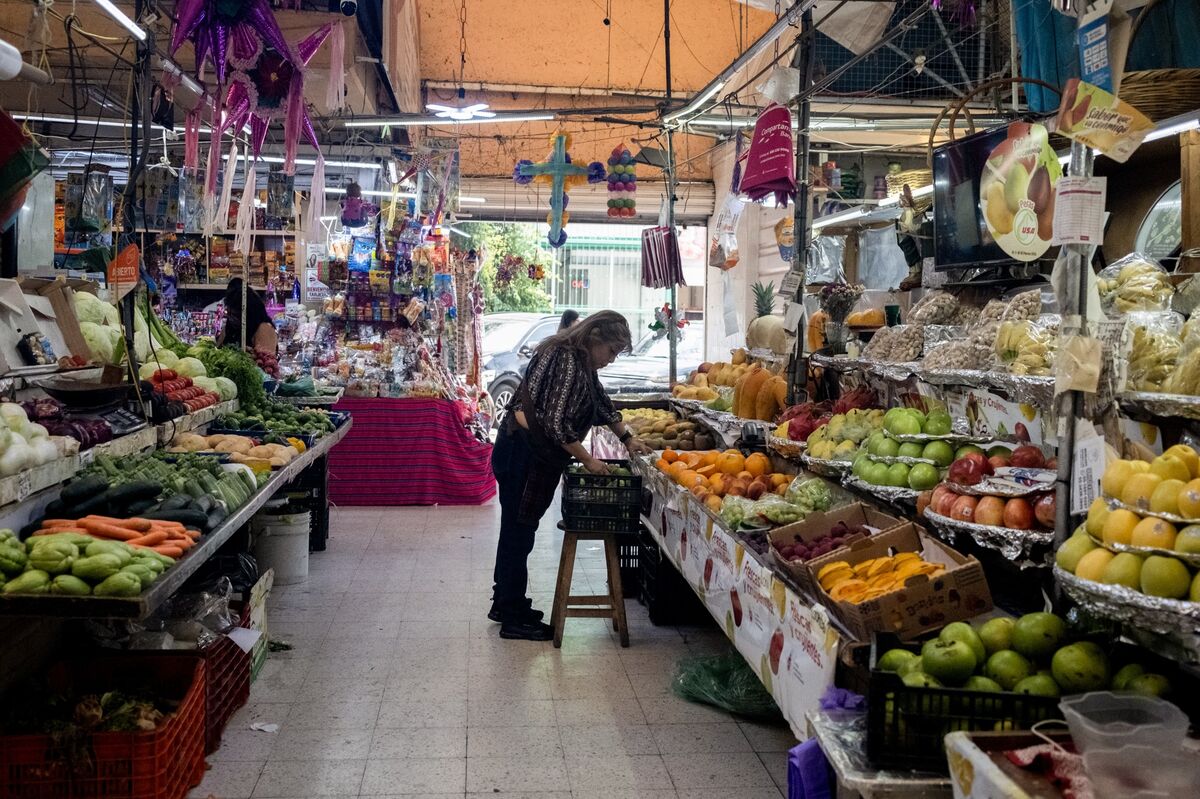
A worker arranges vegetables in the Medellin market in Mexico City.
Mexico’s auto industry is bracing for a blow that could spread well beyond Toyota Motor Corp., after the Japanese automaker said it would move production of its popular Tacoma truck out of the country and into Texas.
A Toyota Tacoma concept pick-up truck during the 2024 New York International Auto Show.
For years, Mexico’s pitch to investors rested on a simple promise: build here, sell to the US.
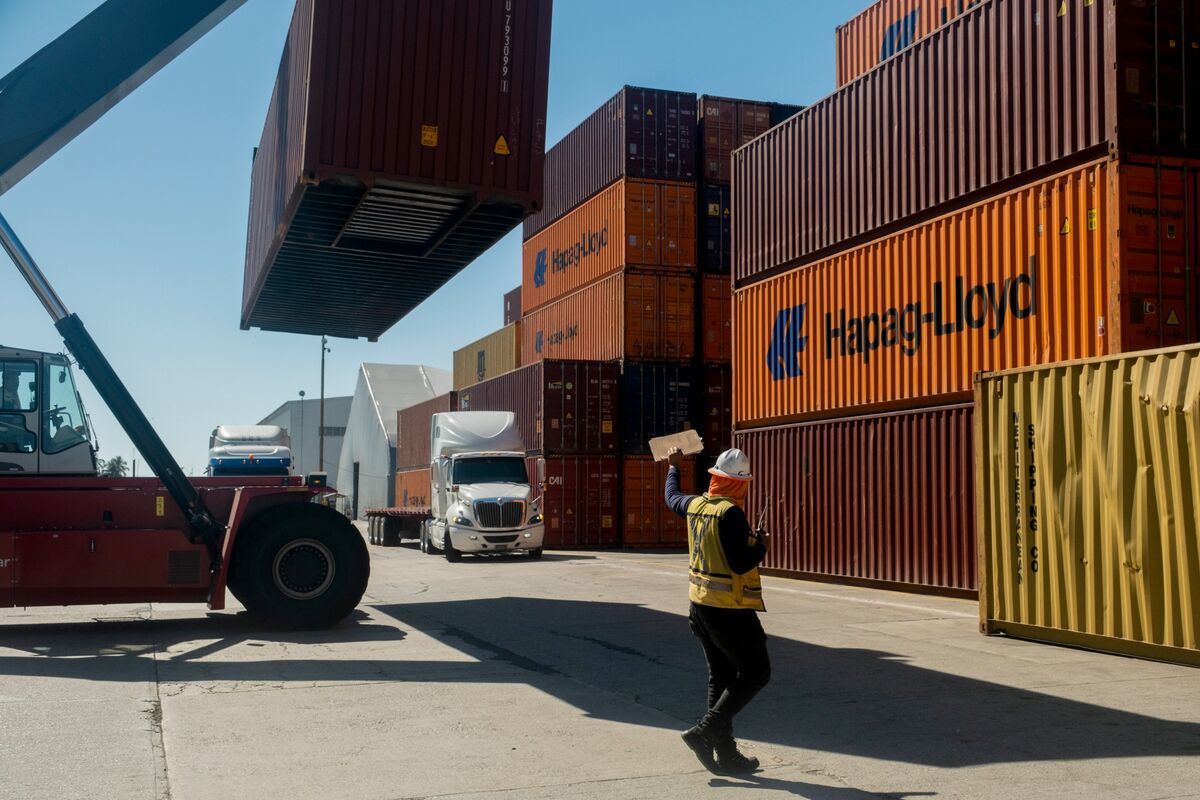
Shipping containers are moved at the Port of Mazatlan in Mazatlan, Sinaloa state, Mexico, on Wednesday, Jan. 21, 2026. President Donald Trump expressed indifference toward the North American trade agreement with Canada and Mexico, portending a lengthy renegotiation of the US's largest free-trade pact.
Mexico’s central bank published regulations allowing it to buy some local government securities to support money-market liquidity when needed, expanding its toolkit to ensure the proper functioning of markets during selloffs or periods of high volatility.
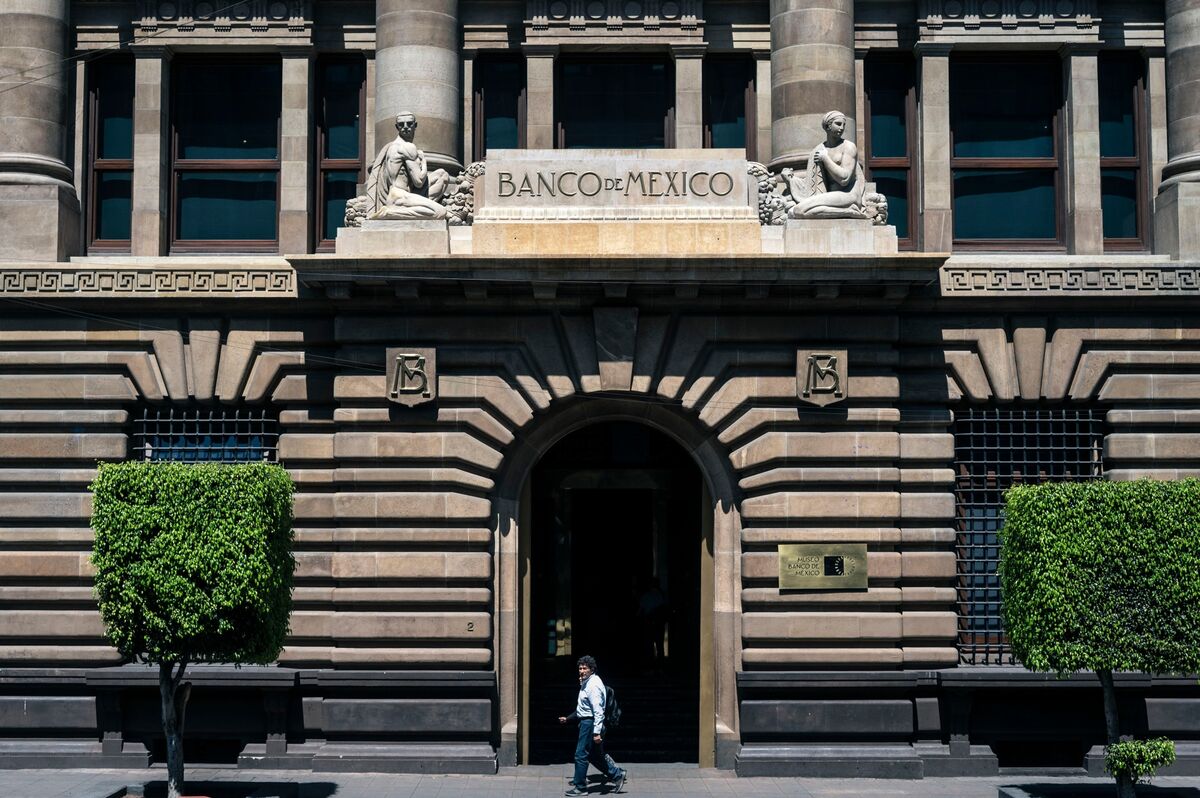
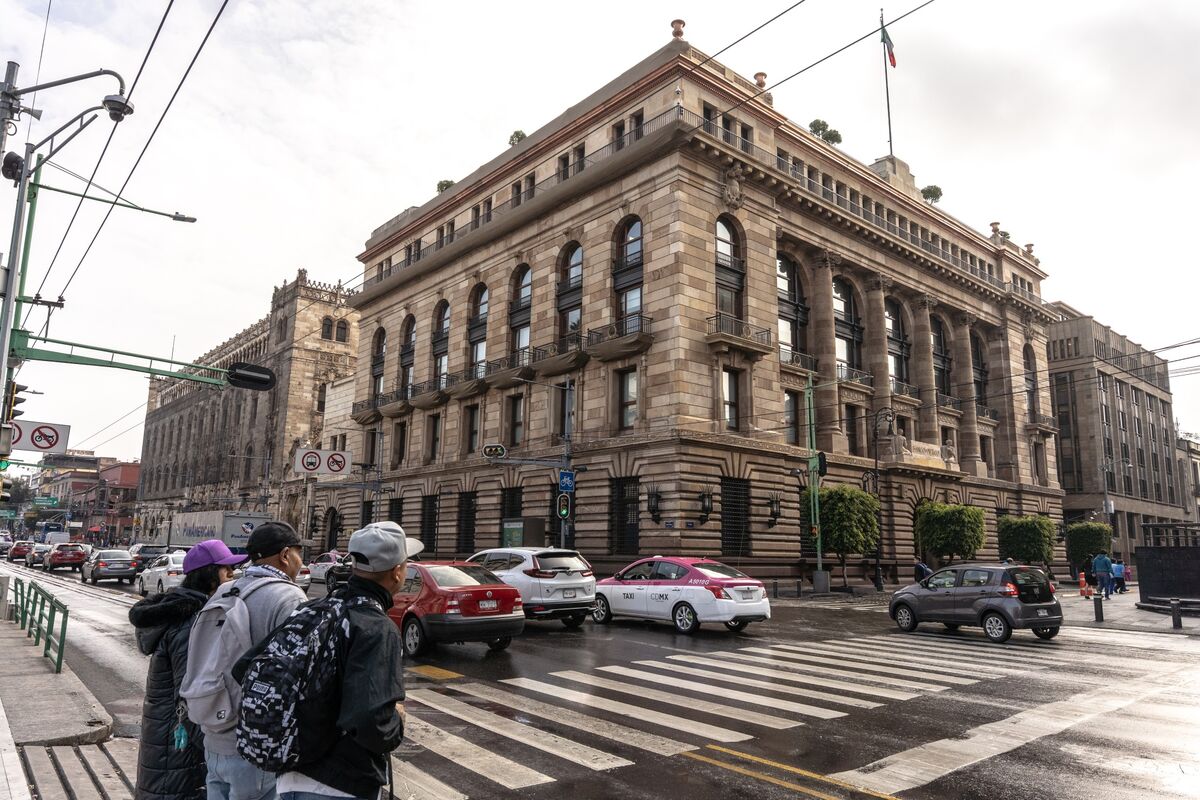
Mexico's central bank headquarters, the Banco de Mexico, in Mexico City. Photographer: Mayolo Lopez Gutierrez/Bloomberg
Banco de Mexico’s Governor Victoria Rodríguez Ceja said the central bank’s decision to pause any rate move has no predetermined duration, as policymakers assess if the recent drop in inflation will last.
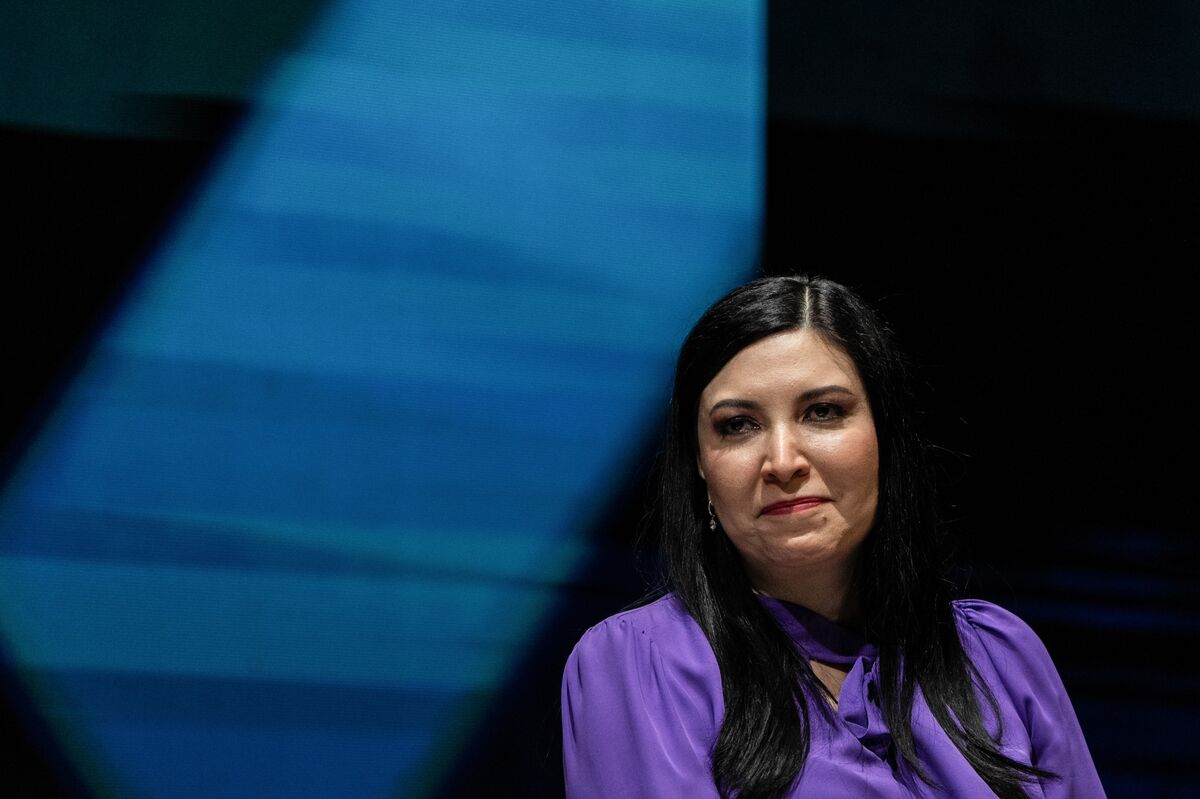
Victoria Rodriguez Ceja, governor of the Bank of Mexico, during the Association of Banks of Mexico (ABM) convention in Cancun, Quintana Roo state, Mexico, on Wednesday, March 18, 2026. Mexican regulators and banks are seeking to boost how many payments are sent digitally and curb the country's preference for cash, according to the head of the country's banking industry group.
Mexico’s central bank held its benchmark interest rate steady while signaling it will keep it at 6.50% for longer as it closely follows the evolution of inflation and economic growth.
 Anmelden