Business activity in the euro area expanded at a slower pace this month, restrained by a contraction in France, where protests have devolved into rioting and looting.
Inflationary pressures are mounting in the US, with fresh consumer and wholesale price data indicating costlier fuel is filtering through into higher prices for other goods and services.
Higher gasoline prices probably led to quicker overall US inflation in September even as underlying price pressures moderated, supporting views that the Federal Reserve will refrain from raising interest rates this month.
Sentiment among US consumers deteriorated for a third straight month on cost-of-living concerns, while personal spending in Japan continued to weaken and German factory orders slid.
Any urgency among Federal Reserve and European Central Bank policymakers to follow up September interest-rate hikes at this month’s meetings has been dialed back in the wake of soft US jobs data and acute stress in French financial markets.
The Federal Reserve raised interest rates for the first time since July 2023 and penciled in an additional hike before the end of the year — steps aimed at containing inflation.
Inflation pressures intensified across the global economy this week as surging energy costs from the Iran war continued to feed through to consumer and producer prices, raising the risk of slower growth and tighter monetary policy.
US payrolls growth got back on track in August, consistent with general steadiness in the labor market that’s helping the Federal Reserve focus more intently on its battle with inflation.
Federal Reserve Chairman Kevin Warsh made clear he wants to see underlying inflation clearly heading lower at an annual Federal Reserve gathering in Wyoming. Government figures this week didn’t help much.
Prices paid by US consumers probably inched up marginally last month after falling for the first time in six years, a welcome tempering in recent war-driven inflationary pressures.
Employers in the US likely stepped up their pace of hiring in July, showing a steady appetite for workers despite the overhang of geopolitical concerns and elevated inflation.
US consumer spending merely edged up in April as war-driven inflation pressures sapped incomes and pushed the saving rate to an almost four-year low.
Shoppers at the checkout counter at Abracadabra NYC in New York, US, on Friday, Sept. 26, 2025. Halloween spending in the US is expected to climb to a record $13.1 billion this year despite consumer wariness about tariffs and higher costs of living, according to a survey by the National Retail Federation.
The Federal Reserve’s favored top-line inflation gauge is rapidly approaching 4% as a war-driven spike in energy costs generates unease that price pressures will broaden.
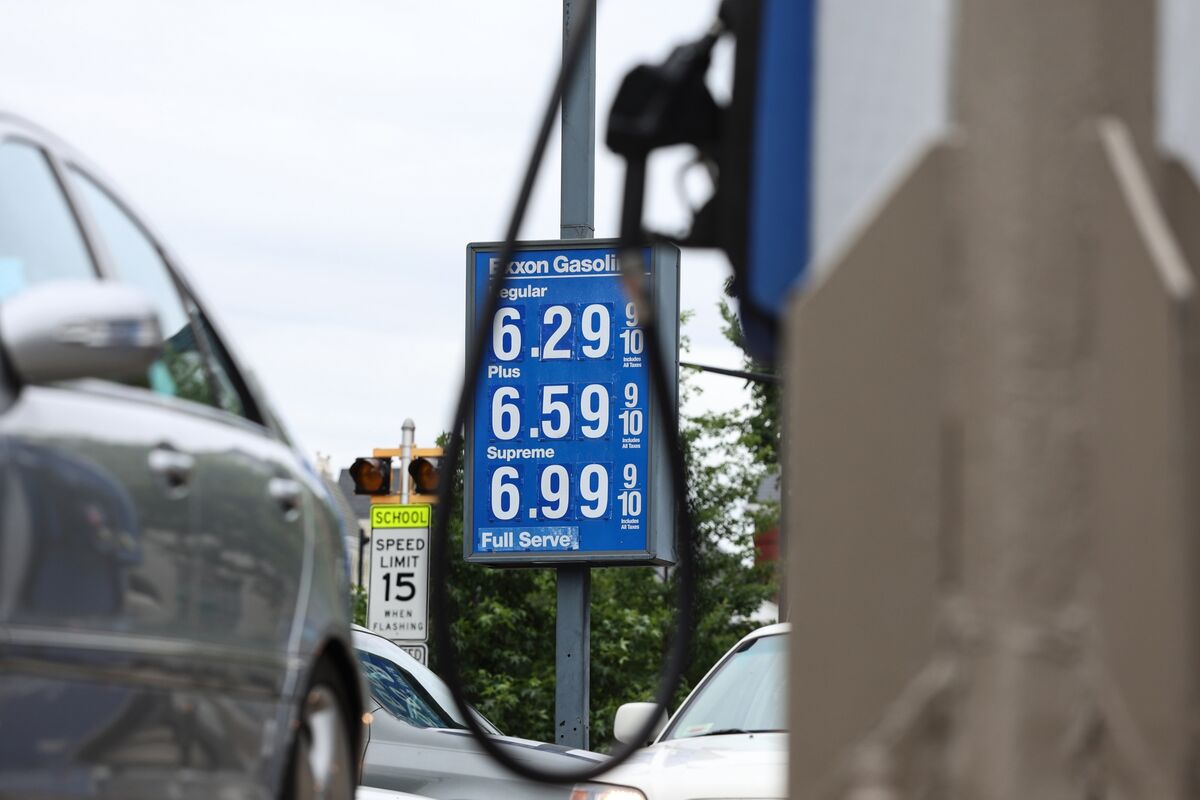
A sign displays the price of unleaded gasoline at an Exxon gas station in Washington, DC, US, on Thursday, May 21, 2026. AAA projects that 45 million people will travel at least 50 miles from home over the Memorial Day weekend, which would set a Memorial Day record.
The fallout from the war in Iran continued to ripple across the global economy, complicating the outlook and fueling inflation angst.
Shoppers in Union Square in San Francisco, California, US, on Thursday, Dec. 11, 2025. Holiday spending will surpass $1 trillion this year and set a record despite consumer caution, according to a forecast by the National Retail Federation.
A fresh batch of consumer price data in the coming week is likely to affirm Americans’ growing frustration with inflation.
A driver refuels a vehicle with regular gasoline at a Chevron gas station in Seattle, Washington, US, on Thursday, April 30, 2026. After weeks of fuel inflation across Asia and Europe, higher pump prices are now starting to intensify in the US as war-driven energy shocks show little sign of abating.
Employers in the US boosted payrolls in April by more than projected after an even bigger increase a month earlier, suggesting the labor market may be gaining momentum after near-zero job growth last year.
Workers at a cafe in Washington, DC, US, on Wednesday, March 11, 2026. The Bureau of Economic Analysis is scheduled to release gross domestic product (GDP) figures on March 13.
 Anmelden