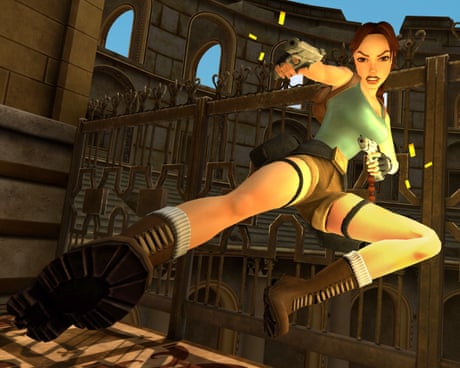
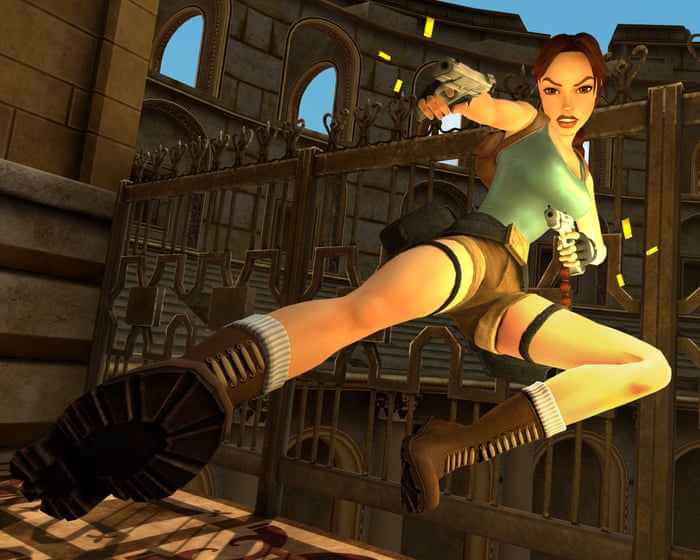
‘Giving Lara Croft pistols meant we could show off her acrobatics. And when she goes to Peru, we threw in a T rex!’
I joined Core Design in the summer of 1994 and met Toby Gard, who showed me his concept sketches for Tomb Raider. He’d already come up with the title and drawn a mock-up box cover with a woman holding two pistols.
PC; Origame Digital This odd but absorbing adventure sends you waddling across Antarctica in search of an eldritch entity – uncovering a world far stranger than it first appears
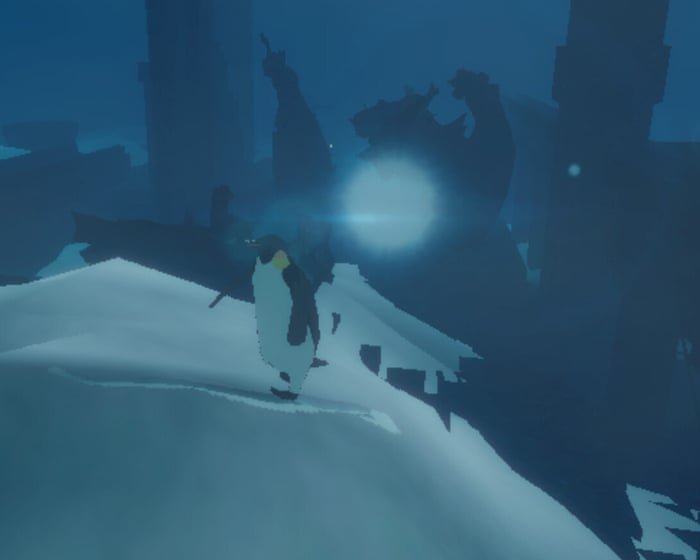
A Nazi kneels down on frozen snow, staring at an endless Antarctic horizon. Another holds a gun to his head, ready to end his own life. I direct a small waddling penguin up to them, trying to imagine what it could be thinking. Dismay, perhaps. Likely bewilderment. But then a faint smile seems to break out across its beaky face, as if amused by these silly humans and their misguided belief that they could ever best this howling, harsh landscape.
For most games, the idea of playing as a penguin observing Nazis losing the plot near the south pole would be weird enough. But Penguin Colony, developed by Origame Digital, pushes further. This is an audacious, frequently brilliant retelling of HP Lovecraft’s 1936 novella At the Mountains of Madness, in which eldritch horrors are just as common as Nazis. Further weirdness abounds: the many collectibles scattered about this place are not shiny gold objects à la Super Mario or Sonic. Rather, they are words. So tottering about as a semiaquatic bird, you have a unique mission: collect human language.
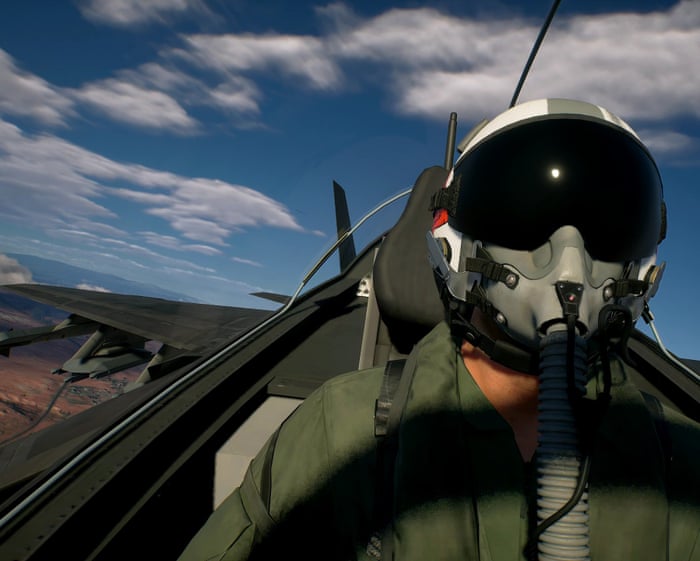
PlayStation 5, Xbox, PC (version played); Bandai Namco The game generates blood-pumping moments as you twist, turn and weave through the skies, while your locked-on missiles speed away to obliterate an enemy plane
The core appeal of any Ace Combat game lies in the moment when the beautiful clouds part, the sunlight glints off your perfectly rendered state-of-the-art fighter jet, and guitar-shredding music kicks into overdrive as your locked-on missiles speed away to obliterate an enemy plane. All of that is 100% present in Ace Combat 8: Wings of Theve. What’s new is the way it delivers its unexpectedly compelling story.
Set in the Earth-like alternative world of Strangereal, where every country is absolutely obsessed with fighter planes and giant superweapons, Ace Combat drafts you into the role of a fake ace pilot called the Wings of Theve – a propaganda invention to raise the morale of a besieged nation, similar to real-life rumours about Ukraine’s Ghosts of Kyiv. You rapidly find yourself becoming an actual legendary pilot, soaring through the skies with your buddies and raining hell upon your oppressors as everybody cheers on the radio. Speaking of ghosts, you have one in your ear – your predecessor, whom nobody else can hear, a gravelly voice waxing lyrical about flying, war and whatever else is on his mind as you flit about.
PC, Nintendo Switch, PlayStation 4/5, Xbox; Arbitrary Metric The latest work from the team behind Paratopic is part compulsive time-loop management sim, part eerie subterranean adventure
Fetch the chair from storage. Deliver a message that causes disgust. Clean vomit in the afternoon and pour another glass in the evening. In Roman Sands RE:Build, you provide concierge service to delirious, broken people who couldn’t care less about the sweat on your forehead and the bags under your eyes.
In this reimagining of the 2019 visual novel Roman Sands, crafted by the team behind the Americana horror road trip Paratopic, you’re trapped in a beach resort and tethered in a time loop. The task is deceivingly simple: fulfil menial directives from four gluttonous individuals, unlock tools and items to open more rooms and then do it all over again.
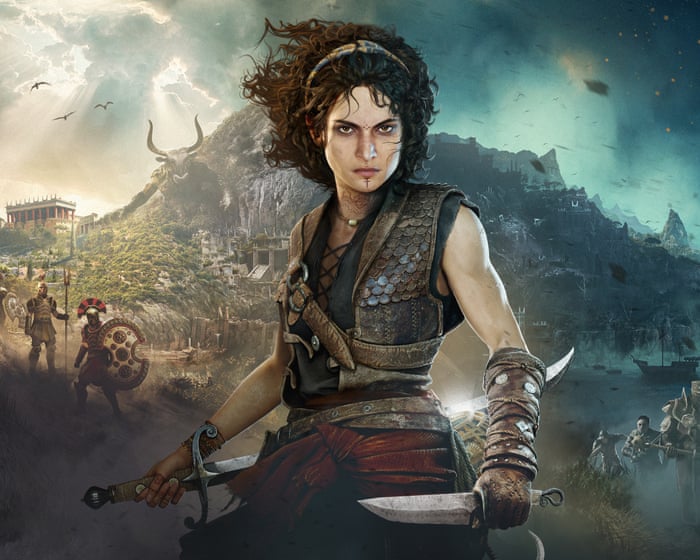
PlayStation 5, Xbox Series S/X, PC; Asobo Studio The medieval franchise is transplanted to Crete, conjuring action-adventure magic from familiar ingredients
The path in Resonance: A Plague Tale Legacy is a familiar one. Amid ancient ruins and sun-dappled gorges, a young woman, Sophia, dutifully treads the same footsteps as a Minoan warrior from millennia ago, one with whom she seems to share a visionary connection. The “resonance” between these two characters is made clear by their echoing actions – a crank pushed in the bronze age that still works in the medieval present, for example. Through these spliced timelines, it becomes clear that Sophia, compelled by her supernatural gift, possesses little agency. Destiny beckons her forwards.
This is a smart meta concept for a game that, at its most basic level, boils down to keeping your left thumb planted firmly on the analogue stick, always pushing Sophia onwards in linear fashion. You jostle her through ornate corridors rendered as higgledy-piggledy pirate camps and cobbled Venetian streets. For the greater part of the game, you propel her through the Minoan remains of Crete, which harbour a dark and terrible secret. It is classic third-person action-adventure fare, building on the template laid down by the likes of Tomb Raider and then refined and complicated by titles such as The Last of Us. Little, from an interactive perspective, surprises: you dash, vault and swing between teetering podiums, squeeze through tiny gaps in rock and crouch behind conveniently placed walls to avoid enemies.
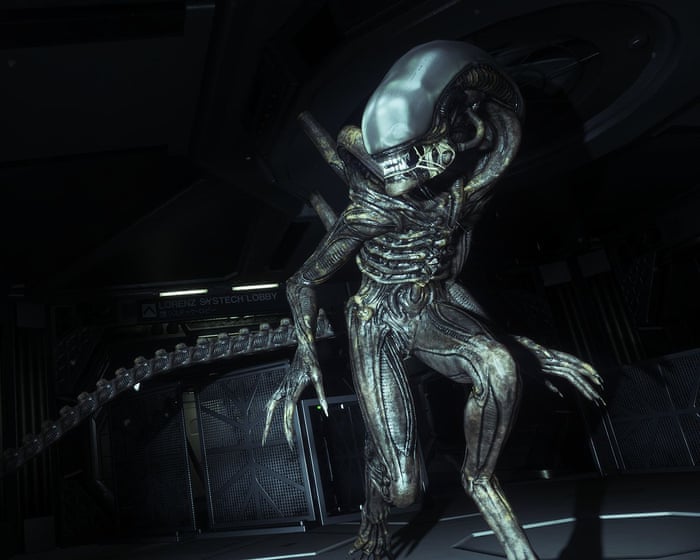
Creative Assembly could strike gold again with this follow-up to their fan-favourite, film-inspired game … if you’re brave enough to venture outdoors
Alien: Isolation redefined Alien games on its release in 2014, bringing the original taut, haunted house theme of the first movie to fans who had mostly been fed action-packed shooters. Cowering under desks and inside lockers wasn’t a new thing; being hunted by an intelligent and lethal xenomorph that could spring down from a duct at any moment was.
“I was thinking about what we could do for a sequel while we were still finishing the first game,” reveals Creative Assembly’s Alistair Hope, creative lead on Alien: Isolation and its sequel. “But we didn’t actually start the project until around the time of the 10th anniversary. We’ve seen the response grow over time, watching [Alien: Isolation] continue to find new players, even though it’s a relatively old game. And they’re surprised there isn’t a sequel.”
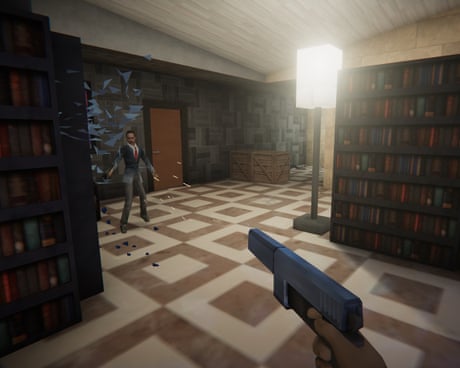
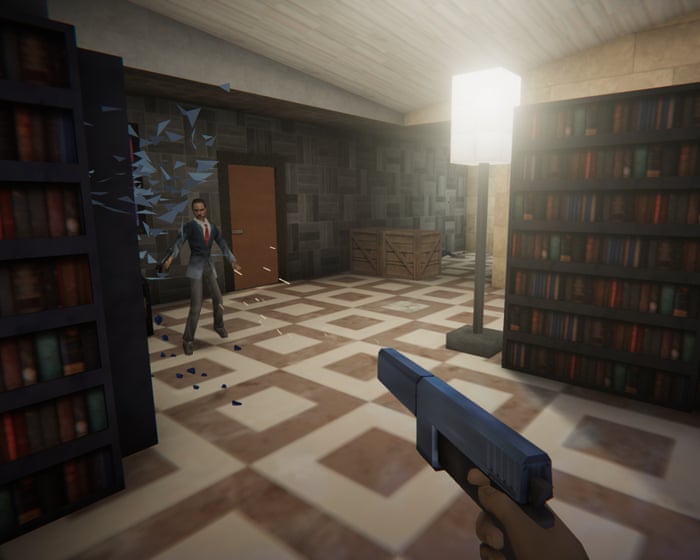
PC; Replicant D6 This GoldenEye 007-styled retro shooter is an agreeable set of straightahead shooting missions that hark back to a simpler time, with simpler controls
With 007 First Light, 2026 has already given us the best James Bond game in more than three decades, since the release of Rare’s N64 classic GoldenEye 007. But what about those players whose loyalties lie not with the super-spy himself but the particulars of that 90s interpretation of his adventures?
Enter Agent 64: Spies Never Die. Made almost entirely by a single developer (who goes by the very cloak-and-dagger alias Replicant D6), its production values couldn’t be much further from the blockbuster First Light. There’s no voice acting, with all dialogue instead delivered via subtitles, while each location on your globe-trotting adventure is depicted by a repeating texture wallpapered over scenery so blocky you can count the individual polygons.
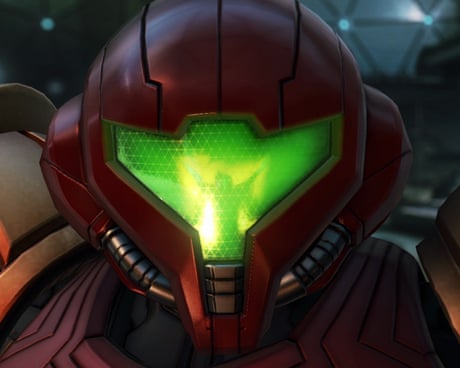
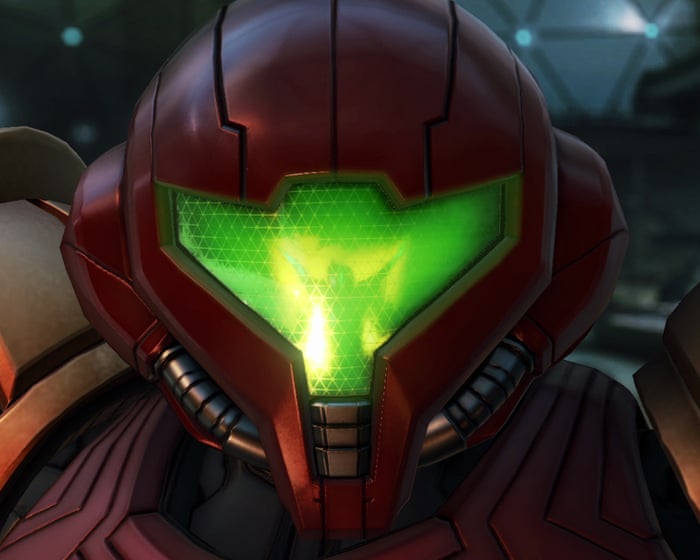
Being a woman who loves video games has often felt lonely, like being on a hostile planet – but Metroid’s female space hunter has been with me all the way
It’s 1986, and you’re playing a brand-new game. (You’re in Japan in this scenario, by the way; the game in question, Metroid, won’t come to North America and Europe until later.) Anyway, this new game has you in its grip. You are a lone astronaut exploring a hostile alien planet full of ancient, mysterious structures. This astronaut looks human enough – but this distinctly alien place is full of objects that power up their spacesuit’s capabilities. Each new ability allows you to explore a new area, and as you do, you realise that the entirety of the planetary base you’re exploringis one, massive, interconnected maze. Whoa.
Hours later, you finally defeat Mother Brain and set off a timed self-destruct sequence. Upon your escape, you’re treated to an endgame screen: the little astronaut faces you as text on screen implores you to “pray for peace in space”.
Denkiworks’ debut lets players pull off tricks and pull pints in a stunning, Japan-inspired setting
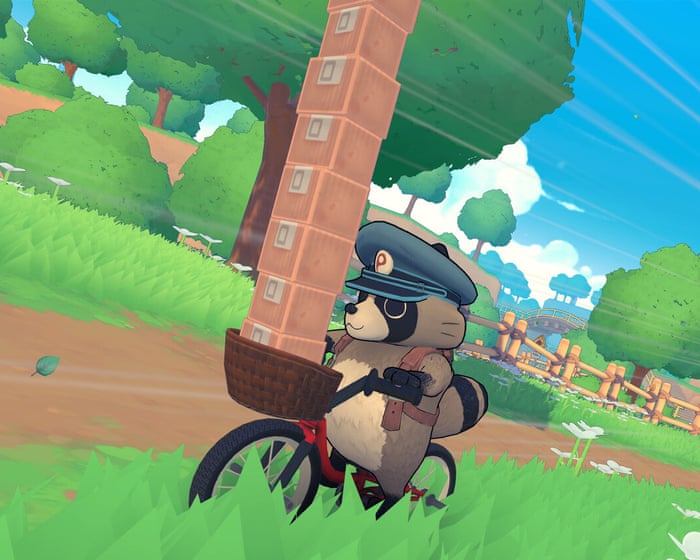
A freeloading tanuki, mounting debt, and a town full of possibilities will sound familiar to fans of Animal Crossing. Alas, while you won’t find accountability from Tom Nook, Kyoto-based studio Denkiworks has stepped in to heal your financial trauma with a BMX-filled adventure in which a mammal finally pays the price for their years of bad behaviour. “Even Japanese people ask why it’s a tanuki,” jokes Liam Edwards, a game designer at Denkiworks. “They have such a mythological background to them; they’re almost like dragons in terms of their mythology.”
In Tanuki: Pon’s Summer, you play as an adorable but irresponsible critter named Pon, who’s bled the coffers of the local shrine – his home – dry by buying video games and snack food instead of preparing for its semicentennial matsuri. As a result, the shrine is in total disrepair, and important architecture and cultural artefacts – such as the ema stand and the chōzuya – are left cracked and broken, unbefitting a festival half a century in the making.
PC, PlayStation 5, Xbox, Nintendo Switch; Vertigo Games This clever update captures the 1990s magic of the original… including some of the technical issues
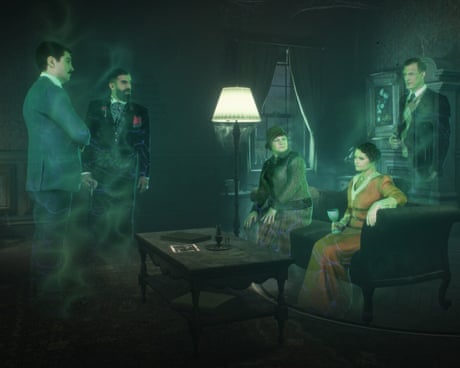
The 90s were a gold rush for adventure games. LucasArts kicked off the decade with its legendarily irreverent Monkey Island games. Then, Cyan Worlds materialised to deliver a series of atmospheric and boundary-pushing odysseys with Myst and Riven. Nestled between these primary genre texts is The 7th Guest, a lesser-known but still notorious adventure that earned plaudits for its unique FMV visual style, blending live-action filmed footage with pre-rendered 3D backgrounds. It was remade originally for VR, and now has been reconfigured into something playable on PC and consoles, its digital cobwebs cleared and tricky puzzles tinkered with for a fresh (or nostalgic) audience.
We are dropped into the ectoplasmic shoes of an amnesiac apparition, arriving at the gloomy haunted home of a toy-maker. Armed with a time-bending lantern and a Ouija board-shaped map, your job is to solve a historical whodunnit by literally illuminating events from the past. It’s a melodramatic, surprisingly campy adventure that effectively evokes the overzealous CD-Rom horror of its original era.
As Hollywood searches for its next iteration of the superspy, the actor explains how he earned pop culture’s most sought-after role – and how he’s taking 007 back to basics
Is any acting gig more contested than James Bond? Each week seems to bring a din of audition speculation so loud that it must be exhausting for the Elordis, Cavills and Dickinsons who are at the centre of it all. But when one of them does finally bag the role, perhaps they should seek the counsel of the actor who has quietly played the part for the last five years: Patrick Gibson. He’s the star of 007 First Light, the video game that has sold 2.7m copies since it was released two weeks ago.
As a computerised Bond, Gibson is the first video game actor to lend both his voice and likeness to the role. With endorsement from both Amazon MGM and previous brand guardians Eon there’s a case to be made that he is the seventh official Bond (and the second Irish one). Not that he knew this when submitting a self-tape to Danish developers IO Interactive. “There was talk of martinis in the audition sides that gave me an inkling,” says Gibson. “Although at that point I didn’t believe there was any way it could be that.”
90s PlayStation fans, rejoice: California studio Toys for Bob is making Spyro: Realms Beyond, intended to ‘inspire love, joy and laughter’
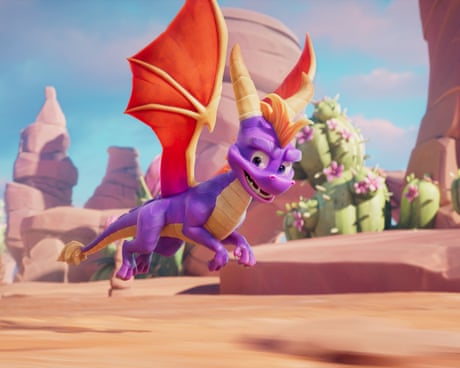
As the gaming mascots of millennial childhood have been resuscitated one by one for a nostalgic audience, one has remained notably absent: 1990s PlayStation hero Spyro. A new game starring the purple dragon was announced at tonight’s Xbox Game Showcase – the first original title since 2008. Called Spyro: A Realm Beyond, it is being developed by studio Toys for Bob in California and will be released in spring 2027 on Xbox, PlayStation 5, PC and Nintendo Switch 2.
It features a freshly redesigned Spyro with his trademark quiff, voiced by Tom Kenny, the original star of the games. Unlike in the original Spyro titles, players will be able to take flight at any time. “[We’re] leaning into the true capabilities of being a dragon,” explains creative director Lou Studdert. “It’s really engaging … the player is making decisions how they fly. They are diving down to sustain speed. They are using fire-breath to light campfires, to create an updraft to get lift before flapping their wings.”
PC, PlayStation 5, Nintendo Switch, Nintendo Switch 2, Xbox; Yacht Club Games This brilliant adventure creates a whole world from one character with a unique ability
You could mistake Mina the Hollower for something found on the liquid-crystal display of a Game Boy Color around the turn of the millennium. Like the pocketable Zelda and Pokémon games of the time, it presents a kind of snow-globe reality that you peer into from above, relying on imagination to decipher each two-colour clump of pixels into a tree, or a skeleton, or a cloaked mouse wielding a hammer twice her size.
This is Mina, our hero: she jumps, she moves at a clip, and she can delve downward into the soil or floorboards, tunnelling underfoot for a moment or two before popping back up, like an inflatable forcibly submerged in a swimming pool. This is her signature move, perfectly elastic in sensation – the way the released button springs back against your thumb! – and in application. The burrow-jump is an excavation tool, unearthing any treasure you happen to dig through, and a navigational one, used to hop over gaps, reach high-up spots and nose into tiny hidden spaces, where more treasure almost invariably awaits.
PlayStation 5 (version tested), Xbox, PC, Switch 2; Capcom Engineer Hugh is sent from Earth to investigate a malfunctioning research station and meets a young android who helps him fend off murderous mechs
When Pragmata was announced alongside the PlayStation 5 in 2020, its shiny trailer promised slick sci-fi action in outer space. While it certainly delivers those futuristic thrills in spades, what I didn’t expect was a tender tale of paternal love. This is Capcom’s belated, surprisingly soulful first entry into gaming’s sad dad genre.
In this near-future fiction, a corporation named Delphi has established a research station on the moon’s surface to experiment with advanced 3D printing tech, using “Lunafilament” to easily recreate everything from tools to entire buildings. Predictably, things soon go very wrong. As the station suddenly goes dark, engineer Hugh is sent from Earth to investigate.
PC, Xbox, Nintendo Switch, PlayStation 4/5; Tribute Games Inc A treat for nostalgia fans and completists, but there’s little new in this rehashing of a classic that feels like an add-on rather than a fully fledged adventure
It’s 20XX, and unrepentant slacker Scott Pilgrim and his friends are revelling in the throes of young adulthood. They’re skint, but in a cool way that’s unrecognisable today (not least because nobody can afford to live near downtown Toronto). For many readers, the Scott Pilgrim graphic novels were a cultural touchpoint, a story about emotional immaturity, growing as a person and ultimately defeating youthful arrogance. Having cemented itself as a cult classic with an Edgar Wright movie, a 2010 tie-in game and a Netflix miniseries, it’s now back in the form of a raucous action-adventure game, Scott Pilgrim EX.
This is a homecoming of sorts for developer Tribute Games, which was formed by ex-Ubisoft employees who worked on the 2010 Scott Pilgrim game. Having established themselves as beat ’em up revivalists with Teenage Mutant Ninja Turtles: Shredder’s Revenge and Marvel Cosmic Invasion, the team has stepped up for another crack at this essential coming-of-age tale. Scott Pilgrim EX feels like a passion project, so they have the Powers of Love and Understanding on their side.
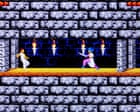
‘There was no animation software in those days. So I videotaped my brother David running, jumping and climbing in a car park’
Programming was very open back in the 1980s. You had to teach yourself, either from magazines, or by swapping tips. When you wrote a video game, you submitted it on a floppy disk to a publisher, like a book manuscript. In my freshman year at Yale university, I sent Deathbounce, an Asteroids-esque game for the Apple II computer, to Broderbund, my favourite games company. They rejected it, but took my next effort, Karateka, a side-scrolling beat-’em-up.
As 007 makes his gaming return, you can climb a mountain in Cairn, play a scaredy-cat in Resident Evil, and play a criminal couple in GTA VI
Live your mountaineering fantasies and brave the elements in a wonderfully illustrated climbing game. You must carefully place climber Aava’s hands and feet to make your way up a forbidding mountain, camping on ledges and bandaging her fingers as you go. Like real climbing, it is challenging and somewhat brutal.
• PC, PlayStation 5; 29 January
PS5, Xbox, Switch, PC Have you ever wanted to romance your record player? Date Everything! offers players the chance to develop relationships with everyday objects around your house, in a fully voiced sandbox romp featuring over 100 anthropomorphised characters. Wonderfully meta; you can put the moves on the textbox, or even “Michael Transaction” (microtransaction – get it?) himself. Meghan Ellis

 Anmelden