❌

Lese-Ansicht

The Guardian view on the 2026 Booker shortlist: what it takes to be a man | Editorial

All the contenders for this year’s prize are a reflection of the crisis in masculinity

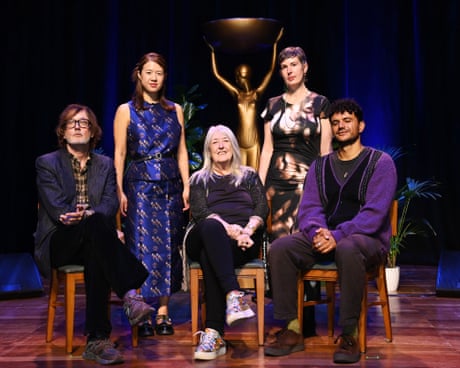
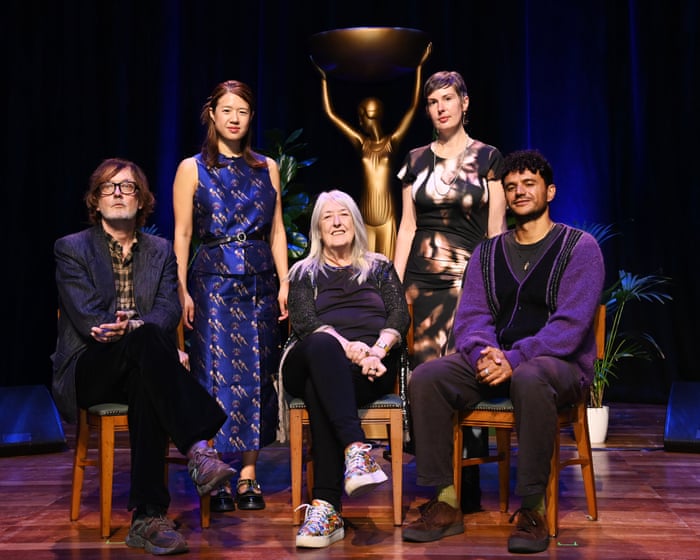
Jarvis Cocker, one of the judges for this year’s Booker prize, has expressed surprise that the shortlist, announced this week, contains four male authors and only two female writers, because, “generally speaking, the male-written books weren’t as good as the ones written by women”.

The Pulp frontman might be on to something. Over the past 10 years, however, seven Booker winners have been men; the number of women boosted to four by the controversial joint win between Bernardine Evaristo and Margaret Atwood in 2019. The 2024 Booker shortlist was the first to have five female authors in the prize’s history. Last year’s winner Flesh, by British-Hungarian author David Szalay, stripped what being a man means down to its bones.

Continue reading...
© Photograph: Dave Benett/Alan Chapman/Getty Images
© Photograph: Dave Benett/Alan Chapman/Getty Images
© Photograph: Dave Benett/Alan Chapman/Getty Images


  •  

The Guardian view on how culture is taking on tech: the ultimate handheld device | Editorial

Transcription, the winner of the Orwell prize for political fiction, and Toy Story 5 show life before smartphones and screen time

In the opening pages of Ben Lerner’s novel Transcription, the unnamed narrator mentions his mobile phone more than 25 times. He is on a train to Providence in the US to visit a German intellectual called Thomas, who has just turned 90. The narrator worries that he will fail to record the interview on his phone; he texts his wife; the guard scans his ticket; he takes a photo; he FaceTimes his daughter; he uses Google Maps for directions to his hotel. He even dreams about his phone. Then he accidentally drops it in the sink.

The novel is set during Covid, but there is no mention of Donald Trump or Joe Biden. Last month Transcription was awarded the Orwell prize for political fiction. “The question of how certain forms of media flatten or monetise our attention – I do think that’s political territory,” the author said of his win. With its shiny black cover and stark white typeface, this slim novel is designed to remind to us that the book is also a handheld portable device. It invites us to consider the relationship between art and technology. The smartphone has rewired us. “I was glitching, craving my cellular phone on a cellular level,” the narrator confesses.

Do you have an opinion on the issues raised in this article? If you would like to submit a response of up to 300 words by email to be considered for publication in our letters section, please click here.

Continue reading...

© Photograph: Posed by model; Catherine Falls Commercial/Getty Images

© Photograph: Posed by model; Catherine Falls Commercial/Getty Images

© Photograph: Posed by model; Catherine Falls Commercial/Getty Images

  •  

Transcription by Ben Lerner wins Orwell prize for political fiction

Judging chair calls Lerner’s novel a ‘funny, brainy and timely’ study of our appetite for technology, while Karen Bartlett wins the nonfiction prize for The Escape from Kabul

American writer Ben Lerner has won this year’s Orwell prize for political fiction for Transcription, a novel exploring technology and memory.

In nonfiction, the prize went to Karen Bartlett for The Escape from Kabul, which looks at Afghan women lawyers who came under threat after the fall of Kabul in 2021.

Continue reading...

© Photograph: Beowulf Sheehan

© Photograph: Beowulf Sheehan

© Photograph: Beowulf Sheehan

  •  

‘His favourite book was by Jordan Peterson, which was a massive ick’: how books perform on dating apps

Mentions of reading in Tinder bios are up 29% in the last year. But is searching for a fellow fan of one’s favourite author really a shortcut to compatibility?

‘One of my Hinge prompts is: ‘What’s the best book you read this year?’ and I swipe left on anyone who says a book I don’t like,” says 29-year-old Ayo*. “Someone once replied with a book by Jordan Peterson, which was a massive ick.”

It’s a blunt approach to romance, but Ayo is far from alone. Books have long functioned as cultural shorthand for personality – signals of taste and worldview – but dating apps have accelerated and intensified that process. In an attention economy that rewards speed, these signifiers have to be legible at a glance.

Continue reading...

© Photograph: Blend Images/Alamy

© Photograph: Blend Images/Alamy

© Photograph: Blend Images/Alamy

  •  
❌