❌

Lese-Ansicht

Lobsters and acidic seas: can shellfish help neutralise one of the greatest threats to the ocean?

Crustaceans are the subject of tests to see if alkalis added to seawater, so it absorbs more CO2, harm marine life. But Trump’s halt to funding threatens to scupper the research

For many in the US region of New England, the lobster roll is synonymous with summertime. Loaded into a toasted bun, chunks of the sweet meat are served hot and soaked in butter, or chilled and slathered in mayonnaise with celery and herbs.

The only thing more debated than the recipe is the price: the once-humble roll now routinely fetches $30 (£22), or even $50, in a sign of the changing times – and seas.

Scott Lord brings in his catch of lobster to the wharf in Tenants Harbor, Maine

Continue reading...

© Photograph: Daniel Grill/Tetra Images/Getty Images/Tetra images RF

© Photograph: Daniel Grill/Tetra Images/Getty Images/Tetra images RF

© Photograph: Daniel Grill/Tetra Images/Getty Images/Tetra images RF


  •  

Bomb the Arctic, dam the Mediterranean and build a second moon: five outlandish plans to remodel our climate

Humans have long sought to geoengineer the Earth’s environment. Tim Flannery outlines a few of the wildest ideas from the 20th century

An increasing number of scientists think we have let the climate crisis fester for so long that our only hope to stave off ever-intensifying catastrophes is to use technological interventions. Cloud brightening, injecting sulphur into the atmosphere and the use of tiny mirrors in space – all of which might reduce the amount of sunlight reaching Earth’s surface – are among the concepts being promoted by entrepreneurs and governments alike. Geoengineering, they argue, is now inevitable.

Ever since the God of the Old Testament granted our species dominion over the Earth, ideas of remaking the world to better suit us have been a dominant thread in human thinking. We have for centuries toyed with grand ambitions to alter and re-form the climate and environment, many of which – in retrospect – seem doomed or absurd.

Sign up for a weekly email featuring our best reads

Continue reading...

© Photograph: Album/Alamy

© Photograph: Album/Alamy

© Photograph: Album/Alamy

  •  

‘At first, the idea does sound crazy’: meet the scientists trying to refreeze the Arctic

Sea ice is melting fast, worsening the climate crisis, but a bold attempt to rethicken it is showing early signs of success

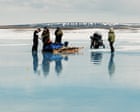
‘This would have been a wild dream a year ago,” says Andrea Ceccolini, standing on Arctic sea ice just a 4-mile snowmobile ride from the Inuit town of Cambridge Bay, northern Canada. To his left are sky blue ponds of meltwater created in the last few days by a sun that no longer sets in the high north summer. To his right, the sea ice is still a brilliant white, the light dusting of snow on top continuing to sparkle.

“It’s incredibly different, the boundary – I mean, you can point to it,” he says. The difference is the result of a bold geoengineering experiment being conducted by Ceccolini’s company, Real Ice, funded by the UK government.

Continue reading...

© Photograph: Brodie Larocque/Icepik Media/The Guardian

© Photograph: Brodie Larocque/Icepik Media/The Guardian

© Photograph: Brodie Larocque/Icepik Media/The Guardian

  •  

Better sleep, improved health, happier people: how ‘cool roofs’ could help millions avoid deadly heat

A project to measure how reflective paint reduces indoor temperatures is delivering tangible benefits across Africa

The brick house Sylvia shares in a Western Cape township on the outskirts of Cape Town with her three children gets unbearably hot every summer, causing the youngest to cry and her two older children to struggle to concentrate on their homework. Sylvia is not alone, according to a recent report in the Lancet: “In 2024, people in South Africa were exposed to 13 heatwave days, on average. Of these, 10.5 (80%) would not have been expected to occur without climate change.”

But summer is more bearable for the family now that her asbestos roof has been painted with reflective paint.

Continue reading...

© Photograph: Chris de Beer-Procter/The Guardian

© Photograph: Chris de Beer-Procter/The Guardian

© Photograph: Chris de Beer-Procter/The Guardian

  •  

Some want to ban geoengineering research. This would be a catastrophic mistake for our planet | Craig Segall and Baroness Bryony Worthington

We’ve already geoengineered the planet through the careless release of greenhouse gases. Now we need a plan to manage the risks we’ve set in motion

A few months ago, Marjorie Taylor Greene, then a Georgia representative, held a hearing on her bill to ban research on “geoengineering”, which refers to technological climate interventions, such as using reflective particles to reflect away sunlight. The hearing represented something of a first – a Republican raising alarm bells about human activity altering the health of the planet. Of course, for centuries, people have burned fossil fuels to power and feed society, emitting greenhouse gases that now overheat the planet.

Unfortunately, her hearing waved past an urgent debate that policymakers are confronting around the world: after centuries of accidental fossil-fuel geoengineering, should we deliberately explore interventions to cool the planet and give the energy transition breathing room?

Craig Segall is the former deputy executive officer and assistant chief counsel of the California Air Resources Board. He is also former senior vice-president of Evergreen Action and a longtime climate advocate. He has academic seats at the University of Edinburgh, New York University, and the University of California at Berkeley The opinions in this piece are his own.

Baroness Bryony Worthington was created a life peer in 2011, giving her a seat in the UK’s House of Lords where she served as shadow energy minister She has over 25 years of experience working on climate, energy and environmental policy in the NGO and public sectors, and in the private sector.

Continue reading...

© Photograph: Jason Whitman/NurPhoto/Shutterstock

© Photograph: Jason Whitman/NurPhoto/Shutterstock

© Photograph: Jason Whitman/NurPhoto/Shutterstock

  •  

We study glaciers. ‘Artificial glaciers’ and other tech may halt their total collapse | Brent Minchew and Colin Meyer

How might we prevent sea-level rise? Satellite-based radar, solar-powered drones, robot submarines and lab-based ‘artificial glaciers’ could all play a role

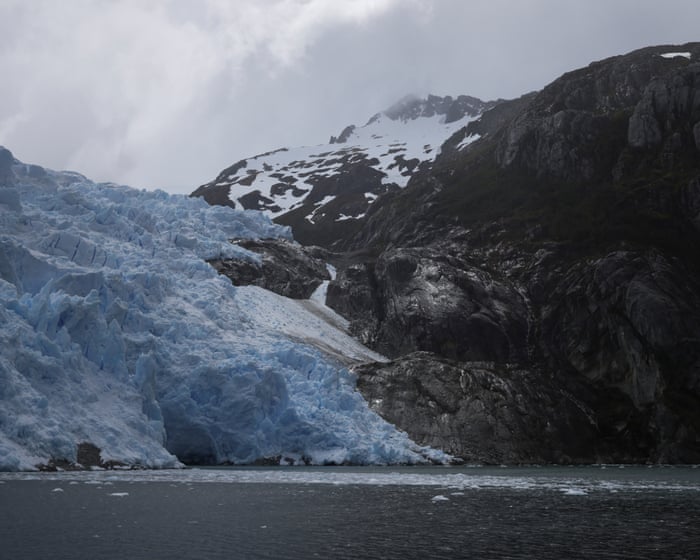
Sea levels are rising faster than at any point in human history, and for every foot that waters rise, 100 million people lose their homes. At current projections, that means about 300 million people will be forced to move in the decades to come, along with the social and political conflict as people migrate inland. Despite this looming crisis, the world still lacks specific, reliable forecasts for when and where the seas will rise – and we have invested almost nothing in understanding whether and how we can slow it down.

Societies must continue to focus on reducing greenhouse gas emissions, but it’s increasingly clear that the world needs to do more: we need to predict the future of the world’s ice with precision, and to explore safe, science-backed methods to keep it from melting away.

Continue reading...

© Photograph: Pablo Sanhueza/Reuters

© Photograph: Pablo Sanhueza/Reuters

© Photograph: Pablo Sanhueza/Reuters

  •  

The Guardian view on solar geoengineering: Africa has a point about this risky technology | Editorial

Sun-dimming risks putting the planet’s thermostat under Donald Trump’s control. Better to adopt the precautionary principle with high-stakes science

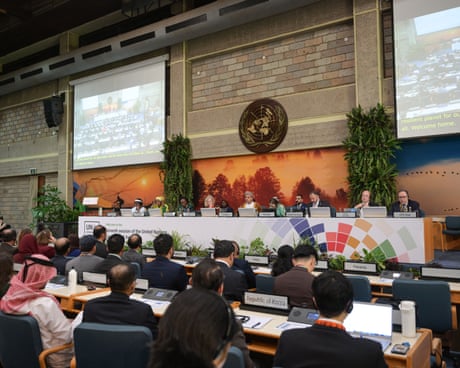
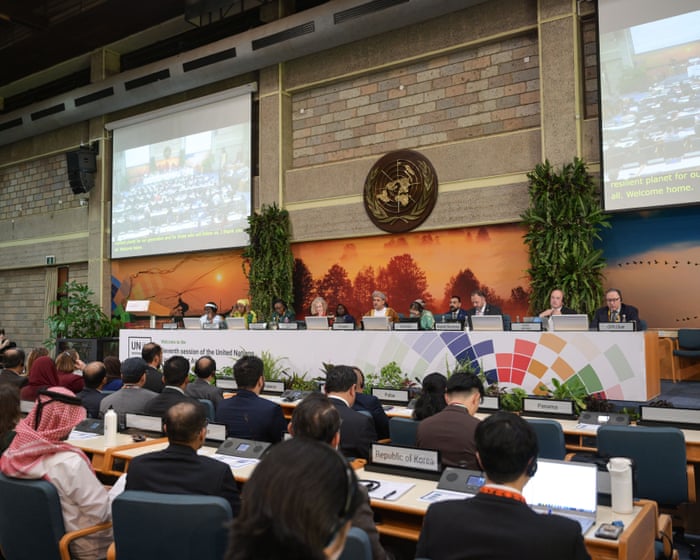
It is fitting that this week’s UN environment talks are in Nairobi, with Africa shaping the global climate conversation. The continent’s diplomats are dealing with the vexed question of whether it is wise to try to cool the planet by dimming the sun’s rays. While not on the formal summit agenda, on the sidelines they are arguing that it’s time to stop promoting solar geoengineering technology as a solution to global heating. It’s hard to disagree.

African nations have acted because they don’t want their continent to become a test bed for unproven schemes to spray particles into the high atmosphere to reflect sunlight away from Earth for a small, uncertain cooling gain. They point to environmental, ethical and geopolitical risks. That’s why the continent is pushing for a global “non-use” agreement that would rule out public funding, outdoor experiments, patenting and official promotion of these technologies.

Do you have an opinion on the issues raised in this article? If you would like to submit a response of up to 300 words by email to be considered for publication in our letters section, please click here.

Continue reading...

© Photograph: Xinhua/Shutterstock

© Photograph: Xinhua/Shutterstock

© Photograph: Xinhua/Shutterstock

  •  
❌