❌

Lese-Ansicht

English National Ballet: Rhythm Riot review – this triple whammy brings zing, grit and chills

Sadler’s Wells, London
A trio of dances taking influence from Stravinsky, tap and William Blake’s poetry combine with powerful performances exuding showmanship

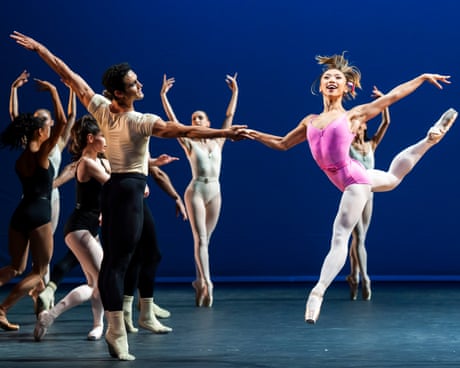
Damn, there was some amazing dance going on in mid-20th century New York. You had George Balanchine forging a new American ballet, all slick speed and striking angles, and in Harlem there was the Cotton Club and the Savoy, swinging dancefloors and entertainers like the legendary Nicholas Brothers, of whom Balanchine was a fan. There’s a taste of this world in English National Ballet’s latest triple bill, with a distinctly American flavour and a focus on propulsive rhythm.

Balanchine’s Symphony in Three Movements was made in 1972 as a memorial to Stravinsky, although the eponymous music is from 1945. Balanchine and Stravinsky were an absolute dream team, architects of multiple masterpieces. Here the clarity of line and stripped-back nature of the design crossed with the depth and crunchy complexity of Stravinsky’s score is a perfect balance. There’s palpable power from the pit, with the English National Ballet Philharmonic relishing the music under the baton of Maria Seletskaja.

Continue reading...
© Photograph: Tristram Kenton/The Guardian
© Photograph: Tristram Kenton/The Guardian
© Photograph: Tristram Kenton/The Guardian

  •  

Igor Stravinsky: Late Works album review – kudos to Reuss for bringing this spellbinding music to life

Daniel Reuss/Noord Nederlands Orkest/Cappella Amsterdam
(Pentatone)

Noord Nederlands Orkest and Cappella Amsterdam breathe colour and light into work from the composer’s most austere period

In his later years, Igor Stravinsky became fascinated by serialism, both as a means of distilling musical thought and as an intellectual and stylistic challenge for a composer entering his 70s and 80s. The results struck some contemporary listeners as austere, but there’s a self-effacing purity and beauty about this complex, intellectually probing music that deserves a wider audience than hitherto. Kudos, then, to conductor Daniel Reuss, whose precise yet vital interpretations teem with colour and light.

There are four main works here. In Memoriam Dylan Thomas from 1954 is an extended, impassioned setting for solo tenor of Do Not Go Gentle Into That Good Night. Threni, a spiny, multifaceted jewel from 1958, sets words from the Book of Lamentations. The haunting Introitus and bristling Requiem Canticles, from 1965 and 1966 respectively, complete the set, interspersed with briefer pieces including an unpretentious Lord’s Prayer and the severely cerebral two-minute Elegy for JFK.

Continue reading...

© Photograph: Diederik Rooker

© Photograph: Diederik Rooker

© Photograph: Diederik Rooker

  •  
❌