Elsewhere in the region, crisis over Poland’s constitutional court enters new phase; Slovak PM vows to fight on after losing parliamentary majority; and protests against Czech government’s public media reforms intensify.
Donald Tusk is attempting to restore legitimacy to the country’s constitutional court. In a polarised country and continent, that carries political risks
The Polish prime minister, Donald Tusk, must occasionally look towards Budapest and sigh. A landslide victory in elections last spring enabled Hungary’s new prime minister, Péter Magyar, to act with ruthless determination to clean up the country’s politics after 16 years of corrupt Orbánisation. Mr Tusk, whose centrist coalition ousted the far-right Law and Justice party (PiS) in 2023, is similarly taking on the legacy of a government which undermined the rule of law and democratic norms. But his efforts have been relentlessly boxed in by the blocking tactics of Poland’s (PiS)‑backed president, Karol Nawrocki.
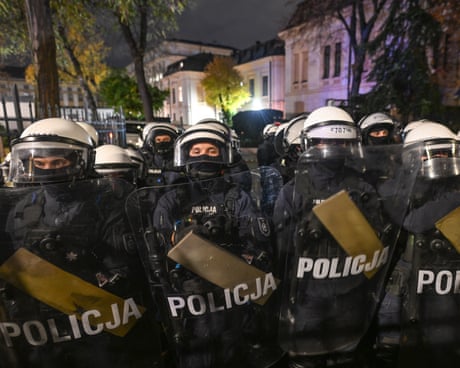
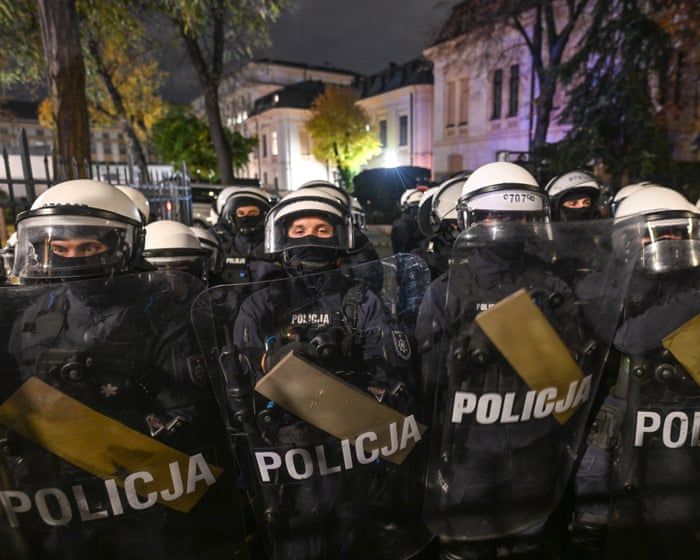
At the weekend, this standoff escalated into a crisis with wider implications for the European Union as well as Poland itself. Exasperated by Mr Nawrocki’s attempts to veto the appointment of new judges to the country’s constitutional court – which has been illegitimately dominated since 2015 by PiS‑friendly appointees – Mr Tusk backed the enforced appointment of a new head, and the suspension of the court’s president and vice‑president. Extraordinary scenes followed, as rightwing demonstrators massed outside the court building in the early hours of Saturday morning and Mr Nawrocki pushed past security forces to protest.
Do you have an opinion on the issues raised in this article? If you would like to submit a response of up to 300 words by email to be considered for publication in our letters section, please click here.
From 1945 to 1989 security police relied on tens of thousands of spies to suppress dissent. To rebuild trust, their files will finally be made public
Hungary’s new government will on Wednesday reveal the names of tens of thousands of state informants from the communist era in an attempt to confront the past and rebuild public trust.
From 1945 to 1989, Hungary’s communist state-security services relied on an extensive network of informants to monitor society and suppress dissent. Some were blackmailed or coerced into reporting on neighbours, friends, colleagues and even family members; others were recruited through promises of various advantages.
Elections are never enough by themselves, but the stunning results from Serbia, Brazil and Hungary have given us hope in dark times
It is undoubtedly too early to declare victory, but the recent electoral defeats of Viktor Orbán, Aleksandar Vučić and Flávio Bolsonaro make me wonder: is 2026 turning out to be the year democracy slowly, but surely, fought back?
Even in Israel, prime minister Benjamin Netanyahu’s reigning bloc lost its parliamentary majority and saw the spectacular rise of Arab parties. Though the opposition may not be able to form a government yet, it does have the larger parliamentary bloc.
David Van Reybrouck is a Belgian author and philosopher laureate for the Low Countries. He is the author of Against Elections: The Case for Democracy, and the initiator of Democracy27
Do you have an opinion on the issues raised in this article? If you would like to submit a response of up to 300 words by email to be considered for publication in our letters section, please click here.
Elsewhere, arrest warrant issued for son of ex-head of Hungarian central bank; Poland wins bid to host European patriot missile service hub; Czechs hold protests against public media funding reform; Slovak foreign minister visits Moscow.
A bill to bar politicians from running sports clubs is the first step in a wider overhaul of a system that channelled public money to political allies during Fidesz’s 16 years in power.
Elsewhere, former chief of Hungary’s central bank detained on suspicion of economic fraud; Polish abortion reform clears first hurdle but faces presidential veto; and Slovak president blocks far-right nominee for environment minister.
Der Kommunikationsberater Gergő Papp seziert die Mechanismen des Machtwechsels in Ungarn und erklärt, wie Péter Magyar Viktor Orbán besiegte. Doch die Strategie Magyars ließe sich auch für andere Ziele nutzen.
Elsewhere, Slovakia to revive cooperation with Russia at meeting planned for November 25; Hungary parliament approves new child protection legislation; and Czech Army chief warns of possible Russian attack
Es gilt als eine der umstrittensten Maßnahmen der Orbán-Ära in Ungarn: das sogenannte Anti-LGBTQ-Gesetz unter dem Deckmantel des Kinderschutzes. Die neue Regierung hat nun einige Änderungen durchgesetzt.
Die Princeton-Professorin Kim Lane Scheppele erklärt, wie sich Ungarn von Orbán befreien konnte und warum sich aus der Wahl in Sachsen-Anhalt etwas Positives herauslesen lässt.
As the 70th anniversary of Hungary’s 1956 anti-Soviet uprising approaches, Hungarians are preparing for the release of communist-era informer lists – and a new political battle over interpreting the past.
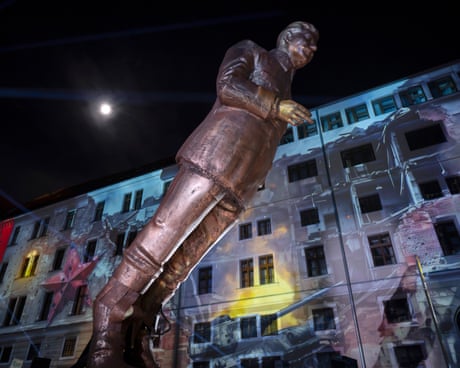
Elsewhere, Hungary unveils wealth tax; Czech president faces backlash for going on holiday during elections; and a Soviet statue is removed in Prague, unveiled in Slovakia.
The fate of Budapest’s House of Terror, a controversial museum which focuses on life under totalitarianism in the 20th century, could spark another round of the ‘culture war’.
Elsewhere, Russia retaliates by expelling Hungarian diplomats; Poland changes rules of engagement for shooting down airborne threats; Slovak PM Fico juggles jobs and coalition; and Czech coalition survives no-confidence vote.
Maja T. wurde rechtskräftig wegen Gewalttaten in Budapest verurteilt. Weil die Auslieferung der non-binären Person nach Ungarn rechtswidrig war, wollen ihre Anwälte sie nach Deutschland überstellen lassen.
Elsewhere, Polish foreign minister confronts Russian counterpart at UN as tensions with Kremlin rise; Hungary allowed to re-enter EU’s Erasmus+ program; Slovakia succeeds in getting Russian billionaires removed from EU sanctions list.
Viktor Orban positioned Hungary as a bulwark of ‘Christian Identity’ in Europe. His successor hopes to implement liberal reforms without getting into a fight with Hungary’s churches.
Elsewhere, Poland and Russia trade threats after drone strike on Ukrainian train bound for Warsaw; Slovak Defence Minister under pressure to explain dealings with Czech arms tycoon; and Czech PM floats idea of creating ‘Euro Patriot’ joint missile defence program.
Time pressure and a change of government in Hungary could pave the way for the normalisation of relations with Croatia, but compromises will be needed on both sides.

 Anmelden