❌

Lese-Ansicht

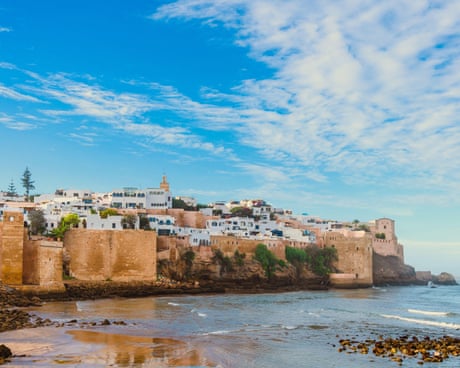
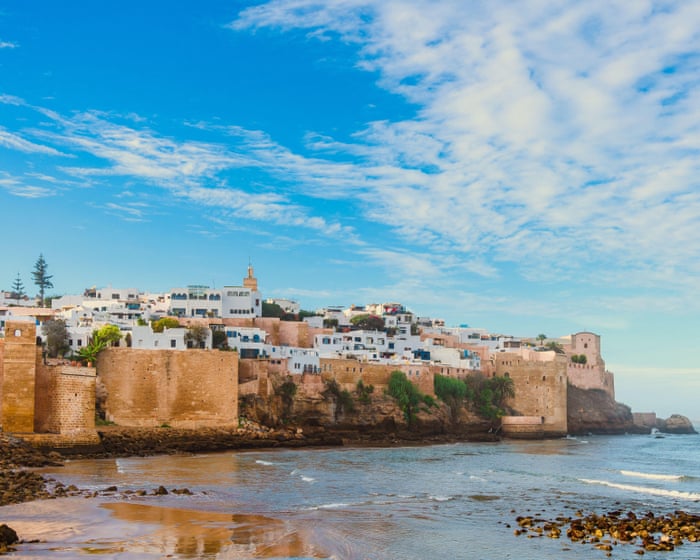
Exploring Rabat, Morocco – this year’s Unesco World Book Capital

Rabat is a gorgeous seaside city with great food and culture, but for book lovers there’s an added incentive to go this year

The first book I read willingly was Bridget Jones’s Diary. I was 19. Up to that point, I hadn’t been much of a reader. I’d been more into football, or Baywatch, or Robin Budd in the year above – anything really. Given the choice between reading a book and staring at a wall, I would have plumped for the latter.

After finishing my A-levels, I worked in a barbecue restaurant in Portsmouth – which is where I found Bridget Jones. The book was lying around in the staffroom. I picked it up and read a few pages, and then a few more, and then a few more. It felt exciting. Like I’d met someone. Like I was suddenly in a relationship. Over the next few days, I remember cancelling nights out so I could go to bed and read. My mum thought I was depressed.

Continue reading...
© Photograph: Sergio Formoso/Alamy
© Photograph: Sergio Formoso/Alamy
© Photograph: Sergio Formoso/Alamy
  •  

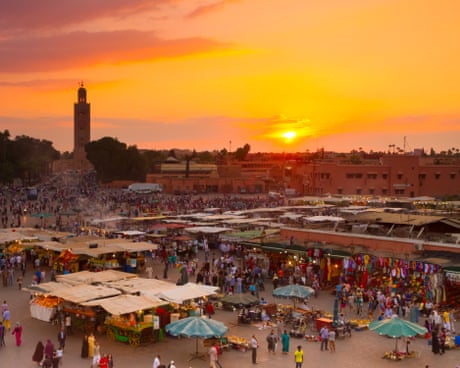
Mysterious Marrakech: why I never tire of Morocco’s Red City

With its never-ending street theatre and labyrinthine medina, this timeless city swallows you whole – and reveals new secrets with each visit

The rising sun sets fire to the snow-covered caps of the Atlas mountains. Within moments, the shadowy gorges are gleaming with warm terracotta hues. I turn my back on north Africa’s highest peaks and look north where Marrakech – nicknamed the Red City – rests like a jagged ruby amid the jade swathes of palms and the silvery sheen of olive groves.

Swinging 800 metres (2,625ft) above the stony desert in a giant wicker basket, I try to imagine what this scene would have looked like when camel trains trooped this way, loaded with salt, spices and enslaved humans bound for Marrakech’s souks.

Continue reading...

© Photograph: kasto80/Getty Images/iStockphoto

© Photograph: kasto80/Getty Images/iStockphoto

© Photograph: kasto80/Getty Images/iStockphoto

  •  

Hiking on the roof of North Africa: a trek to Morocco’s tallest peak

A fabled boutique hotel in the Atlas mountains makes a stunning base for hikes to spectacular viewpoints

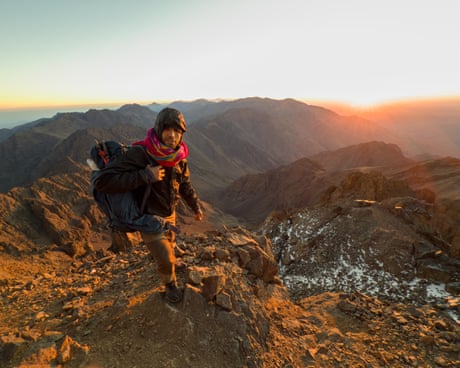
Coming up the footpath from Imlil, Hussein and I step aside to let a laden mule go past and I look back. On the wooded lower slopes of the valley are clusters of tall houses, some plumed with wood smoke. There appears to be a lot of building work going on, some of it to repair the damage caused by the 2023 earthquake. The sound of a concrete mixer comes cutting through the cool mountain air mixed with birdsong and human voices. Turning back to face south, I can see the Atlas mountains, austere and aloof, a few snow patches on the upper slopes. That’s where we are going, to the top of Toubkal at 4,167 metres, the highest peak in North Africa.

Hussein has been a guide in this beautiful Moroccan valley all his adult life. “Most people here work in tourism now,” he says, waving a greeting to a muleteer who is passing us. The man is clutching the tail of his animal to steady himself up the steep track. “Twenty years ago everyone grew walnuts and subsistence food,” Hussein says. “Now we’ve still got walnuts, but we’ve also planted apple trees as a cash crop. It leaves time for the tourist work.”

Continue reading...

© Photograph: Kevin Rushby

© Photograph: Kevin Rushby

© Photograph: Kevin Rushby

  •  

Could a surfing retreat in Morocco conquer my fear of the sea?

The process of learning to catch a wave is an all-consuming activity that can prove to be a powerful therapeutic tool

I can’t remember when my terror of waves began in earnest. Maybe it was a singular incident that triggered it, like that monster wave in Biarritz, France, almost 20 years ago that body-slammed me on to the seabed, taking all the skin off my chin.

More likely is that my transition from fearless to frightened had been more of a slow creep, and a perfectly rational one when you consider the danger of riptides, hidden rocks, sharks and concussion. But for me, I feel it goes deeper. Almost inevitably my job will have had something to do with this. Nearly two decades of working as a journalist reporting on the very worst things that human beings can do to other human beings in a wide array of contexts has definitely eroded my sense that I can keep myself – and others – safe from harm in a dangerous world.

Continue reading...

© Photograph: Chris Werret

© Photograph: Chris Werret

© Photograph: Chris Werret

  •  

‘So unchanged it is almost otherworldly’: the oasis town of Skoura, Morocco

For the explorer and author, the desert outpost, irrigated by water from the Atlas mountains, is the perfect place to decompress

The first thing I notice when I walk into the oasis is the temperature drop. Then, I hear the birdsong and the rustling of the palm trees. The harsh sun dims and there’s water and the smell of damp earth. It’s easy to understand why desert travellers yearned to reach these havens and why they have become synonymous with peace. I’m an explorer who’s walked through many oases with loaded camels, crossing Morocco and the Sahara on foot, but Skoura, a four-hour drive from Marrakech, is a place I visit to decompress.

You may be imagining some kind of cartoon mirage oasis – a sole date palm shimmering above the endless sands. In fact, Skoura has a population of around 3,000 people living in a small town on the edge of the palms with 10 sq miles (25 sq km) of agricultural land. Many visitors to Morocco start in Fez or Marrakech and stop off in Aït Benhaddou, then go down to the Sahara towns of Zagora or Merzouga. Skoura, less than an hour from Ouarzazate, is an ideal stop-off point for a couple of days, or you could combine it with a Marrakech city break. The bus from Marrakech (CTM or Supratours) takes six hours, or you can hire a car (or car with driver) from Marrakech or Fez.

Continue reading...

© Photograph: Ron Yue/Alamy

© Photograph: Ron Yue/Alamy

© Photograph: Ron Yue/Alamy

  •  
❌