He made Daniel Radcliffe’s Harry Potter fart, left Judi Dench unable to control herself and told a fry-up fantasy about Helen Mirren. A new biography details the star’s mischief
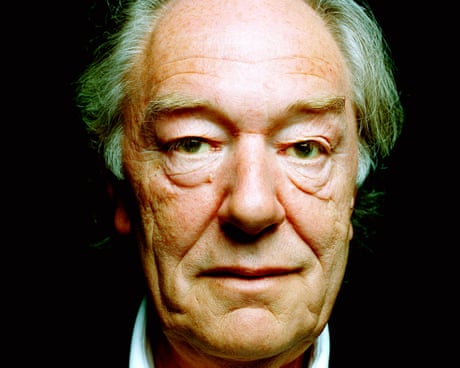
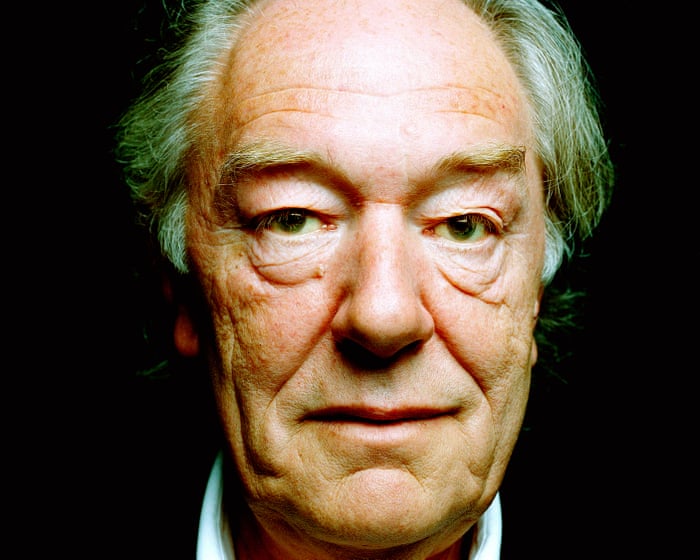
Jasper Rees’s authorised biography of Michael Gambon, published three years after the great actor’s death, has nuanced accounts of his performances in Shakespeare, Beckett and Pinter as well as The Singing Detective and the Harry Potter films. There are even chapters devoted to his hands (“the biggest you’ve ever seen on anybody” – Brian Cox) and similarly enormous feet. But, Gambon being Gambon, there are also dozens of accounts of tomfoolery on and off stage …
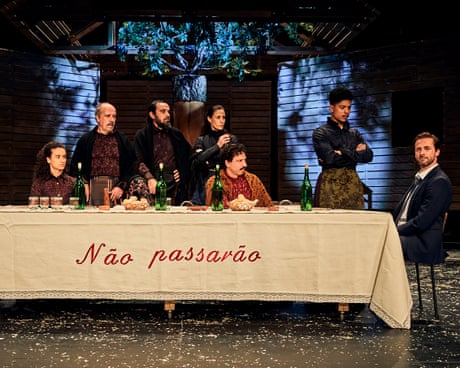
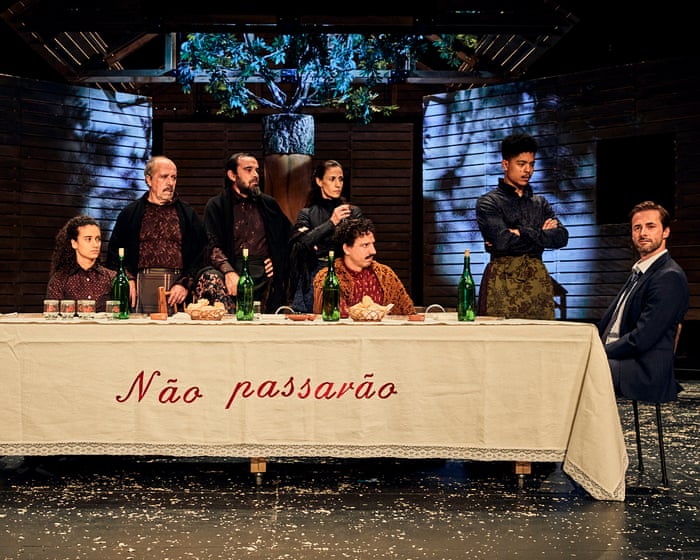
National Theatre, London Tiago Rodrigues’s play has incensed audiences abroad with one character’s hellfire rightwing invective. But its combination of boredom and shocks ultimately feels confusing
What does it say about an audience who, while watching a character make a speech that has sparked screeching protests and angry walkouts in its run across Europe, sit politely listening until the end?
The booing does come, but only after the actor playing a far-right politician and kidnap victim (Romeu Costa) has finished a half-hour invective that takes in everything from the scourge of minorities to that of elites, homosexuals, and the far-left. It is a masterclass in rightwing rabble-rousing, with its appropriation of the word “freedom”. Yet on press night at its British premiere, all that is summoned in response is nervous laughter, a chorus of coughs and a few loud whistles.
As The Story – inspired by a scandal that ended a young Black reporter’s career – makes its London debut, its author explains why, two decades on, it’s more relevant than ever
If our ability to discern fake news from fact is a hot topic today, Tracey Scott Wilson was on to it more than two decades ago. As a child, the playwright’s father trained her to watch the news every night and discuss it with her three siblings. It meant that she was well placed in the early 00s to spot how stations such as Fox News were veering away from objective reporting to become angled towards a given agenda.
By this point a real-life story had been percolating in Wilson’s mind for more than two decades: in 1981, Janet Cooke, a young, ambitious Black American reporter at The Washington Post, had been exposed as a liar. Cooke had just won the Pulitzer prize for her news story about an eight-year-old drug addict, which turned out to be invented. Cooke was discredited, both for her reporting and for embellishing her CV, and was forced to hand back her prize two days after receiving it.
It has inspired violent protests from Norway to Rome – and now it’s hitting the UK. Playwright Tiago Rodrigues explains why the far-right speech at the drama’s climax has proved so incendiary
In February, turbulent scenes inside a German theatre made headlines around the globe. During the final act of a play at Schauspielhaus theatre in Bochum, the audience first jeered and whistled at a performer in the role of a far-right politician. An orange lobbed from the auditorium narrowly missed its target; eventually, two spectators climbed on to the stage and tried to wrestle the actor off. News of the incident travelled around the world: it seemed a bizarre throwback to a world in which people were not able to tell the difference between art and real life, like 19th-century Parisians stampeding out of a cinema after watching a train hurtle towards the camera.
For the man who wrote the play, however, it was nothing unusual. “I was not surprised by the reaction,” says Portuguese playwright Tiago Rodrigues. “I was surprised by the fact that it was so surprising for so many people.” He describes the audience’s reaction to his play Catarina and the Beauty of Killing Fascists as “very intense”, but also “typical”.
In a bold new production starring Cate Blanchett and Nina Hoss, the NT is fusing Sophocles and Ingmar Bergman. So what can two stories written 23 centuries apart tell us about how we live today?
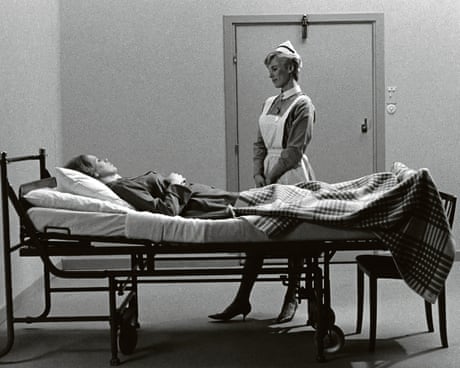
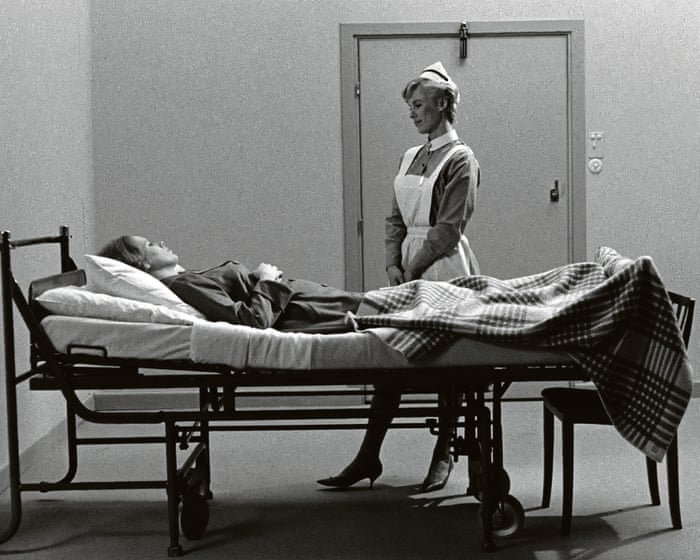
In around 420BC, Sophocles staged Electra, in which the title character avenges the murder of her father by her mother, Clytemnestra. In 1966, Swedish film director Ingmar Bergman premiered Persona, in which a psychiatric nurse, Alma, is caring for Elisabeth, an actor who has suffered a breakdown while playing Electra. These two dramas, written 23 centuries apart, are now sharing the stage in an alluring new National Theatre production.
In Electra/Persona, director Benedict Andrews has paired the stories before and after the interval, linked by a stunning coup de theatre at the end of the first half. “Persona is a pinnacle of modernist cinema and Bergman is a north star for me,” says Andrews. “I’ve long been fascinated by the impossibility – in a good way – of staging Persona, because it is so much about the camera and the silence and the closeup: the face as a terrain. And I was always fascinated by why Bergman chose to have Elisabeth break down while playing Electra, so I wanted to put them together. I think it’s become clear in rehearsal that the whole evening is one cycle of grief.”
The 2014 film was only a modest success – but now the musical’s message of gay rights and solidarity feels both outlandish and full of hope
Hands down the hottest ticket in London this summer is the musical Pride at the National Theatre, which is booked solid until the end of its run in September and will presumably transfer to the West End after that. There are lots of gay shows doing well at the moment: I saw Oh, Mary! for the second time this week when the show’s creator, Cole Escola, came over from New York to resume the title role, and Operation Mincemeat keeps going and going. But both those shows are tonally rather than politically gay. Pride, which is adapted from the 2014 film and had modest commercial success when it came out, is a different kettle of fish and I’m curious as to why it’s flown now.
I should say up front I haven’t seen the show (can’t get a ticket!). But this week, as I watched my timeline continue to fill up with effusive praise and lots of crying about the musical, I went back to the film. It’s a strange time to watch it, in a news cycle in which issues around sexuality in public life and old views about gay rights have surfaced to yank us back to earlier times. The death of the US senator Lindsey Graham triggered widespread speculation about what, exactly, Donald Trump held over him and gave rise to a lot of gay jokes pulled out of the deep freeze.
Emma Brockes is a Guardian columnist. She is the author of She Left Me The Gun: My Mother’s Life Before Me
Helen Hunt and Kristin Scott Thomas are leading revivals of the Russian classic whose blend of comedy and tragedy is baked into our own dramatic heritage
What kind of play is The Cherry Orchard? As a new production starring Helen Hunt and Kenneth Branagh beckons in Stratford, I am reminded that it is a question people have been asking since the play’s inception. Chekhov himself wrote that what had emerged in his play was “not a drama but a comedy, in places almost a farce”. Stanislavski, who directed the Moscow premiere in 1904, violently disagreed. “It is a tragedy,” he told Chekhov, “whatever prospect of a better life you hold out in the last act.”
While the debate continues, I hope we shall not be told by anyone involved in the new RSC production that they are at long last restoring the play’s comedy. It is a critical cliche that the British sentimentalise the play and treat it as a lament for the decline and fall of a pseudo-Edwardian aristocracy. In my experience of the play – and I have seen about 20 productions – this is simply untrue. We generally do The Cherry Orchard very well because its blend of styles and moods is something baked into our own dramatic heritage. Eschewing the academic formality of the French, for whom tragedy and comedy are rigidly defined genres, we are used to a glorious impurity in drama: a culture that can produce Twelfth Night should have no problem in comprehending The Cherry Orchard.
It took a long time for the actor to find her groove – then the smash TV spy thriller changed everything. She talks about getting advice from A-listers, speaking her mind, and why she’s switching to theatre
Sandra Oh bursts into a back room at the National Theatre in London with wayward post-rehearsal energy. The 54-year-old, long one of the most stylish actors in Hollywood, is in brown linen, a herringbone jacket and hat and sunglasses, which she removes before collapsing into a chair and throwing her head forward, arms outstretched, hair splayed across the table. “It’s just the fucking process of it,” she groans. “We just finished our first stagger-through, which if anyone is an actor – it’s early days, so the fact we made it through was great. It’s brutal. We started in the Lyttelton, and it’s interesting to be in that space and to hear verse. You can really hear it. It’s not just about volume or speed. It’s not even solely about intention. You learn so much just being in that space, but the big thing is – sorry.” She catches herself. “I’m just marching on.” And she bellows with laughter.
Oh has been in London for just over a month rehearsing her role as Alice in a modern reimagining of Molière’s Le Misanthrope. It’s a happy return; eight years ago, she was in the capital to film the first of four series of the hit show Killing Eve, which became a phenomenon and changed her life as an actor for ever. Oh played Eve Polastri, the shambolic but brilliant British intelligence agent, who, along with Jodi Comer’s Villanelle, made for one of the best spy capers of recent years. Now, she is playing a novelist – gender-flipped from the 17th-century original, in an adaptation by Martin Crimp – who is fed up with the flattery and dishonesty of the people around her. It’s a deliberate pivot to theatre; last summer, she appeared as Olivia in a starry production of Twelfth Night at the Delacorte Theater in Central Park, New York. In the autumn, she made her debut at New York’s Metropolitan Opera in a production of Donizetti’s comic opera La Fille du Régiment. Unlike the sometimes fraught me-me-meism of screen work, says Oh, working in theatre in general and at the National in particular “is a collaborative thing” – not least, she adds drily, because no one does it for the money. “Everyone has to bring their best and most open selves. And everyone else loves watching everyone succeed.”
He stood down as boss of the NT – and threw himself into kayaking, writing and DIY. The veteran director talks about his new start aged 60, mourning his mother – and directing Death of a Salesman in Turkish
There were several big endings for Rufus Norris in 2025, all crammed into the same few seismic months. Firstly, the close of his tenure as director of the National Theatre after a decade at the helm. That planned ending collided with the loss of his mother, who died three weeks before he left the NT. On top of that, a significant birthday concluding his 50s.
So what did Norris do after turning 60, on the other side of the Big Job, alongside the grief of losing a parent? DIY, plenty of kayaking and a house move, it turns out: “It felt important to have a complete break,” he says. “I’m a bit of a workaholic, but I’m also a bird of simple brain so I can as easily lose myself in how to build a shed or do up a place.”
Over his kaleidoscopic career, the great Shakespearean was a stalwart of the RSC, co-founded a ‘rock’n’roll’ theatre company and excelled at Chekhov and Pinter
Michael Pennington was what Richard II – a part he played with great distinction – called a “well-graced actor”. He had a resonant voice, a handsome countenance, a security and ease on stage. But looking back over his career, on his death at the age of 82, I am struck by its astonishing variety.
He co-founded, with Michael Bogdanov, the English Shakespeare Company. He toured the world with one-man shows on Shakespeare and Chekhov. He directed here and abroad and wrote 10 books full of practical wisdom. On top of all that, he was witty and delightful company.
As the writer turns 80, his masterful adaptation of the French novel is being revived at the National Theatre. It highlights his lifelong interest in political power play
I once dubbed Christopher Hampton, who celebrates his 80th birthday this month, “the quiet man of British theatre”. By that I meant that he was less prone to expressing his views in opinion pieces than contemporaries such as David Hare and David Edgar. The term also implied that his plays possessed a less idiosyncratic style than the work of, say, Harold Pinter or Tom Stoppard. But I suspect that Hampton’s regard for the classical virtues of objectivity, lucidity and irony means that his work will prove as durable as anyone’s.
He is also, as I have seen, a man of considerable private passion. One incident in particular is branded on my memory. In November 1990 I was one of a group, including the director David Leveaux and set designer Bob Crowley, despatched by the British Council to Cairo to give a number of talks ahead of a visit by the National Theatre. We were privileged to be given a private night-time tour of the pyramids and were enjoying a quiet drink in the neighbouring hotel in Giza when in burst Hampton, who had just arrived from London. “Have you heard the news?” he cried. “Mrs Thatcher has been attacked in the Commons by Geoffrey Howe and it looks as if she’s in trouble.”

 Anmelden