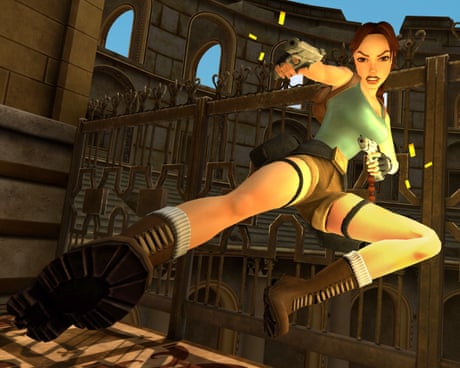
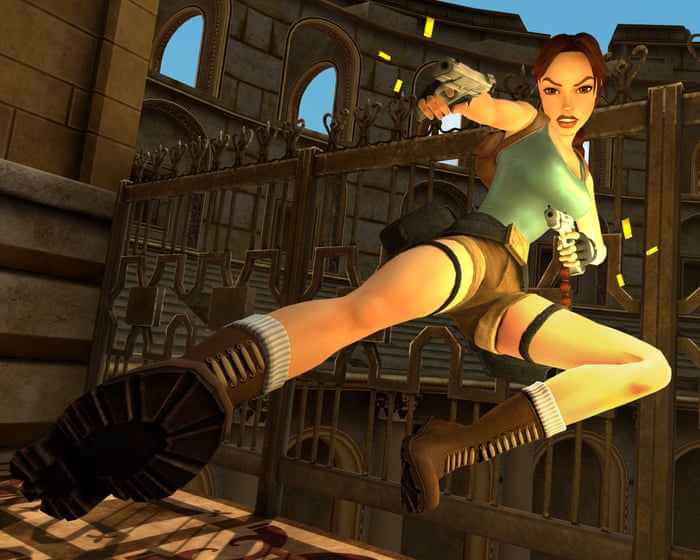
‘Giving Lara Croft pistols meant we could show off her acrobatics. And when she goes to Peru, we threw in a T rex!’
I joined Core Design in the summer of 1994 and met Toby Gard, who showed me his concept sketches for Tomb Raider. He’d already come up with the title and drawn a mock-up box cover with a woman holding two pistols.
PC; Origame Digital This odd but absorbing adventure sends you waddling across Antarctica in search of an eldritch entity – uncovering a world far stranger than it first appears
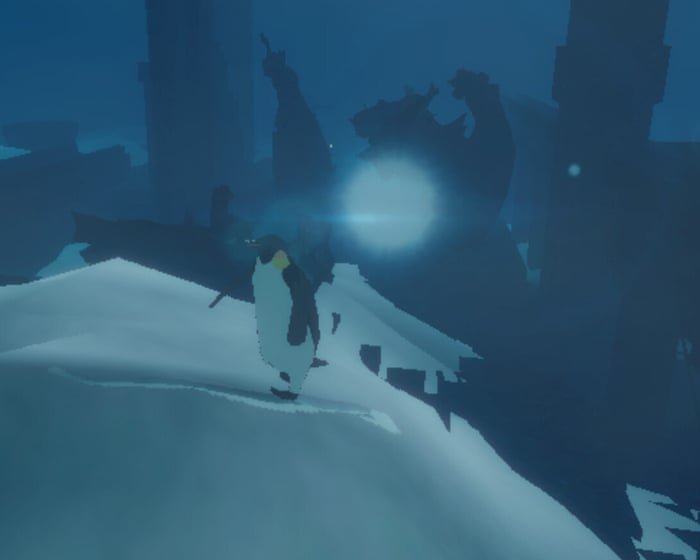
A Nazi kneels down on frozen snow, staring at an endless Antarctic horizon. Another holds a gun to his head, ready to end his own life. I direct a small waddling penguin up to them, trying to imagine what it could be thinking. Dismay, perhaps. Likely bewilderment. But then a faint smile seems to break out across its beaky face, as if amused by these silly humans and their misguided belief that they could ever best this howling, harsh landscape.
For most games, the idea of playing as a penguin observing Nazis losing the plot near the south pole would be weird enough. But Penguin Colony, developed by Origame Digital, pushes further. This is an audacious, frequently brilliant retelling of HP Lovecraft’s 1936 novella At the Mountains of Madness, in which eldritch horrors are just as common as Nazis. Further weirdness abounds: the many collectibles scattered about this place are not shiny gold objects à la Super Mario or Sonic. Rather, they are words. So tottering about as a semiaquatic bird, you have a unique mission: collect human language.
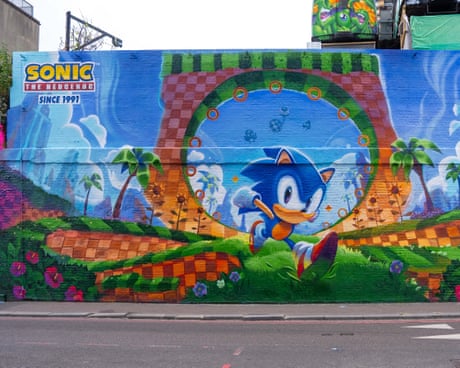
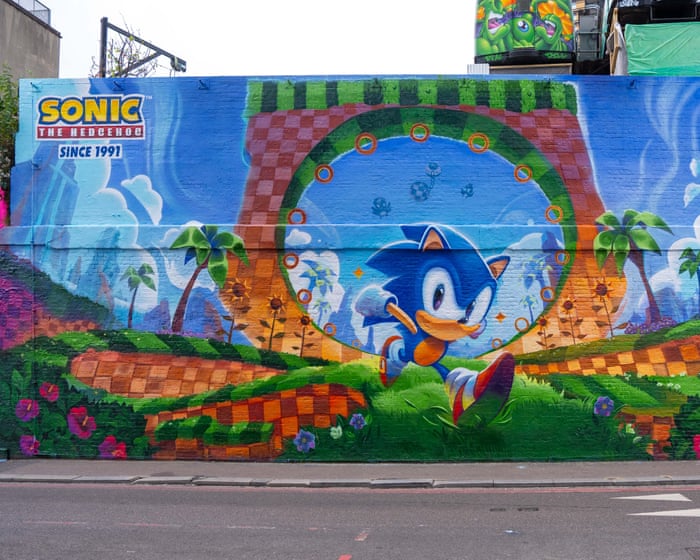
Sonic’s creators explain how the speedy scamp has kept on running through generations as an enduring avatar of ‘attitude in the face of adversity’
One day in the early 1990s, I came home from university for the weekend and discovered that my dad had bought himself a Sega Mega Drive, bundled with a copy of Sonic the Hedgehog 2. I knew about Sega’s mascot of course. The launch of the original Sonic the Hedgehog game in 1991 was a landmark moment for the company, massively boosting the sales of its 16bit console in the west, ripping market share from the dominant Super Nintendo. While Mario was the family favourite, Sonic with his speed, attitude and brash visual energy encapsulated the edgy spirit of the early 1990s MTV culture. That weekend, Dad and I did little else but team up for daylong Sonic sessions, the game’s two-player mode letting us play cooperatively as we zoomed through those dense, beautiful play zones.
Thirty-five years later, I am still a Sonic fan. There have been plenty of rough times (Sonic 06, Sonic and the Secret Rings, Sonic Free Riders – sorry, I can’t go on), but there have been plenty of good ones too. (Rush, Mania and Colors, and I have a soft spot for Sonic R, a racer developed by Traveller’s Tales, which went on to make the Lego games). Few people know this rollercoaster better than Takashi Iizuka, who worked on Sonic 3 as a designer and has been series producer for almost 20 years. When he joined Sega in 1992 he wanted to work for the company’s arcade division, but after playing the original Sonic – especially Sonic 2 – he was seduced.
The iconic game that came to define 8-bit programming still conjures flutters of nostalgia 40 years on – all thanks to a 15-year-old tea boy who worked a Saturday shift in a computer shop in Greater Manchester
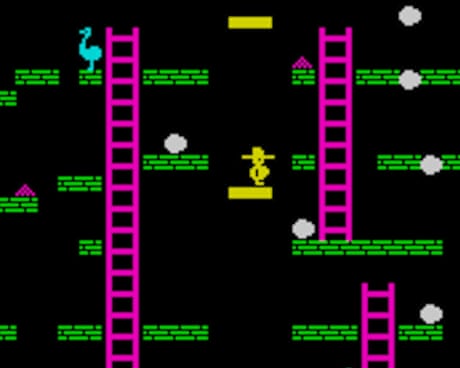
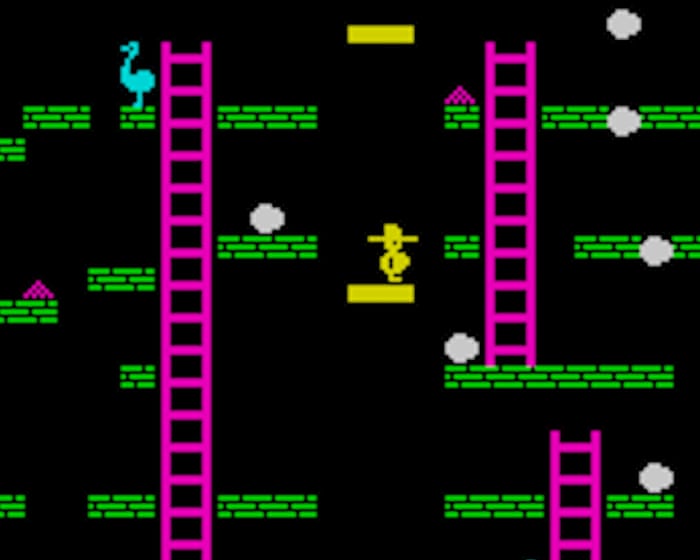
If you were playing games on a home computer in the early 1980s, you knew about Chuckie Egg. No question. This simple-looking platform game had you wandering around a chicken shed, collecting eggs and avoiding the patrolling hens. But when you reached level eight, a large duck was suddenly let loose and would stalk the player like a feathery missile, completely changing the pace and tactics of the game. It was a boss battle before boss battles existed.
Everyone knew about Chuckie Egg because everyone could play it. Originally released on the ZX Spectrum, BBC Micro and Dragon 32 in the autumn of 1983, it immediately topped the charts, encouraging its publisher, A&F Software, to begin porting it to as many machines as possible. Around 11 conversions followed, including the Commodore 64, Amstrad and Acorn Electron. I first played it on the BBC computer in my school library, but I also had it on my C64 and a friend played on his Speccy. Like Manic Miner, Bruce Lee and Skool Daze, it was woven into the tapestry of British 8-bit gaming culture.
PC, PlayStation 5, Xbox, Switch 2; Tarsier Studios Childhood terrors come to wretched life in a grim fairytale of a puzzle-platformer that’s as beautifully macabre as it is hard to put down
“I thought you were dead,” are the first words you’ll hear from the child protagonists of this horror puzzle-platformer. It’s your first sign that things were going badly long before you got here. Exploring dark waves and desolated urban environments in a rowboat, they’re on a search for their lost friends across a world of rabid, malformed entities. As the children struggle with their outsize fears, so will you, but you’ve at least got the option to play co-op if you want someone on the couch to brave the horrors with.
In the early 2000s, irreverent gaming blog Old Man Murray pioneered the “crate review system”. The rubric was simple: the sooner the player encountered their first wooden cube of heinous mediocrity, the more uninspired the game. Updating this method for 2026, we’ve got a few new contenders: how soon before you shimmy slowly through a gap, boost a companion over a high ledge so they can pull you up or tediously rotate some mechanism with the analogue stick? Reanimal pulls out all these hits within the first 20 minutes and, by the time the credits roll, six hours in, it feels as if developer Tarsier has wrung the final drops of interactive novelty from its formula of light exploration puzzles, tense but simple stealth and ghastly chases. And yet this grim fairytale is still difficult to put down.
PS5, Xbox, Switch, PC Have you ever wanted to romance your record player? Date Everything! offers players the chance to develop relationships with everyday objects around your house, in a fully voiced sandbox romp featuring over 100 anthropomorphised characters. Wonderfully meta; you can put the moves on the textbox, or even “Michael Transaction” (microtransaction – get it?) himself. Meghan Ellis

 Anmelden