❌

Lese-Ansicht

‘A slap-up meal for €12’: my search for the perfect old-school Turin tavern

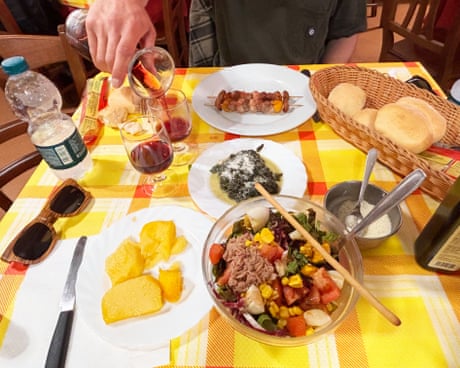
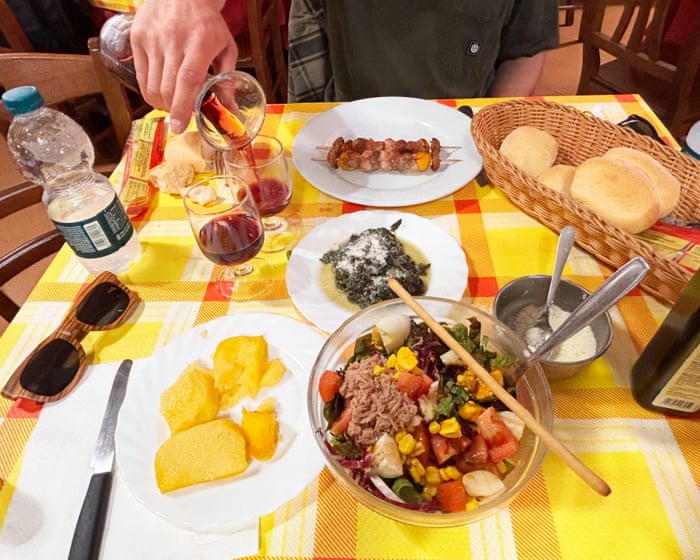
Piòle are the Italian city’s working-class neighbourhood taverns. Of the few that survive, many have gone upmarket – but I was looking for the real deal and affordable home cooking

Turin is one of Italy’s most serious food cities, shaped by the culinary legacy of the House of Savoy and, more recently, the slow food movement – a reputation reflected in its historic cafes and restaurants, where meals can feel refined. But that’s only part of the picture. As a local, I’m drawn to something far less formal: the piòla.

Piòle were never quite restaurants. They were places for a glass of barbera (poured at the counter from a cylindrical, quarter-litre carafe, the tubo) in rooms worn smooth by decades of use. Regulars played cards, argued about football or politics, and lingered without ceremony. Food, if it appeared, was simple and to the point: anchovies in green sauce, hard-boiled eggs, cold cuts, perhaps a plate of agnolotti (stuffed pasta).

Continue reading...

© Photograph: Zsofia Safar
© Photograph: Zsofia Safar
© Photograph: Zsofia Safar

  •  

Slow train to Turin: a winter journey through the Swiss Alps to Italy

By travelling during the day on scenic routes, travellers can soak up spectacular landscapes before taking in Turin’s cultural heritage

Is there a better sensation for a traveller than when a train speeds out of a tunnel? The sudden flood of light, that howling rush of air. Clearly, it’s not just me who thinks trains are the new (old) planes, with 2025 having seen a 7% rise in UK train travel, and more Europeans than ever looking to hit the rails.

It’s late December, and I’m heading out on a slow-train journey across the historic railways of the Swiss Alps and the Italian lakes. It’s a trip of roughly 1,800 miles (2,900km), crossing five countries, almost entirely by scenic daytime trains.

Continue reading...

© Photograph: robertharding/Alamy

© Photograph: robertharding/Alamy

© Photograph: robertharding/Alamy

  •  

‘When the church door opens, it’s like a miracle’: the phone app that’s a key to Italy’s religious art

A cultural initiative in Piedmont is unlocking a trove of priceless medieval frescoes in rural churches

The Santa Maria di Missione chapel in Villafranca Piemonte, northern Italy, stands at the end of a long cornfield. Behind it, the mountains rise gently, their outlines caressed by the sun. The colours of autumn frame the 15th-century frescoes that embellish the structure’s interior, painted by Italian artist Aimone Duce, of the Lombard school. The chapel is the municipality’s oldest religious building, serving about 4,000 inhabitants, and stands on the site of a pre-existing building dating back to 1037.

Inside the small chapel, my footsteps echo softly against the walls, breaking the stillness of the surrounding countryside. The sharp scent of plaster mingles with the earthy smell of the fields outside, carried in on the wind along with the sweetness of wheat. Light filters through the narrow windows, catching the vivid hues of a fresco that depicts the seven deadly sins – a theme often revisited in medieval iconography.

Continue reading...

© Photograph: LAVINIA NOCELLI

© Photograph: LAVINIA NOCELLI

© Photograph: LAVINIA NOCELLI

  •  
❌