Three-quarters of all responses were machine-generated in failed attempt to stop bill from passing into law, research finds
AI bots flooded a government consultation with tens of thousands of fake responses in a failed attempt to stop the UK’s ban on disposable vapes.
Three-quarters of all the responses to the 2023 consultation on the tobacco and vapes bill were machine-generated, in what is thought to be the first coordinated attempt to use AI to derail health policymaking in the UK.
Experts say fires caused by wrongly discarded lithium batteries, such as those in vapes, are putting lives at risk
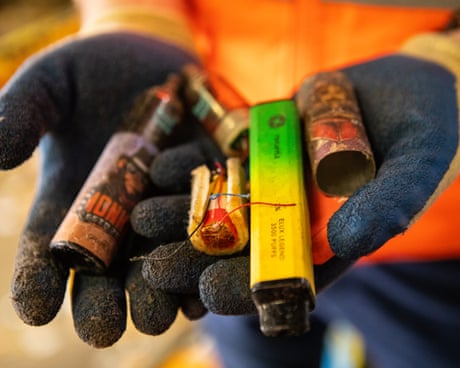
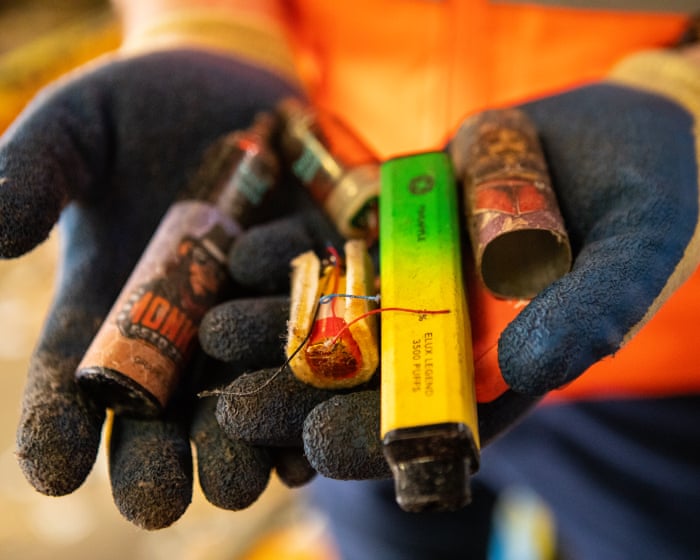
Fires at recycling centres caused by wrongly discarded lithium batteries such as those found in vapes are occurring at the rate of more than 10 a week, according to new figures.
Experts say the sheer volume of battery fires now occurring at waste facilities has reached a crisis that is putting lives at risk, costing £1bn a year and frustrating fire chiefs.
Review by paediatricians links child vaping with poor respiratory health such as coughing, wheezing and asthma
Young people who start vaping risk developing breathing problems and going on to smoke cigarettes, children’s doctors have warned.
Child vaping is consistently linked with poor respiratory health, such as coughing, wheezing, bronchitis symptoms and asthma exacerbations, while vapes have been shown to act as a gateway to smoking cigarettes, according to one of the most comprehensive reviews of the available evidence so far undertaken by the Royal College of Child and Paediatrics Health.
Parents and teachers worry about the number of kids who vape cannabis. But many of them are using something far more dangerous – without even realising it
I bumped into an old acquaintance the other day. Updating me on his children’s ages, he said, with an eyeroll of resignation: “My daughter’s 15 now; just found a cannabis vape in her room.” It’s an increasingly common and concerning situation for parents – with no way of telling if a vape does in fact contain weed (which comes with its own risks, just like vaping tobacco) or something much worse.
Instead of the natural cannabinoids THC or CBD, these vapes can contain a much cheaper substitute: the “prison drug” spice. Last year scientists from the University of Bath analysed 1,923 vapes that had been confiscated from children in 114 schools in England, and found that 13% contained spice. In London and Lancashire it was 25%. And this is among vapes of all kinds, nicotine included, not just those that purported to contain cannabis. As for vapes labelled as containing THC, CBD or cannabis, when the drug-testing service Wedinos (part of Public Health Wales) examined 297 samples received in the year up to March 2025, it found that 39% contained spice.
Ministers consider bringing e-cigarette laws in line with tobacco as data shows 20% of teenagers have tried vaping
Vapes could be sold in plain packaging as part of a range of proposals to stop them being marketed to children.
The UK-wide plans also include limiting device colours to white, black or grey, and keeping vapes out of sight in shops, according to the Department of Health and Social Care.
Analysis shows public understanding about vaping, which is far less harmful than smoking, has plummeted in past decade
More than half of adult smokers in the UK wrongly believe that vaping is as harmful or more harmful than cigarettes, making them less likely to switch to vapes and quit the deadly habit, research has found.
Evidence from scientific studies shows that, while vaping is not risk-free, it is far less harmful than smoking tobacco, which produces thousands of chemicals, including toxic metals, poisonous gases and substances that cause cancer.
The UN is set to review the legal status of nicotine. An outright ban would go too far, but there is no case for its easy availability
The health case for banning cigarettes is ironclad. As the then head of the World Health Organization, Gro Harlem Brundtland, put it in 2000, “a cigarette is the only consumer product which when used as directed kills its consumer”. Smoking is still the leading cause of preventable death worldwide. Many countries, including the UK, have taken strong measures to restrict and even ban cigarettes and other tobacco products. Over the past two decades, however, tobacco-free nicotine products such as vapes and nicotine pouches, which use a synthetic version of the addictive ingredient, have exploded in popularity.
Regulation has been slow.The nation of Palau has now tasked the WHO expert committee on drug dependence with reviewing nicotine, which will lead to a UN vote – likely to be in 2028 – on banning it worldwide. The case relies partly on deciding whether addiction and dependence themselves – in the absence of other major health consequences – are harmful. There is certainly an argument for that, and smoking taught us that it is often better to stamp out highly addictive habits if consequences may become obvious later. But there is also reason for caution.
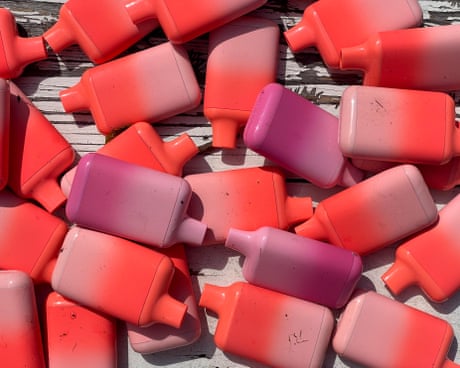
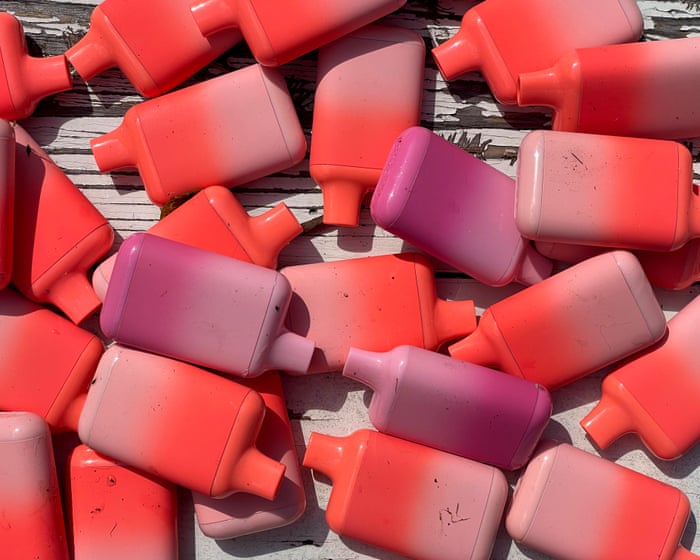
Despite the ban on disposables, waste professionals say the mountain of discarded devices is a £1bn-a-year issue
It is 2pm and Ana, 47, has just started the afternoon shift at the Suez recycling plant near Birmingham city centre, standing beneath a sign reading “Non-ferrous sorting station” with a bucket of vapes in front of her. Sorting and dismantling them is part of her job as a site operative.
Recycling them is not simple. Each bucket holds between 40 and 50 devices, and over the course of a shift, she gets through about half a bucket. Using a hammer, she has to smash each vape open, pry out the batteries and separate each component into a different container.
Clustered together in the area of Cheetham Hill are more than 50 shops specialising in vapes and vaping paraphernalia. How can they all make a living – and for how much longer?
I meet Ali outside his tiny wholesale business, Fly Vape – the store name combined with the image of a vape bookended by angel wings appears on the shopfront. In place of a halo is a cloud of vapour. The softly spoken 40-year-old says that working in the vape trade is “OK, better than nothing”. He opened Fly Vape just over two years ago, selling vaping products to small retailers such as convenience stores. Candy-coloured boxes bursting with fruity flavours line the shelves, although body sprays, soft drinks and a plentiful selection of bongs are available too. His customers come “from all around the UK”, he says, although he names only “Leeds, Bradford, Hull”. He shrugs at the fact that, compared with his neighbours, his sales are modest. He is not one of the “big men” here, he grins.
Ali’s store is in Cheetham Hill, Manchester, where two adjoining litter-strewn back streets near Manchester prison (formerly Strangeways) have emerged as a surprising industry hub in recent years. Ali’s is one of more than 50 outlets specialising in vapes and their accompanying products in an area that has been dubbed Britain’s “vape capital”. Most appear to be wholesalers; there are few passersby and some doors bear signs stating “trade only”, “not open to the public”.
Vaping is likely to cause lung and oral cancer, researchers have found, as they urged regulators to act now rather than wait decades for a definitive level of risk.
Cancer researchers led by the University of New South Wales in Sydney analysed reviews of evidence from animal studies, human case reports and laboratory research published between 2017 and 2025, in one of the most detailed assessments to date of whether nicotine e-cigarettes could cause cancer.
Number fell 23% year on year in 2025 but waste companies say recycling systems still under strain from sheer volume
More than 6m vapes and vape pods are still being discarded every week in the UK, with waste management companies warning the sheer volume continues to strain recycling systems despite the ban on disposable e-cigarettes.
According to research by the recycling campaign group Material Focus, the 6.3m vapes and pods thrown away each week in 2025 represented a 23% reduction from the previous year.
A Virgin Australia flight from Brisbane to Melbourne was met by firefighters after smoke was seen coming from a vape on board.
Flight VA 328 landed safely and all passengers disembarked normally after a vape “activated” in the cabin shortly before landing at about 4pm on Sunday afternoon in Melbourne, Melbourne airport said.
That first cigarette can lead to a lifetime of dependency, as well as cancer, strokes, heart attacks … Here’s why smokers crave their nicotine hit – and how they can fight back
Smoking is bad for you and you shouldn’t do it. You know both of these things, of course: you’ve been told them in school, on TV and the radio, by doctors, and via the Cronenbergian body-horror of cigarette packets themselves. It’s worth reiterating, though, for two reasons: first, because the effects of having a quick puff outside the pub aren’t just a long-term gamble on your health but an immediate way of making your life worse; and second, because cigarettes remain wildly, impossibly addictive. Some research suggests that as many as two-thirds of people who try one cigarette become, at least temporarily, daily smokers, while a recent survey found that less than a fifth of UK smokers trying to quit actually managed it. Estimates for the average number of times people try to quit before actually managing it range from half a dozen to well over a hundred. So what confluence of factors actually makes cigarettes so difficult to give up – and what does that mean for a wannabe quitter?
“The first thing that happens when you smoke a cigarette is that you inhale a noxious mix of nicotine, various irritants and carcinogens into your lungs, ‘stunning’ your cilia – the tiny, hair-like projections that line your airways – and making them do their job less effectively,” says Lion Shahab, professor of health psychology at University College London. “The other thing that happens very, very quickly is that nicotine gets absorbed through the lungs into the alveoli, into the bloodstream, and then gets transferred into the brain. This is when you start to feel good, and also a key thing that keeps you addicted.”
World Health Organization report also finds one in seven adolescents across continent use vapes and e-cigarettes
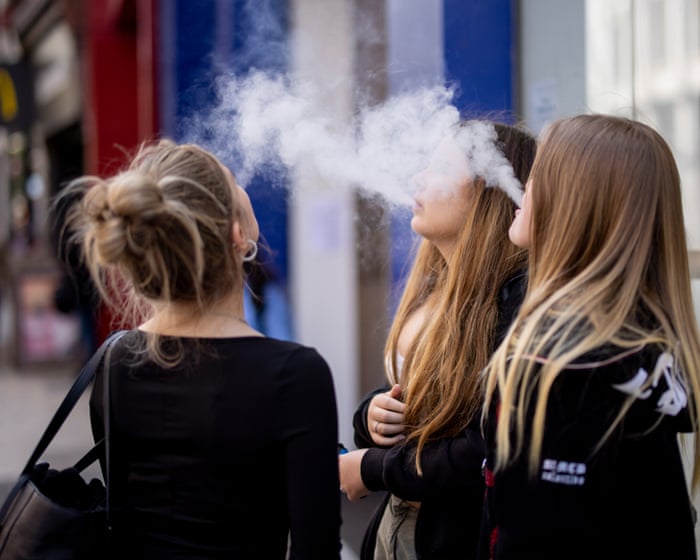
Teenage girls in Europe have the highest rate of tobacco use in their age group around the world, while one in seven adolescents across the continent use vapes and e-cigarettes, figures show.
The data, based on analysis by the World Health Organization (WHO), shows that Europe is on course to maintain its status as the world’s biggest consumer of tobacco up to 2030, and reveals “particularly concerning” trends of tobacco use among women and young people.
Rising evidence that secondhand vapour from e-cigarettes poses health risks, government says
Vaping in cars carrying anyone under 18 will be banned in England under government plans to reduce the harm caused by smoking and e-cigarettes.
The move is included in the tobacco and vapes bill, which will also outlaw smoking, vaping and using heated tobacco in playgrounds and outside schools and hospitals.
With vaping now more common than smoking, experts explain addiction and what actually helps people quit
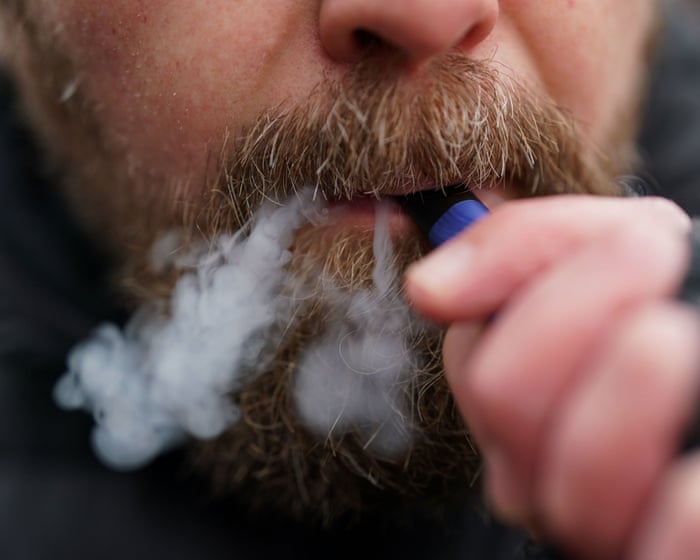
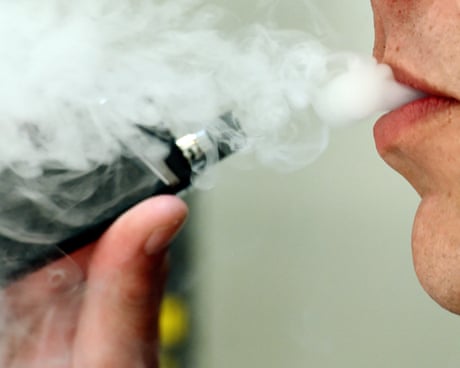
More socially acceptable than smoking – yet just as addictive – vaping has become the UK’s default way of consuming nicotine.
Figures published by the Office for National Statistics last month showed that the number of over-16s in Great Britain who use vapes or e-cigarettes has overtaken the number who smoke cigarettes for the first time, with 5.4 million adults now vaping daily or occasionally, compared with 4.9 million who smoke.

 Anmelden