As tech bosses get richer and ordinary Americans struggle, Democrats put the case against the US’s grotesque unfairness – and voters responded
Remember the “vibe shift”? Just last year, columnists and corporate boardrooms alike declared that the second coming of Donald Trump meant the old rules of politics and even everyday civility were roadkill.
“I feel liberated,” one top banker told the Financial Times. “We can say ‘retard’ and ‘pussy’ without the fear of getting cancelled … it’s a new dawn.”
What if someone told you the truth about the economy? For years, UK governments have tried spending more, spending less, cutting red tape, leaving the EU, levelling up, and they have still failed to increase growth per person. So what’s the lesson from the great British fairytale? On the latest episode, the rebel economists Karel Williams and Sukhdev Johal explain to Aditya Chakrabortty why they believe praying for growth is a fool’s dream – and why it won’t improve your life
Aditya’s suggested reading list for Karel Williams and Sukhdev Johal:
As we say in the podcast, I’ve championed the work of Karel and Sukhdev and their colleagues in the Guardian for many years, and some of my columns are a good introduction to their approach.
• In our conversation we look at what life after growth looks like for towns and suburbs, and what it should look like. This report from South Wales in 2016 examines the present-day reality.
• For a broader analysis of how the UK has become highly unequal and increasingly stagnant, try this.
• As part of the Foundational Economy collective, Karel and Sukhdev put a lot of their analysis into freely available working papers. That circumvents the leisureliness and expense of academic publishing and gets their arguments in front of a wider public. A good example is this one on the cost of living crisis.
Are we doomscrolling our way into a democratic crisis? That’s what the playwright James Graham fears may be happening, as he suggests that our algorithms have led us into ‘a massive crisis of the new’ and are preventing us from imagining a different future
Aditya suggested reading (and watching) list for James Graham
James Graham has written a shaming amount. I’ve listed below three
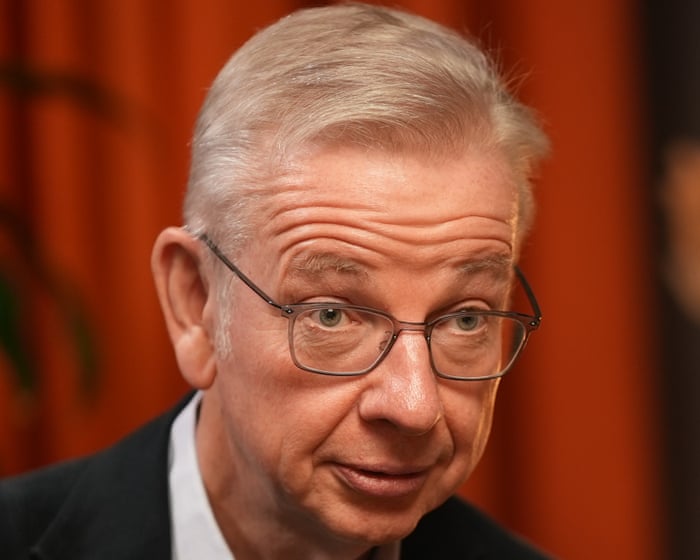
For more than three decades, Michael Gove has been a leading figure in British Conservatism. As a journalist, government minister and now editor of the Tory bible, the Spectator, he has helped shape the right even as it has moved further rightwards. In the latest episode of Radical Thinking, Gove joins Aditya Chakrabortty to discuss the future of the right, his record on Brexit and austerity, and the Spectator’s position on Islam.
Aditya’s suggested reading:
To read the fruits of Michael Gove’s dalliance with the Marxism Today gang, look up his essay in a 1998 collection called The Moderniser’s Dilemma: Radical Politics in the Age of Blair.
For a slalom ride through Michael Gove’s years in power, read The Demented Dalek by the historian Richard J Evans in the London Review of Books.
To learn more about what’s become of the British right, there’s a column by me for the Guardian.
Phil also writes a very good blog on British politics, which keeps a close eye on how each party is trying to marshal a coalition of voters. Here he is on Kemi Badenoch.
For more on the economics of the Cameron years, this paper examines how the Tories failed to move the UK away from being a country of renters towards a country of makers. Two of its authors will join us for a podcast later in the series.
And if you want to read how Brexit may have cost the UK 8% of GDP, read this paper based on data from the Bank of England.
In a new series from the Guardian, the pair speak to Radical Thinking with Aditya Chakrabortty in an extended interview. From Trump 2.0 and the rise of the tech billionaire to Gaza and the ongoing climate emergency, Klein and Taylor argue we are not just lurching from crisis to crisis, but are in a new and dangerous moment in history. However, they haven’t given up hope of a fightback.
Radical Thinking will be published every Saturday in the Politics Weekly feed
Who is really in charge? The people or the markets?
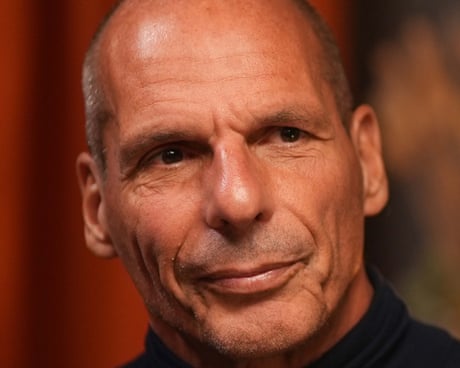
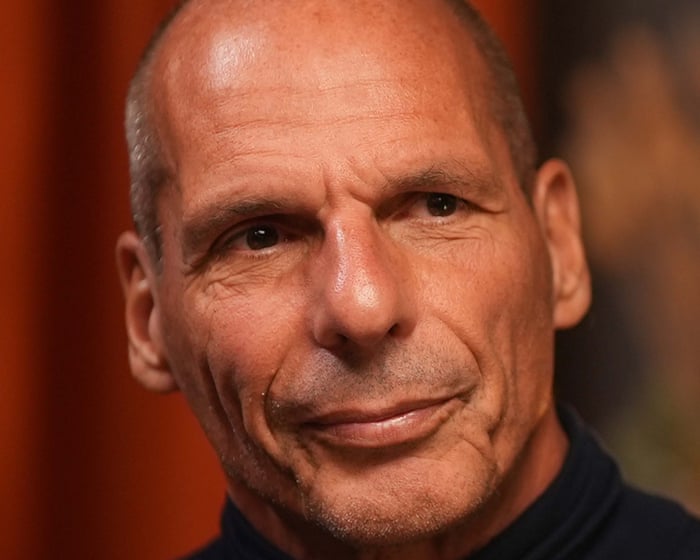
In the first episode of Radical Thinking, a new series from the Guardian, senior economics commentator Aditya Chakrabortty speaks to the former Greek finance minister Yanis Varoufakis.
In an extended interview, we hear what it was like during the Eurocrisis when he went head to head with those who wanted to stop his economic changes. And, what does he make of Andy Burnham's plans to 'rewire' the UK economy?
Radical Thinking will be published every Saturday in the Politics Weekly feed
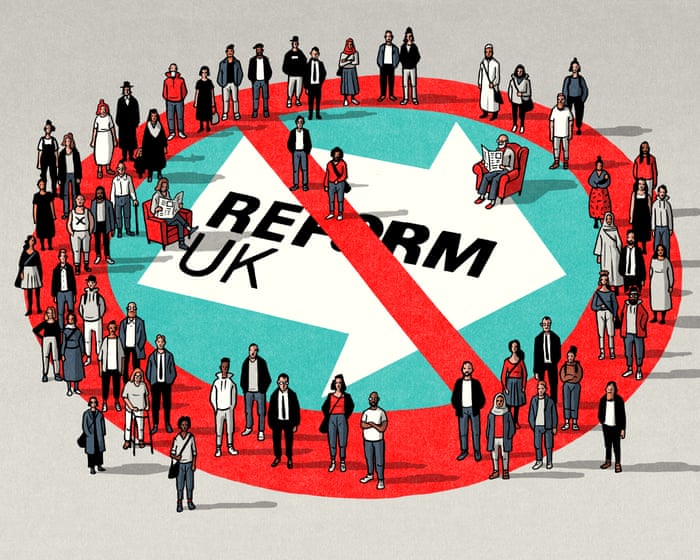
An anti-Farage army of voters is there to be galvanised, as exclusive data shows. But getting them out will be tricky
Who can stop Nigel Farage? Which voters would actually dig out their ID and schlep down to the polling booth to fight him?
Over the past year, these two questions have come to shape British politics. From Runcorn and Helsby to Caerphilly and Aberdeen South, via countless flimsy leaflets claiming “Only X can win here”, parties have jostled for the part of his majesty’s opposition to Reform. Those battles have given us Hannah Spencer and Andy Burnham; they have bulldozed Labour in Wales and forced Keir Starmer out of No 10.
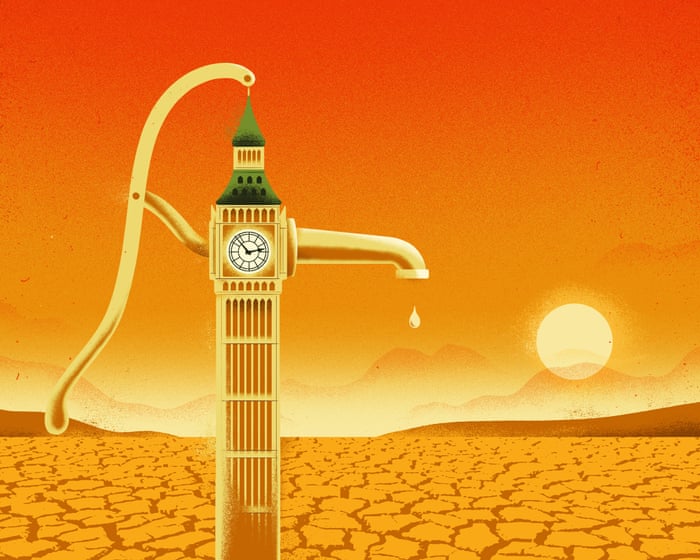
This punishingly hot and dry summer will probably be followed by another wet winter. But it’s nothing compared with what Britain will endure in years to come
The NHS will divert billions of pounds from essential services to pay for new medicines, under the terms of the US-UK trade deal agreed in December, which could lead to more than 200,000 excess deaths, analysis has found.
Ministers have defended the deal as a way of helping British drug exports avoid US tariffs and giving patients access to vital medication, but critics accuse the Labour party of caving into pressure from Donald Trump.
Lucy Hough speaks to columnist Aditya Chakrabortty
This shadowy treaty on medicine imports will cost the NHS billions and take funding away from doctors, nurses, cancer scans and the rest
For all the crowd noise and heavy-breathing match analysis, British democracy is a simple sport. We elect politicians to serve our interests. They direct the vital services that look after our families and communities, such as our healthcare and our schools. The entire political system rests on one basic premise: they work for us.
Believe that, as I do, and this week is one of vast democratic failure. Rather than working for us, Keir Starmer and his ministers are acting against us. They have rammed through parliament a sweeping law that will, independent experts agree, harm the public; and they have done so without even coming clean on the costs or the consequences. What’s worse, MPs and the press have failed to put this under scrutiny.
To stay popular with the public – and his backbenchers – he’ll need to make big changes fast. That means changing the way the government borrows
A Labour leader arrives, shirt and smile ironed into place, in his hands a big idea. He has polished one slogan, prepped three anecdotes, memorised eight bullet points. He wants more cash for vital services, or workers to have a stake in their employers, or to take some utility into public control. Not so big an idea, really, but, right on cue, the attacks come from almost every side – breathless lobby reporters, sententious columnists, zombie Blairites. And they all agree on one fatal thing: the bond markets will never wear it.
The death sentence having been pronounced, all that remains for the politician’s proposal is a pauper’s funeral.
Aditya: I have three distinct memories of that entire period: the sense of anger, the sense of the confusion in Westminster and then, afterwards, this quick curdling into a really base form of racism. I remember reporting around south Wales and the north-east of England and then coming back into London, and noticing that one group were talking about their anger and frustration and the other were talking about facts.
Starmer’s EU reset is aimed at the conference room. Meanwhile Farage and the hard right mine ethnic resentment on the streets
What story does Britain tell itself about Brexit, 10 years after the vote that transformed the country? Watch TV or read the papers and you find one of two viewpoints: from the common room or the conference room.
The common room story is about chums and how they fall out. Friendships forged on hallowed playing fields and over Cotswold kitchen suppers, then dashed on the rocks of ambition. The new BBC documentary Brexit: A Very British Civil War is the latest in the genre, recounting what Dave said to Boris said to Michael said to Dom. It oohs at the deals struck over sets of tennis, and aahs at the then prime minister threatening dissenters with: “I will fuck you up for ever.” This is David Cameron as box office: the Scarface of the Bullingdon Club. And Brexit, you understand, was simply an Oxford fracas that got out of hand.
Voters are desperate for a turnaround in living standards. The runners and riders for the Labour leadership must address this
“Westminster is a cocoon. Lots of people in lovely jobs, so it becomes easy to forget the world outside.” Catherine West should know. She’s been an MP for 11 years, even if you hadn’t heard of her until this weekend when the Labour backbencher threatened Keir Starmer for the leadership, firing the first shots in the civil war that now engulfs the government. Before Wes Streeting broke cover, before Andy Burnham boarded that train to Euston, there was Catherine West.
Ever since, she has been pelted with insults. But, when we spoke this weekend, she was not only self-aware, it was one of the few times this week that I’ve heard a Labour politician grasp that what’s at stake goes beyond who sits where at the cabinet table, or how their party is polling: it’s about who leads the UK into the 2030s.
Aditya Chakrabortty is a Guardian columnist
Do you have an opinion on the issues raised in this article? If you would like to submit a response of up to 300 words by email to be considered for publication in our letters section, please click here.
Aditya Chakrabortty on the Labour leader’s predicament – and if he may be the last prime minister of the two-party system
In these highly polarised times, dunking on the prime minister – and this PM in particular – is the one thing that seems to unite people in fury, disappointment and loathing. So as he rolled his sleeves up to address the nation on Monday morning, after one of the worst election results in Labour’s history, Keir Starmer had quite the job on his hands.
The Guardian columnist Aditya Chakrabortty was watching – and wincing. “There are times when I watch Keir Starmer promising he’s going to change,” he said. “He looks to me like a guy on the verge of divorce, holding flowers from the nearest petrol station and saying: 'Trust me. Honestly, it’s going to be different this time. Honestly, love, stick with me.’” But why does there seem to be such antagonism towards the Labour leader – and can anyone guide the party out of the mess they have found themselves in?
Presenting himself as a serious, sensible ‘grownup’ was essential to Starmer’s rise to power. His premiership has revealed how hollow that message is
Some big questions will be asked this weekend – about how Labour fell so far so fast, about when Keir Starmer goes and who takes his place – but at least one big thing will be clear: never entrust your country to people who keep insisting they’re grown up.
Think back to 2024 and the birth of Starmer’s government. “The adults are back in the room,” exulted Darren Jones as Labour went marching into Downing Street. Having chopped the party’s largest pledges into little pieces (Goodbye, Green New Deal! Farewell, securonomics!), the single greatest qualification Starmer, Jones and co had for office was not policy, but vibes. After a decade of blue-on-blue fighting and a string of gap-year prime ministers, all the reds had to be was serious, sensible, businesslike. Labour would own the mien of production.
Aditya Chakrabortty is a Guardian columnist
Do you have an opinion on the issues raised in this article? If you would like to submit a response of up to 300 words by email to be considered for publication in our letters section, please click here.
Tribalism has not faded over the past decade. Instead, new research reveals our politics has become ever-more polarised and fractious
On 23 June 2016, the British voter changed. Before that day, they picked a party, usually red or blue. By that morning, only two tribes mattered: remain or leave. And they kept mattering long, long after the result was declared. Rather than bin those short-lived and now stale allegiances, voters made them their personas. No longer a “Labour man” or a “Conservative family”, they became instead “remoaners” or “Brexiters”. Even today, 60% of Britons still identify themselves by where they scrawled a single cross in a one-off poll 10 years ago.
Ask about the difference Brexit has made and the answer normally concerns policy or high politics: how our economic trajectory has become bumpier, or how the Tories keep getting into punch-ups with each other. But it became so much bigger than Boris v Dave. The civil war blazed through the country, and recruited nearly all of us to one side or the other. The effects still ripple through our elections and media today.
Brutal past experience has taught us that a cost of living crisis doesn’t affect us all the same, because we don’t all go into it with the same income or wealth
Perhaps the most celebrated writer on oil markets is Daniel Yergin. His work has won a Pulitzer and his advice sought by every president from Bill Clinton to Donald Trump. Let’s start by looking at an example.
Fifteen years ago, before the US and Israel started their war on Iran, killing thousands of civilians in the process,before the strait of Hormuz became as infamous as the Bermuda Triangle, and before experts declared “the greatest global energy security threat in history”, Yergin published The Quest: Energy, Security and the Remaking of the Modern World. After hearing Trump announce a “very soon” end to the conflict for the second – or was it the third? – time, I dug out my copy. Just as I remembered, it devotes a chapter to the Persian Gulf.
Aditya Chakrabortty is a Guardian columnist
Do you have an opinion on the issues raised in this article? If you would like to submit a response of up to 300 words by email to be considered for publication in our letters section, please click here.
The news that healthy life expectancy is in decline in Britain exposes a serious truth about the state we’re in
My guess is you keep across the news. You know Andy Mountbatten-Windsor has just had the worst birthday ever; that tall hotels in Dubai don’t make for a great holiday right now; and that Keir Starmer’s engagements diary for 2027 will be remarkably clear.
Still, there is one headline I’ll bet you haven’t seen, even though it directly affects your life. It’s about your life, and mine, and those of our families and friends and neighbours. I didn’t spot it either, until a few days ago when the Guardian ran a reader’s letter.
It is not just this doomed government but the Labour party itself that is disappearing before our very eyes
When he does go, what will the political death certificate give as the true cause of Keir Starmer’s demise? It won’t be the Peter Mandelson scandal, the policy U-turns or the bleak nights at provincial counting centres. All these are symptoms, not the disease. No, what is turning the guy elected just 19 months ago into an ex-prime minister is the slow realisation among ministers, colleagues and voters of one essential truth about the man: there is less to him than meets the eye.
His promises get shrunk in the wash. A green new deal is jettisoned, an Employment Rights Act has a large watering can poured over it, a bold manifesto pledge to end Britain’s feudal leasehold laws suddenly grows caveats.

 Anmelden