❌

Lese-Ansicht

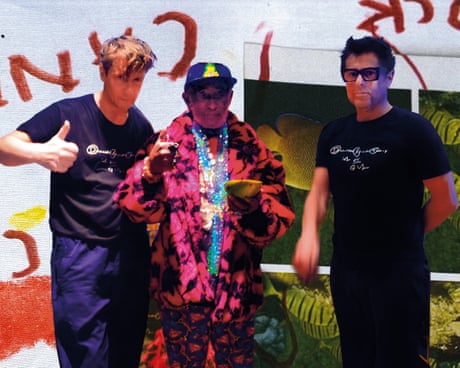
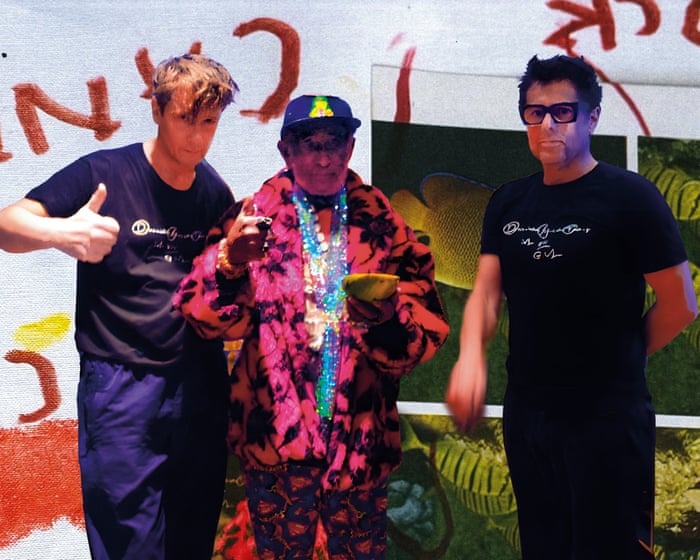
‘We’re waiting for the plan to find us’: Mouse on Mars on working with Lee ‘Scratch’ Perry and 30 years of oblique adventures in sound

The German duo are returning with the results of their whirlwind session with the late dub legend, best heard in a ‘spatial audio’ installation. They explain why such an unexpected move is par for their artistic course

Interviewing Mouse on Mars is no easy feat. Not because the duo are hard to find, even though their current studio is hidden in a courtyard deep in Berlin’s Kreuzberg district. Nor because they continue to be notoriously busy, particularly since one half of the band, Jan St Werner (born Jan Stephan Werner), is now a professor for sound practice research, at the Folkwang University of the Arts in the western German city of Essen. No, a conversation with Mouse on Mars is an exercise in perseverance and endurance.

Which does not mean it is unpleasurable to chat with Andi Toma and St Werner, as well as their unofficial member and longtime collaborator, the percussionist Dodo NKishi. But any answer to a question may end up somewhere entirely different than originally intended, spanning from the quality of the fruit juice NKishi brought to the studio, to esoteric, tech-optimist digressions on the possibility of forensic resynthesising of the past through archival audio.

Continue reading...

© Illustration: Constantin Carstens
© Illustration: Constantin Carstens
© Illustration: Constantin Carstens

  •  

Still collapsing after all these years: Einstürzende Neubauten on their fifth decade as a Berlin legend

The band’s newest member, Josefine Lukschy, was born the year their fifth album was released. They and founding member Blixa Bargeld talk about leading the counter counter-culture

‘Everything already written, everything already said,” – the words Blixa Bargeld chose to open Rampen, the latest Einstürzende Neubauten record, released in 2024 to comparatively little fanfare, felt ominous. Would this mark the end of the band that has defined German music, at least to the outside world, for close to five decades?

“No!” Bargeld replies, his voice thundering across the small dressing room backstage at the National Theatre of the Netherlands in The Hague. “Take it for granted – we’ll make another record.” Later that night, Einstürzende Neubauten (“Collapsing New Buildings”) are at the Amare concert hall, the closing act of the Rewire festival’s 15th edition, an anniversary for the city’s celebration of experimental music and art. It is the third stop on a short festival run the band has embarked on this spring and summer, and true to form, they have lugged a shopping trolley all the way from Berlin, along with pipes, drills and metal sheets.

Continue reading...

© Photograph: Jan Rijk

© Photograph: Jan Rijk

© Photograph: Jan Rijk

  •  

‘Even when the world is collapsing, life continues’: the return of indietronica legends the Notwist

The Bavarian band known for a love of tinkering embraced a fresh ethos, ditching remote collaboration for a collective recording done in a week

‘It all went so fast,” Markus Acher says. “We’ve never been this fast at making a record.” He is sitting at the far end of a sofa in the Notwist’s Munich studio. On the other end is his brother Micha Acher; next to them, Cico Beck, who joined the band in 2014, balances on a stool. For a group known for meticulous studio craft, speed is an unfamiliar sensation. For most of their career, the Notwist have worked slowly, layering, revising, rethinking, as if wary of committing too soon to anything at all.

Formed in 1989 in the Bavarian town of Weilheim, the Notwist began as a heavy metal trio before evolving, over the next decade, into one of Germany’s most distinctive bands. Their breakthrough album, Neon Golden (2002), married indie songwriting to electronic textures, shaped largely by then-member Martin Gretschmann, also known as Console or Acid Pauli, in a way that felt inward-looking and strangely expansive. Its influence travelled far beyond Germany, securing the band a place in the canon of early-2000s indie experimentalism. Pitchfork named Neon Golden one of the best albums of the 2000s.

Continue reading...

© Illustration: Bernd Hofmann

© Illustration: Bernd Hofmann

© Illustration: Bernd Hofmann

  •  
❌