❌

Lese-Ansicht

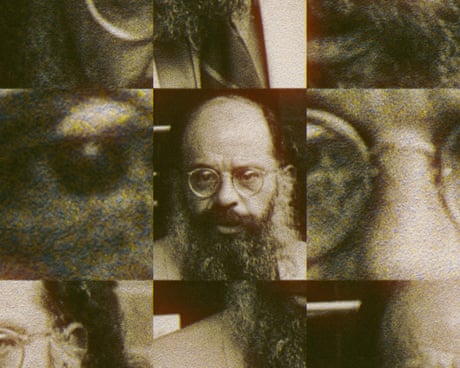
Beat legend, ‘boy lover’: how should we reckon with Allen Ginsberg’s complex legacy?

As a series of star-studded events celebrates Ginsberg’s centennial, the keeper of his estate weighs the genius poetry – and provocative views – of the iconic writer

In 1985 Allen Ginsberg sat his friend, an out gay 17-year-old named Peter Hale, down and gave some advice: “Get a wife, settle down, and have kids.” At the time, Hale was enrolled in a summer program at Naropa University, a Buddhism-inspired college where Ginsberg, 59, ran the writing program.

“He told me not to live the life of the itinerant poet going around heartbroken, forever unfulfilled,” Hale tells me via video call. Ginsberg was, in Hale’s words, “very much a traditionalist”.

Continue reading...
© Illustration: Guardian Design / Getty Images
© Illustration: Guardian Design / Getty Images
© Illustration: Guardian Design / Getty Images

  •  

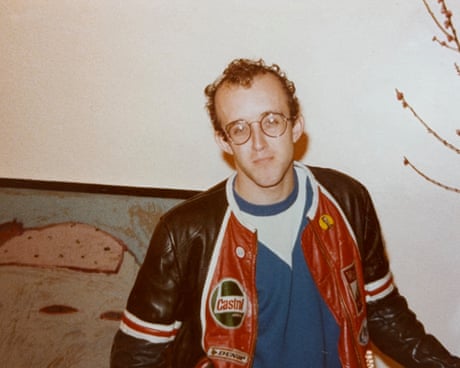
‘I told his family he was HIV positive’: Keith Haring’s best friend on life with the artist as unseen works go on show

For nearly four decades, the artist Kermit Oswald lived with some of the most intimate works Haring ever made. Now the pieces are going up for auction

The story of how Keith Haring came to paint a crib began on a quiet, ordinary afternoon in 1986. His best friend’s wife was pregnant, and the couple didn’t have the money to buy a new crib for their home in New York City’s Greenpoint neighborhood. “I called my parents to ask if my old crib was still in the attic,” says artist Kermit Oswald, Haring’s friend since childhood. “I got it and I painted it yellow, then Keith came over, we had a few beers and he painted the rest of it.”

Haring is famed as an enduring, globally recognized celebrant of Aids activism, nightlife and the New York Bohemian scene of the 1980s. But he honored his connection with his straight best friend even as he rubbed shoulders with Andy Warhol, Robert Mapplethorpe and Jean-Michel Basquiat.

Continue reading...

© Photograph: Courtesy of Kermit Oswald

© Photograph: Courtesy of Kermit Oswald

© Photograph: Courtesy of Kermit Oswald

  •  

‘They accomplished so much, even as they were dying’: the groundbreaking gay art of Peter Hujar and Paul Thek

A new book uncovers the yearning romance that fueled the Aids-era artists’ life and work

Andrew Durbin, author and editor-in-chief of Frieze Magazine, spent almost five years writing The Wonderful World That Almost Was. This dual biography of photographer Peter Hujar and sculptor Paul Thek, two gay artists who made extraordinary work in the years before and during Aids, focuses on their friendship, creativity and collaboration spanning more than 30 years. They died within a year of each other, in 1987 and 1988, both from complications from Aids.

The work and lives of Thek and Hujar have come storming back into the cultural conversation in recent years. Hujar was played by Ben Whishaw in Ira Sachs’s poetic 2025 film, Peter Hujar’s Day, and his images have been used as cover art for an Anohni and the Johnsons album and Hanya Yanagihara’s bestseller A Little Life. Thek’s equivalent moment has been slower; his most important works were large-scale installations in Europe, all lost, and which, as Durbin tells me, “everyone loved, but few could experience. And when they were finished, there wasn’t much left to sell. But I think his moment is about to come.”

Continue reading...

© Photograph: Farrar, Straus and Giroux

© Photograph: Farrar, Straus and Giroux

© Photograph: Farrar, Straus and Giroux

  •  

‘We all want to know what he was doing in the bedroom’: Kerouac’s unseen archive goes on show in New York

As the original On the Road scroll heads to auction, a new exhibition uncovers the private life of the Beat legend

Among great literary myths, the one of Jack Kerouac is often reduced to a vibe. The open road, a cigarette, a postwar rebel leaning on a beat-up car – a masculine archetype of rebellion and hedonism. Kerouac’s 1957 book On the Road was the bible of the beat generation and chronicles, in startlingly unfiltered prose, his travels across the US with fellow writers Allen Ginsberg, William S Burroughs, and his lifelong muse, the dashing Neal Cassady. The book shifted the course of US literature and captured the imagination of a rapidly changing world. Kerouac was crowned king of the beats, a moniker he later despised.

This, at least, is what many students of US literature know. But a new exhibition Running Through Heaven: Visions of Jack Kerouac at New York’s Grolier Club aims to rehumanize the myth, with letters from Kerouac that have never been publicly viewed before.

Continue reading...

© Photograph: Jerry Yulsman/Associated Press

© Photograph: Jerry Yulsman/Associated Press

© Photograph: Jerry Yulsman/Associated Press

  •  
❌