❌

Lese-Ansicht

New AI tool can predict cancer survival by a single patient selfie, study suggests

System can estimate a person’s biological age and predict chances of cancer survival from a single photograph

Doctors have developed an artificial intelligence tool that can predict a cancer patient’s chances of survival from a single photograph of their face.

The AI system was custom-built by experts at Mass General Brigham, a nonprofit, integrated academic healthcare system in Massachusetts, to estimate biological age and directly predict survival outcomes in patients diagnosed with cancer.

Continue reading...

© Photograph: Addictive Stock Creatives/Alamy

© Photograph: Addictive Stock Creatives/Alamy

© Photograph: Addictive Stock Creatives/Alamy


  •  

Women ‘more likely to be told autoimmune conditions are psychological’

Cambridge University study suggests stark gender divide in misdiagnosis, with women also waiting longer for treatment

Women with autoimmune conditions are up to 74% more likely than men to be told their symptoms are psychological or psychosomatic, and face much longer waits for a diagnosis and treatment, a study suggests.

Hundreds of millions of people – about one in 10 globally – are affected by autoimmune conditions, which can cause a range of health issues including fatigue, muscle pain and rashes.

Continue reading...

© Photograph: Bsip Sa/Alamy

© Photograph: Bsip Sa/Alamy

© Photograph: Bsip Sa/Alamy

  •  

Teenager becomes first person to have testicular tissue transplant in UK

Operation on 19-year-old who had no sperm after chemotherapy offers hope of preserving children’s fertility after cancer treatment

Surgeons have performed the first testicular tissue transplant on a teenager in the UK, offering hope that boys left infertile by chemotherapy could one day have biological children.

The 19-year-old had his tissue removed and frozen three years ago before undergoing treatment for a serious blood disorder. He said he was “incredibly grateful” to the medical team behind the pioneering procedure, which represents a potential breakthrough for male fertility preservation.

Continue reading...

© Illustration: Christoph Burgstedt/Getty Images

© Illustration: Christoph Burgstedt/Getty Images

© Illustration: Christoph Burgstedt/Getty Images

  •  

‘Godzilla’ of weight-loss drugs could provide other important health benefits

Though not yet approved by any regulatory agency, retatrutide could help improve blood sugar levels and reduce inflammation

The ‘Godzilla’ of weight-loss drugs could help improve blood sugar levels, reduce inflammation and cut a person’s body weight by a quarter, according to the largest study of its kind.

Retatrutide mimics three key gut hormones that help control appetite, blood sugar and metabolism: GLP-1, GIP and glucagon. Unlike other drugs such as Wegovy, which primarily targets the GLP-1 pathway to suppress appetite, or Mounjaro, which contains GLP-1 plus GIP to control blood sugar levels, retatrutide also engages the glucagon receptor, which helps increase energy expenditure.

Continue reading...

© Photograph: Gareth Fuller/PA

© Photograph: Gareth Fuller/PA

© Photograph: Gareth Fuller/PA

  •  

UK doctors develop non-invasive test for womb cancer in women bleeding after menopause

Test using urine and vaginal fluid samples raises hopes thousands of lower-risk women could be spared internal ultrasounds and hysteroscopies

Doctors have developed a simple test that could help rule out womb cancer in women who experience bleeding after menopause.

The approach has the potential to transform care for thousands of women each year and spare them from invasive and uncomfortable tests that can also be costly for healthcare systems.

Continue reading...

© Photograph: andrei_r/Getty Images/iStockphoto

© Photograph: andrei_r/Getty Images/iStockphoto

© Photograph: andrei_r/Getty Images/iStockphoto

  •  

Children as young as 13 being referred to UK hospital suffering from ‘ketamine bladder’

County’s first such clinic, at Alder Hey in Liverpool, treating children suffering from chronic bladder problems with severe cases needing dialysis

Children as young as 13 in the UK have been referred to a specialist clinic for a “devastating” bladder condition linked to sustained use of ketamine.

Medics at Alder Hey children’s hospital in Liverpool opened the first ketamine clinic in the UK for young people amid a surge in urology problems linked to addiction of the drug.

Continue reading...

© Photograph: gorodenkoff/Getty Images

© Photograph: gorodenkoff/Getty Images

© Photograph: gorodenkoff/Getty Images

  •  

Martha’s rule to be expanded to every A&E in England

System gives patients, loved ones and health workers the right to ask for a second opinion on care

Martha’s rule, which lets NHS patients, staff and relatives request a review of their care, is being expanded to every A&E in England, health officials have announced.

The system gives patients, their loved ones and health workers the right to ask for a different medical team to examine the care being provided on inpatient wards and to recommend changes. It has already potentially saved hundreds of lives, official figures show.

Continue reading...

© Photograph: Mills/Laity family photograph/PA

© Photograph: Mills/Laity family photograph/PA

© Photograph: Mills/Laity family photograph/PA

  •  

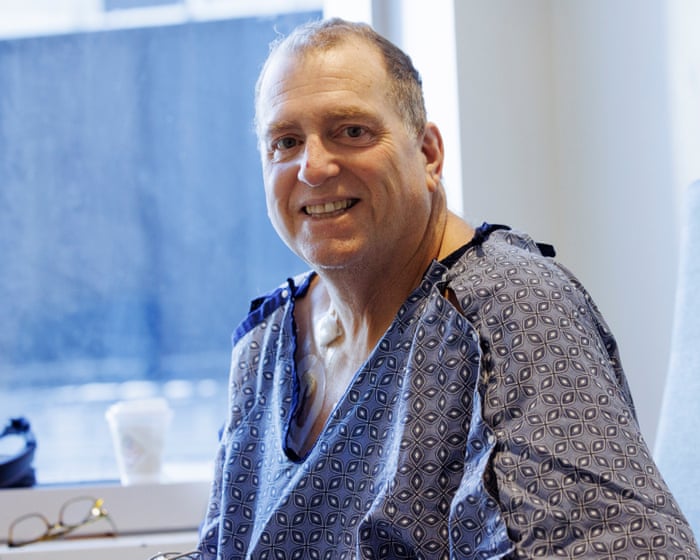
Genetically modified pig kidney keeps man alive for record nine months

Organ kept Tim Andrews off dialysis and acted as a ‘bridge’ while he waited for a human transplant in the US

A genetically modified kidney from a pig called Wilma has kept a 66-year-old man with kidney failure alive for a record nine months and successfully acted as a “bridge” to a human transplant in a world first.

Tim Andrews was seriously ill with end-stage kidney disease caused by type 2 diabetes and had only a 9% chance of receiving a human kidney within five years, against a more than 40% risk of dying or being removed from the waiting list.

Continue reading...

© Photograph: Kate Flock/Massachusetts General Hospital/PA

© Photograph: Kate Flock/Massachusetts General Hospital/PA

© Photograph: Kate Flock/Massachusetts General Hospital/PA

  •  

‘Superhuman’ AI tool spots heart disease in less than 2 seconds

Technology trained on millions of routine ECGs could fast-track high-risk patients for treatment

Doctors have developed a “superhuman” AI tool that can spot heart disease in less than two seconds.

The groundbreaking technology has been trained on millions of patients and works by extracting more information from a routine electrocardiogram (ECG) than the human eye can typically see.

Continue reading...

© Photograph: alengo/Getty Images

© Photograph: alengo/Getty Images

© Photograph: alengo/Getty Images

  •  

‘People should not feel guilty’: weekend lie-in may be good for you, experts say

Previous advice stressed risks of sleeping in but about 90 minutes extra could prevent high blood pressure

For years, experts have stressed the risks of lie-ins, warning that catching up on missed sleep at the weekend can disrupt the body’s internal clock and trigger adverse health effects.

Now analysis has produced a heartening caveat to that advice: if you do not overdo it, weekend lie-ins may be good for you, with an ideal benchmark of 1hr 27min extra in bed to protect against high blood pressure.

Continue reading...

© Photograph: Westend61/Getty Images

© Photograph: Westend61/Getty Images

© Photograph: Westend61/Getty Images

  •  

Statins can reduce dementia risk by up to 15%, long-term study suggests

The cholesterol-busting drugs are more effective the earlier in life they are taken, 15-year research project indicates

Statins can lower the risk of dementia by 15%, and the earlier in life they are taken the higher the chances of avoiding the disease, a 15-year study suggests.

The number of people living with dementia globally is forecast to nearly triple to 153 million by 2050. But experts believe almost half of dementia cases could be prevented or delayed.

Continue reading...

© Photograph: Joe Giddens/PA

© Photograph: Joe Giddens/PA

© Photograph: Joe Giddens/PA

  •  

New heart attack definition promises better care for women

Leading cardiovascular health groups reclassify overlooked causes and introduce sex-specific diagnostic thresholds

Doctors have agreed the world’s first universal definition of a heart attack, paving the way for millions of women to finally receive better treatment after decades of being “deprioritised”.

In one of the biggest procedural shake-ups in a generation, the world’s four leading cardiovascular health groups have signed off on new guidance for healthcare professionals when seeing suspected heart attack patients.

Continue reading...

© Photograph: David Sillitoe/The Guardian

© Photograph: David Sillitoe/The Guardian

© Photograph: David Sillitoe/The Guardian

  •  

Sweetener used in chewing gum and jam linked to strokes and heart attacks

High blood levels of xylitol associated with higher risk of major cardiovascular events, in largest study of its kind

A common sweetener used in products such as chewing gum, toothpaste, jam, yoghurts and ice-cream has been linked to an increased risk of strokes, heart attacks and death.

Xylitol is a sugar alcohol present in some natural foods in very low amounts. It is also added – often in amounts 1,000 times higher – to artificially sweeten foods, beverages and oral care products.

Continue reading...

© Photograph: Martin Lee/Alamy

© Photograph: Martin Lee/Alamy

© Photograph: Martin Lee/Alamy

  •  

AI can detect heart disease in women using mammograms, study suggests

Experts say findings mean breast screenings for cancer could also flag cardiovascular problems in women

Doctors have discovered a way to use routine mammograms that screen for breast cancer to spot heart disease, the world’s leading – and frequently underdiagnosed – cause of death in women.

Researchers analysed the scans using artificial intelligence and were able to successfully identify women with coronary heart disease, high blood pressure or who had suffered a stroke.

Continue reading...

© Photograph: andresr/Getty Images

© Photograph: andresr/Getty Images

© Photograph: andresr/Getty Images

  •  

London neurosurgeons perform first successful AI-assisted operation to remove brain tumour

Surgeons aided by real-time analysis of camera footage that identified critical anatomy in brain to be avoided

Neurosurgeons in London have performed the world’s first successful AI-assisted operation to remove a brain tumour, saving the sight of a 48-year-old man, health officials have said.

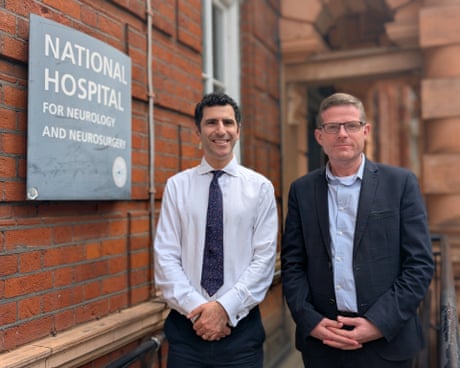
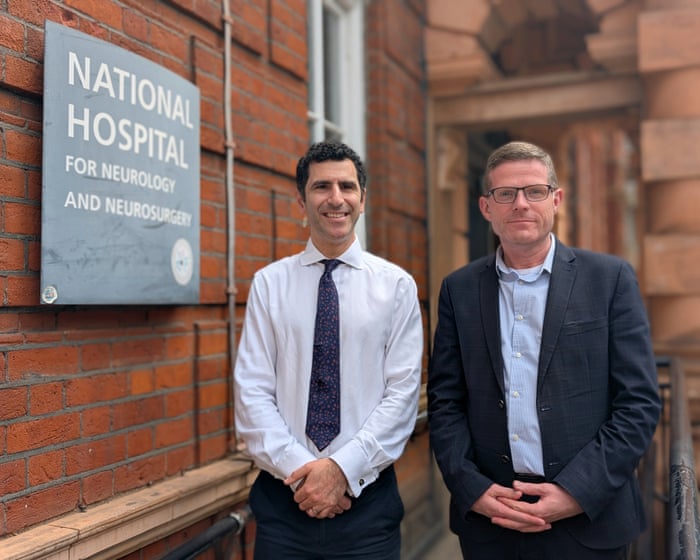
The surgery was performed in May at the National Hospital for Neurology and Neurosurgery (NHNN), part of University College London hospitals NHS foundation trust, but details were kept secret until Thursday while the patient, Rhys Hibbert, recovered.

Continue reading...

© Photograph: UCLH/PA

© Photograph: UCLH/PA

© Photograph: UCLH/PA

  •  

NHS England to offer women ‘gamechanging’ free home testing kits for cervical cancer

NHS has target of eliminating the cancer by 2040, but up to 4 million eligible women are not up to date with screening

Millions of women in England who have missed cervical screening appointments will be offered free home testing kits on the NHS.

The move comes amid concerns that only two-thirds of women attend in-person cervical screening appointments when asked to do so, leaving as many as 4 million women not up to date.

Continue reading...

© Photograph: Bsip Sa/Alamy

© Photograph: Bsip Sa/Alamy

© Photograph: Bsip Sa/Alamy

  •  

Largest review of its kind confirms benefits of tai chi and other Chinese exercises

Analysis finds ‘high certainty evidence’ of their effectiveness for the 1.7bn people worldwide with musculoskeletal conditions

Traditional Chinese exercises such as tai chi can offer wide-ranging benefits for people with musculoskeletal disorders, improving physical function, pain, mental health, sleep quality and bone mineral density, according to the largest review of its kind.

More than 1.7bn people have musculoskeletal conditions worldwide. While prevalence varies by age and diagnosis, people of all ages in every country and every continent are affected.

Continue reading...

© Photograph: MoMo Productions/Getty Images

© Photograph: MoMo Productions/Getty Images

© Photograph: MoMo Productions/Getty Images

  •  

UK men with heart disease at higher risk of developing and dying from cancer

Decade-long study finds stark gender difference in outcomes of people with heart disease

Millions of men with heart disease have a higher risk of developing and dying from cancer, according to a decades-long study.

The biggest drivers behind male cases were smoking, obesity and drinking too much alcohol, researchers said, with the link most pronounced in lung and oesophageal cancers.

Continue reading...

© Photograph: AndreyPopov/Getty Images

© Photograph: AndreyPopov/Getty Images

© Photograph: AndreyPopov/Getty Images

  •  

Millions in England face longer waits for mental health care as NHS providers plan cuts

Exclusive: Seven in 10 survey respondents expect services to be reduced or shut, while more than half anticipate job losses

Millions of adults and children in England face being forced to wait longer for mental health care, with more than two-thirds of NHS providers planning to cut services and half expected to axe jobs, the Guardian can reveal.

With mental health services already under extraordinary pressure amid soaring demand for support, experts warned the proposed cuts – drawn up by trusts to plug holes in their finances – would also have “significant” consequences for the wider NHS, the economy and public services.

Continue reading...

© Photograph: Roos Koole/Getty Images

© Photograph: Roos Koole/Getty Images

© Photograph: Roos Koole/Getty Images

  •  

Study finds three midlife health factors that could delay dementia for 13 years

Research suggests addressing risk factors for poor cardiovascular health between the ages of 45 and 65 could help reduce risk of cognitive decline

Scientists claim to have identified three health measures in middle age that can ward off dementia for more than a decade.

Having normal blood pressure, no type 2 diabetes, and not smoking between the ages of 45 and 65 were associated with almost 13 additional years, on average, of dementia-free life, a study shows.

Continue reading...

© Photograph: parkerphotography/Alamy

© Photograph: parkerphotography/Alamy

© Photograph: parkerphotography/Alamy

  •  
❌