❌

Lese-Ansicht

I know why many east Germans vote AfD. And no, it’s not an inherited longing for dictatorship | Carolin Würfel

Grievance politics has grown in the east of the country where I was born. But west Germans have hard questions to answer too

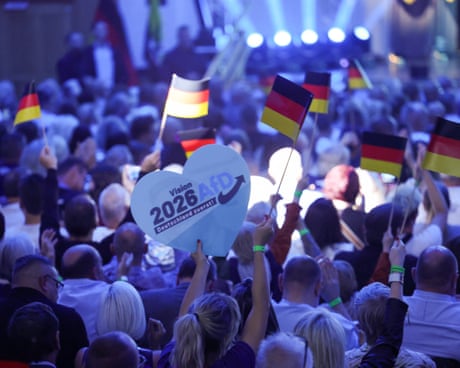
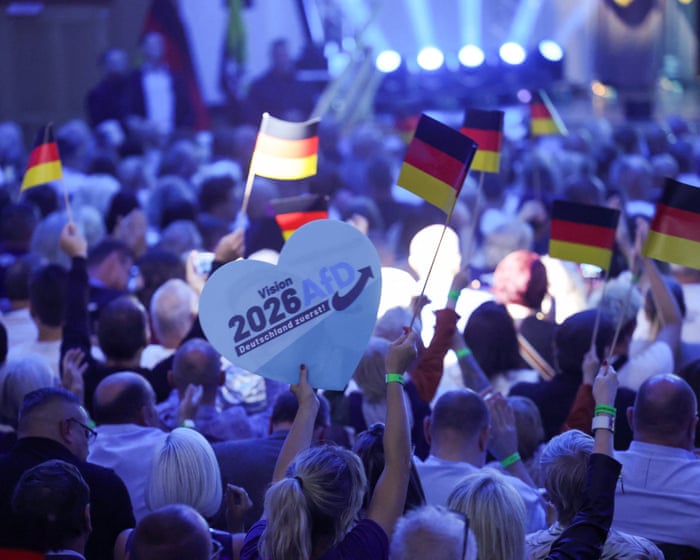
The fear that a fascist, far-right movement would rise to power again in Germany has been with me since my youth. On 6 September, the far-right, anti-immigrant, pro-Kremlin Alternative für Deutschland (AfD) won a landslide in Saxony-Anhalt, becoming the biggest party in the state parliament, with a shocking 44% of the vote, on a record turnout. If it finds a way to power it will be the first far-right party to govern a German state since the Nazi era.

The night before the vote, I sent a message to a friend, who, like myself, has an East German background. Was she as worried, scared even, about the vote as I was, I asked. I’d fallen into a loop for days, scrolling videos, reels, reports, interviews done on the ground. And I knew these AfD voters. They could have been relatives, friends of my parents, old teachers, former schoolmates. Why were they saying such incoherent stuff?

Continue reading...

© Photograph: Fabrizio Bensch/Reuters
© Photograph: Fabrizio Bensch/Reuters
© Photograph: Fabrizio Bensch/Reuters


  •  

I thought my life would feel sorted when I turned 40. It doesn’t – and that’s OK | Carolin Würfel

Born in the former East Germany, I was caught between two systems. But it’s a mistake to think of the ‘in-between’ as life’s waiting room

In the 1970s, the German novelist Christa Wolf wrote a letter to her friend and fellow author Lew Kopelew, which included these lines: “One stands quite comfortably between all fronts, and must come to understand that this is, in fact, the only possible place to be.” The fronts Wolf was referring to were the Soviet Union and the west, the GDR and West Germany, the politics of the cold war – but I believe the idea resonated with her personally, as she was then too, in the middle of her life.

There is a certain irony and wit in those lines. Standing between all fronts can mean you don’t have to choose – a relief, for some. Or it can mean you never arrive anywhere, neither here nor there. At worst, it marks a person with no standpoint, no stable position. Lost in foggy ground.

Continue reading...

© Photograph: Francisco Seco/AP

© Photograph: Francisco Seco/AP

© Photograph: Francisco Seco/AP

  •  

In an Istanbul market, I found an old German phrase book – and a reminder of how not to speak to migrants | Carolin Würfel

Turkish immigrants to Germany in the 60s were seen as temporary labour, not people. Today’s government in Berlin is at risk of repeating the mistake

A few weekends ago, I went to the flea market in Bomonti, a neighbourhood on the European side of Istanbul. I go there regularly, and over the years I’ve accumulated a small collection of things: embroidered napkins, records, old issues of House & Garden, earrings, candle holders. It is usually on the days when you are not looking for anything in particular that you find the most interesting things – or, as the Turkish writer Sabahattin Ali once wrote, “some things we never know we need until we find them”.

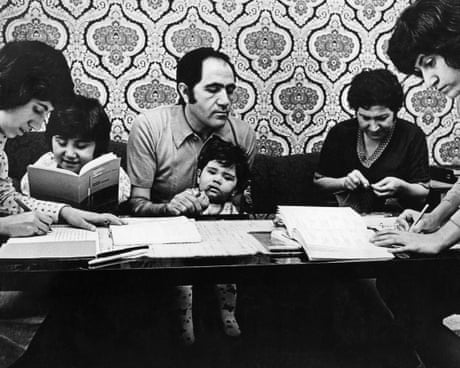
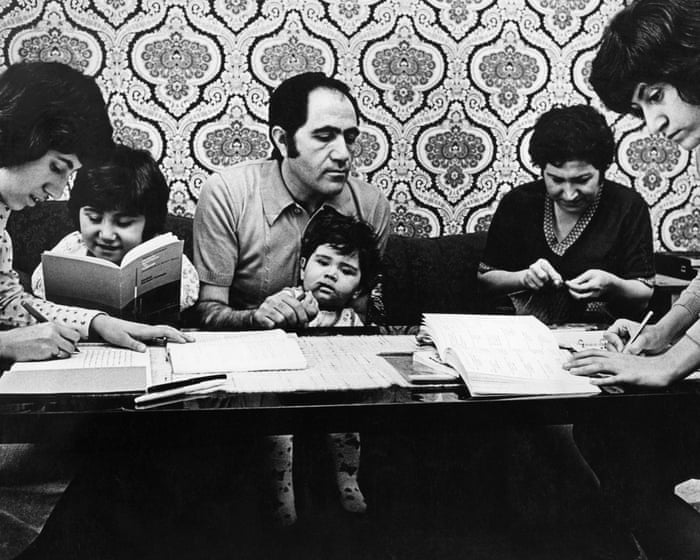
That particular Sunday, strolling through the stalls, I came across a book from 1965 titled Türkler için Almanca – Deutsch für Türken (German for Turks). It was among the first language textbooks of its kind, widely distributed to the so-called Gastarbeiter – “guest workers” – who came to West Germany in the 1960s and 70s. The economic boom of the 1950s had created an acute labour shortage, prompting the recruitment of workers from abroad. A bilateral agreement with Turkey, signed in 1961, facilitated the arrival of hundreds of thousands of Turkish men and women to come and work in German factories. Officially, their stay was meant to be temporary. Workers came alone; families stayed behind. A copy of the language book I found 60 years later at a flea market in Istanbul would have been in the suitcases of many of these workers.

Carolin Würfel is a writer, screenwriter and journalist who lives in Berlin and Istanbul. She is the author of Three Women Dreamed of Socialism

Do you have an opinion on the issues raised in this article? If you would like to submit a response of up to 300 words by email to be considered for publication in our letters section, please click here.

Continue reading...

© Photograph: Sueddeutsche Zeitung Photo/Alamy

© Photograph: Sueddeutsche Zeitung Photo/Alamy

© Photograph: Sueddeutsche Zeitung Photo/Alamy

  •  

Artist Henrike Naumann used sofas, chairs and coffee tables to interrogate a divided Germany

The East German-born artist, who has died aged 41, came of age in a deeply dysfunctional landscape, using furniture to reveal schisms masked by unification

Mourning has many colours and many layers. One mourns people. But one can also mourn a state, a system, an ideology – even those that were deeply flawed. In 2019, the artist Henrike Naumann built an East German living room and rotated it by 90 degrees. The sofa, chairs and coffee table – all in the unmistakable aesthetic of the 1990s – climbed the wall. The carpet became vertical. Cabinets hovered near the floor alongside a CD rack, baseball badges and a flag bearing a slogan in Sütterlin script: “Beware of storm and wind and East Germans who are enraged.”

The installation – titled Ostalgie (a portmanteau of the German words for “east” and “nostalgia”) – made physical what many had felt but struggled to articulate: the collapse of the GDR and its aftermath for those who had lived through it and felt it on some level as a loss. That rupture was not abstract. It tilted the room. It unsettled the ground beneath your feet.

Continue reading...

© Photograph: NurPhoto SRL/Alamy

© Photograph: NurPhoto SRL/Alamy

© Photograph: NurPhoto SRL/Alamy

  •  

I could not forgive the father who left me. Until a chance encounter changed my outlook | Carolin Würfel

In 2025 I learned that reconciliation is less about a grand apology than a shift in perspective

Forgiveness isn’t a destination. It’s a journey. Mine began on an escalator at Berlin Brandenburg airport. It was a Sunday afternoon. I was heading up to the check-in counters for my return flight to Istanbul, where I’ve lived for the past few years. On the other side, people were heading down – fresh off flights into Berlin. I was daydreaming, my eyes drifting across bags and figures, when I paused at a brown leather bag and a light linen suit. Charming travel outfit, I thought. Relaxed. Timeless. Someone must’ve had a lovely weekend, maybe somewhere on the Mediterranean. I only saw the man’s face as he passed me – and suddenly I couldn’t breathe.

I knew him. He was my father.

Carolin Würfel is a writer, screenwriter and journalist who lives in Berlin and Istanbul. She is the author of Three Women Dreamed of Socialism

Continue reading...

© Photograph: Angelika Warmuth/Reuters

© Photograph: Angelika Warmuth/Reuters

© Photograph: Angelika Warmuth/Reuters

  •  

How are you? If you’re German, like me, you might struggle to answer | Carolin Würfel

Our cultural aversion to superficial answers leaves ‘Wie geht’s?’ sounding like a trick question. Perhaps it is time to let our guard down

In the early autumn, over pizza and wine, I had a conversation with a dear friend. He’s Turkish. We were in Ayvalık, a small town on Turkey’s Aegean coast, talking about cultural imprints, when he suddenly paused and looked at me. “You know what?” he said. “Whenever I ask you how you are, you never really answer. You go into a meta space immediately – talking about politics or about bigger things that worry you – but you never say how you actually are.”

I’ve been thinking about his observation ever since, debating in my mind whether it was true – and I’ve recently reached the conclusion that, unfortunately, he was right.

Carolin Würfel is a writer, screenwriter and journalist who lives in Berlin and Istanbul. She is the author of Three Women Dreamed of Socialism

Continue reading...

© Photograph: Alamy

© Photograph: Alamy

© Photograph: Alamy

  •  
❌