❌

Lese-Ansicht

Greenpeace activists create ‘boulder barrier’ in North Sea to deter industrial fishing

Action taken to prevent bottom trawling in the marine protected area and conserve porpoise populations

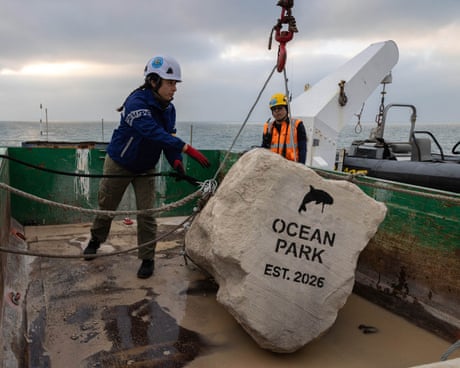
Greenpeace activists have dropped boulders in the North Sea to snag the dragnets of industrial trawlers fishing in a marine protected area.

Activists onboard the Greenpeace ship Arctic Sunrise dropped the giant stones to form an underwater barrier around the Southern North Sea marine protected area (MPA) – the UK’s most bottom-trawled MPA.

Continue reading...
© Photograph: Andrew McConnell/Greenpeace
© Photograph: Andrew McConnell/Greenpeace
© Photograph: Andrew McConnell/Greenpeace


  •  

Super-rich UK energy and food magnates’ wealth skyrockets amid global crises

Analysis has shown the costs of daily essentials soaring in recent years, thanks in part to climate shocks, wars and geopolitical tensions

François Perrodo is what is known in motorsport as a gentleman driver. In June, he raced at Le Mans, earning a podium place. At the end of August he was back behind the wheel at the Circuit de Spa-Francorchamps. This time he won.

Gentleman drivers are wealthy individuals who fund their own participation. The FIA governing body caps costs to keep racing accessible to such enthusiasts. But for self-confessed petrolhead Perrodo, it is well within his means.

Continue reading...

© Photograph: Paulo Maria/DPPI/Shutterstock

© Photograph: Paulo Maria/DPPI/Shutterstock

© Photograph: Paulo Maria/DPPI/Shutterstock

  •  

Climate crisis probably weakened glacier that caused devastating Nepal-Tibet floods, first study finds

Scientists say global heating was a destabilising factor in collapse of 200,000 sq metre glacier in August

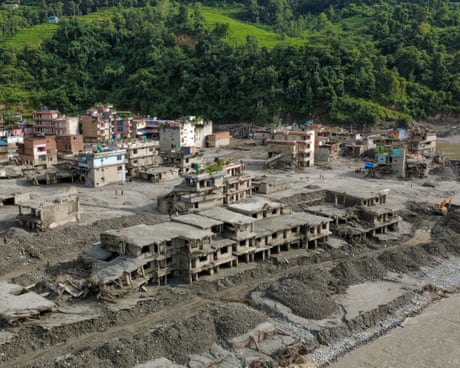
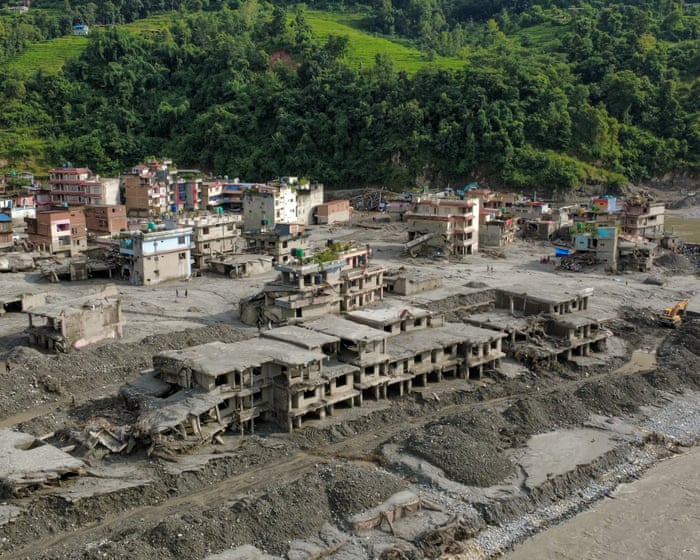
Climate breakdown probably weakened the glacier that collapsed causing catastrophic floods and killing over a thousand people in Nepal and Tibet last month, the first scientific study of the disaster has found.

Researchers identified unusually warm conditions before the glacier’s collapse, which sent an avalanche of 110m cubic metres (3.885bn cu ft) of snow and ice into the valley below. This triggered flash floods on an almost unprecedented scale, hitting communities downstream without warning.

Continue reading...

© Photograph: Suryams Upreti/AAP

© Photograph: Suryams Upreti/AAP

© Photograph: Suryams Upreti/AAP

  •  

Fossil fuel advertising contracts at all-time high in 2026

In year of extreme weather, ad agencies found to be building Big Oil’s image as integral to family life and security

“It’s that time of the year again,” the Abu Dhabi National Oil Company told Emiratis in a Ramadan advertising campaign. “Where tanks are always full – for night after night of majlis hopping.”

When you think about fossil fuels, you might think of offshore oil platforms flaring gas in rough seas, the US/Iran war or the greenhouse effect heating up the world’s climate. A new report argues, however, that what Big Oil wants you to think about is family, friends and faith instead.

Continue reading...

© Photograph: Youtube

© Photograph: Youtube

© Photograph: Youtube

  •  

‘Tidal wave’ of Pfas being launched to satisfy AI industry, campaigners warn

Big manufacturers planning to produce more of the forever chemicals to meet demand from datacentres

Pfas companies are launching a “tidal wave” of forever chemicals production to meet demand from the AI industry, a campaign organisation has warned.

Despite alarm over the chemicals, which have been linked to cancer, a survey of the 10 biggest manufacturers found most had plans to increase production.

Continue reading...

© Photograph: Toby Melville/Reuters

© Photograph: Toby Melville/Reuters

© Photograph: Toby Melville/Reuters

  •  

Heatwaves and wildfires are setting back air quality improvements, UN finds

WMO report details extreme weather events causing climatic feedback loop with serious health consequences

Big increases in wildfires and heatwaves supercharged by the climate crisis are hindering improvements to air quality around the world, UN experts have said.

Regions that had recorded a fall in pollution emitted by cars and industrial sites are facing new threats to air quality because of exposure to smoke from wildfires, according to a new report, while rising temperatures caused by intense heatwaves are causing a surge in ground-level ozone.

Continue reading...

© Photograph: Stéphane Mahé/Reuters

© Photograph: Stéphane Mahé/Reuters

© Photograph: Stéphane Mahé/Reuters

  •  

‘Godzilla-level’ El Niño could cause hottest year on record - The Latest

The UN has warned that the El Niño climate phenomenon is ‘supersizing before our eyes’. The event is forecast to be the largest in at least 1,000 years and will almost certainly shatter temperature records. After a summer of record-breaking heatwaves and extreme weather due to global heating, El Niño means 2027 is almost certain to be the hottest year ever recorded. Lucy Hough speaks to environment correspondent Damien Gayle – watch on YouTube

Continue reading...

© Photograph: Reuters

© Photograph: Reuters

© Photograph: Reuters

  •  

Biggest El Niño for a century forecast to bring UK more autumn rain and storms

‘Unprecedented’ weather pattern over Pacific Ocean to be felt worldwide, with severe droughts expected in some areas

The El Niño event developing over the Pacific Ocean is likely to be the strongest for more than a century and make 2027 another record-breaking year for heat, the UK’s Met Office has said.

Increased rainfall and storms are forecast to hit the UK this autumn as a result of the “unprecedented” weather pattern, while the pulse in heat it generates means the global temperature will temporarily exceed 1.5C above the preindustrial average, according to the national weather service.

Continue reading...

© Photograph: Henry Nicholls/AFP/Getty Images

© Photograph: Henry Nicholls/AFP/Getty Images

© Photograph: Henry Nicholls/AFP/Getty Images

  •  

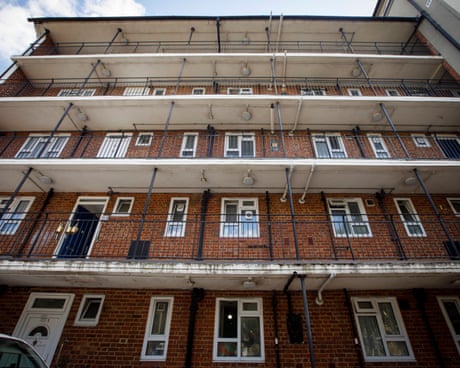
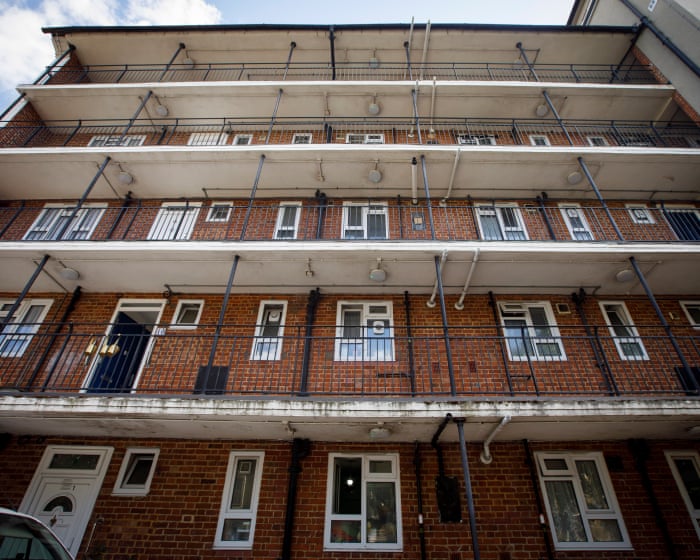
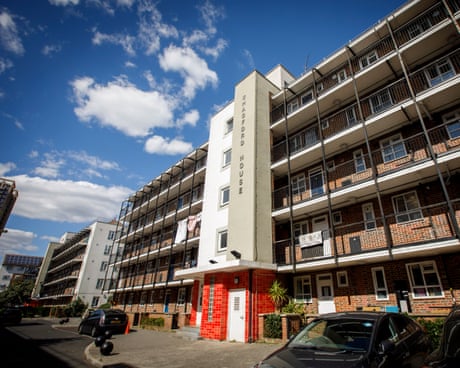
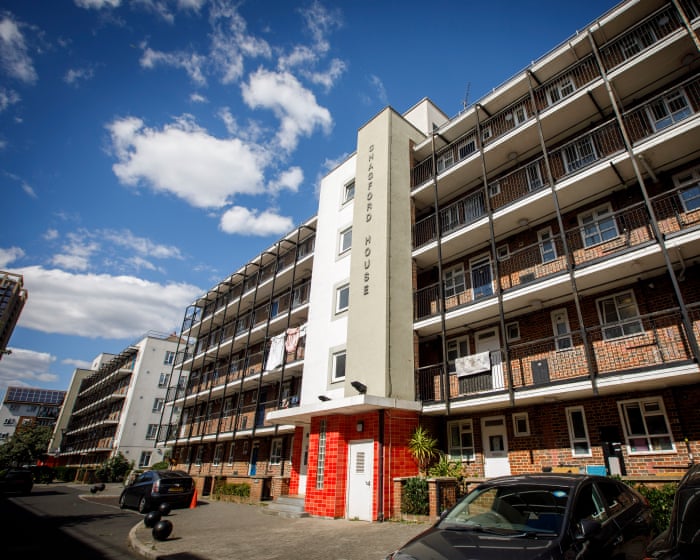
Hundreds in London flats left without regular running water since last year

Supply in nine blocks in Tower Hamlets affected with some residents suspecting nearby building developments

Hundreds of residents in blocks of flats in east London have been left without regular running water for more than seven months after development in the area may have left it without an adequate supply.

Taps have been running dry in nine blocks in Tower Hamlets, where residents have been forced to use bottled water while their landlord, the housing association Poplar Harca, delayed works to solve the problem.

Continue reading...

© Photograph: Alicia Canter/The Guardian

© Photograph: Alicia Canter/The Guardian

© Photograph: Alicia Canter/The Guardian

  •  

They cannot even flush their toilets: life in east London blocks where taps often run dry

Devons Road estate residents describe months-long ordeal of not being able to wash, clean or cook for much of the day

Christmas Day in east London. Beatrice Asante empties a bag of potatoes into her kitchen sink and turns on the tap. Nothing. She turns it off and on again. Still nothing. What now?

Asante rushes out to the only shop that is open, the local Nisa convenience store. She buys several big plastic bottles of water. Enough, she thinks, to make dinner and to last until the taps start running again.

Continue reading...

© Photograph: Alicia Canter/The Guardian

© Photograph: Alicia Canter/The Guardian

© Photograph: Alicia Canter/The Guardian

  •  

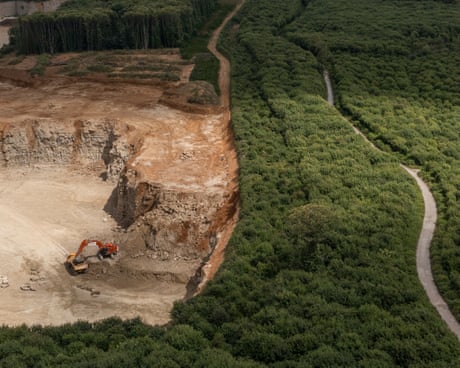
‘It’s irreplaceable’: Fury over Reform plans to expand quarry in ancient Kent woodland

Forty hectares of Oaken Wood could be razed after it was identified as potential site of expansion by Reform-run council

It was at the confluence of seven forest paths that Allison Sweetman came to a stop. Trees rose on all sides, save for a recently coppiced section to the north-east. The noon heat had silenced most birds, but the quiet was peaceful.

“This is what they call Seven Wents,” she said. For centuries, the people of Kent had travelled this way, from East Malling to Barming, from Ditton to Teston, for church, commerce and friends. “It’s on maps going back 400 years.”

Continue reading...

© Photograph: Dan Kitwood/Getty Images

© Photograph: Dan Kitwood/Getty Images

© Photograph: Dan Kitwood/Getty Images

  •  

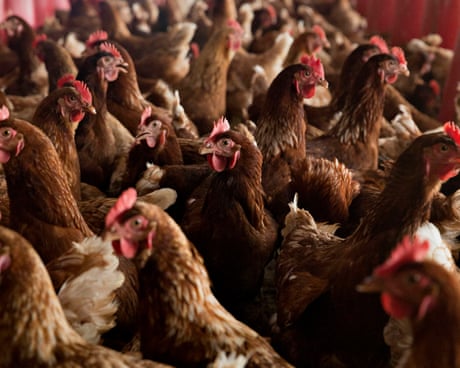
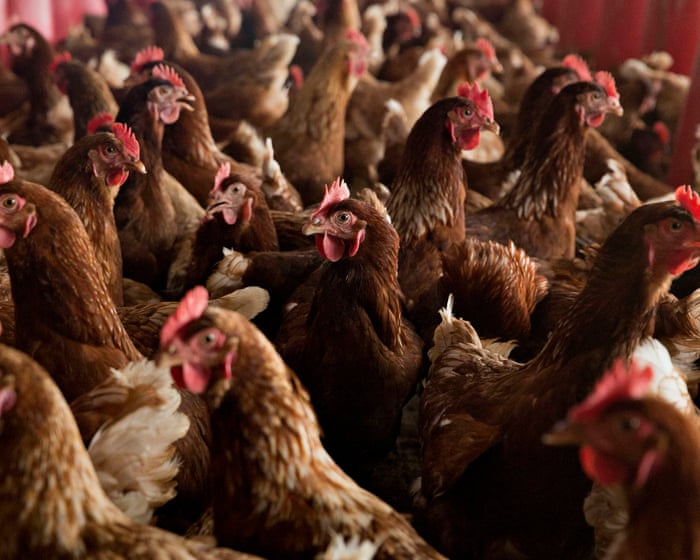
Organic eggs have worse impact on climate than eggs from caged chickens

Adopting organic free-range model in UK could lead to greenhouse emissions equivalent to 2,316,000 tonnes of CO2, study suggests

Organic eggs are twice as bad for the climate as eggs from chickens living in cages, research suggests.

According to the study, switching the UK’s entire egg production to an organic free-range model would lead to greenhouse gas emissions equivalent to 2,316,000 tonnes of CO2 (tCO2e), while production through a fully caged system would emit 1,184,000 tCO2e.

Continue reading...

© Photograph: Bloomberg/Getty Images

© Photograph: Bloomberg/Getty Images

© Photograph: Bloomberg/Getty Images

  •  

Could ‘Godzilla’ El Niño bring the hottest year on record? – video explainer

The Earth keeps getting hotter and experts fear this year's El Niño, nicknamed 'Godzilla' because of its predicted intensity, could raise global temperatures by up to 3.6C. Environment correspondent Damien Gayle spoke to climate scientists to understand how the weather phenomenon and the climate crisis pose a huge threat to the planet

Continue reading...

© Photograph: The Guardian

© Photograph: The Guardian

© Photograph: The Guardian

  •  

Food scraps and mushrooms: the closed-loop garden behind the world’s first community-powered sauna

R-Urban Poplar in London is a ‘living lab’ where locals can experiment with ways of taking charge of their food supply

On a stiflingly hot and dusty morning at the height of the summer’s third heatwave, traffic thunders down the A12 arterial route through east London. A high, red-brick wall rises by the road. What few passersby will realise is that this ivy-topped wall shelters an urban oasis, within which sits an unprecedented sustainable project.

The world’s first “community-powered” sauna – heated by food waste from residents of the neighbouring housing estate – is set to open here.

Continue reading...

© Photograph: Graeme Robertson/The Guardian

© Photograph: Graeme Robertson/The Guardian

© Photograph: Graeme Robertson/The Guardian

  •  

‘We will not survive’: jailing of Daria Egereva highlights plight of Russia’s Indigenous people

Authorities are cracking down on rights activists fighting for Indigenous people threatened by authoritarianism, extractivism and climate breakdown

The operation began at 9am Moscow time, but took place across all of Russia’s 11 time zones. Almost simultaneously, agents of the federal security service (FSB) raided the homes and workplaces of 17 Indigenous rights activists.

Officers carried out searches, confiscated laptops and phones, and arrested and interrogated activists about participation in international forums. Most were let go; many have since left the country. Others remain in Russia, but will no longer speak up.

Continue reading...

© Photograph: DariaEgereva.org

© Photograph: DariaEgereva.org

© Photograph: DariaEgereva.org

  •  

Typical English roast dinner potentially ‘drenched’ in 102 pesticides, says report

Greenpeace finds cocktail of pesticides including seven banned in EU may have been used on seven categories of vegetables and soft fruit
It is a beautiful early summer Sunday afternoon and you have stopped for a pub lunch. A waiter sets down a roast served with carrots, peas, parsnips, potatoes and onion gravy, and then for pudding, strawberries and cream. It feels like the perfect rustic meal to accompany a day in the country.

However, a report by Greenpeace, published on Thursday, has found that the ingredients of the traditional Sunday roast have potentially been treated with a cocktail of more than 100 pesticides. Data from the Fera pesticide usage survey for 2024, showed 102 – including seven banned in the EU – were used on seven vegetable and soft fruit categories.

Continue reading...

© Photograph: Alexander Spatari/Getty Images

© Photograph: Alexander Spatari/Getty Images

© Photograph: Alexander Spatari/Getty Images

  •  

The global sand crisis: it’s being used up faster than it can be replaced

It is the most extracted solid material on Earth – but this extraction can threaten ecosystems and livelihoods

Malé is one of the world’s most overcrowded cities, but it faces double pressure. As well as a growing population, the capital of the Maldives is also threatened by rising sea levels. Owing to climate breakdown, its living space is shrinking.

So the justification for a land reclamation project seemed clear. Take sand from elsewhere in the archipelago and use it to build up the land available for Malé’s people. What could go wrong? After all, it’s only sand, right?

Continue reading...

© Photograph: Ezra Acayan/Getty Images

© Photograph: Ezra Acayan/Getty Images

© Photograph: Ezra Acayan/Getty Images

  •  

EU trade deal could force UK to restrict use of weedkiller linked to cancer


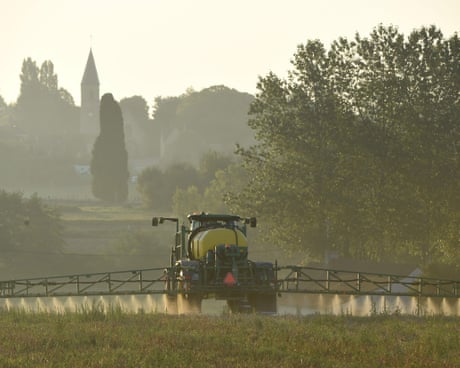
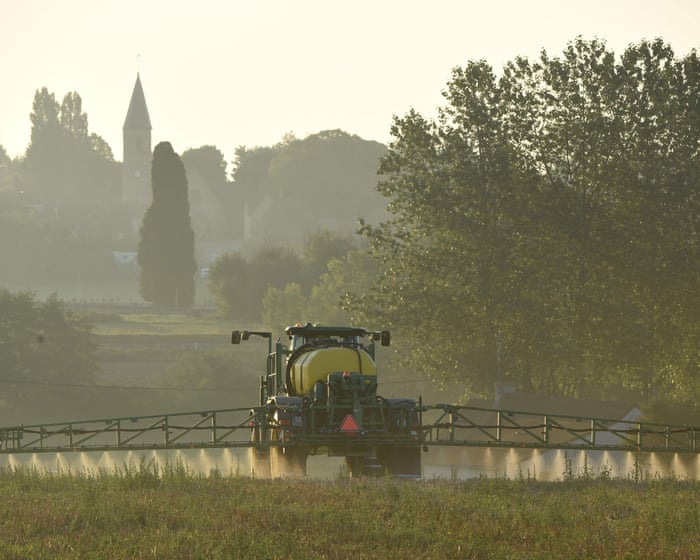
Glyphosate is currently sprayed on cereal and pulse crops to dessicate them and make them easier to harvest

A new trade deal with the EU could lead to restrictions on the use of the controversial weedkiller glyphosate on UK food crops.

The full-spectrum herbicide, which kills almost every plant it touches, is often sprayed on wheat, oats and other cereal and pulse crops shortly before harvest to desiccate them and make them easier to handle.

Continue reading...

© Photograph: Jean-François Monier/AFP/Getty Images

© Photograph: Jean-François Monier/AFP/Getty Images

© Photograph: Jean-François Monier/AFP/Getty Images

  •  

Industrial chicken producer hits out over Wye and Usk river pollution claim

Lawyers for Avara Foods and Freemans of Newent say legal claim backed by 1,300 people is ‘entirely inferential’

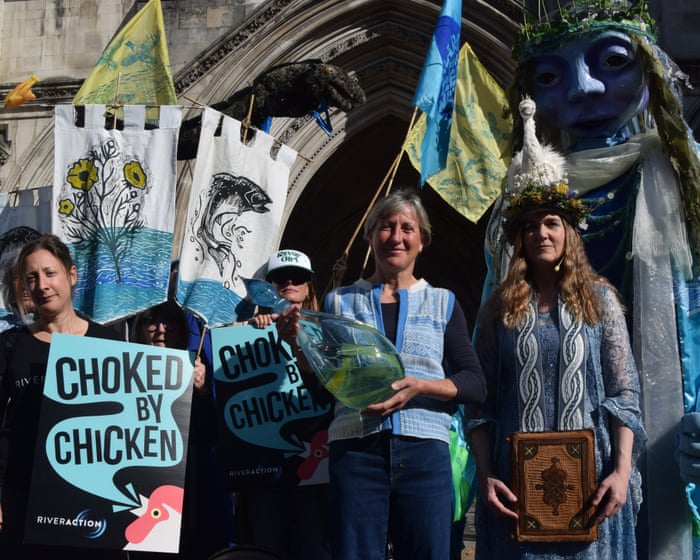
Lawyers for one of the country’s biggest producers of industrially farmed chicken have attacked a claim that they are responsible for pollution in the River Wye and River Usk.

More than 1,300 people have signed up to sue Avara Foods, its subsidiary Freemans of Newent and the local sewage company Welsh Water for extensive and widespread pollution in the rivers and their catchment areas.

Continue reading...

© Photograph: Vuk Valcic/SOPA Images/Shutterstock

© Photograph: Vuk Valcic/SOPA Images/Shutterstock

© Photograph: Vuk Valcic/SOPA Images/Shutterstock

  •  

Officials hugely underestimated impact of AI datacentres on UK carbon emissions

Revised figures increase fears about energy-intensive datacentres worsening climate emergency

The UK government vastly underestimated the climate impact of artificial intelligence, it has emerged, after officials raised their estimate of carbon emissions from AI by a factor of more than 100.

According to new data quietly published this week, energy use by AI datacentres in the UK could cause the emission of up to 123m tonnes of carbon dioxide (CO₂) – about as much as generated by 2.7 million people – over the next 10 years.

Continue reading...

© Photograph: Amazing Aerial/Alamy

© Photograph: Amazing Aerial/Alamy

© Photograph: Amazing Aerial/Alamy

  •  
❌