❌

Lese-Ansicht

How citizen science is tracking changes in shorelines around the world

An app and a camera phone are all that’s needed at more than 200 spots to help researchers monitor coastal areas

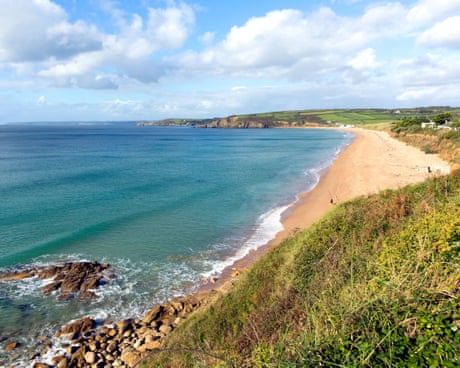
The shoreline changes with the weather. Tracking these changes over time is a labour-intensive task, and an army of citizen scientists with camera phones is a great asset.

The CoastSnap project started in Australia in 2017 and has spread to beaches worldwide. You may have spotted the setup while out walking along the coast: a cradle to rest your phone on while taking a picture and a sign explaining where to send the snap.

Continue reading...
© Photograph: Michael Charles/Alamy
© Photograph: Michael Charles/Alamy
© Photograph: Michael Charles/Alamy
  •  

How autumnal high pressure brings on the dark doldrums

With no wind to disperse the low cloud, mist and fog and less sunlight to burn it off, anticyclonic gloom can set in

In summer, a high-pressure system over the UK usually means fine weather. But in the colder months it can result in anticyclonic gloom, characterised by grey skies, mist, fog and drizzle.

A settled high-pressure system brings stable conditions and impedes the usual vertical movement of air. This is a recipe for sunshine when humidity is low, but can act like a lid, trapping atmospheric moisture near the surface.

Continue reading...

© Photograph: Gary Calton/The Guardian

© Photograph: Gary Calton/The Guardian

© Photograph: Gary Calton/The Guardian

  •  

Weatherwatch: soil moisture deficit – how dry are the UK’s thirsty soils?

SMD is the moisture the soil must make up until it is at capacity, with very dry conditions over most of England and Wales

When the ground is thoroughly wet, after excess rainwater has run off it is said to be at field capacity. Meteorologists describe drought in terms of soil moisture deficit (SMD) from field capacity. The SMD is a measure of how thirsty the soil is, expressed as how many millimetres of rain it would take to top it up to field capacity.

In southern England, the SMD tends to hover around zero in winter when fields are wet. In summer it may be about 100mm, going up to 150mm or more in a dry year. The extreme of dryness, when soil has no water accessible to plants, is known as the permanent wilting point or PWP.

Continue reading...

© Photograph: Bloomberg/Getty Images

© Photograph: Bloomberg/Getty Images

© Photograph: Bloomberg/Getty Images

  •  

Weatherwatch: AI model beats standard methods at predicting cyclones

Artificial intelligence system delivers a three-day forecast as accurate as previous two-day predictions

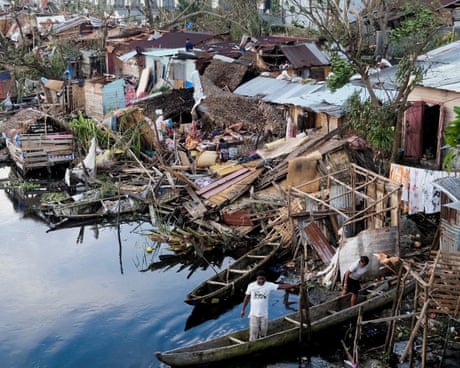
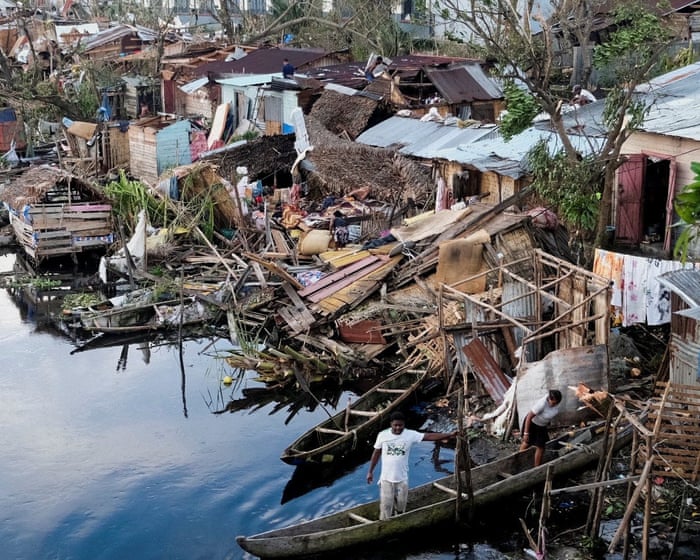
Google’s WeatherNext AI model is better than existing systems at forecasting cyclones, according to a paper published in Nature.

The AI-based technology gives an extra day of warning, providing a three-day forecast for hurricanes or typhoons that is as accurate as previous two-day predictions.

Continue reading...

© Photograph: Zo Andrianjafy/Reuters

© Photograph: Zo Andrianjafy/Reuters

© Photograph: Zo Andrianjafy/Reuters

  •  

From toxic blooms to dead zones, how wildfires transform oceans and lakes

Wildfire smoke and ash can reshape aquatic ecosystems long after the flames have been extinguished

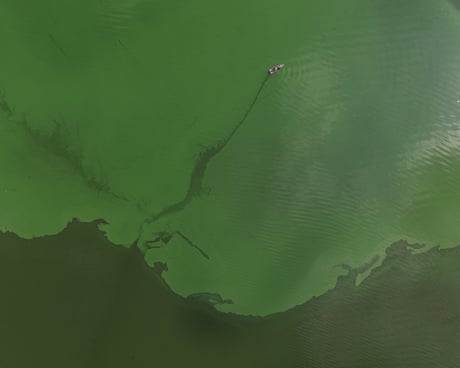
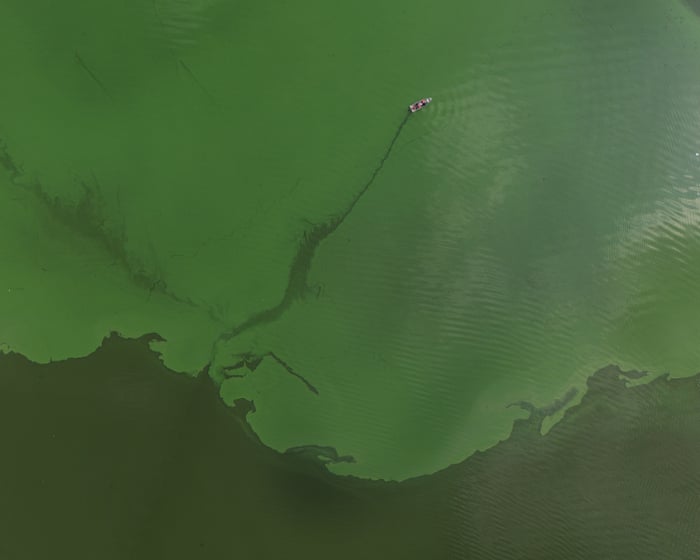
Wildfires are an increasing problem in Europe and elsewhere. While their immediate effect on air quality is obvious, they can also trigger less visible but significant environmental effects, including algal blooms.

An algal bloom is the rapid growth of algae and other plant-like microorganisms. These blooms can become so dense that they change the colour of the lake and seas. Although most are harmless, some produce dangerous toxins. When their blooms die, their decomposition depletes oxygen in the water, creating so-called dead zones.

Continue reading...

© Photograph: Avener Prado/The Guardian

© Photograph: Avener Prado/The Guardian

© Photograph: Avener Prado/The Guardian

  •  

Weatherwatch: Why Britain’s heatwaves don’t always end with thunderstorms

The science behind summer storms – and why they have yet to break the hot spell gripping the country

“The English summer: three fine days and a thunderstorm,” George II is reputed to have said, although the line has also been attributed to Charles II and others. It was not recorded until 1867, by which time it was already in common circulation.

A brief hot spell ending in a thunderstorm is a familiar pattern, but it is not what we have experienced in recent weeks.

Continue reading...

© Photograph: David Burton/Alamy
© Photograph: David Burton/Alamy
© Photograph: David Burton/Alamy

  •  

Drones offer alternative to balloons for weather research

Pre-programmed flights gather data at different altitudes then return to bases to recharge and download

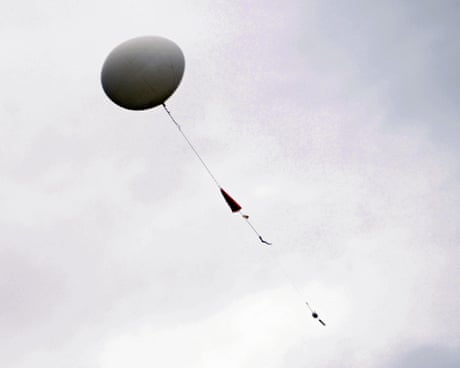
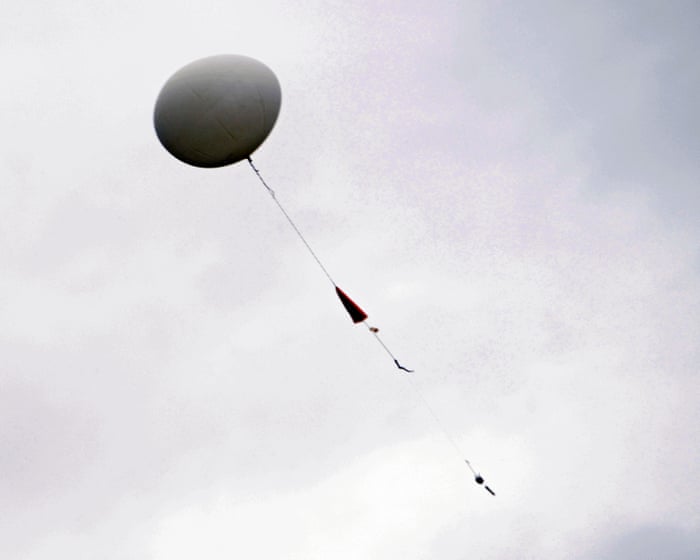
Weather happens in the boundary layer, the atmosphere from ground level to a few thousand metres, but this can be difficult to study in detail: weather stations are too low, and aircraft are expensive. Instrumented weather balloons are the traditional solution, and thousands are released every day. But these are at the mercy of the wind and use irreplaceable helium.

Drones offer an alternative and the US company Meteomatics has taken the idea further with Meteobase, a base station on the ground with a drone that can be launched and recovered automatically. It carries out a pre-programmed flight, gathering data at different altitudes, then returns to recharge and download data which the Meteobase sends to researchers.

Continue reading...

© Photograph: Miguel Roberts/AP

© Photograph: Miguel Roberts/AP

© Photograph: Miguel Roberts/AP

  •  

Weatherwatch: How increased Arctic shipping affects cloud formation

Shipping routes opened by climate change mean more industrial pollutants in the air

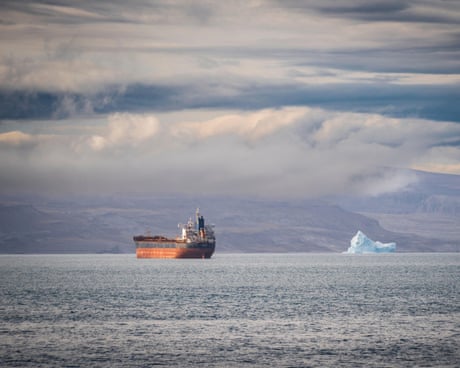
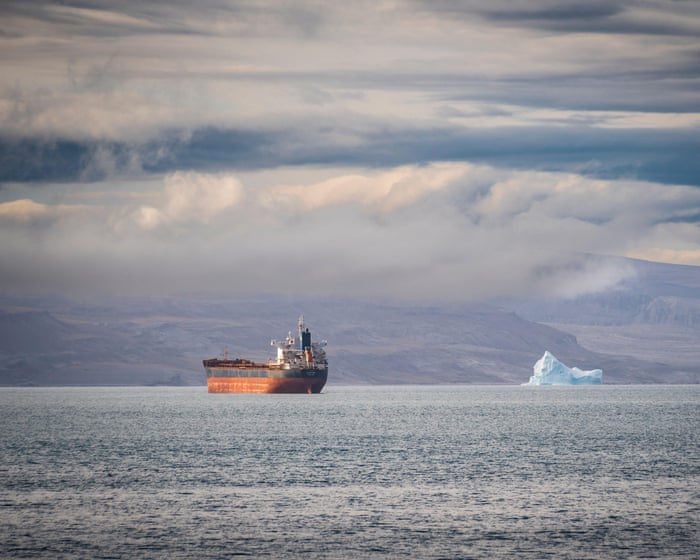
The gradual reduction in Arctic ice has started to open up new shipping routes, with marine traffic increasing by about 40% over the past 12 years. All these ships leave trails of pollutants in the air, which are already having a measurable climate effect.

Aerosol particles in engine exhaust act as nuclei for water droplets, promoting cloud formation. Like aircraft, ships may leave contrails behind them in the sky.

Continue reading...

© Photograph: Alexander McClearn/Alamy
© Photograph: Alexander McClearn/Alamy
© Photograph: Alexander McClearn/Alamy
  •  

Weatherwatch: How English summer clouds can warn of trouble ahead

Mackerel skies and mare’s tails signal arrival of warm fronts that push moisture to high altitudes and creates distinctive clouds

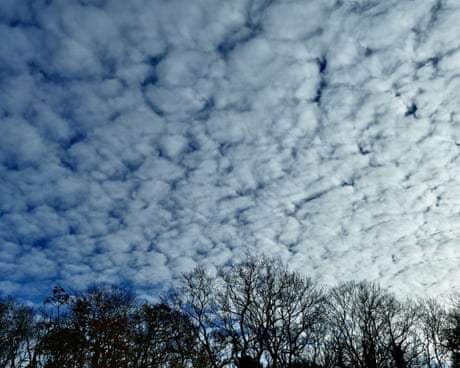
“Mare’s tails and mackerel scales make lofty ships to carry low sails,” runs an old English saying about summer skies.

Mackerel skies are cirrocumulus or altocumulus clouds in regular but patchy rows, resembling the light and dark-scale pattern on a mackerel. The cirrocumulus version is white and wispy, altocumulus is grey and thicker. One easy rule is that cirrocumulus is narrower than a finger at arm’s length, altocumulus more like three fingers.

Continue reading...

© Photograph: Geoffrey Swaine/Rex/Shutterstock

© Photograph: Geoffrey Swaine/Rex/Shutterstock

© Photograph: Geoffrey Swaine/Rex/Shutterstock

  •  

Low-e windows keep homes cool … but may set neighbours’ property on fire

Low-emissivity windows also keep houses warm in winter, but use on bowed glass can have magnifying-glass effect

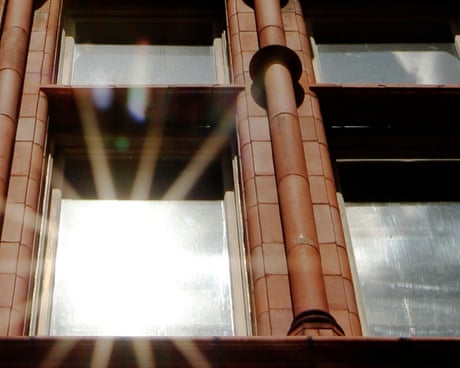
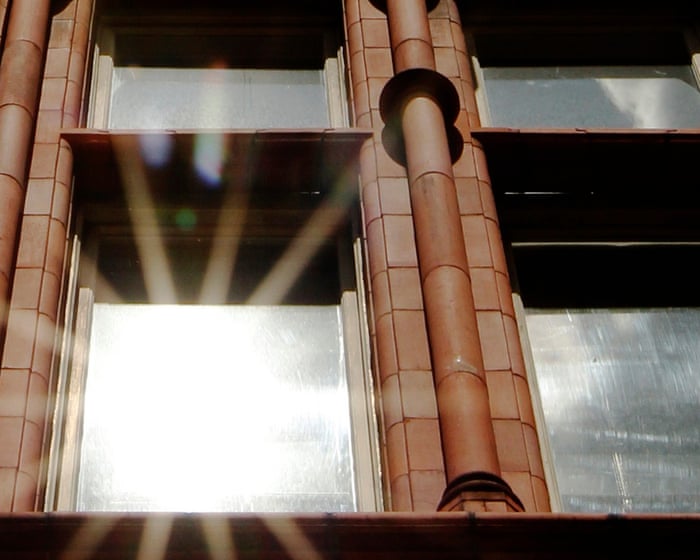
Low-emissivity or low-E window glass is a useful green technology for keeping buildings warm in winter and cool in summer … but a rare side-effect can set the neighbours’ property on fire.

The glass is coated with a thin layer of metal or metal oxide which lets visible light through but acts like a mirror in the infrared. Heat from the interior is reflected back in, retaining warmth in winter, while unwanted solar radiation is repelled in summer.

Continue reading...

© Photograph: Luke MacGregor/REUTERS

© Photograph: Luke MacGregor/REUTERS

© Photograph: Luke MacGregor/REUTERS

  •  

Weatherwatch: How thunder is made

Sound of thunder varies depending on distance of listener from lightning as atmosphere muffles and absorbs sound

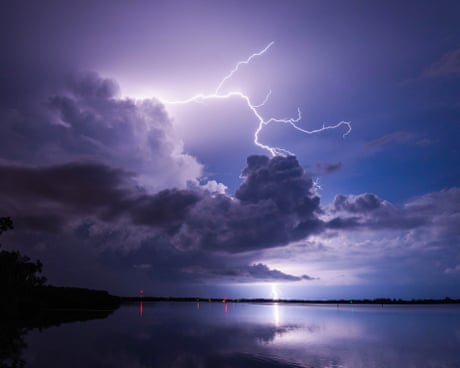
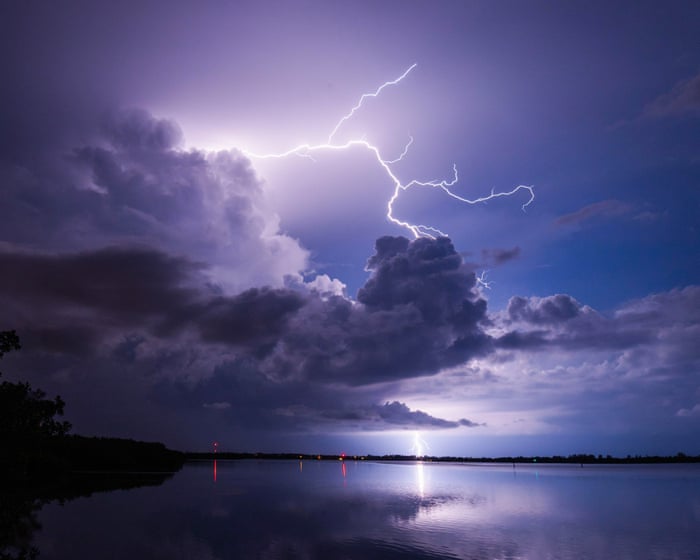
A bolt of lightning heats the air almost instantly to as high as 30,000C, causing explosive expansion and a supersonic shock wave that becomes thunder. What that thunder sounds like to a listener depends largely on where they are.

Nearby lightning produces a distinctive snap or crack, or a startling explosive boom. Large, complex lightning with multiple segments generates a peal of thunder, a series of booms of different pitches as the sound from each of the segments reaches you in turn.

Continue reading...

© Photograph: Wirestock, Inc./Alamy

© Photograph: Wirestock, Inc./Alamy

© Photograph: Wirestock, Inc./Alamy

  •  

Weatherwatch: How UK firm’s low-cost tech can warn of volcanic eruptions

VolcanoTech’s sulphur dioxide detecting sensors are in already in use in a number of countries

Weather forecasts now include air quality warnings and cities have networks of air quality sensors driving real-time maps online.

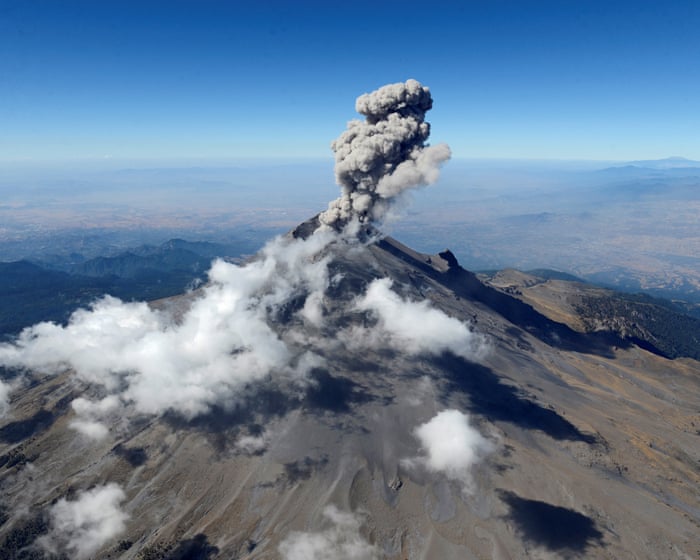
Similar air quality sensors can warn of an imminent volcanic eruption. Just as a fizzy drink releases carbon dioxide when the pressure is released, rising magma emits dissolved sulphur dioxide as it rises. So a big increase in this gas warns that a volcanic eruption may be imminent.

Continue reading...

© Photograph: Mexico’S National Center For Disaster Prevention/Reuters

© Photograph: Mexico’S National Center For Disaster Prevention/Reuters

© Photograph: Mexico’S National Center For Disaster Prevention/Reuters

  •  

Weatherwatch: Saharan dust drops microorganisms into European soil

Scientists are examining how ‘blood rain’ affects soil microbiome, with Portuguese vineyards a particular focus

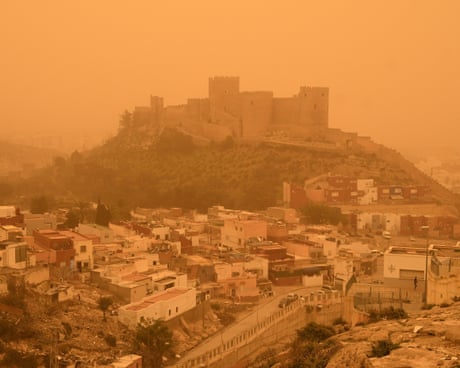
Dust events, when thousands of tonnes of fine sand whipped up from the Sahara are dumped over Europe, are becoming more intense. These sometimes produce “blood rain” that leaves visible red streaks, and while generally harmless, the dust is not sterile but brings a freight of microorganisms.

One big concern is how imported microbes may affect the soil microbiome and impact agricultural fertility and crop yield. Southern Portugal lies along one of the main deposition routes for Saharan dust, and the effect on vineyards in particular is a growing concern. A team from the University of Lisbon carried out genomic mapping of microbes in dust samples from 2022’s Storm Celia.

Continue reading...

© Photograph: Carlos Barba/EPA

© Photograph: Carlos Barba/EPA

© Photograph: Carlos Barba/EPA

  •  

Lightning stops play: how electrical storms could disrupt the World Cup

Under US rules, even a distant strike can suspend a game – and some will take place in Florida, the thunderstorm state

Hot weather will be a major concern at the World Cup, but lightning may also prove a particular problem. Under US safety regulations, a strike within 10 miles (16km) of a stadium triggers a 30-minute suspension of the game, during which players must leave the pitch.

The size of the safety zone was dictated by research on the distance that lightning can strike from a storm even with no clouds overhead. This is more than a theoretical risk. During a game in the Democratic Republic of the Congo in 1998, an entire team was killed by a single bolt of lightning. There have been many other deadly incidents.

Continue reading...

© Photograph: Wirestock, Inc./Alamy

© Photograph: Wirestock, Inc./Alamy

© Photograph: Wirestock, Inc./Alamy

  •  

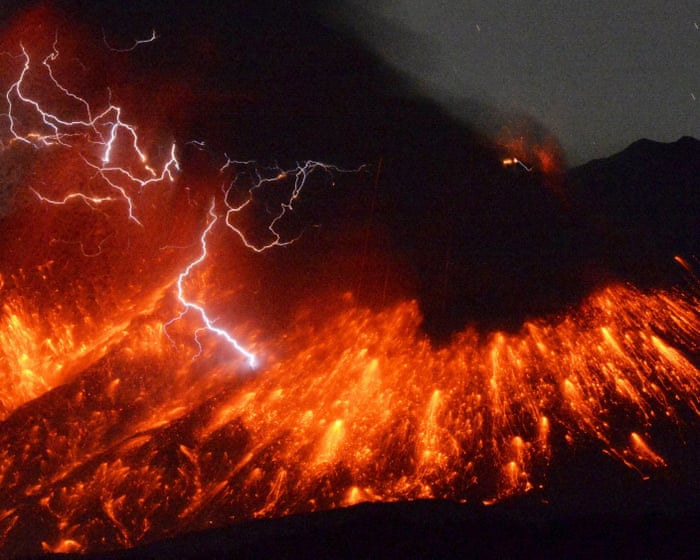
Scientists make breakthrough in solving mystery of volcanic lightning

Research shows fine carbon coating on silica in updraught causes electrical charge – and spectacular display

Researchers are a step closer to understanding volcanic lightning, one of the most spectacular atmospheric phenomena, which can be seen playing among the clouds of smoke and ash during an eruption. The intensity is extreme: the Hunga Tonga-Hunga Ha‘apai eruption, in the Tongan archipelago in 2022, produced more than 2,600 lightning flashes a minute stretching up to 19 miles (31km) above sea level.

We know that storm clouds become electrically charged as a result of collisions between ice crystals rising in updraughts and falling particles of graupel, or soft hail. The ice picks up positive charge and the hail negative. What has puzzled scientists is how a volcanic plume, which is dry and consists of ash and rock fragments, could pick up charge. Particles made from the same rocky material should not do that during collisions.

Continue reading...

© Photograph: KYODO/Reuters

© Photograph: KYODO/Reuters

© Photograph: KYODO/Reuters

  •  

Exploding trees: the winter phenomenon behind frost cracks

When temperatures drop suddenly, trapped water can freeze and expand, splitting trunks with a gunshot-like sound

During the recent cold spell in the northern US, meteorologists issued warnings about exploding trees.

A tree’s first line of defence against freezing is its bark, which provides efficient insulation. In cold conditions, trees also enter a form of hibernation, with changes at a cellular level: cells dehydrate, harden and shrink, increasing their sugar concentration. This is the botanical equivalent of adding antifreeze, helping to prevent the formation of ice crystals.

Continue reading...

© Photograph: Scott Wilson/Alamy

© Photograph: Scott Wilson/Alamy

© Photograph: Scott Wilson/Alamy

  •  

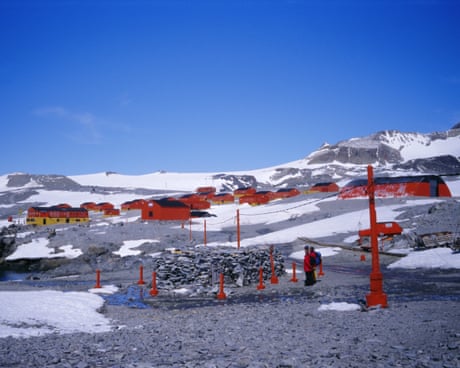
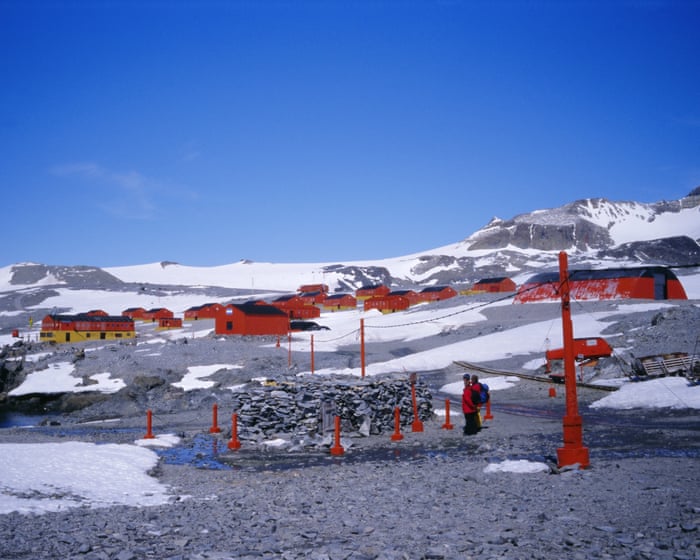
Does Antarctica really have the bluest sky in the world?

Light scattering creates the shade we see when we look skyward, and studies show the process varies around the world

On holiday the sky may look a deeper shade of blue than even the clearest summer day at home. Some places, including Cape Town in South Africa and Briançon in France, pride themselves on the blueness of their skies. But is there really any difference?

The blue of the sky is the product of Rayleigh scattering, which affects light more at the blue end of the spectrum. The blue we see is just the blue component of scattered white sunlight.

Continue reading...

© Photograph: Geoff Renner/Getty Images/Collection Mix: Subjects RF

© Photograph: Geoff Renner/Getty Images/Collection Mix: Subjects RF

© Photograph: Geoff Renner/Getty Images/Collection Mix: Subjects RF

  •  
❌