❌

Lese-Ansicht

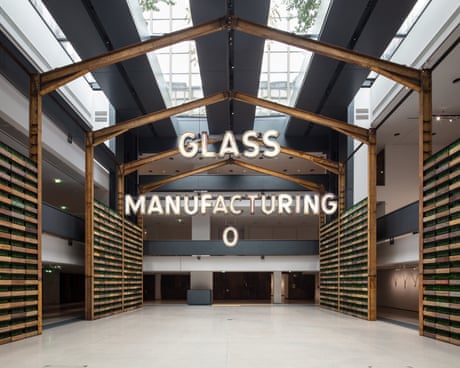
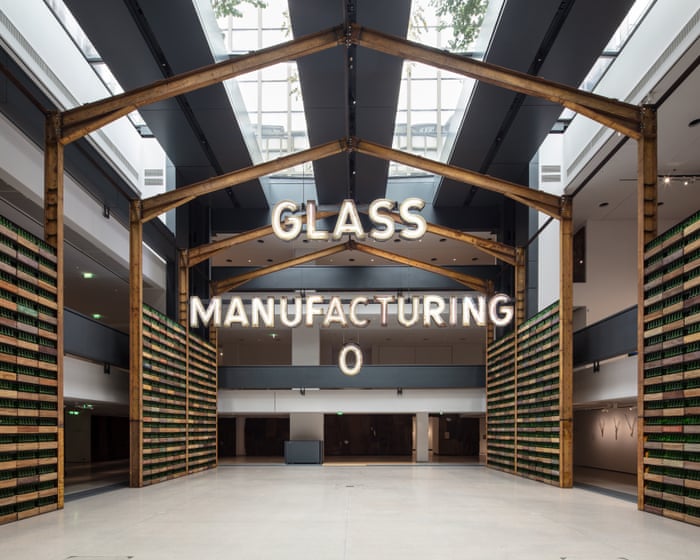
Why has a crumbling bottle plant been rebuilt in Paris? The stunning show suggesting the future is Ghana-shaped

Fondation Cartier, Paris
Ibrahim Mahama put an entire factory in this exhibition exploring Ghana before and after it was ripped to shreds by colonialism. And it’s just one dazzling installation in a show full of hope

Ibrahim Mahama has dug through the ruins of post-colonial Ghana, sorted through the ashes of its ancient history, picked through the industrial detritus, the corporate waste, the piles of rubbish, and found something pretty unique: hope.

Sit on one of the Asante stools in his circular Parliament of Ghosts and you can almost feel a new future being worked out right in front of you. It’s the first installation in this huge exhibition at the Fondation Cartier in Paris, and it sums Mahama up pretty neatly. He’s looking at the collapse of the Ghanaian government in 1966, the way the hope of the post-colonial project was crushed in a military coup, and he’s looking at ancient Ghanaian history, at the empires that fell centuries ago and the way colonialism tore them to shreds. But he’s not lamenting any of them. He’s not mourning. Instead, he’s reclaiming them, asking how things can be rebuilt, how we can move forwards by learning from the past.

Continue reading...

© Photograph: Benoit Fougeirol
© Photograph: Benoit Fougeirol
© Photograph: Benoit Fougeirol

  •  

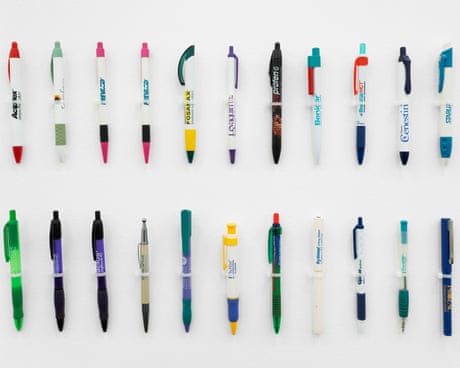
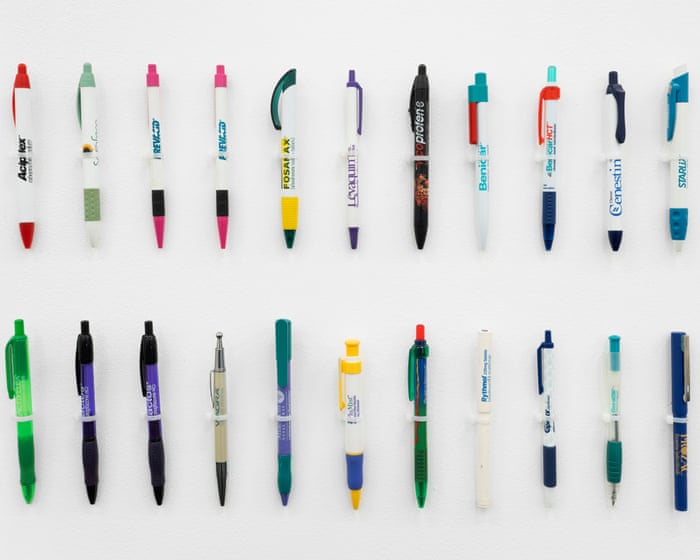
Sweet nothings, urinal cakes and headless dogs: 10 artworks worth seeing at Frieze

There’s plenty that stands out at Regent’s Park this year, from antidepressant pens and an ibuprofen-dolling robotic arm to Miriam Cahn’s 26 years’ worth of self-portraiture and a 150m-year-old dinosaur skull – still with embedded tooth

The raised platform in the middle of British artist Ella Fleck’s installation vibrates under your feet to the sound of a male voice. He’s whispering sweet nothings, intoning sexual fantasies. It’s all based on third-party agencies that manage OnlyFans accounts, interacting with users, creating fictional relationships that horny guys spend thousands on. It’s a greasy, gross, uncomfortable exploration of sex work on an industrial scale.

Continue reading...

© Photograph: Courtesy the artist/ Trautwein Herleth

© Photograph: Courtesy the artist/ Trautwein Herleth

© Photograph: Courtesy the artist/ Trautwein Herleth

  •  

Issy Wood: Self-Portraits review – suffocatingly revealing works from the ultimate zillennial painter

National Portrait Gallery, London
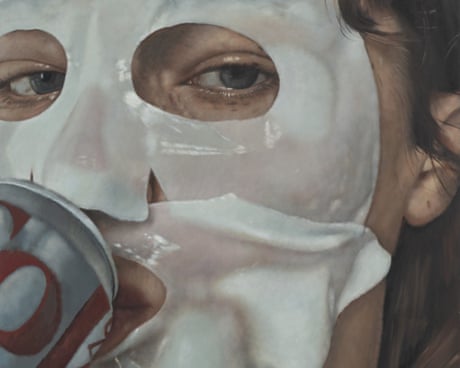
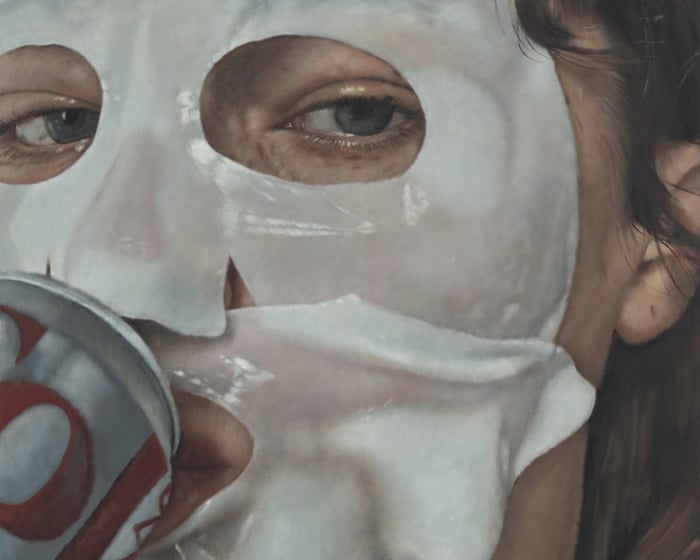
These close-cropped paintings seem to capture our own bored, glum and perpetually online lives – yet there’s humour and silliness, too, in among the masks

It might feel like Issy Wood is staring right back at you, glaring out of every canvas, making hard, uncomfortable, unflinching eye contact. But she’s not. The young British painter is staring at herself, lost in soul-searching rumination. You’ve just walked in at the wrong time.

This display at the National Portrait Gallery – the first in a new series of presentations looking at contemporary artists’ use of portraiture – is Wood’s first big public foray into capturing her own face. She’s painted self-portraits before, but never at this scale, never this big and personal. For years now, her focus has mainly been on external stimuli: Diet Coke cans, antiques, clocks, ceramics, leather coats. The stuff of midnight doomscrolling, obsessive research, fetishistic desire. Seeing her close-cropped, soft-focus approach to everyday ephemera over the years has been like spying on someone’s internet tabs, peeking into the diary of a bored, sad, overtired, caffeine-wired young overachiever.

Continue reading...

© Photograph: Damian Griffiths/© Issy Wood. Courtesy the Artist, Carlos/Ishikawa, London, and VeneKlasen, New York and London

© Photograph: Damian Griffiths/© Issy Wood. Courtesy the Artist, Carlos/Ishikawa, London, and VeneKlasen, New York and London

© Photograph: Damian Griffiths/© Issy Wood. Courtesy the Artist, Carlos/Ishikawa, London, and VeneKlasen, New York and London

  •  

A tour around Amy Winehouse’s private junk: five free art exhibitions to see

The Back to Black singer’s books, shoes and jigsaw puzzles have gone on display. Elsewhere, a leaky Barbican and some gloriously gloopy sculptures can be viewed in London galleries this week

Continue reading...

© Photograph: Eva Herzog/Courtesy the artist and the Nicoletta Fiorucci Foundation

© Photograph: Eva Herzog/Courtesy the artist and the Nicoletta Fiorucci Foundation

© Photograph: Eva Herzog/Courtesy the artist and the Nicoletta Fiorucci Foundation

  •  

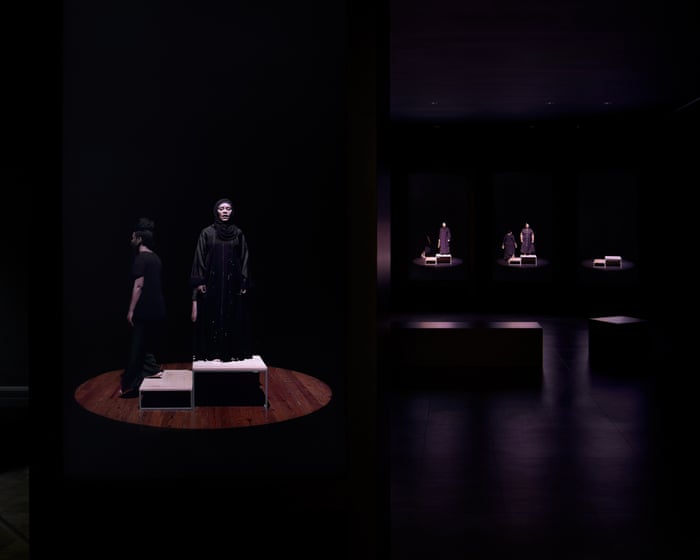
Gabrielle Goliath: Elegy review – devastating lament is a furious, single-note call to action

Ibraaz, London
Too controversial for the Venice Biennale, this haunting video and audio work commemorates murders and genocides with an angry act of mourning

The sound of mourning spills out into the streets. A single, endless wailing note echoes out of the basement of Ibraaz, a relatively new cultural centre in London’s Fitzrovia. This is Gabrielle Goliath’s heart-wrenching Elegy, each of its three films featuring a woman singing just one note until their lungs falter and another woman steps up to fill in for her. Just as a note is about to die, it is sustained. It’s a haunting, shocking act of mourning for murder, injustice and genocide.

And it almost never made it.

Continue reading...

© Photograph: Ollie Hammick

© Photograph: Ollie Hammick

© Photograph: Ollie Hammick

  •  

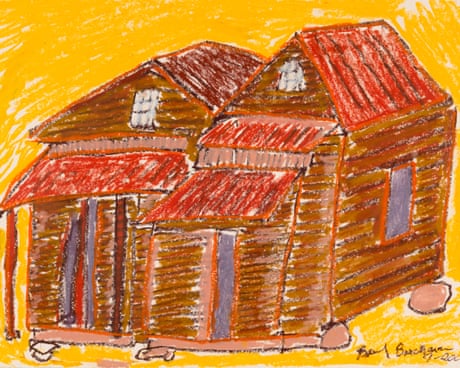
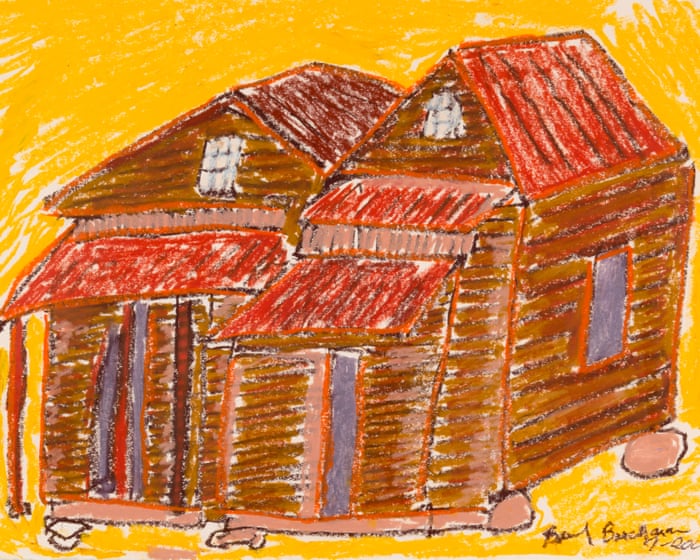
Beverly Buchanan review – ramshackle mini barns and shanties bursting with brutal history

Spike Island, Bristol
Inspired by the shacks and sheds of the American south, Buchanan’s exceptional sculptures combine folk art and minimalism to memorialise the survival of enslaved people
When she was a kid, Beverly Buchanan visited tenant farmers and sharecroppers across the American south-east with her dad. There in the fields she saw shacks and sheds, shanties and shotgun houses. More than 100 years after the abolition of slavery, she saw in this rough improvised architecture a symbol of survival and perseverance, of a people making their own way against the odds.

Buchanan spent the rest of her life – a life marked by multiple chronic illnesses before she died in 2015 – translating that architectural heft into art. This show at Spike Island is filled with ramshackle, half-broken, semi-dilapidated little sculptures, each one based on the buildings of the south. There are houses made of scrap wood, churches made of cardboard, tiny barns hammered together and splashed with paint or covered with buttons. The one large sculpture here is great, a shed seemingly on the verge of collapse, but Buchanan’s physical condition forced her to work on a smaller scale as she was often stuck at home for long periods.

Continue reading...

© Photograph: Courtesy of the Estate of Beverly Buchanan and Andrew Edlin Gallery, New York

© Photograph: Courtesy of the Estate of Beverly Buchanan and Andrew Edlin Gallery, New York

© Photograph: Courtesy of the Estate of Beverly Buchanan and Andrew Edlin Gallery, New York

  •  

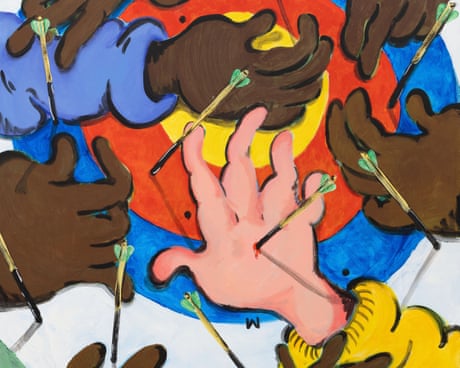
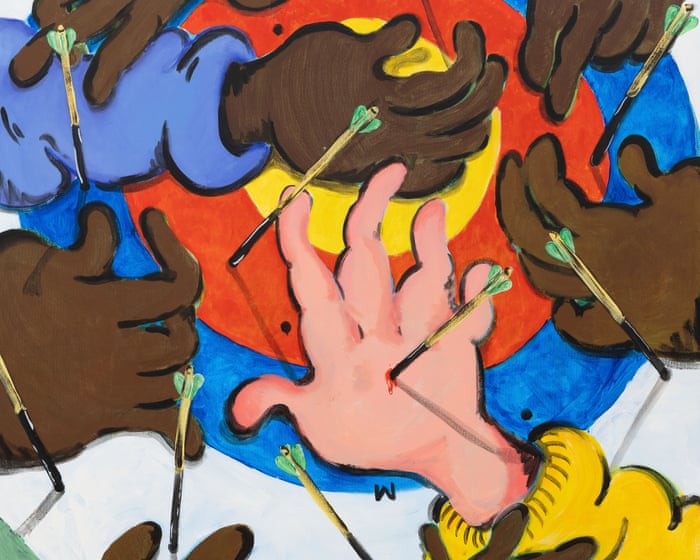
Quentin Bell and Olivia Sterling review – two artists with a magic touch

Charleston, Lewes
Bell’s strange and charming ceramics celebrate a life dedicated to creativity, while next door Sterling’s bawdier, weirder paintings form a critique of race and power

Quentin Bell was not a great artist, but that didn’t stop him. He saw the world as a magical place. The ceramicist (son of the Bloomsbury group’s Vanessa Bell; biographer of his aunt Virginia Woolf) spent his life lost in a world of magic, myth, newts in ponds, levitating women and knights on horseback. He died in 1996, leaving behind decades of pots, plates, figurines and drawings filled with wonder and amazement.

It all started when Bell was nine years old. Taken to a magic show by some relatives, he saw a jaw-dropping spectacle: a beautiful woman seeming to float in the air. It stayed with him throughout his life.

Continue reading...

© Photograph: Hendrik Zeitler/Olivia Sterling

© Photograph: Hendrik Zeitler/Olivia Sterling

© Photograph: Hendrik Zeitler/Olivia Sterling

  •  

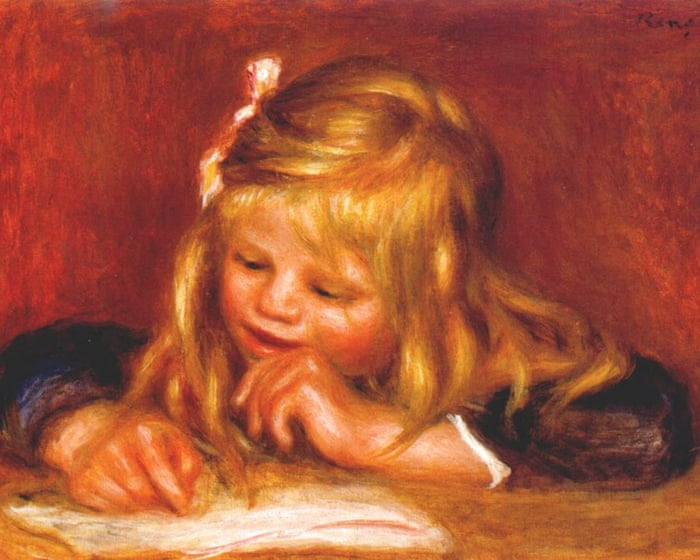
A constipated baby and a kid that looks like Boris Johnson: why would anyone bother stealing a Renoir?

The chocolate boxiest of all the impressionists has long had his haters – even Manet thought he was rubbish. Little surprise then that the thieves ditched two works on the way out

Stealing from the Louvre you can understand. I mean, who wouldn’t want a Géricault or Leonardo to hang in the downstairs loo? Same for the Musée d’Orsay too, even the Pompidou – they’re French museums absolutely rammed full of stunning art, all just begging to be audaciously heisted. But the Renoir Museum? It’s hard to see why anyone would bother.

As French art fans reel at the news that two Renoir paintings were stolen from the Cagnes-sur-Mer museum that bears his name this week, the rest of the art world has been saying really? Him? Renoir? He’s … awful. It’s like doing a heist of flares in the era of skinny jeans.

Continue reading...

© Photograph: Alamy

© Photograph: Alamy

© Photograph: Alamy

  •  

HRH Helch: the graffiti artist who left an indelible mark on high-rise Britain

He upset Queen Elizabeth II, defied the developers and had to scrap for every inch of graffiti space in a gentrified, urban landscape

• Prolific UK graffiti artist Helch dies

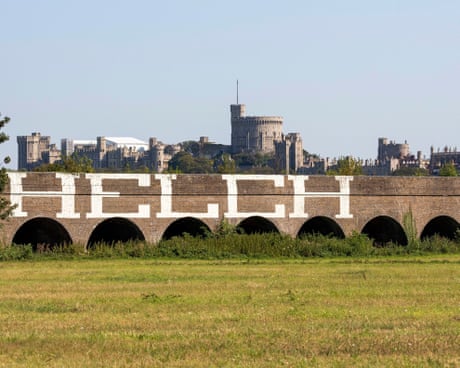
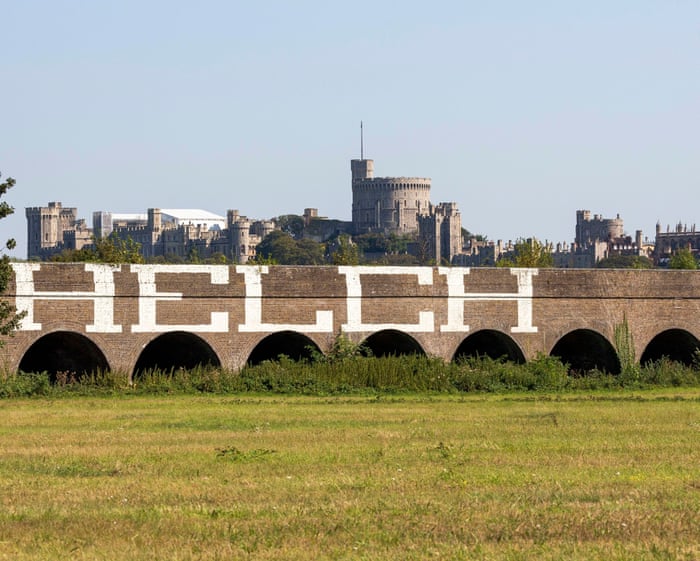
You know you’ve made an impact when the headlines upon your death are filled with words like “iconic”, “infamous”, “world class” and “upset Queen Elizabeth II”. By that measure, graffiti supremo Helch made a pretty serious mark on the world.

He died this week, leaving behind a country pockmarked by his tag, a giant towering HELCH, though sometimes reduced to just a simple upper-case H. It was on railway bridges and motorway overpasses, on derelict buildings and decrepit high rises. From Bristol to London, Helch was everywhere. He was even on a railway viaduct on the way to Windsor Castle, in 60ft high white letters, “ruining” the view of poor old Elizabeth’s home and apparently leaving our late monarch in an absolute rage.

Continue reading...

© Photograph: REX/Shutterstock

© Photograph: REX/Shutterstock

© Photograph: REX/Shutterstock

  •  

‘I’m not nervous, I’m ready’: Tschabalala Self on racist vandals and her bold striding woman for the Fourth Plinth

The last time she displayed a sculpture in public in Britain, someone covered it in white paint. But, undeterred, the acclaimed artist is a placing a black woman in Trafalgar Square

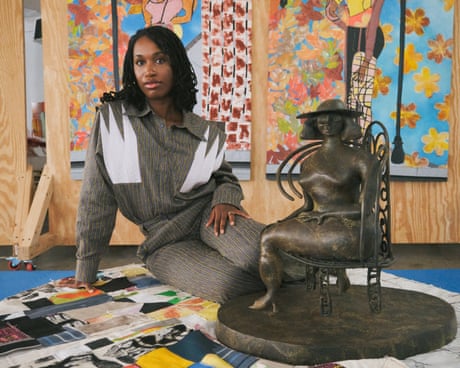
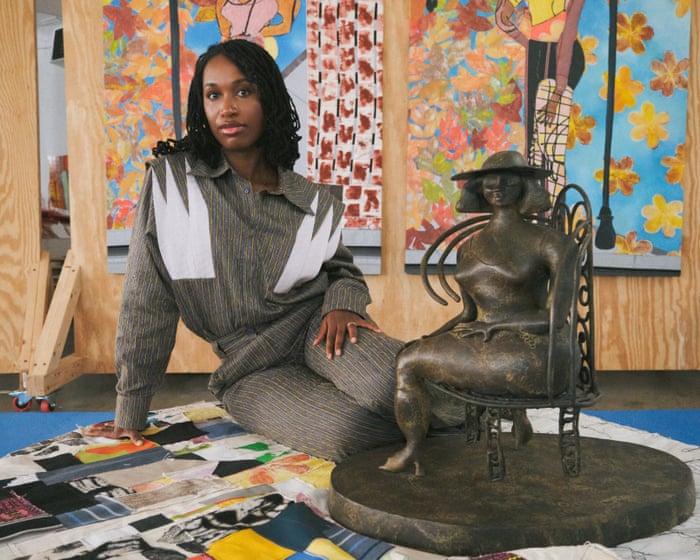
Tschabalala Self is relentlessly positive and unstoppably optimistic. The US artist is waiting for the unveiling of Lady in Blue, her new sculpture for the fourth plinth in Trafalgar Square, London, a towering, colourful painted bronze of a black woman striding (positively, optimistically) into the future. Self seems resolutely hopeful about the work, which is pretty impressive considering what happened to her last public sculpture in the UK. “Yeah,” she says, speaking from her home in upstate New York. “I mean, that was a completely racist act.”

In 2022, Self unveiled Seated at Coal Drops Yard in King’s Cross, London. Like Lady in Blue, it was a vast, brightly painted bronze depiction of a black woman, this time seated demurely on a chair. After being shown at Coal Drops Yard without incident, it was moved to the De La Warr Pavilion in Bexhill-on-Sea, where the reception wasn’t quite as warm. “Within the first week,” says Self, “it was spraypainted white, but only on the skin of the sculpture.” As vandalism goes, it doesn’t get much more pointed, or racist. “The first feeling I had was just pain that my sculpture had been harmed. That someone had enacted violence on an object I had imbued with love and affection.”

Continue reading...

© Photograph: Christian DeFonte/The Guardian

© Photograph: Christian DeFonte/The Guardian

© Photograph: Christian DeFonte/The Guardian

  •  

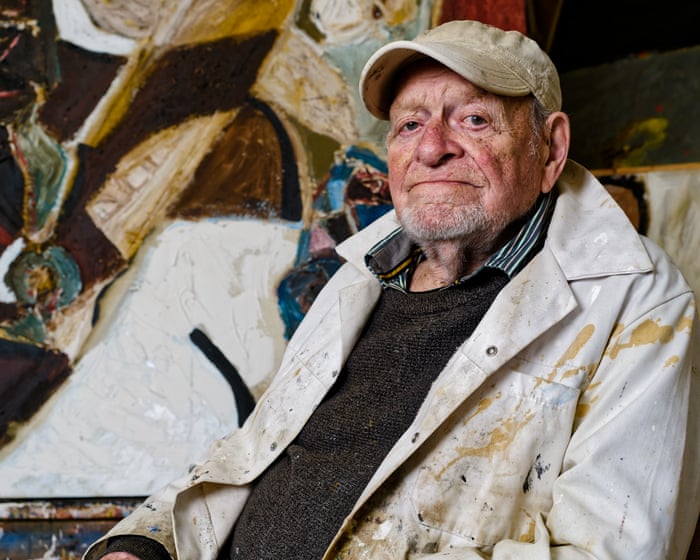
Ken Turner, the 100-year-old artist who flattened a Tesla with a tank: ‘I’m not a revolutionary, I’m a simple rebel’

The painter, sculptor and performance artist has devoted his life to making art available to the masses. Now with a new exhibition, the centenarian discusses inequality, inspiration, and why he won’t be stopping any time soon

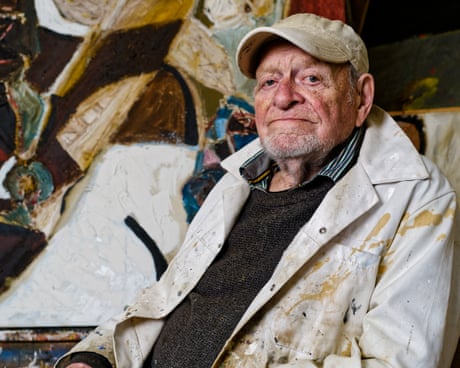
‘Life is short, art long,” says Ken Turner, reading from a book of aphorisms by ancient Greek physician Hippocrates. And he’s half right, really, because at 100 years old – and very possibly the world’s oldest performance artist – art might have been long, but life hasn’t been all that short for him, either. And he has filled those years to the brim with radicalism, experimentalism and a singular dedication to pushing ideas as far as he can make them go.

In the 1960s, Turner moved from painting towards a socially conscious form of public art, creating giant inflatable sculptures that visitors could inhabit and interact with decades before immersive art became a thing. He was taught by Fernand Léger, he was mates with John Berger, he made frames for Frank Auerbach and Leon Kossoff. Last year, he drove a tank over a Tesla in a performance meant as a damning indictment of corporate greed and rising fascism. His has been a life of rebellion and revolution, of obstinately following his own artistic path no matter what obstacles he encounters, no matter how much easier it would have been to walk down a more well-trodden one.

Continue reading...

© Photograph: Patrick Shanahan, 2026

© Photograph: Patrick Shanahan, 2026

© Photograph: Patrick Shanahan, 2026

  •  

Backyard Biennial: East review – this morose and meaningless exhibition gave me a migraine

Whitechapel Gallery, London
I feel bad for the artists whose work has been crowbarred into a wonky show about migration, protest, climate and identity

It’s rare that an exhibition is so bad you feel compelled to text a friend saying “you wouldn’t believe the garbage I just saw” as soon as you get out. And if you can walk around this badly explained, undercontextualised, barely linked, poorly thought through mess of a show without getting a migraine, you have a stronger constitution than me.

This is an exhibition about east London. Or maybe it’s about Britishness. Or migration. Or the climate crisis. Or music. Or global trade. Whitechapel Gallery doesn’t seem to really know, so what chance do the rest of us have of figuring it out? The gallery would argue it’s about all of these things; I’d say it manages to be about none of them.

Continue reading...

© Photograph: © Marwan Bassiouni Courtesy the artist

© Photograph: © Marwan Bassiouni Courtesy the artist

© Photograph: © Marwan Bassiouni Courtesy the artist

  •  

Ai Weiwei: Button Up! review – skeleton chandeliers, a real-life temple – and too much silly Lego

Aviva Studios, Manchester
The artist’s latest show is a staggering takedown of colonial history, warfare and the migrant crisis, featuring buttons by the tonne and richly perfumed tea

History has repeated itself all over Ai Weiwei’s vast exhibition of monumental sculpture in Manchester. The flags of long-lost nations hang from the ceiling, bronzes looted by dead empires have been recast and reclaimed, dilapidated ancient ruins have been rebuilt. Everywhere you look here, you will find death, exploitation, greed and suffering from across human history, brought back to life and put morbidly on display. The first thing you see is a black glass chandelier made of skeletons – The Human Comedy – and a wall covered in images of the most powerful bombs ever invented. Like a head on a stake, this is art as warning.

This massive, ambitious exhibition is the Chinese artist at his most monumental, and as a result at his most effective. His subject matter works best at enormous scale, blown up, expanded, shoved in your face. Lining the back wall of this warehouse is a giant inflatable dinghy, 100 metres long, filled with figures in lifejackets. Think you can ignore the migrant crisis? Not here you can’t, because Ai has taken everyday, normalised tragedy and made it into a monument. He spent years interviewing hundreds of refugees, meeting people desperate for safety and a new life and produced a huge amount of work about it. This is the culmination of that project. Is it a good-looking work of art? Not really, but it makes a point, and makes it loudly.

Continue reading...

© Photograph: Peter Powell/AFP/Getty Images

© Photograph: Peter Powell/AFP/Getty Images

© Photograph: Peter Powell/AFP/Getty Images

  •  

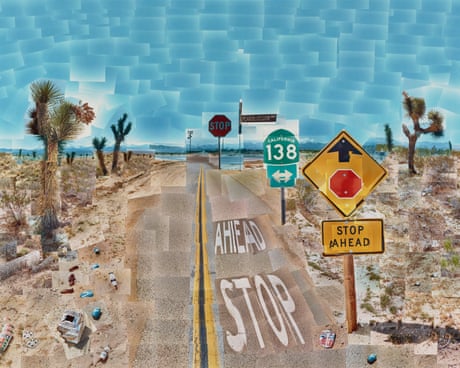
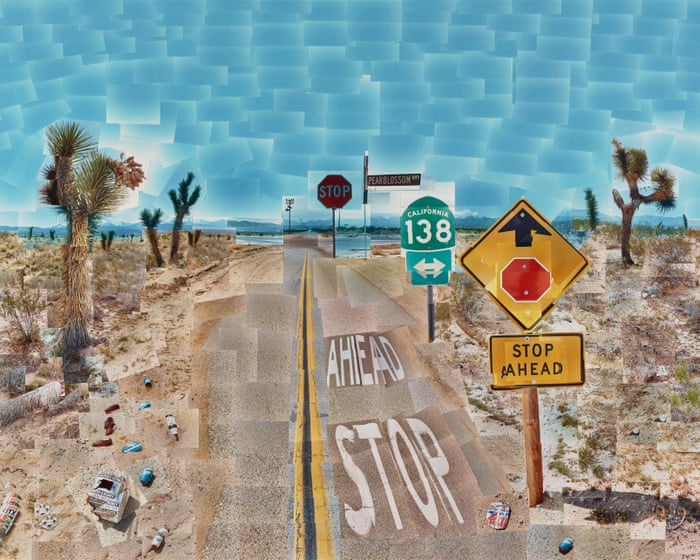
‘Hyper-stylised, ultra-cool visions’: 10 ways David Hockney changed art

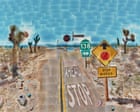
He pushed landscape painting into the stratosphere, demolished one-point perspective, invented the Los Angeles look, embraced iPads, created dazzling stage sets for theatre and opera …

David Hockney didn’t just appear out of nowhere like some fully formed artistic wunderkind. His work was a synthesis of so much that came before and was happening around him. He took the ideas of minimalism and abstraction, fused them with the traditions of portraiture, and filtered it all through the innovations in pop and conceptualism that were going on in the 1960s. He was heavily indebted to a lot of other artists, but he synthesised all those influences into something so simple, immediate, digestible and approachable that it became something new.

Continue reading...

© Photograph: The J Paul Getty Museum/The J. Paul Getty Museum, Los Angeles, CA

© Photograph: The J Paul Getty Museum/The J. Paul Getty Museum, Los Angeles, CA

© Photograph: The J Paul Getty Museum/The J. Paul Getty Museum, Los Angeles, CA

  •  

‘I lived near a serial killer’: Steven Shearer on turning teen angst and death metal into high art

He rarely gives interviews and hates explaining his work – yet his stunning paintings, inspired by subcultures and German Romanticism, reveal a lot about this reclusive Canadian

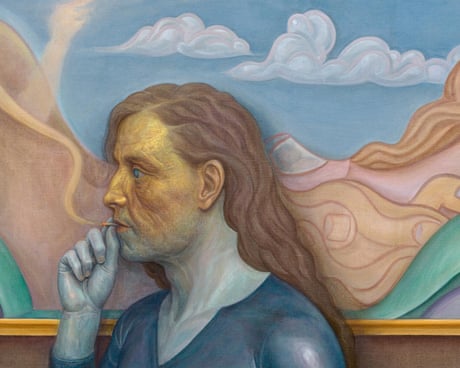
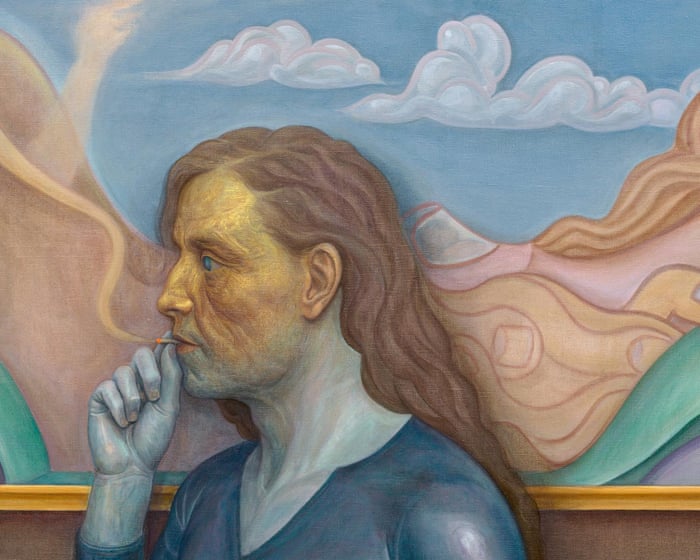
Steven Shearer is a quiet man. He’s elusive, too, shy and reclusive. He is difficult to pin down for an interview. And once you have, it is tough to get him talking. Maybe the Canadian artist thinks his work – spanning 40 years and multiple media, including stunning paintings of long-haired teens, collages of appropriated images, and billboard-sized poetry inspired by heavy metal lyrics – speaks for itself. But Shearer’s work doesn’t really speak, at least not clearly; it mumbles awkwardly into its sleeve like a goth at a family Easter picnic.

“I wrote down lots of potential things to say,” he says from his immaculate white studio in Vancouver, ahead of his show at David Zwirner Gallery in London, his first UK exhibition since 2007, “but it’s not my nature. All the hope or will to be able to communicate kind of goes into the pictures. And I try to stay out of the way once that’s happened.”

Continue reading...

© Photograph: © Steven Shearer Courtesy the artist, Galerie Eva Presenhuber, and David Zwirner

© Photograph: © Steven Shearer Courtesy the artist, Galerie Eva Presenhuber, and David Zwirner

© Photograph: © Steven Shearer Courtesy the artist, Galerie Eva Presenhuber, and David Zwirner

  •  

Christo: Air review – surprisingly profound manifestation of the wrapper’s impossible dream

Gagosian, Grosvenor Hill, London
Not only does this giant plastic bag make the intangible physical, it gains a bodily sense of weight and an unexpected emotional resonance

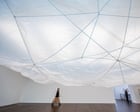
When he wasn’t busy wrapping buildings and bridges in vast reams of fabric, Christo was wrapping absolutely nothing. The Bulgarian artist made his name – alongside his partner Jeanne-Claude – with a wrapped Reichstag, a swaddled Arc de Triomphe and an enveloped Pont Neuf. They found a way of containing, embracing, protecting and smothering the whole world. But in the 1960s, he was trying to wrap air. Nothing more.

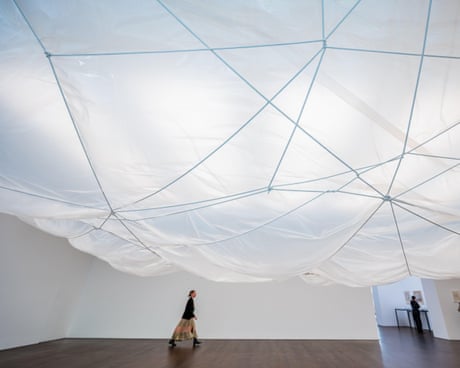
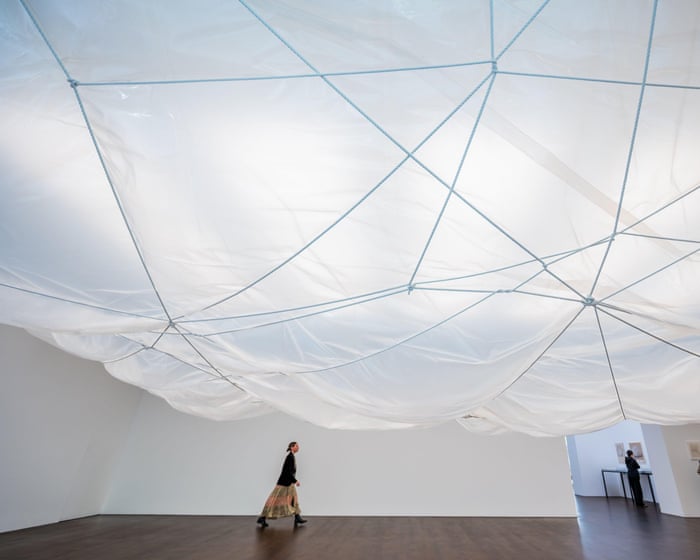
Christo (Jeanne-Claude hadn’t been given full joint credit at this point) wanted to contain the air within a room, but the original idea was limited by technical constraints. Now, 50 years after it was first proposed for the Institute of Contemporary Art in Philadelphia, and six years after Christo’s death in 2020, he’s finally pulled it off. The opening room at Gagosian has been bisected horizontally, a huge polyethylene sack splitting the room in two, held to the ceiling by white ropes. It droops low, sinking into the middle of the space, forcing you to crouch to get under it. You’re forced into a physical relationship with the work, bullied into changing how you interact with the environment.

Christo: Air is at Gagosian, Grosvenor Hill, London, until 21 August

Continue reading...

© Photograph: Guy Bell/Alamy Live News/Alamy Live News.

© Photograph: Guy Bell/Alamy Live News/Alamy Live News.

© Photograph: Guy Bell/Alamy Live News/Alamy Live News.

  •  

The car park that changed British art: Bold Tendencies at 20

Two decades after it opened in a multi-storey in Peckham in London, the space has redrawn the map for how to present art – with rooftop cocktails and the pink staircase that launched a thousand selfies

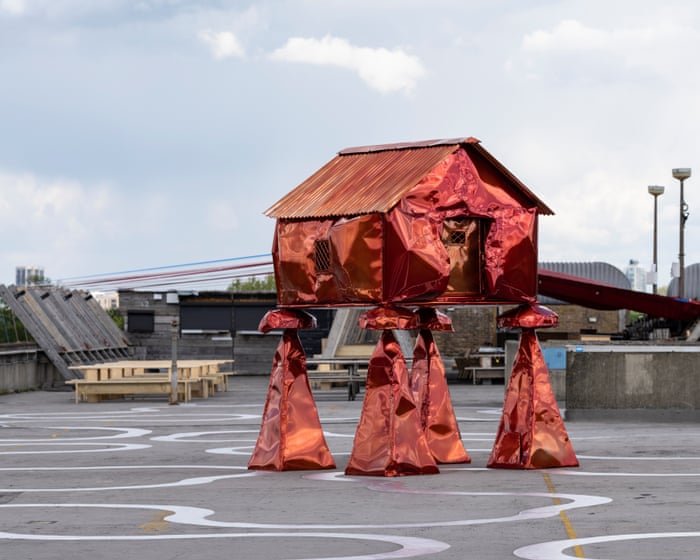
It’s hard to imagine now, but there was a time when rooftop bars weren’t really a thing. A time before pop-ups and contemporary outdoor sculpture parks. A time even, if you can bear to think of it, before immersive art. Way back in 2007, there was none of that – the UK was an experiential art wasteland. And then Bold Tendencies showed up, chucked a whole load of sculptures in a multi-storey Peckham car park, painted a staircase bright pink, built a cocktail bar on the roof, and changed everything.

Now going into its 20th summer season, Bold Tendencies is celebrating two decades of sometimes sun-drenched, often windswept and drizzly arts programming. In that time, it has welcomed more than 3 million visitors into its concrete edifice behind Peckhamplex cinema, commissioned dozens of new artworks, hosted countless recitals and performances, built an auditorium and a concert hall, and drawn the roadmap for countless art experiences that have come in its wake.

Continue reading...

© Photograph: © Damian Griffiths

© Photograph: © Damian Griffiths

© Photograph: © Damian Griffiths

  •  

What does a woman swimming in urine tell us about the state of the world? Lots! – Venice Biennale review

The theme of earth’s biggest art extravaganza – spiritual rest – felt wildly wrong for our crisis-hit planet. Thank goodness for the pavilions, from fake babies to hi-tech sperm banks to a chocolate Russell Crowe

It was almost over before it even started. This year’s Venice Biennale has been tearing itself apart for months: countries not showing up, artists getting fired, exhibitions being cancelled, funding getting pulled. There were petitions and protests months before a painting was on a wall. The jury quit in the days leading up to the opening, then Iran quit, then the European Commission quit. There were protests against Israel and Russia during the preview, artists went on strike and artworks were replaced with installations of Palestinian flags.

The whole thing was a massive mess of conflicting politics, personal tragedy and unresolvable ideological differences from the very beginning. And all this without even mentioning that the curator, Koyo Kouoh, died last year and wasn’t able to see her artistic vision through to completion. In a sense, the 2026 Venice Biennale never stood a chance.

Continue reading...

© Photograph: David Levene/The Guardian

© Photograph: David Levene/The Guardian

© Photograph: David Levene/The Guardian

  •  

Lubaina Himid’s British pavilion at the Venice Biennale review – alienation in a green and pleasant land

Amid a calming soundtrack of lapping waves and cooing birds, workers in brightly coloured paintings share glances that say: ‘What the hell are we doing here?’ But isn’t there more to not belonging than this show suggests?

Home comforts aren’t always all that comfortable. Here at the Venice Biennale, Lubaina Himid paints an awkward, tense, uncomfortable portrait of our damp old home nation. Her installation of monumental paintings and a wall of painted oars at the British pavilion is full of tailors and cooks and architects, the people who shape the country, keeping it fed, clothed and sheltered.

An audio piece burbles through the space with the sound of bucolic country life: seagulls, rigging slapping on masts, bird calls and buzzing flies. How lovely Great Britain is, how welcoming and kind and accepting.

Continue reading...

© Photograph: Eva Herzog

© Photograph: Eva Herzog

© Photograph: Eva Herzog

  •  

Playing it safe: this year’s Turner prize nominees lack the anger – and joy – of previous years

From over-serious spoken word to meaningless steel skeletons and bleak military aesthetics, the 2026 shortlist is more notable for what’s missing. It can’t help but feel insular and elitist

What do you want from the Turner prize in 2026? Are you after wild, shocking, disturbing, era-defining cultural moments? Please, it’s not the 1990s. How about hard-edged, ultra-conceptual, high-minded aesthetic experimentation? Come on, we haven’t had that for decades. Maybe you expect some culture-war-mongering, super-identitarian, polemically explosive political invective? A bit 2022, I reckon.

No, the 2026 Turner prize is something else, something way more appropriate for the age: a bit timid, a bit fearful, a bit safe.

Continue reading...

© Photograph: Jack Elliot Edwards/Vardaxoglou Gallery/PA

© Photograph: Jack Elliot Edwards/Vardaxoglou Gallery/PA

© Photograph: Jack Elliot Edwards/Vardaxoglou Gallery/PA

  •  
❌