❌

Lese-Ansicht

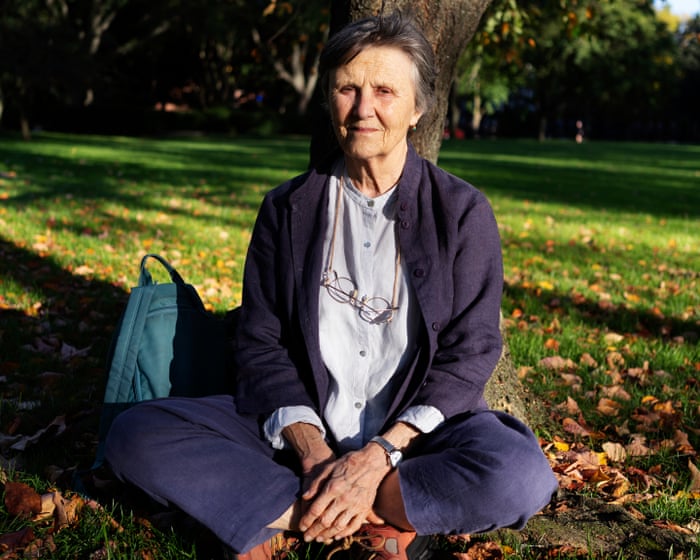
‘Being hated is very bracing’: Helen Garner on surviving three marriages and being called a ‘rotten feminist’

Her unsparing fiction and true crime writing have made her one of Australia’s most controversial and celebrated authors. The author discusses relationships, resilience – and finding global recognition five decades into her career

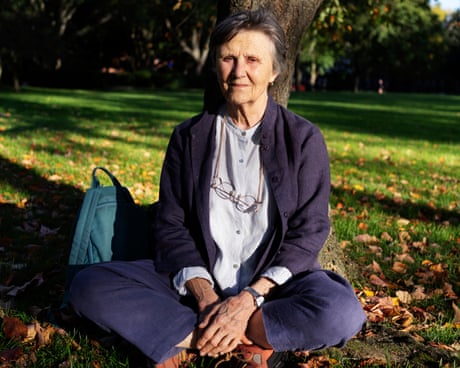
A few years ago, when Helen Garner had an idea to write a book about Australian rules football, her heart soared then immediately sank. The impetus was Ambrose, her teenage grandson, who played for a local team. Garner enjoyed watching them and wanted to put this into writing. Then the dreary thought: “I’ll have to swot, read the rulebook.” People to whom she mentioned the idea assumed she’d be writing a polemic, “like what it means in society and how terrible it is and what violence means. And I’m going: ‘What a bore.’”

As anyone familiar with Garner’s almost 50-year writing career will know, there is nothing more igniting to the 83-year-old than the invitation to outrun boredom by going off in an unauthorised direction. Garner, who is speaking to me via video call from her home in Melbourne, occupies that tiny category of writers famous enough to be recognised in public. Stopped by strangers in the street, she’s often treated to their strong views about her work. As a result, perhaps, she has perfected a very Garnerian obstinacy, enabling her to resist other people’s bossy opinions which, in the case of The Season, meant no tedious explainers about the rules, history or sociology of Aussie rules football. Instead, says Garner, she envisaged following a single season of Ambrose’s U16s team, the Flemington Colts, as “a nanna’s book”. During publicity, she’d turn up to an event at a library to find “the first five rows packed with nannas; all these white-haired women with hankies in their hands. And I feel nobody writes about nannas. I mean, sentimentally, yes; but I want to say what they’re really like.”

Continue reading...

© Photograph: Jillian Freyer <freyerjillian@gmail.com>
© Photograph: Jillian Freyer <freyerjillian@gmail.com>
© Photograph: Jillian Freyer <freyerjillian@gmail.com>

  •  

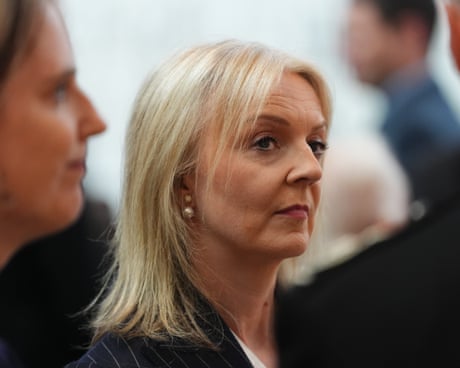
Liz Truss has brought our divided nation together – in mockery of her | Emma Brockes

Though times are hard and days are dark, the former PM’s latest book reminds us of the fun to be had when a figure is so ridiculous but cannot see it

In these times of social and political division, it’s worth doing a quick audit of what keeps us together. Where, as we fight over what constitutes “wealth” and whether or not to go back in on Brexit, are the key sites of consensus? The Celebrity Traitors and the gloriousness of Nigella on Bake Off may offer one area of unity; you can say the words “David Attenborough” to any sample of the population and elicit exactly the same murmur of approval. But, as the recent history of the internet shows, the most forceful bonds are those forged against, rather than in favour of, something. With that in mind, let’s turn to our old friend Liz Truss.

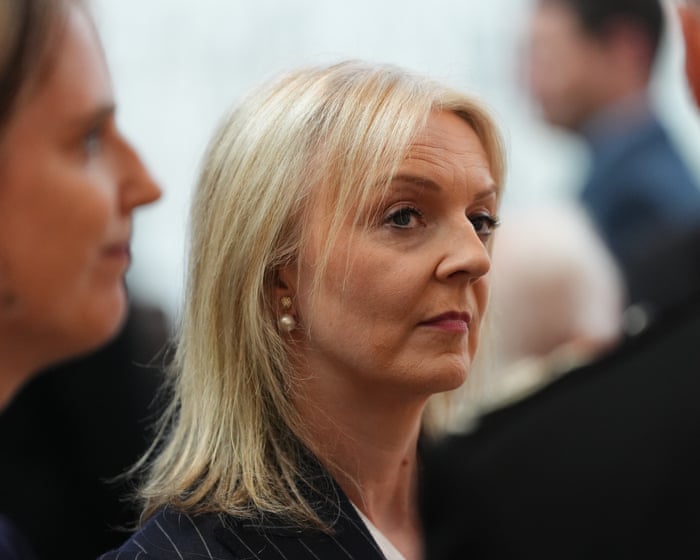
It’s an unusual position, isn’t it, wondering if we might owe a debt of gratitude to the former prime minister who, after tanking the value of the pound in 2022 and otherwise carrying on with the efficacy of someone stopped at random in the street and given the keys to government, is widely regarded as the worst ever to have held office. Truss has a book out this week, her second since leaving office, entitled Bank Job: A Short Book on How the Bank of England Broke the Bond Market and Brought Down the Government, and on the evidence of its early reception, it seems likely to prove even more successful in uniting disparate communities of Britain than her previous volume, Ten Years to Save the West.

Emma Brockes is a Guardian columnist

Continue reading...

© Photograph: Jonathan Brady/PA

© Photograph: Jonathan Brady/PA

© Photograph: Jonathan Brady/PA

  •  

Is this Prince Harry or David Brent in The Office? Either way, we’re watching a masterclass in awkwardness | Emma Brockes

The wayward prince and his wife seem to be aiming for a reboot – searching for purpose, but not self-awareness

Years ago, I was in Washington DC when Prince Harry blew through on an official engagement. He was 28, with a full head of hair, a slightly louche gait and a public image that, on a tour of the Senate led by a baffled-looking John McCain, caused people to lose their minds.

Senate staffers stood five deep to get a glimpse; women materialised from every corner, more glamorously dressed for the office than usual. The excitement was so great that there were actual screams from behind the security line. I remember noting the prince’s prominent ears, the high colour in his cheeks and his habit, when addressed, of bowing his head, as if humbled by what he was hearing. Aw, I thought. Bless him.

Emma Brockes is a Guardian columnist

Do you have an opinion on the issues raised in this article? If you would like to submit a response of up to 300 words by email to be considered for publication in our letters section, please click here.

Continue reading...

© Photograph: FD/Francis Dias/NEWSPIX INTERNATIONAL

© Photograph: FD/Francis Dias/NEWSPIX INTERNATIONAL

© Photograph: FD/Francis Dias/NEWSPIX INTERNATIONAL

  •  

Trump should fear the BBC. Instead he’s picked a fight – and he seems to be losing | Emma Brockes

The president is used to bullying his media targets. The quagmire that is his libel actions shows the broadcaster is working to a different script

For the greatest account of the BBC’s finest hour, one must turn to Penelope Fitzgerald’s novel, Human Voices, written in 1980 and set 40 years earlier, at the corporation’s Portland Place wartime HQ. Flanked by sandbags and infused with a smell of cooking “from the deep hold that suggested more strongly than ever a cruise on the Queen Mary”, the organisation that Fitzgerald describes is at once noble and deeply eccentric. “Broadcasting House stood headed on a fixed course south,” she writes. “With the best engineers in the world, and a crew varying between the intensely respectable and barely sane, it looked ready to scorn any disaster.”

In other words, a formidable foe, one that in the spring of 1940, in the face of anticipated Nazi invasion, decided “without prompting, that truth was more important than consolation, and, in the long run, would be more effective”. I bring this up in respect to the gathering storm of Donald Trump versus the BBC, a fight triggered by the US president’s $10bn defamation lawsuit – $10bn! It’s a wonder he didn’t go for $10 gazillion – brought against the corporation at the end of last year in response to a poorly edited episode of Panorama. The BBC was at fault, editing together comments made by the US president at a rally on 6 January 2021 to give, as the corporation’s apology put it, “the mistaken impression that President Trump had made a direct call for violent action”. But it is fighting the lawsuit.

Emma Brockes is a Guardian columnist

Continue reading...

© Photograph: Bill Clark/CQ-Roll Call, Inc/Getty Images

© Photograph: Bill Clark/CQ-Roll Call, Inc/Getty Images

© Photograph: Bill Clark/CQ-Roll Call, Inc/Getty Images

  •  

Digested week: Don’t worry about the plague, go and read some Anne Carson | Emma Brockes

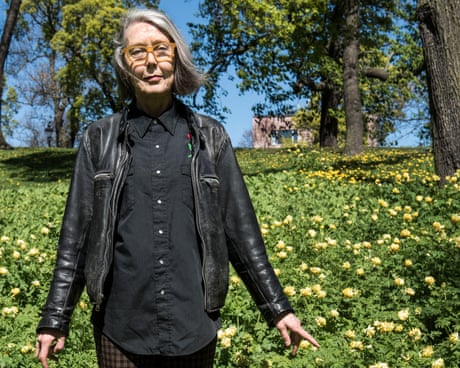
The world may be going to hell in a handcart, but at least now I get to say I know a Nobel prize winner

“Anyone worried about pneumonic plague?” This is a friend – a medic – texting me after reading reports at the weekend of the 28-year-old Russian woman who died while working at a “plague research lab” in Siberia. Relying on details from the famously open Russian state guaranteed the presence of a certain dark subtext to the tantalisingly short news item. Namely: lab-grown disease cultivated for reasons unknown and with a 100% mortality rate escapes Russian facility into general population, eight hours’ flying time from London. In other words, we’re all going to die.

Continue reading...

© Photograph: TT News Agency/Alamy Stock Photo/Alamy Live News.

© Photograph: TT News Agency/Alamy Stock Photo/Alamy Live News.

© Photograph: TT News Agency/Alamy Stock Photo/Alamy Live News.

  •  

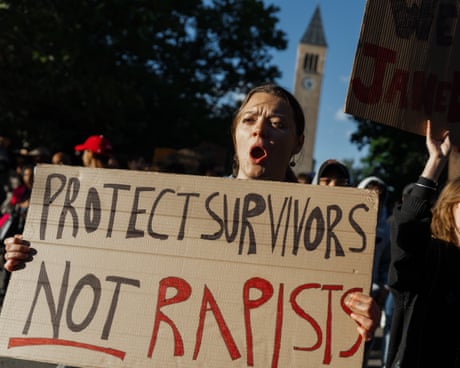
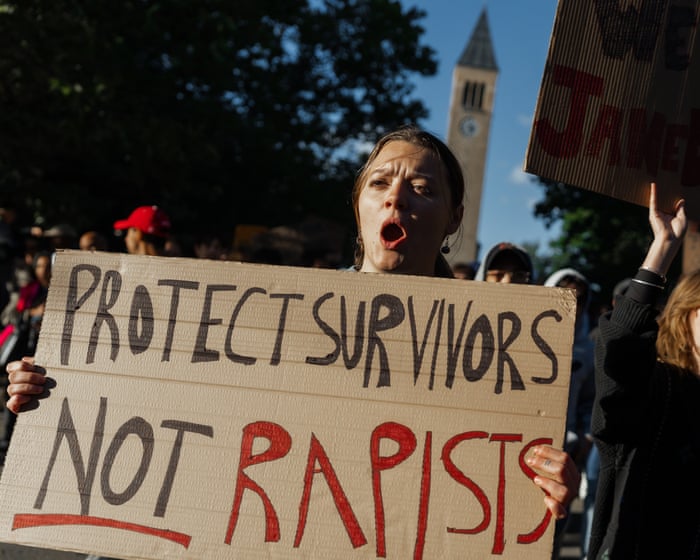
Here’s what connects the Cornell alleged rape case to those before: accused men not being held to serious account | Emma Brockes

There was progress after #MeToo, but not enough. Certainly not enough to shift the assumptions that still protect men and denigrate victims

If the past is another country, and there is nothing so poignant as the innocence of recent history, then there is a third category of engagement with the era directly preceding our own, encapsulated by the line “that didn’t age well”.

I found myself thinking about this in relation to news of the seven male students accused of gang-raping a 20-year-old woman two years ago in their fraternity house at Cornell University, and now facing a civil suit brought by their alleged victim. Apparent failures by Cornell and the local district attorney to act appropriately at the time have triggered another round of commentary about the “death of #MeToo”, not least with the looming anniversary on 15 October, the date in 2017 when the hashtag first went viral. But the period I find myself thinking about predates even that, when it seemed as if these questions of consent had been largely resolved.

Emma Brockes is a Guardian columnist

Do you have an opinion on the issues raised in this article? If you would like to submit a response of up to 300 words by email to be considered for publication in our letters section, please click here.

Continue reading...

© Photograph: Olga Fedorova/EPA

© Photograph: Olga Fedorova/EPA

© Photograph: Olga Fedorova/EPA

  •  

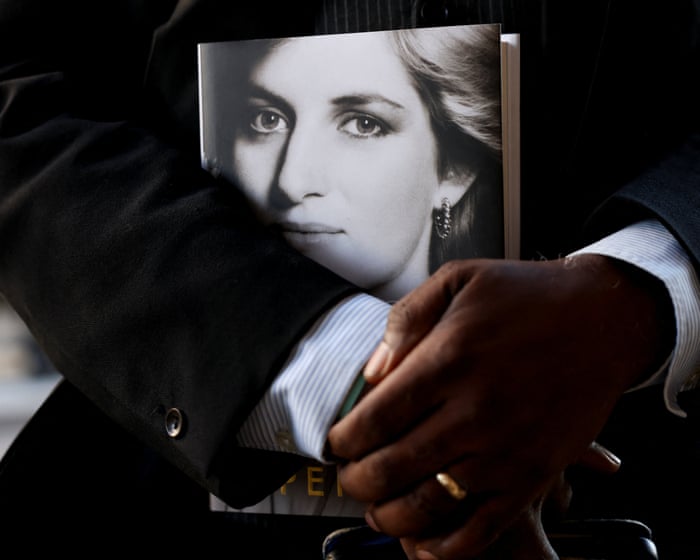
Swan Song by Charles Spencer review – a furious exercise in score-settling by Diana’s brother

Amid genuinely touching passages about his sister, the earl can’t help but put himself and his grievances centre stage

Charles Spencer’s Swan Song, a memoir of his relationship with his sister, the late Diana, Princess of Wales, is a fascinating document that tells us a little about Diana and a great deal about Charles Spencer – perhaps more than we needed to know. If that sounds snarky, after 400 pages of score settling, chest thumping, wild indiscretion and some truly touching passages about his late sister, the reader is left with a head-spinning story of the world that created Diana and a certain sourness at the manner in which it is told.

Let’s start with the headlines in last week’s Daily Mail, the newspaper to whom Spencer sold serialisation of a book which includes a line describing tabloid journalists as “those who inhabit the murky swamps of malevolence, and who need to suck their victims dry of their souls”. Perhaps he meant a different set of hacks. Anyway the top line in the Mail was that, shortly after Diana’s death, King Charles insulted her in a phone call to Spencer: “‘Rest assured,’ he hissed, ‘we’ll forget her soon enough.’” Your take on this quote will likely dictate how you receive the book, and here’s mine: I’m willing to believe the king behaved badly, but “hissed” is a red flag, one of those embellishments, like “snarled” or “flounced”, that writers tend to use to make those they’re writing about appear worse. Spencer, always the injured party, has so many axes grinding away in this book that at times it’s impossible to hear what he’s saying.

Continue reading...

© Photograph: Jack Taylor/Reuters

© Photograph: Jack Taylor/Reuters

© Photograph: Jack Taylor/Reuters

  •  

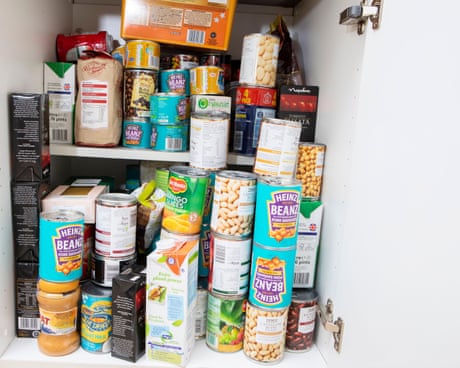
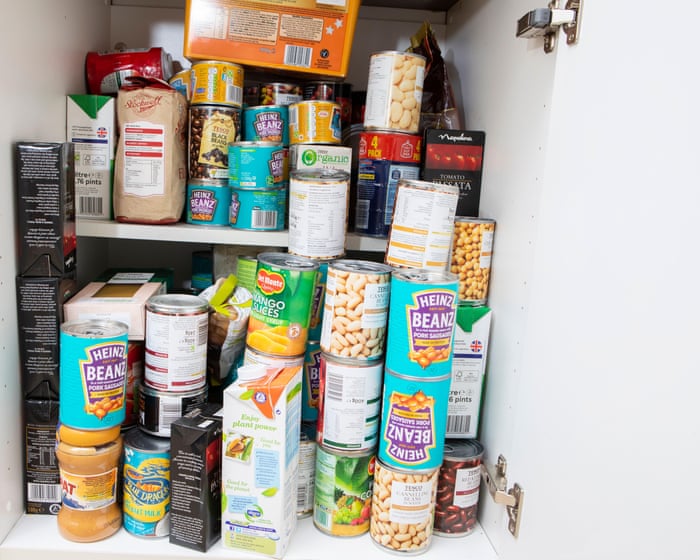
How’s your apocalypse stockpiling coming on? Three weeks in, mine has hit a few snags | Emma Brockes

Cans of tuna, sparkling water and an old torch – if the end of the world came for me now I’d struggle, but it’s hard to know how to prepare for an unknown threat

It’s been three weeks since the government advisory urging us to start stockpiling in case of emergency – how’s your prep coming along? The Prepare campaign, backed by Wes Streeting, who one imagines gliding through the apocalypse, quiff undisturbed, listed nine essential items, among them wet wipes, first-aid kits and batteries. The World Health Organization, meanwhile, suggests budgeting for 15 litres of water per person per day, so a family of four will need to store upwards of 180 litres to cover the recommended period of three days. The chances of this actually happening seem to me, intuitively, to be considerably lower than the disaster they’re supposed to forestall. But hope springs, so let’s see.

The first step towards stockpiling is stocktaking. This is where I’m at: one mega-torch (uncharged), which I bought in prepper mode after surviving the terrifying New York blackout of 2019 when for about an hour we couldn’t charge our phones; lots of very large sticking plasters and a handful of small round ones, the normal sizes having long been used up; two cans of tuna, which will go down to one after lunch; two litres of sparkling water, so for the first hour or so after a nuclear strike, assuming it happens this afternoon, we’ll at least be able to enjoy some bubbles; and three OxyContin saved from my c-section almost 12 years ago, which are probably less powerful than homeopathy at this point but I retain a vague hope I can use for barter when money breaks down.

Emma Brockes is a Guardian columnist

Continue reading...

© Photograph: Lucy Ray/Alamy

© Photograph: Lucy Ray/Alamy

© Photograph: Lucy Ray/Alamy

  •  

Ridiculed by the press – and now King Charles is joining in. Sorry, Harry, but what did you expect? | Emma Brockes

The Sussexes must have hoped for a warm welcome. Then they read the king’s delicately savage letter about ‘private citizens’

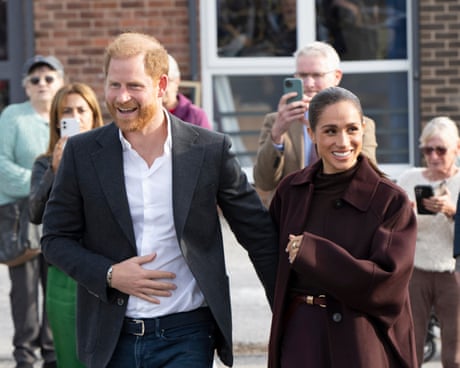
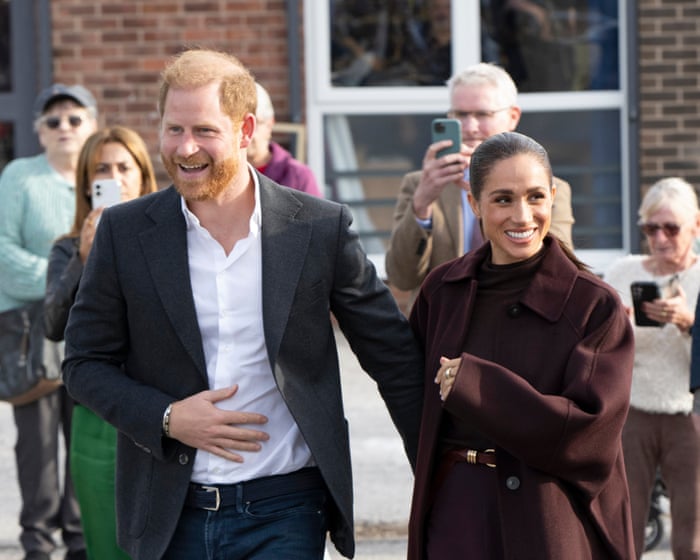
As welcome-back-to-Britain gestures go, the lord chamberlain’s letter, sent on behalf of King Charles on Monday to remind Harry, Meghan and everyone watching that they’re still “private citizens”, was so perfect as to restore me to monarchism. After six years in the wilderness, what greater comfort for Prince Harry than to find himself, once again, in the familiar waters of this country’s passive aggression, being attacked by his father via the merciless phrase “fully respected”, and provoking from the prince a coded up-yours in the form of his publicly stated “surprise”.

Well, it’s up there with better cheese, bread and the NHS, isn’t it?! Even the most Eurocentric American can’t match us for this kind of subtextual bare-knuckle fight. Before we get into what else the returnees may be enjoying this month, let’s fully excavate the letter’s encrypted hostility. First, the king’s repeated use of the words “personal” and “private” – as in “the charitable work of the Duke and Duchess is a personal matter for them both and undertaken in their private capacity” – is so intense, so heavy handed, as to go beyond merely calling his younger son a civilian and come perilously close to the ultimate insult, “middle class”.

Emma Brockes is a Guardian columnist

Do you have an opinion on the issues raised in this article? If you would like to submit a response of up to 300 words by email to be considered for publication in our letters section, please click here.

Continue reading...

© Photograph: Aaron Chown/PA

© Photograph: Aaron Chown/PA

© Photograph: Aaron Chown/PA

  •  

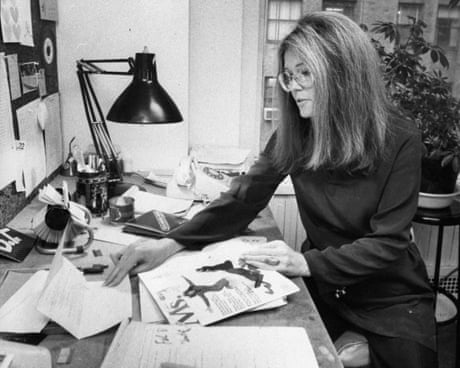
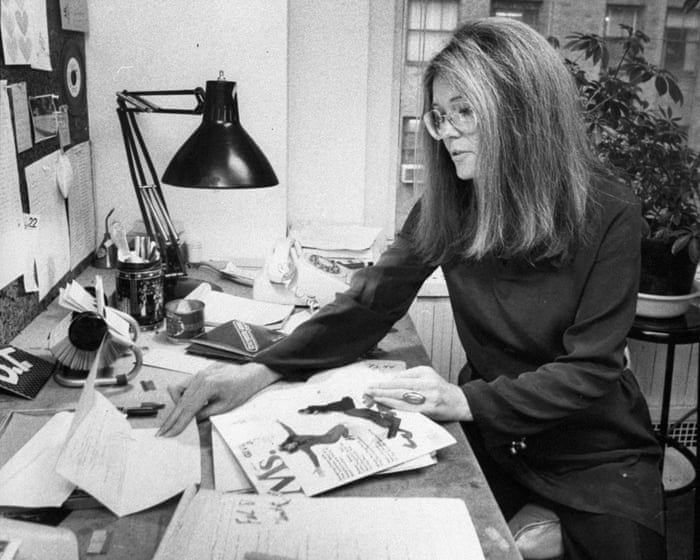
An Unexpected Life by Gloria Steinem review – a fitting tribute to a feminist icon

The activist’s memoir, due to be published this month, now stands as a posthumous testament to her remarkable life

Gloria Steinem was due to speak at a women’s lunch in New York at the end of this month and at more events in October, illustrating the central theme of An Unexpected Life, her new memoir, which, when it’s published a few weeks from now, will stand as posthumous testament to the 92-year-old icon: just keep going. So it is, after her death on Wednesday, that the book’s opening pages unfold with a deep, added poignancy and when Steinem expresses gratitude for a life that has been both happier and longer “than I ever imagined”, one is struck by the greater gratitude we probably owe her.

An Unexpected Life is a follow-up of sorts to My Life on the Road, the activist’s memoir of a decade ago, and as the tributes pour in, the book offers us an opportunity to go back over Steinem’s hardscrabble origins in Toledo, Ohio, and the roots of her activism. This is where it all happened, the formation of a woman who would come to define second wave feminism by combining a tough-as-they-come stance with something that looked a lot like serenity. Reading the first half of the book, one is reminded of Steinem’s original power and the improbability and iconoclasm of her journey, in which a childhood governed by poverty and dysfunction turned into a lifelong mission to resist the narrow templates laid out for her.

Continue reading...

© Photograph: New York Daily News Archive/NY Daily News/Getty Images

© Photograph: New York Daily News Archive/NY Daily News/Getty Images

© Photograph: New York Daily News Archive/NY Daily News/Getty Images

  •  

The September reset is real. I’m about to become a better person, flaxseed by flaxseed | Emma Brockes

Small changes are what I’m aiming for – 10-minute workouts, cleaning out my handbag. Then I’m less likely to have failed come October

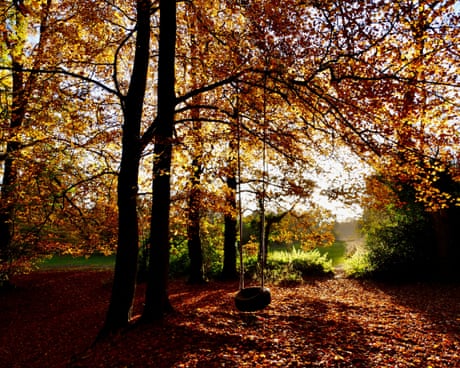
Are you a January resolutions or a September reset person? The latter has always felt more propitious to me, light of the exhaustion of Christmas and with the weather still on our side. Last week, when the Pavlovian response to buying new stationery (for my kids) kicked in, I found myself following a rote impulse to sort my life out by replacing the bag in the vacuum cleaner and committing to an unsustainable course of personal change. This is it! The beginning of a new way of life, driven by sharp pencils and the crispness of autumn.

I mean, it won’t last. But while most of us have read enough advisories cautioning against new year resolutions as durable, somehow September still promises the earth. I can’t shake it. As soon as the breeze picks up and the leaves start to turn, I feel my pilot light ignite – and the urge to sign up to unaffordable personal training sets in. It feels like an ancient response. I’m not writing this while leaning on a dry stone wall or managing my sheepdogs, but still; the sensory changes brought in by autumn surely activate latent energies in all of us. If you can avoid pumpkin spice and survive the costume search for Halloween, September triggers good feelings of renewal via the psychic memory of our serf forebears bringing in the harvest.

Emma Brockes is a Guardian columnist

Continue reading...

© Photograph: Geoffrey Swaine/Shutterstock

© Photograph: Geoffrey Swaine/Shutterstock

© Photograph: Geoffrey Swaine/Shutterstock

  •  

Digested week: Is there anything sadder than the end of summer? | Emma Brockes

Plus, views from the Cotswolds of Harry and Meghan’s return, and the embarrassing anachronism that is Ali G

Is there anything sadder than the end of summer? As schools go back next week and parents rely on the boosting effect of a return to routine, we look around for other ways to soften the blow. A few things this year that might make it easier: the need for rain ensures that the advent of autumn is slightly less depressing than usual; people with attic conversions in which you could bake a muffin over the summer will be able to use them again; and if you happen to be a woman of 50 or thereabouts, the fresher weather is ... a relief.

Continue reading...

© Photograph: Adam Vaughan/EPA

© Photograph: Adam Vaughan/EPA

© Photograph: Adam Vaughan/EPA

  •  

Relax, everyone: Elon Musk has a mantra to make the climate crisis go away | Emma Brockes

It’s simple, says the SpaceX boss – according to something called the ‘Kardashev scale’, we just have to move energy production ‘off-planet’

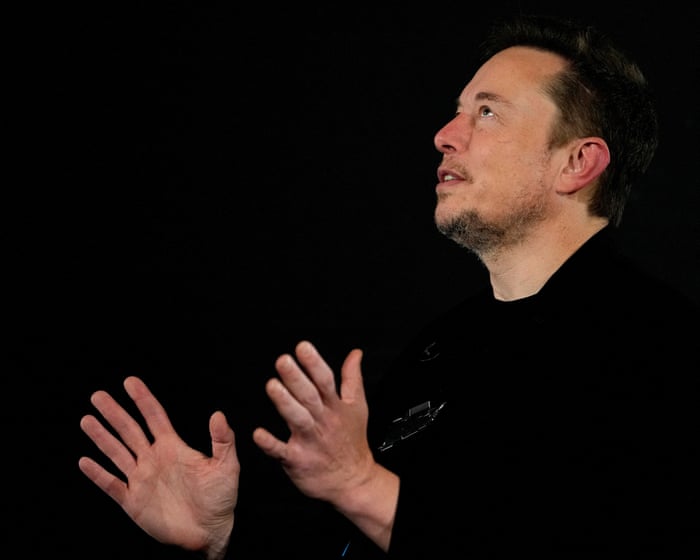
Next time the weather gives the UK 61 days without rain and we wonder idly if this is the end, there is a term we may whistle up to soothe us. Like murmuring the rosary, or putting our fingers in our ears and humming, this phrase is to be mumbled on repeat – “the Kardashev scale, the Kardashev scale” – a buzzy concept in tech, much favoured by Elon Musk, and precisely the thing we’ve been waiting for. The Kardashev scale is the answer both to our impending doom and our anxiety around it – and if we decide to believe in it, we won’t have to give the climate crisis a single thought until the last drip falls from the tap.

This is the idea and it’s a familiar one to anyone who has watched tech billionaires take intractable, commonplace crises and decide that, among the measures and proposals in play, the vital missing ingredient so far has been them. Do you remember when Jeff Bezos, rather than doing something quotidian and loserish like funding public education by ensuring Amazon pays the same tax rate as regular Americans, decided instead to reinvent preschools?

Emma Brockes is a Guardian columnist

Continue reading...

© Photograph: Reuters

© Photograph: Reuters

© Photograph: Reuters

  •  

I’m torn by the hard hat v graduation cap debate. Is it wrong that I want my kids to go to university? | Emma Brockes

As Andy Burnham intervenes, it’s clear that the shine is coming off higher education. But is society ready for this mindshift? Am I?

For a while now I’ve been having a conversation with friends that a few years ago would’ve been largely unthinkable. Partly, this is because of how sheltered we all tend to be when trying to imagine our kids’ lives running on different tracks to our own. But it’s also about the world changing. A brilliant young person I know left school, took up an internship, turned it into a job and now she’s in her early 20s with no debt and a great position at a big fashion house. “Maybe I won’t go to university, either,” said one of my kids, eyeing me for a reaction, while I nodded thoughtfully and tried to ride out the panic.

Andy Burnham’s announcement this week that university shouldn’t be the single, aspirational goal of all young people is perfectly timed and sensibly presented and shouldn’t sound as radical as it does. It is, of course, a correction to existing norms that university-for-all is a proper national goal and the only personal determinant of ambition and success. By contrast, Burnham said on Tuesday, this country should “value the hard hat every bit as much as the graduation cap” as he spoke about tailoring technical and vocational training to meet local job needs and tackle youth unemployment.

Continue reading...

© Photograph: Joerg Sarbach/AP

© Photograph: Joerg Sarbach/AP

© Photograph: Joerg Sarbach/AP

  •  

In a fractious, divided world, I think I know why Pride is the hottest show in town | Emma Brockes

The 2014 film was only a modest success – but now the musical’s message of gay rights and solidarity feels both outlandish and full of hope

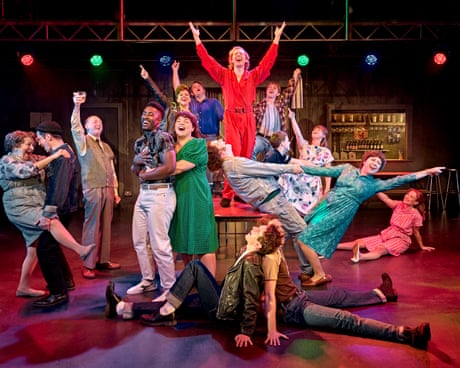
Hands down the hottest ticket in London this summer is the musical Pride at the National Theatre, which is booked solid until the end of its run in September and will presumably transfer to the West End after that. There are lots of gay shows doing well at the moment: I saw Oh, Mary! for the second time this week when the show’s creator, Cole Escola, came over from New York to resume the title role, and Operation Mincemeat keeps going and going. But both those shows are tonally rather than politically gay. Pride, which is adapted from the 2014 film and had modest commercial success when it came out, is a different kettle of fish and I’m curious as to why it’s flown now.

I should say up front I haven’t seen the show (can’t get a ticket!). But this week, as I watched my timeline continue to fill up with effusive praise and lots of crying about the musical, I went back to the film. It’s a strange time to watch it, in a news cycle in which issues around sexuality in public life and old views about gay rights have surfaced to yank us back to earlier times. The death of the US senator Lindsey Graham triggered widespread speculation about what, exactly, Donald Trump held over him and gave rise to a lot of gay jokes pulled out of the deep freeze.

Emma Brockes is a Guardian columnist. She is the author of She Left Me The Gun: My Mother’s Life Before Me

Continue reading...

© Photograph: Manuel Harlan

© Photograph: Manuel Harlan

© Photograph: Manuel Harlan

  •  

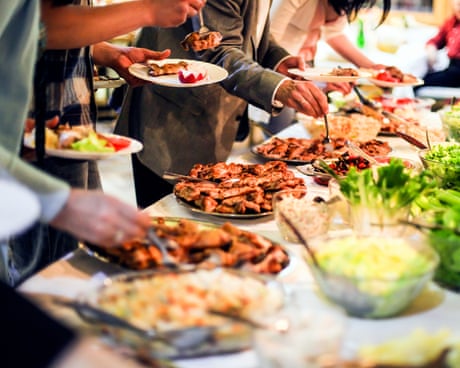
In Britain, Europe, and especially Las Vegas – maxxing the all-you-can-eat buffet is the people’s sport | Emma Brockes

As the all-inclusive holiday has a revival, I recall honing my buffet talents at the Pizza Hut salad bar in the 1980s. It's skill and science: exhilarating

School’s almost out and the holidays are here, which means for millions of Britons we have arrived at the start line for what might be called our biggest annual event: Wimbledon and the World Cup are one thing, but the all-inclusive and all-you-can-eat buffet olympics remains, I would argue, this country’s strongest competitive sport. Arriving at Luton airport before dawn last year, my children walked past the bars and with the innocence of the American-born said, owl-eyed, “Are they drinking … alcohol?” They are, my darlings, and will continue to do so from first light in the terminal until the last coach leaves the resort.

This is how it is now. Since Covid, vacation trends in Britain have skewed increasingly towards formalising this country’s latent maximalist instincts when it comes to enjoying our holidays. Between 2023 and 2024, bookings for European all-inclusive resorts rose by 30%, and the latest figures from Abta suggest that a quarter of British holidaymakers will now opt for the all-inclusive – meaning bottomless canteen-style food and drink, which, no matter how much we paid for it up front, I defy any of us not to experience as “free”.

Emma Brockes is a Guardian columnist

Continue reading...

© Photograph: GoodLifeStudio/Getty Images

© Photograph: GoodLifeStudio/Getty Images

© Photograph: GoodLifeStudio/Getty Images

  •  

The Land and Its People by David Sedaris review – crankiness and charm

Sedaris plays up the curmudgeonliness in a collection that nevertheless entertains

I’ll confess my heart sank slightly at the prospect of reading David Sedaris’s new volume of essays, some of them previously published in the New Yorker, and which, relative to his earlier output, strike me as increasingly shticky and reliant on anecdotes too thin for their weight. (From the essay Little America: “Few things drive me crazier than people who put their feet up on the furniture.”) After nine previous volumes, Sedaris would seem to be suffering from a problem that comes to all writers in the end, and memoir writers in particular, which is a dearth of useable material. What can there possibly be left in the Sedaris backstory that the writer hasn’t already mined?

Well, as it turns out, there is still lots of useable stuff, as well as some an editor could have put a red line through, although Sedaris, who has sold more than 16m books, may well consider himself part of the post-editing elite. (I was reminded while reading of a line from a profile of JK Rowling several years ago in which, referring to The Casual Vacancy, Ian Parker wrote: “Some sentences cause you to picture a Little, Brown editor starting to dial Rowling’s number, then slowly putting down the handset.”) And perhaps it doesn’t matter; as long as Sedaris’s superfans keep coming, both for the books and events, why mess with the formula? For less committed followers, however, reading Sedaris is a glitchier experience than it was.

Continue reading...

© Photograph: Vincent Tullo/New York Times/Redux/eyevine

© Photograph: Vincent Tullo/New York Times/Redux/eyevine

© Photograph: Vincent Tullo/New York Times/Redux/eyevine

  •  

It’s a truly Trumpian tragedy: he’s made billions of dollars but can’t buy love or respect | Emma Brockes

Potus pocketed over $2.2bn last year – but with an algae-filled reflecting pool and his State Fair a fiasco, what price happiness?

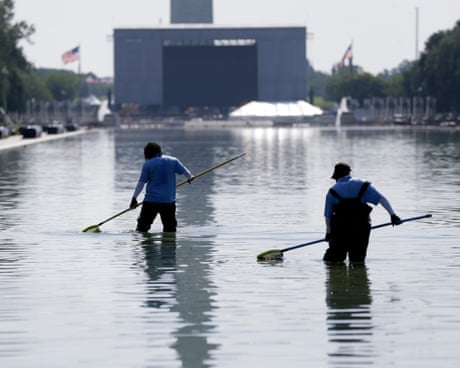
From certain angles, it might appear as if President Trump is having a tough month. He messed up the renovation of the Lincoln Memorial reflecting pool, which he blamed on acts of vandalism no one has been able to stand up. The supreme court rejected both his bid to appeal against the $5m (£3.8m) civil judgment against him for defaming and sexually abusing E Jean Carroll, and his executive order to end birthright citizenship. And the war with Iran keeps rumbling on. And yet, after Trump’s mandatory financial disclosure report was released on Tuesday, headlines drew attention to the fact the president made more than $2.2bn in revenue in 2025 – more than three times what he pulled in the year before his inauguration. Contrary to appearances, perhaps everything is going exactly to plan.

It is always a question with Trump as to how much the wealth he has accrued in his second term in office is the spoils of strategy rather than the lucky result of his scattergun but industrial-scale hustle. Looking at the numbers in his financial report, one is reminded that before he became president, Trump piloted a series of failed businesses – six of which declared bankruptcy – and gave every indication of being a lousy businessman. It’s often pointed out that if Trump had simply invested the vast inheritance left to him by Fred Trump, his father, in a standard tracker fund, he would’ve made more money than through his lacklustre business career, and there’s nothing to suggest this was likely to change.

Emma Brockes is a Guardian columnist

Continue reading...

© Photograph: Rahmat Gul/AP

© Photograph: Rahmat Gul/AP

© Photograph: Rahmat Gul/AP

  •  

‘How do I deal with my rage? I put it in everything I do’: Killing Eve’s Sandra Oh on fury, friendship and hitting her prime in midlife

It took a long time for the actor to find her groove – then the smash TV spy thriller changed everything. She talks about getting advice from A-listers, speaking her mind, and why she’s switching to theatre

Sandra Oh bursts into a back room at the National Theatre in London with wayward post-rehearsal energy. The 54-year-old, long one of the most stylish actors in Hollywood, is in brown linen, a herringbone jacket and hat and sunglasses, which she removes before collapsing into a chair and throwing her head forward, arms outstretched, hair splayed across the table. “It’s just the fucking process of it,” she groans. “We just finished our first stagger-through, which if anyone is an actor – it’s early days, so the fact we made it through was great. It’s brutal. We started in the Lyttelton, and it’s interesting to be in that space and to hear verse. You can really hear it. It’s not just about volume or speed. It’s not even solely about intention. You learn so much just being in that space, but the big thing is – sorry.” She catches herself. “I’m just marching on.” And she bellows with laughter.

Oh has been in London for just over a month rehearsing her role as Alice in a modern reimagining of Molière’s Le Misanthrope. It’s a happy return; eight years ago, she was in the capital to film the first of four series of the hit show Killing Eve, which became a phenomenon and changed her life as an actor for ever. Oh played Eve Polastri, the shambolic but brilliant British intelligence agent, who, along with Jodi Comer’s Villanelle, made for one of the best spy capers of recent years. Now, she is playing a novelist – gender-flipped from the 17th-century original, in an adaptation by Martin Crimp – who is fed up with the flattery and dishonesty of the people around her. It’s a deliberate pivot to theatre; last summer, she appeared as Olivia in a starry production of Twelfth Night at the Delacorte Theater in Central Park, New York. In the autumn, she made her debut at New York’s Metropolitan Opera in a production of Donizetti’s comic opera La Fille du Régiment. Unlike the sometimes fraught me-me-meism of screen work, says Oh, working in theatre in general and at the National in particular “is a collaborative thing” – not least, she adds drily, because no one does it for the money. “Everyone has to bring their best and most open selves. And everyone else loves watching everyone succeed.”

Continue reading...

© Photograph: Stephanie Sian Smith/The Guardian

© Photograph: Stephanie Sian Smith/The Guardian

© Photograph: Stephanie Sian Smith/The Guardian

  •  

Digested week: Struggling bees and the G7’s hot mics may speak volumes

Are we in the opening scenes of a disaster movie? There’s something going on with insects

It’s the start of the G7, guaranteeing us a week of either serious commentary or hot mic moments that may, in their way, prove more revealing than all the thousands of words of analysis. Previous summits have delivered a steady flow of off-the-cuff remarks from world leaders, including President Obama, at the G20 in 2011, grousing to the then French president, Nicolas Sarkozy, about Benjamin Netanyahu (“You may be sick of him, but me, I have to deal with him every day”), and Jacques Chirac, who, at a European summit in the early 2000s, said of the UK: “You cannot trust people who have such bad cuisine. It is the country with the worst food after Finland.” Rude!

Continue reading...

© Photograph: dts News Agency Germany/Shutterstock

© Photograph: dts News Agency Germany/Shutterstock

© Photograph: dts News Agency Germany/Shutterstock

  •  
❌