❌

Lese-Ansicht

PatKop & Say album review – playfulness and beguiling delicacy in mix of new and old

Patricia Kopatchinskaja and Fazil Say
(Alpha
)
Compositions by both musicians themselves frame works by Szymanowski and Prokofiev

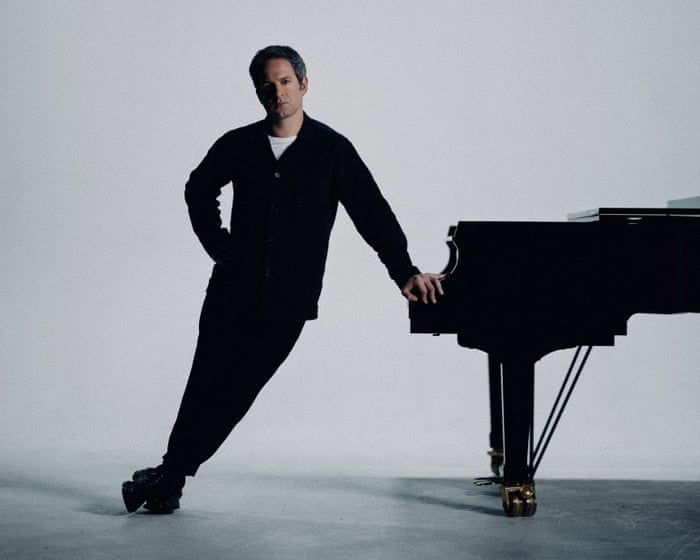
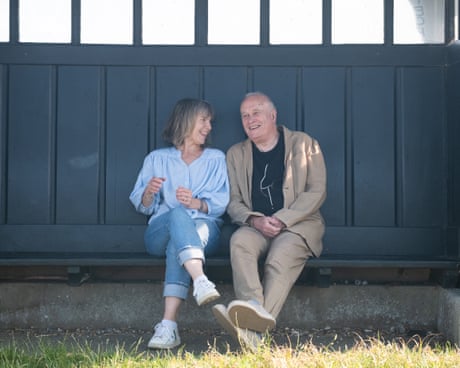
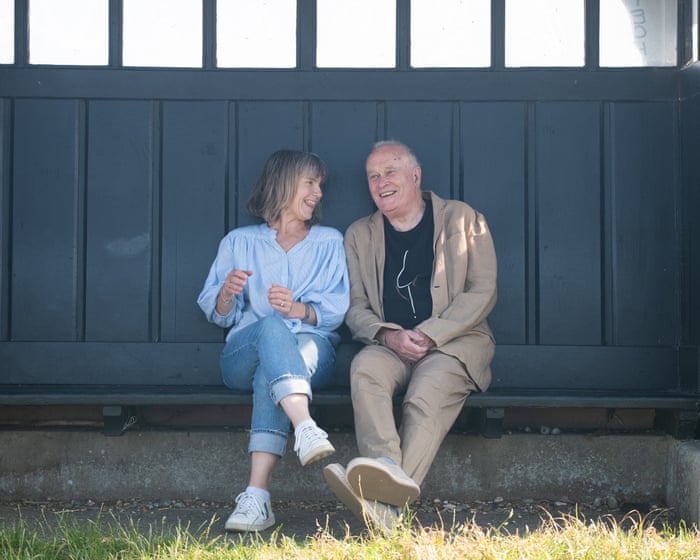
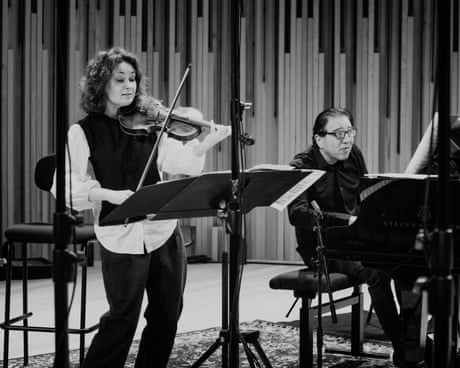
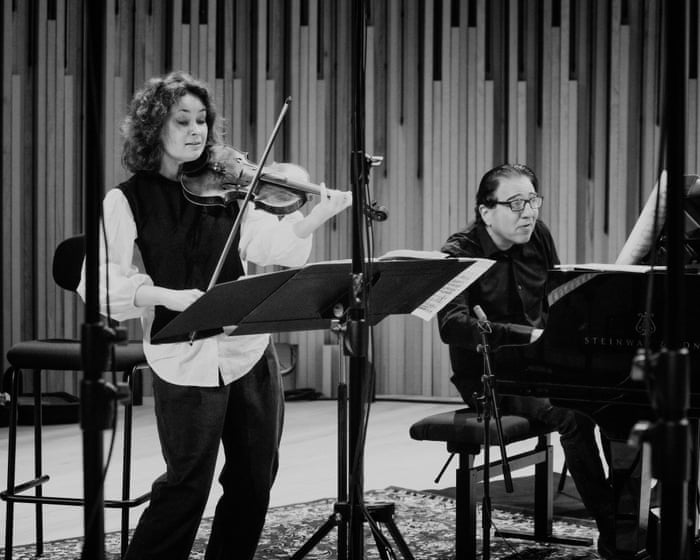
Patricia Kopatchinskaja and Fazil Say have recorded Say’s music together before, but this is their first recording to feature Kopatchinskaja as a composer as well, but this is no vanity project: Say’s and Kopatchinskaja’s pieces make good complements to Szymanowski’s three Mythes and Prokofiev’s Violin Sonata No 1.

Say’s Lost Screams Sonata is driven by repeated piano rhythms, its fierceness tempered by an episode in which Kopatchinskaja plays low, ghostly harmonics and Say gently plucks the strings of the piano so it almost sounds like a second violin. Kopatchinskaja’s three-movement piece UniSolo is an impish work with a searching, thoughtful playfulness that comes from the parallel world to the Kurtág miniatures she plays so well.

Continue reading...
© Photograph: borggreve/Courtesy of Marco Borggreve
© Photograph: borggreve/Courtesy of Marco Borggreve
© Photograph: borggreve/Courtesy of Marco Borggreve
  •  

Mendelssohn: Songs Without Words review – Chamayou makes each piece feel somehow familiar yet fresh

Bertrand Chamayou
(Warner Classics)
The pianist brings a singing quality and seeming effortlessness to the complete set of Songs Without Words

Mendelssohn wrote 48 Songs Without Words for solo piano: eight sets of six, mostly under three minutes long, emerging over a 16-year period that spanned most of his short adult life. The handful that still regularly make their way on to recital programmes are only the tip of the iceberg; the complete set hasn’t been recorded as much as you might think, which makes this new release from Bertrand Chamayou still more welcome.

These pieces belong to the world of Schubert Lieder, and Chamayou brings a singing quality to them from the off. The Duetto that rounds off the Op 38 set is beautifully done, the melodic lines alternating like a female and male voice, each lingering just slightly as the other voice takes over. Compared to other interpreters, Chamayou is often softer-edged, his playing a little smoother and more flowing, although there are exceptions: Op 62 No 6 – known as Spring Song, but originally titled Camberwell Green after the then-elegant London suburb where it was written – is given a perky, almost frothy touch in the accompaniment: spring bubbling under like frogspawn in a pond.

Continue reading...

© Photograph: Le Philtre / Parlophone Records Ltd 2026

© Photograph: Le Philtre / Parlophone Records Ltd 2026

© Photograph: Le Philtre / Parlophone Records Ltd 2026

  •  

‘I never choose the cautious option’: Royal Opera’s Jakub Hrůša on collaboration, control and conducting Wagner

One year into the role, the Royal Opera’s music director is taking on the challenge of Parsifal, and, next season, the Ring Cycle. I’m here, and I am courageous says the conductor

‘You can choose the cautious option – or you can take the full risk and just go and conduct. Maybe I would like the cautious option, but I never choose it.” Jakub Hrůša learned to trust his instincts at the Royal Opera House back in 2022 when he conducted his first ever Wagner opera – Lohengrin – there, describing the experience as “one of the absolute highlights of my life”. Now he’s a year into his role as the house’s music director and about to conduct his first Parsifal, staged by Evgeny Titov. And next season there’ll be yet more Wagner firsts when he conducts complete cycles of the Ring as staged by Barrie Kosky. For most conductors, this would be a gradual process, adding the four Ring operas to their repertoire one by one, but not for Hrůša: he’ll be conducting his first Das Rheingold, Die Walküre, Siegfried and Götterdämmerung all in the space of a week.

“Is it too bold? I find it wonderful!” he says. “I could have chosen to do it in my own way, in 10 years’ time, somewhere else – but I’m here, I’m the music director, the Ring should be done and wants to be done in its entirety, and I am courageous.”

Continue reading...

© Photograph: Charlie Clift

© Photograph: Charlie Clift

© Photograph: Charlie Clift

  •  

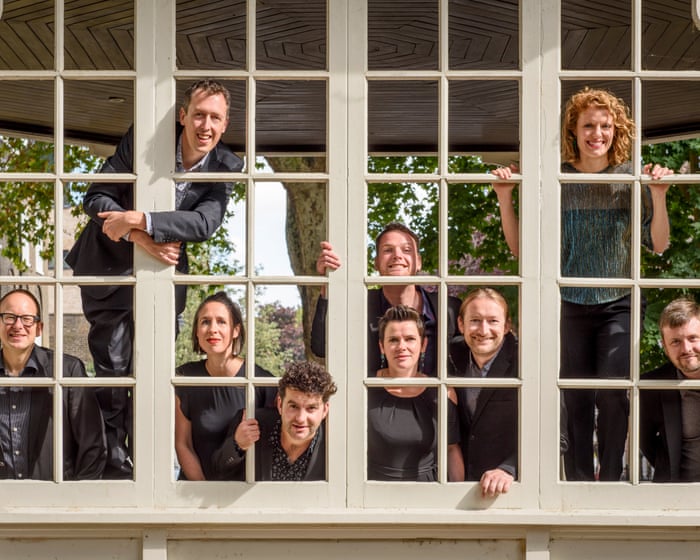
Exaudi: Pocket Universe album review – virtuoso vocals with a joyfully bonkers bent

Exaudi/Weeks
(NMC)
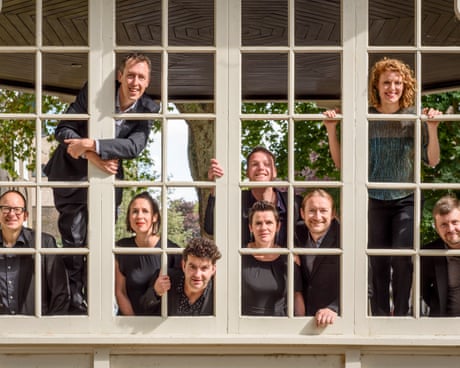
Four substantial, eclectic works written for James Weeks’ ensemble are brought together here, encompassing swooping folk phrasing, delicate harmonising and exuberant stylistic skill

There is a lot of joy in this release from Exaudi and their conductor, James Weeks, bringing together four substantial, eclectic works written for the vocal group during the 2010s. The first is Guide by Cassandra Miller. Based on a devotional song as recorded in 1968 by the folk singer Maria Muldaur, phrases of which are repeated freely by the singers in imitation of Muldaur’s swooping, full-voiced style, it builds quickly into a kind of controlled cacophony.

Andrew Hamilton’s Proclamation of the Republic imagines Patrick Pearse outside the Dublin General Post Office at Easter 1916, reading the historic text to a largely confused or oblivious public; little by little, pairing syllables on a quietly but insistently repeating two-note figure, the music blooms into something that seems to unite the crowd as they walk away, humming.

Continue reading...

© Photograph: Courtesy of Jon Cartwright

© Photograph: Courtesy of Jon Cartwright

© Photograph: Courtesy of Jon Cartwright

  •  

Alcina review – Handel’s opera of sex and sorcery comes alive in vivid staging

Royal Opera House, London
This revival of Richard Jones and Antony McDonald’s 2022 staging has kept most of its excellent original cast Lisette Oropesa is imperious and gleaming as the enchantress Alcina

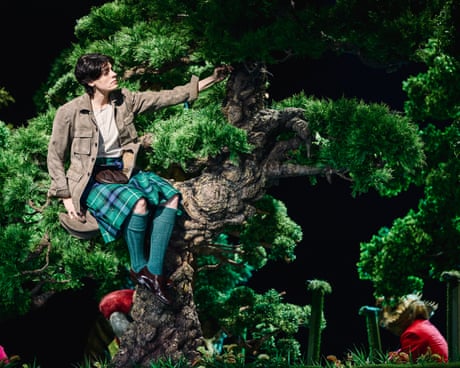
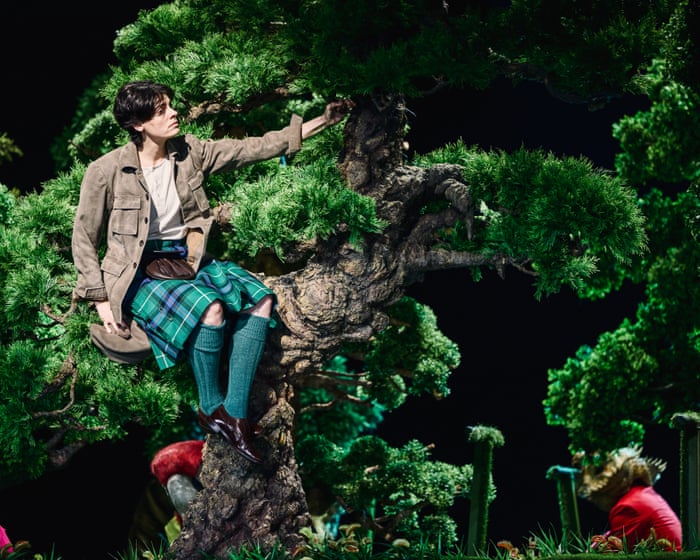
Handel, but make it fun. Perhaps that was Richard Jones’s brief for his production of Alcina, first seen here in 2022 and revived by Sarah Fahie, its original movement director. And of all Handel’s operas perhaps it’s this one, with its desert-island storyline of sorcery and sex – what happens on the island stays on the island – that invites this treatment.

Jones makes the “good guys” into members of a kind of puritan cult, so the tension between the moral world and the sensual, instinctive one is less of a gentle pull, more a tug of war. Alcina’s prisoners are transformed by a squirt of her eponymous perfume into birds and animals – a parrot, a mandrill, a King Charles spaniel, all wearing prosthetic heads so beautifully made that for the past year or two they have been in display cases in the Royal Opera House foyer. The animals are kept busy fawning over Alcina or moving Antony McDonald’s sets around: there’s a huge bed, a greenhouse and an enchanted forest on wheeled platforms, found behind the doors of what might be a hotel corridor. It’s a wide stage, and there’s often at least one singer running across it. Amid all this, the opera’s moments of warmth, insight and introspection risk getting lost or at least overshadowed. It’s brittle, but it is entertaining.

Continue reading...

© Photograph: Ian Hippolyte

© Photograph: Ian Hippolyte

© Photograph: Ian Hippolyte

  •  

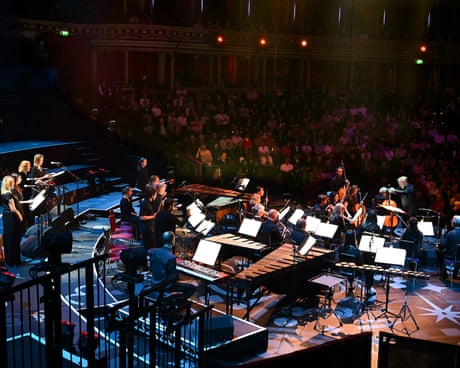
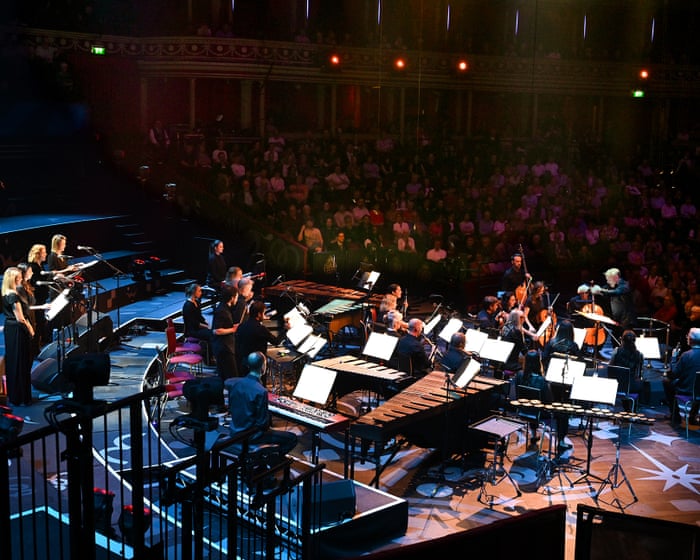
The Gesualdo Six/Colin Currie Group review – surely the year’s most atmospheric Prom

Royal Albert Hall, London
The Gesualdo Six brought focus and luminous tone to a sequence of early devotional music; Reich’s Tehillim made a mesmeric and ecstatic pairing

When Steve Reich wrote Tehillim, half his long life ago, it was a very modern contribution to the ancient tradition of psalm singing. In this late-night Prom celebrating Reich’s 90th birthday, Tehillim was presented next to a sequence of devotional music from medieval Europe, making for what was surely one of this year’s most atmospheric Proms.

For the first half the stage was held by the singers of the Gesualdo Six, who brought intense focus, luminous tone and consistently outstanding vocal quality to polyphonic works by Machaut, Ockeghem, Dunstable and Josquin des Prez, all sung from memory, interspersed with solo melodies by Pérotin and Hildegard of Bingen. Odd one out, in theory, was a version of Hail Gladdening Light written in 2017 by Owain Park, the Gesualdo Six’s bass and director; but this brief chant-like solo for countertenor, with harmonies filled in by the rest of the singers’ humming, fitted in almost seamlessly.

Continue reading...

© Photograph: Chris Christodoulou

© Photograph: Chris Christodoulou

© Photograph: Chris Christodoulou

  •  

Donnacha Dennehy: Limina album review – joyously unfettered music is a thrill in motion

McCarthy/Waarts/National Symphony Orchestra Ireland/McAdams
(Nonesuch)
Dennehy’s Limina, based on areas of the body, is firmly grounded in the harmonic series, and sparklingly executed here, while Stephen Waarts gives a bravura performance of the Violin Concerto

These two concertos, beautifully paired, again find Donnacha Dennehy writing music that is both firmly grounded – both rhythmically and in his fascination with the harmonic series – and, to the ear at least, joyously unfettered. Limina was written in 2023 for the pianist Eliza McCarthy, who is a powerhouse soloist here with the National Symphony Orchestra Ireland and conductor Ryan McAdams. It’s a serious piece born of a slightly playful idea. Its three movements are each named for a part of the body, staking out one area before moving to the threshold, or limina, of the next. Head starts with synapses firing high up the keyboard in sparks and glitter; it travels downwards, frenetic energy dissipating, towards Chest, which evokes breathing – not with regular rhythms but with gentle palindromic phrases that swell in and out and sigh back towards the same bass pitch. Nervous System begins deep in the gut, with coarser sounds – low piano vamping, and slapped bowing from the strings – but eventually escapes its tether and disperses around the keyboard.

The Violin Concerto, written in 2020, is just as propulsive, and the outer movements especially are a workout for Stephen Waarts, who gives a bravura performance. In the middle movement his violin soars, pushing off from the orchestral support to trace slow, weightless somersaults in the air. The finale has a thrilling sense of motion creating its own gravity: as with so much of Dennehy’s writing, it’s as if the music is held together by centrifugal force.

Continue reading...

© Photograph: Hugh O'Conor

© Photograph: Hugh O'Conor

© Photograph: Hugh O'Conor

  •  

Song & Dance album review – Jacques Forestier’s impressive debut has persuasive rhythmic poise
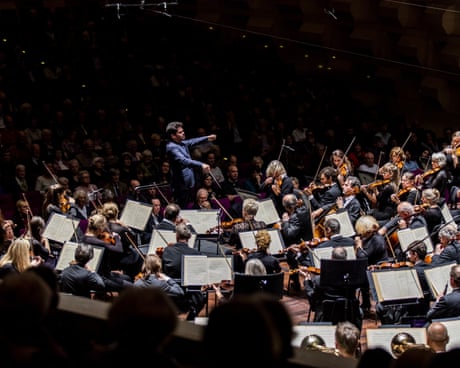
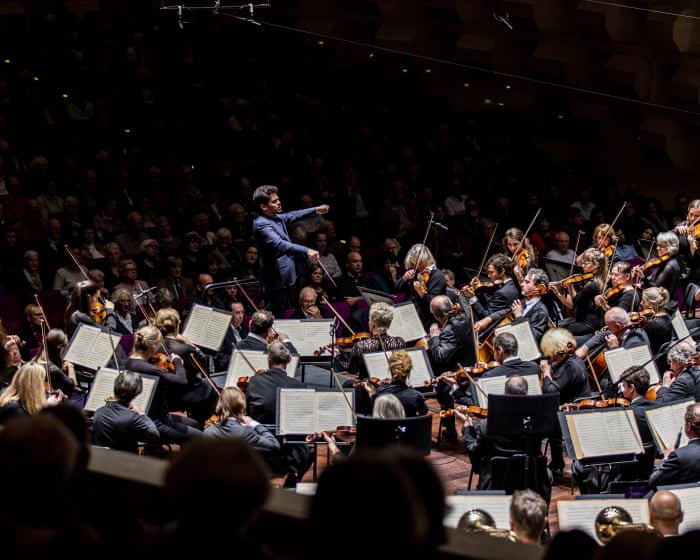
Jacques Forestier/Boris Kusnezow
(Warner Classics)
The Canadian violinist’s album definitely does what it says on the tin: from Bartók to Ernst, there is a quiet and beguiling eloquence to his playing

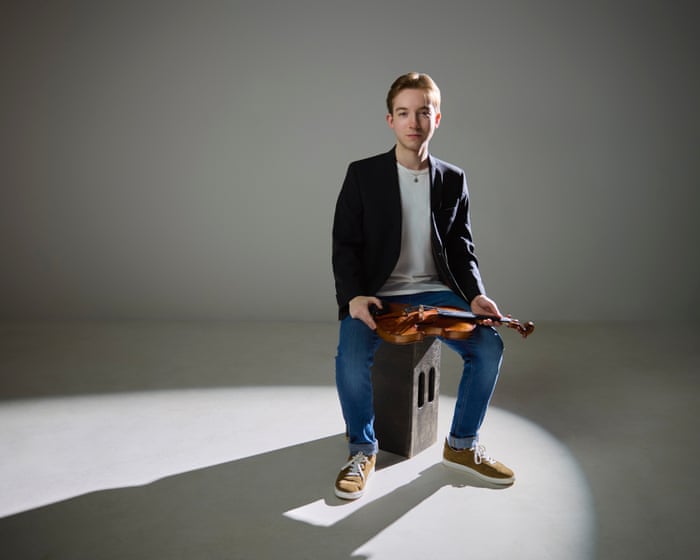
Perhaps the most promising thing about this impressive debut album from Jacques Forestier, the young Canadian violinist who tied in first place at the 2024 Joseph Joachim Competition, is the way it lives up to its title.

There’s a swing to the way he and the pianist Boris Kusnezow play Bartók’s six Romanian Folk Dances that extends even into the quiet movements, which sound distant and beguiling. Wieniawski’s Polonaise de Concert comes across as a dance rather than just a flashy showpiece. Bach’s D minor Sarabande is framed by movements from Ysaÿe’s solo Sonatas. All have persuasive rhythmic poise.

Continue reading...

© Photograph: Ryan Parker

© Photograph: Ryan Parker

© Photograph: Ryan Parker

  •  

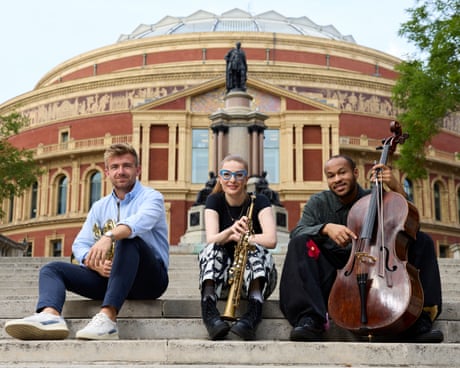
‘We’re going to have to groove!’ The cello, horn and sax prodigies jazzing up the Proms

The finalists from the BBC young musician of 2016 have teamed up with a Mercury-nominated composer to craft a Proms premiere that’s uplifting, lyrical and goes out with an almighty bang

A cellist, a horn player and a soprano saxophonist walk into the Royal Albert Hall … it could be the setup for an exceptionally nerdy joke, but instead it’s a new triple concerto, with three soloists rather than the usual one, to be premiered on the final weekend of the Proms. The concerto – by Gwilym Simcock, the Mercury-shortlisted composer, jazz pianist and horn player who in 2006 was the BBC’s first New Generation jazz artist – reunites the three finalists from the 2016 BBC young musician of the year competition, hence the unusual lineup. “This is a unique combination of instruments,” says the saxophonist Jess Gillam. “I’m fascinated by the colours that we’re going to find. I hope we’ll be able to make a sound where people will think: what instrument is that?”

BBC young musician has launched many careers, but 2016 was exceptional: all three finalists have become major names. “It’s not like you win the competition and all these things fall from the sky, but it does give you a bit of public exposure,” says the horn player Ben Goldscheider, the 2016 brass section winner. “Then it’s up to you and the people around you what you make of that.”

Continue reading...

© Photograph: David Levene/The Guardian

© Photograph: David Levene/The Guardian

© Photograph: David Levene/The Guardian

  •  

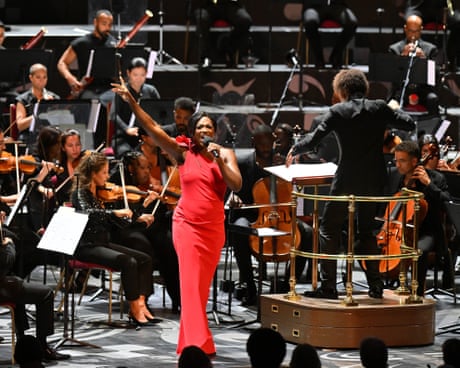
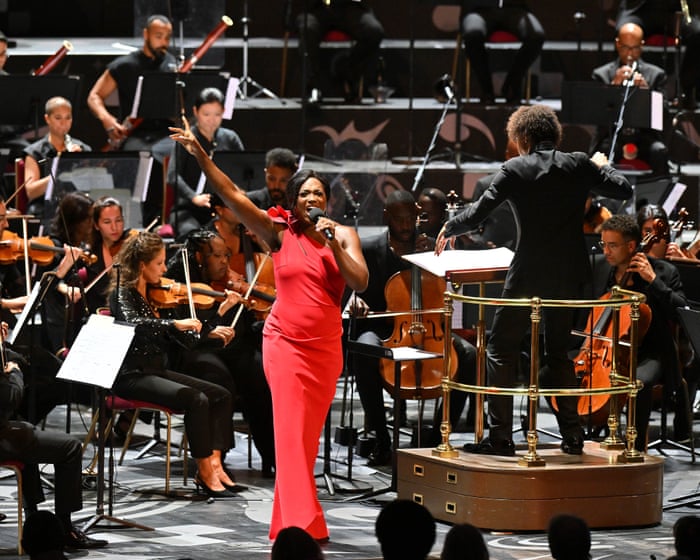
Chineke!/ Heyward/ Angel Blue review – belated premiere for forgotten Black composer

Royal Albert Hall, London
A suite of reconstructed dance pieces from 1918 by Edmund Thornton Jenkins made a moving start to Chineke!’s Prom, where soprano Angel Blue sang Barber’s nostalgic Knoxville and Dvořák’s Symphony No 8 made a breathless finale

Slowly but surely, our perceptions of what a composer looked like in the early 20th century are widening. Chineke!’s ongoing mission to unearth music by forgotten Black composers here brought about the belated premiere of Ballet by Edmund Thornton Jenkins, its incomplete manuscript parts reconstructed by his great-nephew Tuffus Zimbabwe.

Growing up in Charleston, South Carolina, Jenkins died in Paris aged only 32, having made a name for himself as a rising composer and band leader. In between he studied at the Royal Academy of Music in London, where in 1918 he wrote his three-movement Ballet. It sounded persuasive here, as conducted by Jonathon Heyward. A substantial opening Processional, ominous then light-footed, gives way to a second movement beginning with a bubbling flute duet and a florid viola solo; together, these repeatedly show a gift for weaving together melody and countermelody. The flaw is in the finale, where the waltz that dominates the movement sounds unavoidably slender and staid next to the trumpet fanfare that announces it. Still, Jenkins rounds things off with an exuberant, uptempo ending.

Continue reading...

© Photograph: Mark Allan/Mark Allan/BBC

© Photograph: Mark Allan/Mark Allan/BBC

© Photograph: Mark Allan/Mark Allan/BBC

  •  

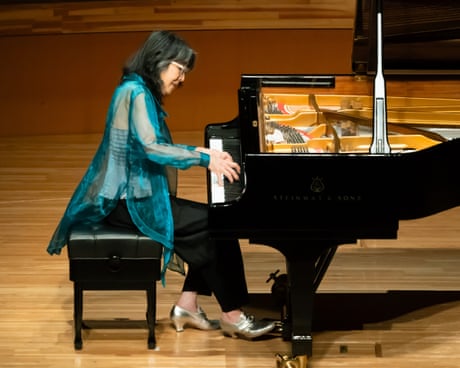
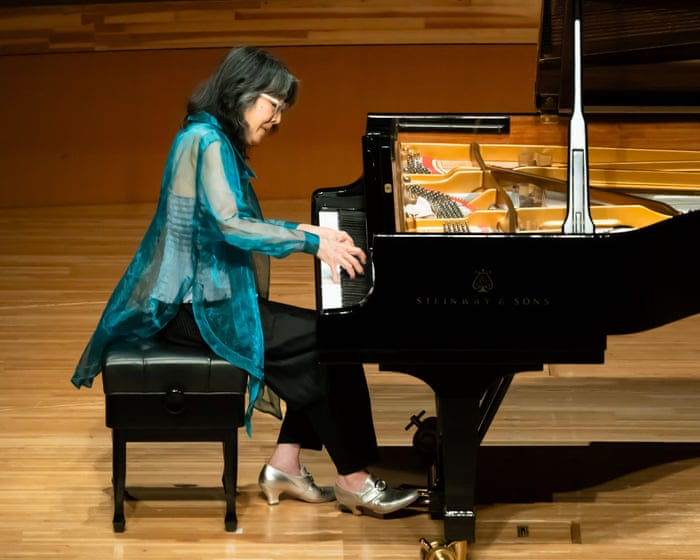
Beethoven: The Last Three Sonatas/Mitsuko Uchida album review – the music emerges as if new

Decca
There are no major surprises in this live recording, just the simple but sublime sense that the music is being handed from composer, through pianist, to us

Twenty years ago, Mitsuko Uchida released a studio recording of Beethoven’s last three piano sonatas that remains a benchmark. Now comes this performance recorded live in Tokyo last October.

Those who have loved her previous recording won’t find big surprises – her interpretations remain similar, albeit at times a little broader or more elastic, and with less obvious urgency in, say, the brief second movements of Op 109 and 110. Yet, even from a pianist who has been playing these pieces for so many decades, the music emerges as if new: nothing sounds predetermined. Nor did Suntory Hall, which seats about 2,000, get exactly the same performance as she had given to a much smaller audience at Wigmore Hall in London, two weeks earlier. Most audience noise has been edited out, but the atmosphere of collective concentration remains.

Continue reading...

© Photograph: © Naoya Ikegami / SUNTORY HALL

© Photograph: © Naoya Ikegami / SUNTORY HALL

© Photograph: © Naoya Ikegami / SUNTORY HALL

  •  

Ariadne auf Naxos review – Laurent Pelly’s staging has plenty of wit but lacks weight

Glyndebourne, East Sussex
The director hits perfectly all the comic marks of Strauss’s opera about an opera, but there’s few insights in a work that should be moving as well as frothy and fun.

Glyndebourne’s new productions this summer have followed a theme: first Tosca, about a fictional opera singer; then L’Orfeo, about the mythical musician. Now comes Richard Strauss’s Ariadne auf Naxos – an opera about an opera. It starts with the shenanigans backstage as two troupes – one high art, one low – prepare after-dinner entertainment for their rich patron, then the performance that ensues when they are forced to combine their acts. The real subject is, of course, love – and that comes across only partially in Laurent Pelly’s production.

The first part finds Pelly at his witty best. We’re in the house of the richest man in Vienna, whose taste is immediately in question; Massimo Troncanetti’s set has a huge doorway of gilded, inlaid wood clashing with a very 20th-century statement chandelier. William Relton’s fearsome Major-Domo pops up everywhere, cowing even Michael Kraus’s classily sung Music Master; Ru Charlesworth’s chainsmoking Dancing Master slinks around dressed as a sequined, velvety advert for Silk Cut. Samantha Hankey, her mezzo-soprano mellow but gleaming, plays the Composer as an irascible would-be genius; Zerbinetta, the comic leading lady, teeters in stockings and suspenders. Buoyantly conducted by Robin Ticciati, the players of the London Philharmonic, reduced in number as per Strauss’s stipulations, revel in the characters’ grand hopes and small tragedies, and Pelly plays to the stereotypes brilliantly, hitting the comic marks without sending things up.

Continue reading...

© Photograph: Tristram Kenton/The Guardian

© Photograph: Tristram Kenton/The Guardian

© Photograph: Tristram Kenton/The Guardian

  •  

Orchestral Works of Mel Bonis album review – full justice is done to her finely crafted and sensuous music

BBC Scottish Symphony Orchestra/Rumon Gamba/Elizabeth Watts
(Chandos)
The French composer – a contemporary of Debussy’s – wrote slender but perfectly-formed pieces of beguiling beauty

The welcome rediscovery of Mel Bonis continues, and the BBC Scottish Symphony Orchestra and conductor Rumon Gamba do full justice to her finely crafted, perfumed orchestral music on this new studio recording. Bonis was a classmate of Debussy, and the best of her works here compare to his in terms of instrumental intrigue, albeit on a smaller scale.

Bonis’s most ambitious works for orchestra were the Trois Femmes de Légende, written around 1909. In these beguiling, brief tone poems, Ophelia emerges as a kind of tragic water nymph, Salome as a princess from a far-off, exotic east. Even more mystery surrounds Cleopatra, who is portrayed in music that is sensuous yet uneasy, with quiet writing for the bass instruments underpinning her languid melody.

Continue reading...

© Photograph: Alexander James

© Photograph: Alexander James

© Photograph: Alexander James

  •  

Dvořák: Symphony No 9 album review – Shani brings a natural freshness to a familiar work

Rotterdam Philharmonic/Shani
Warner Classics
The conductor, soon to finish an eight-year tenure at the helm of the Dutch orchestra, leaves the orchestra in good shape

Lahav Shani’s eight-year tenure at the helm of the Rotterdam Philharmonic is coming to a close – he becomes chief conductor at the Munich Philharmonic in September – and he is leaving this fine orchestra in good shape. Their recording of Dvořák’s Symphony No 9 brings a natural freshness to this familiar work, offering no big surprises or grand gestures but holding the attention fast with an elegant restlessness.

The unfolding of the first movement is unhurried but unstoppable: Shani doesn’t overshape the phrases, but gives them the space and momentum to flow organically from one to the next. The big woodwind solos – the velvety flute in the first movement, the cor anglais in the second – make their mark without signposting.

Continue reading...

© Photograph: Guido Pijper

© Photograph: Guido Pijper

© Photograph: Guido Pijper

  •  

Colin Matthews: Seascapes album review – the songs teem with detail

Nash Ensemble/Booth/Farnsworth/Cottis
(Onyx)
Soprano Claire Booth and baritone Marcus Farnsworth celebrate the influential British composer’s kaleidoscopic soundworld with this collection of four song cycles

It’s hard to think of a single figure who has been so influential on contemporary UK classical music for so long as Colin Matthews, who turned 80 earlierthis year. This release from the Nash Ensemble, conducted by Jessica Cottis, showcases his works for voice and chamber group.

What’s striking throughout these four song cycles is the kaleidoscopic sound world he creates with such forensic precision, whether he has seven players to work with or 17. The songs teem with detail; some would almost work without the singer. And yet the vocal line remains the focus.

Continue reading...

© Photograph: Publicity image

© Photograph: Publicity image

© Photograph: Publicity image

  •  

Beethoven: The Sonatas for Piano and Cello album review – Watkins and Bax have a shared impulse to deliver eloquence

Paul Watkins/Alessio Bax
Signum Classics
Cellist Watkins’ career-long immersion in the composer pays dividends in his pairing with Alessio Bax’s unfussy virtuosity

As cellist of the Nash Ensemble and the Emerson Quartet, Paul Watkins has immersed himself in almost all the chamber music Beethoven wrote. Now he brings those years of experience to his first recording of the cello sonatas. He approached the pianist Alessio Bax for this project after hearing him play the Moonlight Sonata, and his instinct was good: their playing here seems to come from a shared impulse, unflaggingly eloquent without ever seeming to strive for effect.

Together these five sonatas span Beethoven’s composing life. The earliest two date from around the time of his first piano concertos, and they find Beethoven breaking new ground in the way he writes for cello and keyboard as equal duet partners. Both sonatas have slow, serious introductions leading into extended movements showcasing the virtuosity of the pianist, to which Bax rises with a light, crisp touch. The expansive third, Op 69, which Beethoven worked on alongside the Fifth Symphony, centres on a perky middle movement akin to a symphonic scherzo; it’s nicely weighted here, the momentum continuing through all the changes in texture. The final pair of sonatas harness Watkins’s full powers of expression, in particular No 5, the only one of all these to have a full-blown slow movement. It begins in reticent, almost hymn-like style and blooms into something deeply felt; Watkins and Bax handle its closing passages with tightly controlled restraint, then gently clear the air with the introduction to the wrangly little fugue of the finale. It’s all beautifully done.

Continue reading...

© Photograph: Juergen Frank

© Photograph: Juergen Frank

© Photograph: Juergen Frank

  •  

Messiah album review – Whelan takes Handel’s oratorio back to its beginnings

Irish Baroque Orchestra and Choir/Whelan
(Linn)

Conductor Peter Whelan leads a finely judged and agile period-instrument performance with only 13 singers.

Every year, the Irish Baroque Orchestra and their conductor Peter Whelan bring Messiah back to Dublin, the city of its 1742 premiere. Their recording of Handel’s oratorio – the first on period instruments by an Irish ensemble – attempts to recreate the version heard at its first performance at the Fishamble Street music hall, a hot-ticket event at which such a crush was anticipated that the ladies in the audience were requested to forgo hoops in their skirts and the gentlemen to leave their swords at home.

One of the attractions was the scandal-hit contralto and actor Susannah Cibber, who sang several arias including some more often sung today by other voice types: on the recording, gratifyingly, we get to hear a substantial share for Helen Charlston, her voice firm, slightly metallic and unflaggingly expressive. Also included is a less familiar duet-and-chorus version of How Beautiful Are the Feet, written for two of the countertenors from the Dublin cathedral choirs. Here and elsewhere Alexander Chance is in buoyant voice – he also gets the two arias Handel adapted later for his star castrato in London. Hilary Cronin’s sweet-sounding soprano stands out among the solo voices.

Continue reading...

© Photograph: Pawel Bebenca Photography

© Photograph: Pawel Bebenca Photography

© Photograph: Pawel Bebenca Photography

  •  

Hallé: Huw Watkins album review – Covid-era commissions capture energy and hope after lockdown

(Hallé)
Hallé/Elder

Watkins’s symphony, fanfare and concerto make for a spirited showcase of the orchestra’s clean harmonies

This recording is a celebration of what a fruitful relationship between a composer and an orchestra can be, as well as a souvenir of uneasy times. The Hallé co-commissioned Huw Watkins’ second symphony, having premiered his first; it was written amid Covid lockdowns and recorded for a filmed concert in spring 2021. Concurrently, Watkins wrote Fanfare for the Hallé, which in November 2020 was one of the first works played and recorded in the Bridgewater Hall after nine months of silence.

These energised performances, with Mark Elder conducting, are a tribute to the musicians’ resilience. In the symphony, tiny woodwind tendrils unfurl and curl around one another, creating a feeling of irresistible growth and motion, and turning into cartwheeling cascades. The slow movement has the feeling of a nocturne: gauzy, muted textures with glints of light, framing music of high agitation.

Continue reading...

© Photograph: Sharyn Bellemakers

© Photograph: Sharyn Bellemakers

© Photograph: Sharyn Bellemakers

  •  

Lise Davidsen and James Baillieu: Live at the Met album review – electrifying renditions make the momentous intimate

(Decca)
Davidsen/Baillieu
Recorded in New York in 2023, the soprano sings Strauss, Wagner, Grieg and more to thrilling effect, her sincerity and passion matched perfectly on piano

Lise Davidsen and James Baillieu made this live recording on stage at the Metropolitan Opera, New York, in September 2023. While there’s a sense of occasion – being asked to give a solo recital at the Met is a reasonably big deal – what it really represents is simply nearly an hour of outstanding singing.

Davidsen’s soprano sounds fresh, gleaming and direct, her top-most notes silvery. She knows how to ensure nothing gets overblown – and how to get so close to the edge that the effect is thrilling, especially in her four Strauss songs. In Schubert, she fills out long lines into phrases full of sincere expression; four Sibelius songs unleash a passionate way with the text.

Continue reading...

© Photograph: Karen Almond

© Photograph: Karen Almond

© Photograph: Karen Almond

  •  

The Goldberg Variations album review – Yunchan Lim untangles Bach’s complex web of threads

Yunchan Lim
(Decca)
The 21-year-old pianist gives a fine, muscular account of the Goldbergs, with touches of playfulness, in this live recording from Carnegie Hall

Yunchan Lim recorded the Goldberg Variations live at Carnegie Hall last year, riding the momentum of a run of performances, including two in London. Those who enjoyed his interpretation at Wigmore Hall will find plenty of the same rewarding elements here, not least the seeming ease with which the 21-year-old pianist untangles the music’s complex web of threads. Yet it’s good to find his interpretation wasn’t set in stone. Perhaps the New York performance had a more muscular bent, or perhaps the hints of romanticism in the later variations in London don’t register as strongly on a recording as in the hall.

What is more striking on the recording is a strength in the faster variations that sometimes verges on the mechanical: impressive, and a little overdone. There are touches of playfulness too – when in a couple of the variations he switches to a higher octave, the music sounds like it’s on helium, lighter than air. The slow variation halfway through is deeply felt, the long 25th variation touchingly done without quite staring into the abyss in the way that some performances do. It will be interesting to hear how Lim’s interpretation of the Goldbergs develops over the years, but this is a fine account to start with.

Continue reading...

© Photograph: Shin-joong Kim

© Photograph: Shin-joong Kim

© Photograph: Shin-joong Kim

  •  
❌