❌

Lese-Ansicht

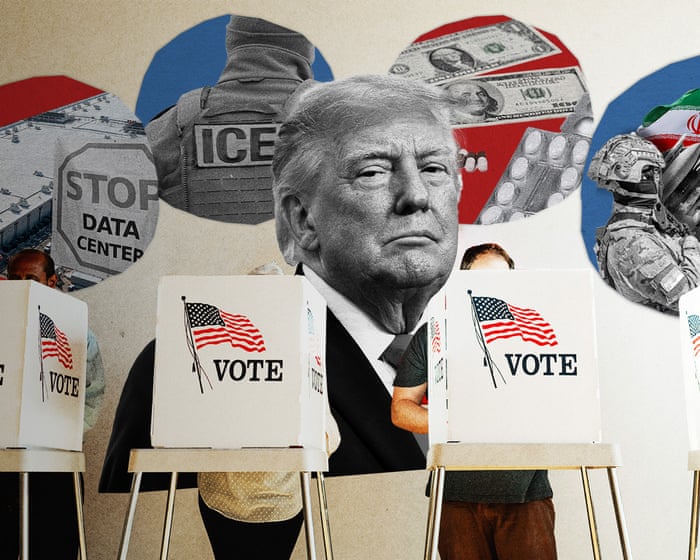
Days away from a national verdict on Trump 2.0, we check in with nine voters across the political spectrum

Millions will vote to decide which party controls Congress – which will have a huge impact on Trump’s final years in office

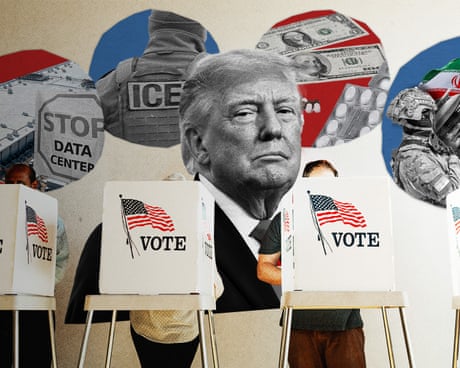
US voters will soon deliver a national verdict on the second presidency of Donald Trump. On 3 November, millions of Americans will vote in midterm elections to decide control of the House of Representatives and Senate, as well as the governorships in 36 states and state legislatures across the country. The results could have a huge impact on Trump’s final two years in office.

Our reporters have interviewed nine voters across the country and the political spectrum about extremism in US politics, their confidence in the US voting system, what they hope Congress will tackle first and their views of the president’s secretary of defense, Pete Hegseth.

Continue reading...

© Composite: The Guardian/Getty Images/Caleb Davis/David Ferrari/Sally Rasmussen/Patti Fucci/Justin Daniels/Sharon Anderson/Scott Akridge/Yajaira Martinez
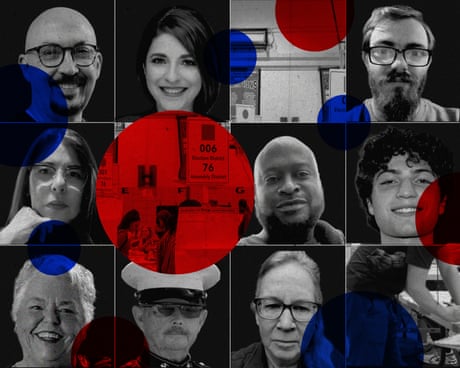
© Composite: The Guardian/Getty Images/Caleb Davis/David Ferrari/Sally Rasmussen/Patti Fucci/Justin Daniels/Sharon Anderson/Scott Akridge/Yajaira Martinez
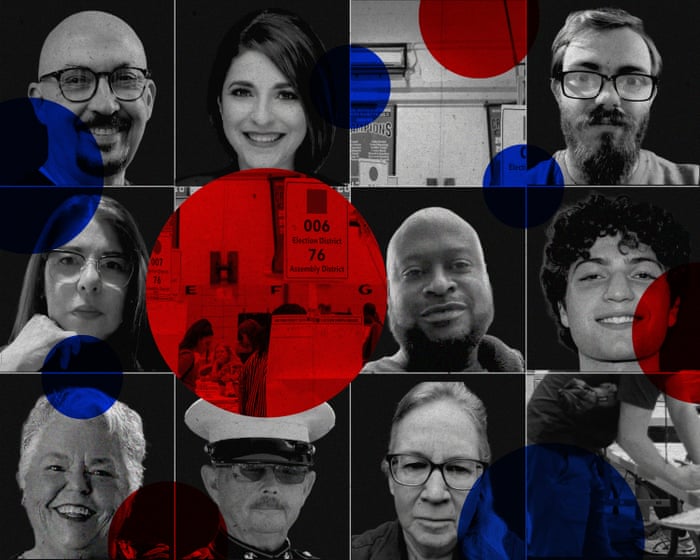
© Composite: The Guardian/Getty Images/Caleb Davis/David Ferrari/Sally Rasmussen/Patti Fucci/Justin Daniels/Sharon Anderson/Scott Akridge/Yajaira Martinez

  •  

What will drive American voters to the polls in the midterm elections? - video explainer

Recent polls show that American voters across the political spectrum are deeply dissatisfied with the Trump administration, and the upcoming midterm elections will provide them an opportunity to express how they feel. The Guardian's reporter Fabiola Cineas breaks down the four key issues that will drive voters to the polls

Continue reading...

© Photograph: Guardian reactive desk

© Photograph: Guardian reactive desk

© Photograph: Guardian reactive desk

  •  

Life after Maga: the group offering an ‘exit ramp’ for rightwingers questioning Trumpism

The non-profit Leaving Maga is built on the premise that abandoning the Trump-built movement is like fighting a disease or breaking an addiction

Stephania Messina kept birthing boys. In the Quiverfull conservative Christian church she belonged to outside Detroit, Michigan, that made her a community celebrity. Your quiver, as the church taught it, is your womb, meant to be filled with as many arrows – a metaphor for children – as you can shoot unto the Lord. She shot five. “They treated me like I was Mother Mary, like I was this gift to the church,” she said.

But while she was quickly pushed into leading worship and Bible study groups for women and children, she wasn’t permitted to talk about politics.

Continue reading...

© Composite: The Guardian/Getty Images

© Composite: The Guardian/Getty Images

© Composite: The Guardian/Getty Images

  •  

Is Florida ready for a democratic socialist?

Oliver Larkin, a 34-year-old DSA candidate, is running for Congress in a newly drawn district in Florida. On Tuesday, voters will decide between him and a ‘DeSantis Democrat’

Doors don’t get knocked on much in this stretch of south Florida, where yard signs for Republican and Democratic candidates alternate from home to home. Oliver Larkin, the 34-year-old democratic socialist running for Congress here, knows this.

With a clipboard in hand five weeks before the state’s primary, Larkin and two canvassing volunteers walked down palm tree-lined streets with single-family homes to pitch residents on his plan for a better way of life. Surprisingly, many wanted to chat with the strangers at their door.

Continue reading...

© Photograph: Gabriel Bit-Babik

© Photograph: Gabriel Bit-Babik

© Photograph: Gabriel Bit-Babik

  •  

One week, two killings: Trump’s immigration crackdown turns deadly – again

The fatal shootings of two men, both killed in their vehicles by ICE agents, have rekindled anger over the US’s militarized deportation push

Lorenzo Salgado Araujo, 52, was driving to work with his brother and two other passengers in Houston, Texas, when immigration agents began tailing his car. They pulled him over and fired a fatal shot through the open passenger-side window.

Six days later in Biddeford, Maine, Joan Sebastián Durán Guerrero, 26, was driving around his neighborhood when agents stopped him at an intersection – right outside the laundromat where he’d often go with his three-year-old daughter – and shot him dead.

Continue reading...

© Illustration: Guardian Design

© Illustration: Guardian Design

© Illustration: Guardian Design

  •  

Suspected gunman at White House press dinner named

Law enforcement agencies name Cole Tomas Allen as Trump posts video of man sprinting through checkpoint

The suspected gunman in the shooting at the White House correspondents’ dinner that has roiled Washington has been identified as Cole Tomas Allen, a 31-year-old man from southern California.

Allen, of Torrance, a suburb of Los Angeles, has no record of criminal charges or a civil court history in Los Angeles county, according to a records search.

Continue reading...

© Photograph: Apu Gomes/Getty Images

© Photograph: Apu Gomes/Getty Images

© Photograph: Apu Gomes/Getty Images

  •  

They all survived Jeffrey Epstein. They have something to tell you

Saturday marks one year since Virginia Giuffre’s death – and other survivors are making a public reckoning possible

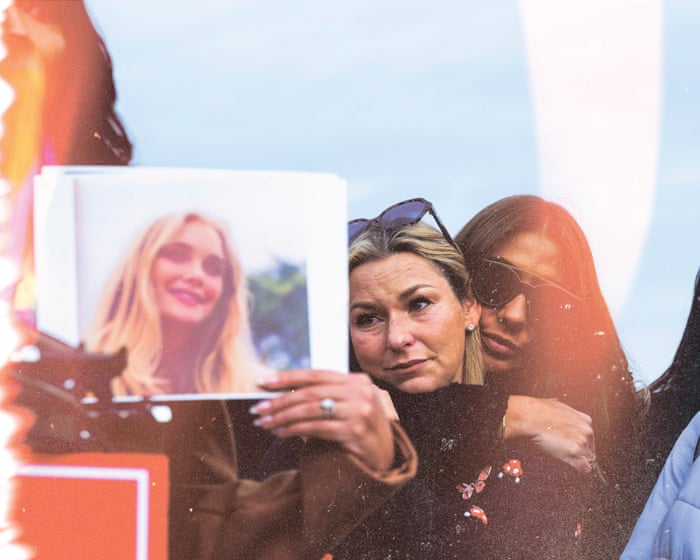
Saturday will mark one year since the death of Virginia Giuffre, one of the first women to surrender her anonymity, detail her experiences and publicly call for criminal charges against convicted child sex offender Jeffrey Epstein. For other Epstein survivors such as Liz Stein and Jess Michaels, Giuffre’s public reckoning made it possible to finally name what had happened to them.

“I saw myself in Virginia, in [Epstein survivor] Maria Farmer, in all of them,” said Danielle Bensky, who was pulled into Epstein’s orbit when she was 17. “And I thought: if they can be victimized, anyone can be. I was not alone. I finally understood that we were not going to be silent any more.

Continue reading...

© Composite: The Guardian/Getty Images

© Composite: The Guardian/Getty Images

© Composite: The Guardian/Getty Images

  •  

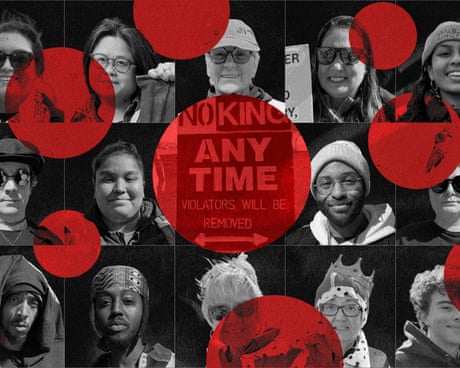
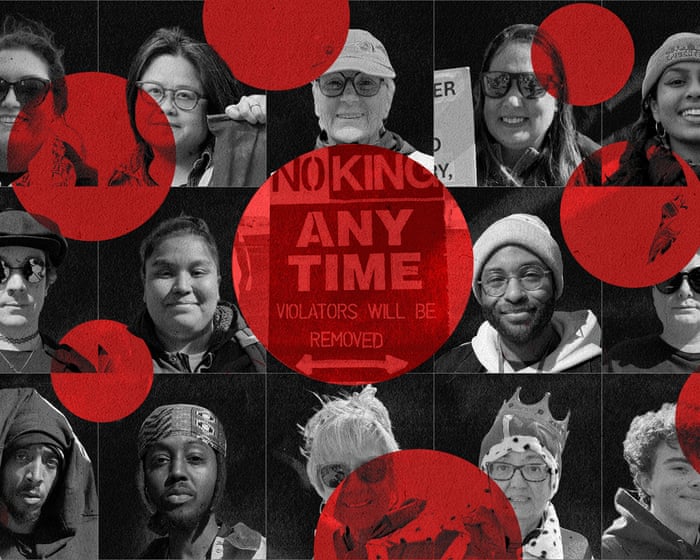
‘The more they come down on us, the more we come together’: 14 No Kings protesters on where to go from here

Saturday’s protests drew millions of people across the US and around the world. The Guardian spoke with some of them to see why they were there and what’s next

Saturday saw the greatest number of protests in US history, when more than 8 million people at 3,300 No Kings events took to the streets to oppose the policies of Donald Trump.

In the past few months, the Trump administration has sent more than 3,000 federal immigration agents into Minnesota’s Twin Cities, causing fear and havoc that was only furthered when agents killed two residents. Trump has also launched strikes on Venezuela and waged a war in Iran that has so far cost the US about $30bn to $40bn. That is on top of the US continuing to fund Israel’s war in Gaza; the ongoing immigration raids in other US cities, towns and rural regions; and the threats to trans rights, voting rights and more.

Continue reading...

© Composite: The Guardian/ Fabiola Cineas/Lex McMenamin/Amy Qin/Rachel Leingang

© Composite: The Guardian/ Fabiola Cineas/Lex McMenamin/Amy Qin/Rachel Leingang

© Composite: The Guardian/ Fabiola Cineas/Lex McMenamin/Amy Qin/Rachel Leingang

  •  

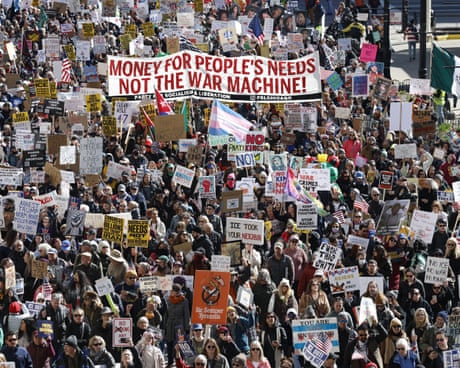
Third No Kings protest draws 8 million worldwide to push back on Trump administration

Anti-authoritarian rallies, in all 50 states plus more than a dozen countries, were the largest number of protests in a single day in US history

More than 8 million people protested against the Trump administration at more than 3,300 No Kings events across the US and in more than a dozen countries on Saturday, according to organizers. It’s the greatest number of protests in a single day in US history, said Britt Jacovich, the deputy communications director for Move On, one of the organizers behind No Kings.

Saturday’s protest was the third No Kings, organized by a coalition that also includes “anti-authoritarian” groups Indivisible and 50501, labor unions and other grassroots organizations. The last one in October drew 7 million people nationwide.

Continue reading...

© Photograph: Kamil Krzaczyński/AFP/Getty Images

© Photograph: Kamil Krzaczyński/AFP/Getty Images

© Photograph: Kamil Krzaczyński/AFP/Getty Images

  •  

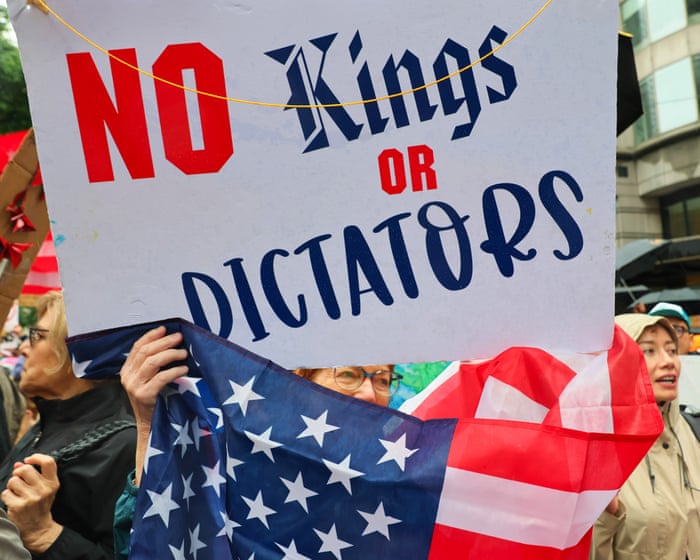
The third No Kings protests are expected to draw millions. Do they need clearer goals?

Anti-authoritarian rallies standing up to Trump have broad objectives and no leaders. Organizers say that is by design

More than 3,100 anti-authoritarian protests are scheduled across the US and at least 15 other countries on Saturday. All these events will take place under a single banner: No Kings.

Formally launched in June to fight back against Trump administration policies, the No Kings movement has grown with astonishing speed – its second and most recent mass protest in October drew an estimated 7 million participants. Organizers expect Saturday’s events to be the biggest protest in American history.

Continue reading...

© Photograph: Michael M Santiago/Getty Images

© Photograph: Michael M Santiago/Getty Images

© Photograph: Michael M Santiago/Getty Images

  •  

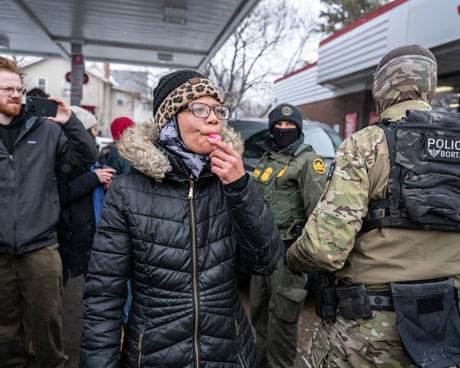
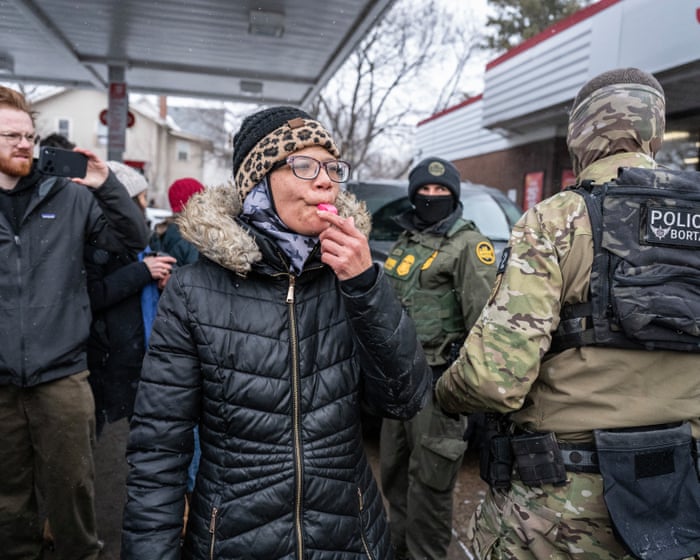
Whistles are a symbol of resistance amid Trump’s ICE crackdown. Some say they hurt more than they help

The instrument has strengthened community ties, but some organizers say whistles can create panic or confusion

Over the past year, whistles have become a symbol of the collective resistance of ordinary people standing up to federal immigration enforcement. As the Trump administration expands its immigration crackdown to cities and towns across the US, people are relying on whistles to warn their neighbors about the presence of Immigration and Customs Enforcement (ICE) agents.

But not all activists agree on their efficacy. Some organizers, including those in rural areas of the US, say that whistles can heighten panic in the communities they serve. Others say they can create unnecessary confusion for children, the elderly and those with disabilities.

When a few grassroots organizations across the country, from Washington state to Maryland, posted on social media about their decision to keep whistles out of their activism, a debate exploded online. But scholars of social movements say that tactical adaptability is a healthy part of organizing, as coalitions emerge, coalesce and continue to transform to meet the needs on the ground.

Continue reading...

© Photograph: Roberto Schmidt/AFP/Getty Images

© Photograph: Roberto Schmidt/AFP/Getty Images

© Photograph: Roberto Schmidt/AFP/Getty Images

  •  
❌